wayground logo

Free Printable Worksheets

Font size

S
M
L
XL
Worksheets

Unit 3 Bend 2 Test Review

Total questions: 85

Worksheet time: 1hrs 5mins

Name
Class
Date
1.

Natural selection results in change in a population's _____________ traits over time.

a)

inherited

b)

acquired

2.

Brown mice survive and reproduce in their desert environment better than white mice because owls can see and eat the white mice more easily. In this situation, what part of the environment is doing the selecting?

a)

predator

b)

soil composition

c)

mouse fur color

d)

sexual preferences

3.

Individuals undergo evolution.

a)

True

b)

False

4.

A phenotype that improves an organism’s chance of survival in their environment is considered a(n) ____________.

a)

natural selection

b)

adaption

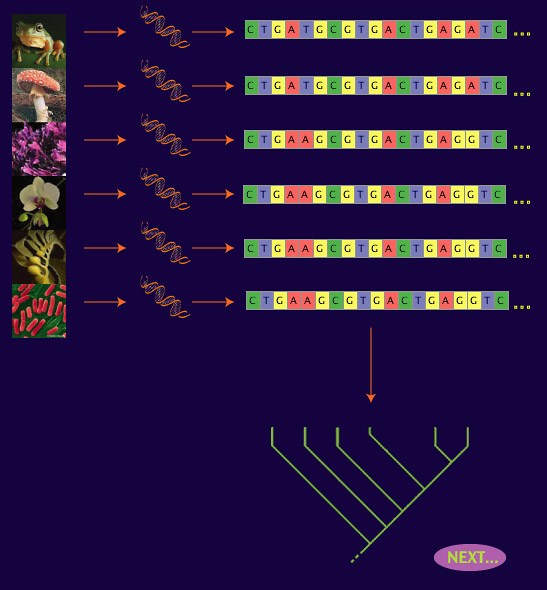
c)

speciation

5.

Which of the following is NOT an example of natural selection?

a)

People selectively breeding hamsters for size.

b)

Insect populations developing resistance to certain pesticides.

c)

Bacteria becoming resistant to antibiotics.

d)

Male birds of certain species inheriting colorful feathers that are more attractive to females.

6.

Eyes that can see in the dark is a(an) _______ inherited by nocturnal animals.

a)

adaptation

b)

acquired trait

c)

learned ability

7.

How does a species change over time?

a)

by adapting to the environment

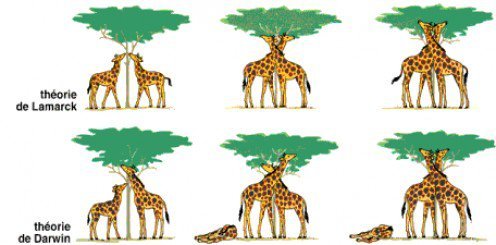
b)

changes in the gene frequencies in a population

c)

acquiring new traits

d)

they do not change

8.

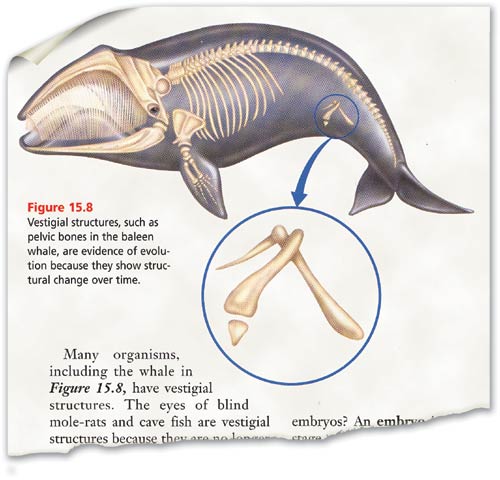
The pelvic bone of whales is not needed for movement within the water. This is an example of a(n) ______________ structure.

a)

vestigial

b)

analogous

c)

homologous

9.

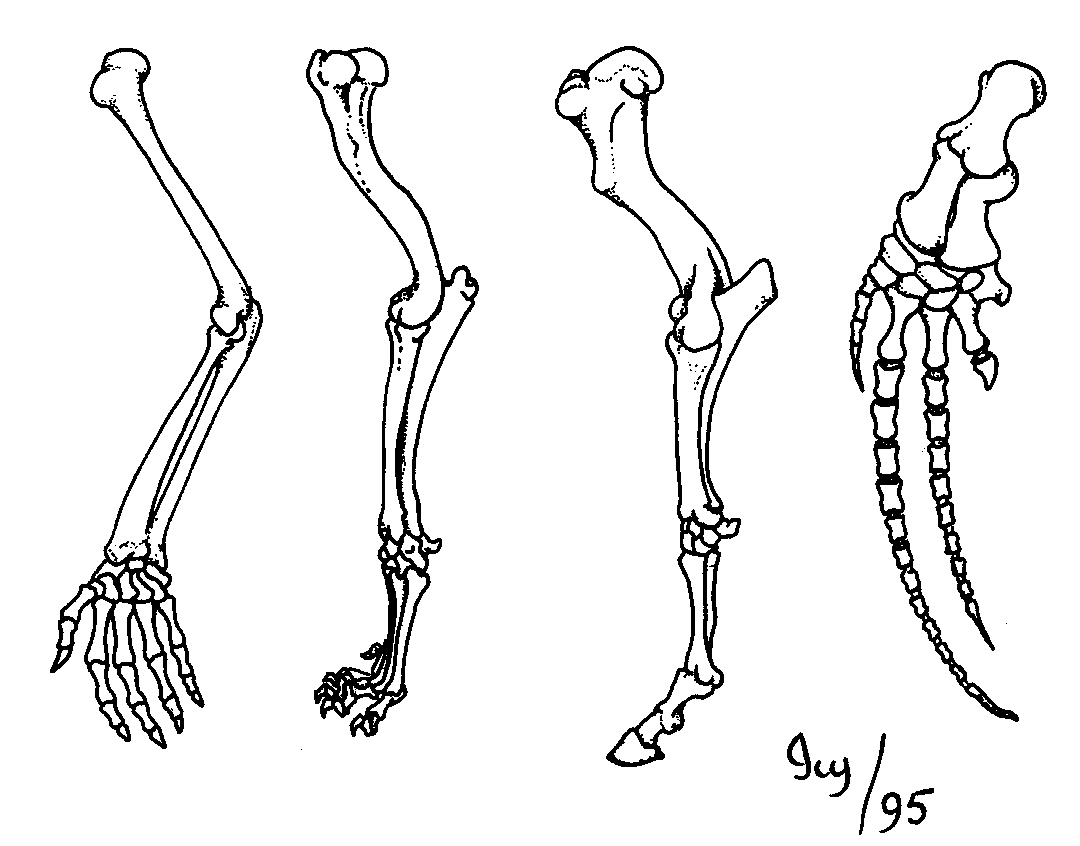
The forelimbs of mammals have similar anatomy because these groups descended from a recent common ancestor. Their bone structure is an example of a(n) ______________ structure.

a)

vestigial

b)

analogous

c)

homologous

10.

Many different groups of organisms have wings, even though they do not share a recent common ancestor. This is because they evolved in environments with similar selective pressures. Wings are an example of a(n) ______________ structure.

a)

vestigial

b)

analogous

c)

homologous

11.

Which does NOT cause genetic variation?

a)

crossing over in meiosis

b)

mutations

c)

acquired traits

12.

Below are the % similarities of DNA between whales and other species. Based on this, which are whales most closely related to?

a)

Pig, 68.4%

b)

Hippo, 83.4%

c)

Mouse, 38.4%

13.
Where the better adapted organisms survive to pass traits along to offspring.
a)
Evolution
b)
Natural Selection
c)
Extinction
d)
Artifical Selection
14.
Why are advantageous traits more likely to be passed onto offspring?
a)
Because they are more likely to survive and reproduce.
b)
Because they come from dominant alleles.
c)
Because they come from recessive alleles.
d)
Because the trait is an acquired phenotype.
15.
Natural selection is when ____________ decides who survives and who doesn't
a)
nature
b)
humans
c)
animals
d)
years
16.
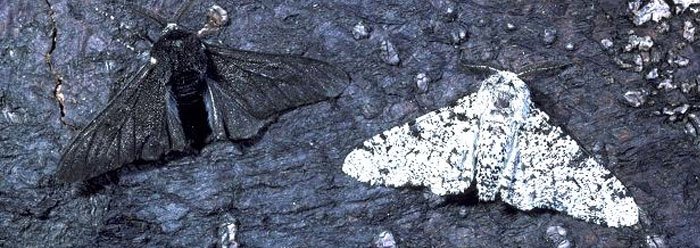
The trees these moths used to live on were white, but have been covered in soot from coal factories. Which moth will be more successful in this environment?
a)
Dark moth
b)
Light moth
c)
Both will be equally successful
d)
Neither will be successful
17.
Change over time
a)
Natural Selection
b)
Selective Breeding
c)
Homeostasis
d)
Evolution
18.
Which best describes mutations?
a)
Always helpful
b)
Always harmful
c)
Can be helpful or harmful
d)
Always neutral
19.
Structures with the same parts have different functions; suggests that organisms share a common ancestry
a)
vestigial structures
b)
homologous structures
c)
adaptive radiation
d)
fossil
20.
Study of embryos of various organisms to show a common ancestor because of similarities in development
a)
natural selection
b)
embryology
c)
speciation
d)
evolution
21.
The diagram shows fossils in different rock layers. Which of these statements about the age of these fossils is most likely correct?
a)
Fossil A and C are the same age
b)
Fossil B is older than fossil C
c)
Fossils A is older than fossil B
d)
Fossil D is older than fossil C
22.
What does Darwin's theory of evolution suggest?
a)
species change over time
b)
extinct species are not related to living species
c)
different species can interbreed
d)
animals that look alike are most closely related
23.
What type of structures are these?
a)
homologous
b)
vestigial 
c)
analogous
d)
fossil
24.
Which of these best represents a time period in which an organism could evolve?
a)
5 days
b)
100 years
c)
10,000 years
d)
2 decades
25.

Whales are aquatic mammals that contain a pelvis (hip) bone. Even though it does not aid in its movement, the function must have been used by a common ancestor of the whale. Thus, the pelvis is referred to as a(n)

a)

vestigial structure

b)

analogous structure

c)

homologous structure

26.
The ability of an organism to survive and reproduce in its specific environment 
a)
diversity.
b)
evolution
c)
adaptation
d)
 fitness
27.
Where humans have bred organisms together based on traits we like.
a)
Evolution
b)
Natural Selection
c)
Extinction 
d)
Artificial Selection
28.
Genetic differences between organisms of the same species
a)
Variation
b)
Adaptation
c)
Behavior
d)
Environment
29.
The difference in the physical traits of an individual from those of other individuals in a group is called a(n)
a)
change
b)
adaption
c)
species
d)
variation
30.
The long and sharp beak of a woodpecker is an example of:
a)
Natural Selection
b)
Selective Breeding
31.
An error in DNA copying that results in a new trait
a)
Homeostasis
b)
Mutation
c)
Natural Selection
d)
Selective Breeding
32.
This scientist came up with the idea of natural selection.
a)
Jean Baptiste Lamarck
b)
Gregor Mendel
c)
Charles Darwin
d)
Thomas Malthus
33.
Inherited trait that helps an organism survive is a(n) __________.
a)
Fossil
b)
Adaptation
c)
Ancestor
d)
Natural selection
34.
Survival of the fittest or when favorable adaptations reproduce faster is called what?
a)
Evolution
b)
Adaptation
c)
Natural selection
d)
Fossilization
35.
Which of the following is an example of a vestigial structure?
a)
the wings of a red-tailed hawk
b)
the hind limbs of a house cat
c)
the fins of sharks
d)
the tailbone of a human
36.

What do we call a change in a species over time?

a)

Adaptation

b)

Evolution

c)

Extinction

d)

Environmental influences

37.
Ostrich wings are examples of
a)
homologous structures
b)
vestigial structures
c)
adaptations
d)
traits
38.
Why do embryologist study embryos?
a)
to see if they are related
b)
to understand adaptations
c)
to determine the age
d)
to learn what parents are vestigial
39.
What is embryology?
a)
the age of organisms
b)
the oldest stage of development
c)
the life span of an organism
d)
the earliest growth stage of development
40.
The environment around Manchester, England, changed during the Industrial Revolution.  How did this change affect peppered moths living in the area?
a)
Natural selection favored moths with dark wings because predators could not see them on the soot-colored trees.
b)
Natural selection favored moths with white wings that were easy for predators to see.
c)
Natural selection favored moths with white wings because predators could not see them on the soot-colored trees.
d)
Natural selection caused moths with white wings to become extinct.
41.
When an organism completely dies out, it is called.....
a)
Adaption
b)
Extinction
c)
Fossilization
d)
Mutation
42.
Two organisms that are closely related would have
a)
very similar DNA sequence
b)
exactly the same DNA sequences
c)
no proteins in common
d)
completely different DNA sequence
43.
Comparing human hemoglobin of chimpanzees, horses, kangaroos, and chickens, reveal that humans have the fewest amino acid differences with 
a)
Kangaroos
b)
Horses
c)
chickens
d)
chimpanzees
44.
All the individuals of a species that live in a particular area are called a
a)
variation
b)
population
c)
fossil
d)
group
45.
Which layer is oldest?
a)
A
b)
W
c)
G
d)
Z
46.
Which of the following is a fossil?
a)
a plant that has recently died
b)
a group of organisms that can reproduce
c)
a structure or organ that no longer functions
d)
a trace of an organisms that existed in the past
47.
In natural selection, the selective agent is the
a)
humans
b)
mutations
c)
breeders
d)
environment
48.
what did Charles Darwin observe in finch populations of the Galapagos Islands off the coast of South America?
a)
different species on different islands
b)
all species on one of the islands
c)
identical species on all the islands
d)
the same species as North America
49.
Mutations are important because they bring about
a)
death of the organism in which they develop
b)
genetic variation needed for a population to evolve
c)
benefits for the individual, not for the population
d)
Hardey-Weinberg equilibrium within a population
50.

What is the term for a feature that allows an organism to survive better in its environemtn?

a)

variation

b)

adaptation

c)

homologous structure

d)

vestigial structure

51.
What is the process in which humans breed organisms for certain traits?
a)
natural selection
b)
inheritance
c)
artificial selection
d)
descent withOUT modification
52.
The Physical remains of a plant or animal preserved in rock or Earth's crust. 
a)
Adapt
b)
Fossil
53.
To adjust to a changing environment
a)
Mutation
b)
Adapt
54.
Most of the species found in fossil form are _______________. 
a)
Alive
b)
Extinct
55.
Darwin wrote that organisms with traits that are best suited to the environment will ________________
a)
increase in number
b)
become extinct
56.
Some organisms that share a common ancestor have features that have different functions, but similar structures.  These are known as
a)
vestigial structures
b)
analogous structures
c)
homologous structures
d)
fossil structures
57.
What increases genetic variation when animals move from one population to another
a)
genetic drift
b)
sexual selection
c)
bottleneck effect
d)
gene flow
58.
What is another name for natural selection?
a)
survival of the smartest
b)
survival of the fastest
c)
survival of the biggest
d)
survival of the fittest
59.
What is the study of organisms at the early stages of development?
a)
DNA studies
b)
embryology 
c)
extinction
d)
fossil record
60.
Which of the following is a term for a group of similar organisms that can reproduce fertile offspring?
a)
individual
b)
population
c)
species
d)
fossil
61.
Mutations are important because they bring about
a)
death of the organism in which they develop
b)
genetic variation needed for a population to evolve
c)
benefits for the individual, not for the population
d)
Hardey-Weinberg equilibrium within a population
62.
Extinction can occur because of which of the following?
a)
All can be causes of extinction.
b)
Increased competition with other species
c)
New predators within the environment
d)
Loss of habitat and/or catastrophes
63.
Finches on the Galapagos Islands had different beaks in order to help them do what?
a)
Build nests
b)
Fight off predators
c)
Collect food sources
d)
Compete with rivals
64.
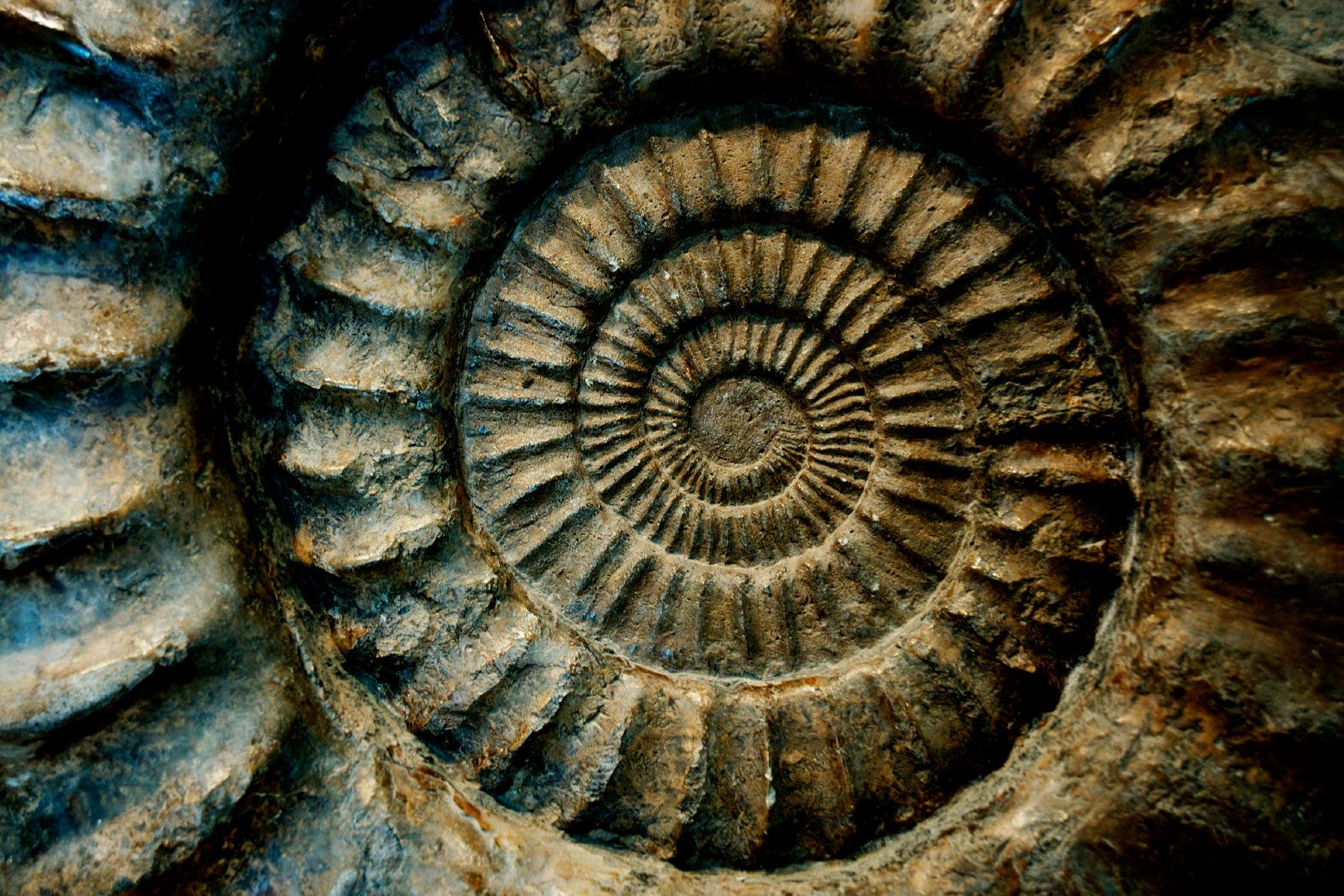
According to the diagram, which organism is older?
a)
ammonite
b)
coral
c)
gastropod
d)
trilobite
65.
If species A and B have very similar genes and proteins, what is probably TRUE?
a)
species A and B share a relatively recent common ancestor
b)
species A evolved independently of species B for a long period
c)
species A is younger than species B
d)
species A is older than species B
66.
What would happen if the Giraffes never evolve?
a)
they would survive
b)
They would thrive
c)
They would become extinct
d)
They will find another source of food
67.
Farmers breed cows to produce high amounts of milk. This is an example of...
a)
Natural Selection 
b)
Variations in a species 
c)
Selective Breeding 
d)
inbreeding
68.
Vertebrate embryos pass through similar stages of development is evidence for
a)
use and disuse
b)
homologous structures
c)
common ancestry
d)
acquired characteristics
69.
Individuals that are well adapted to their environment will survive and produce
a)
better traits
b)
stronger genes
c)
more offspring
d)
fewer mutations
70.
All the individuals of a species that live in a particular area are called a 
a)
group
b)
population
c)
variation
d)
fossil
71.
The fossil record provides evidence that 
a)
Fossils cannot be dated.
b)
All species were formed during Earth’s formation and have changed little since then.
c)
The fossilized species have no connection to today’s species.
d)
Older species gave rise to more-recent species.
72.
Members of different subspecies
a)
Are considered to be entirely different species.
b)
Can no longer interbreed successfully.
c)
Differ genetically because of adaptations for different living conditions.
d)
Will never diverge to become different species.
73.
Starting in 1954, commercial fishers in the northwest Pacific were paid by weight, rather than by the individual fish, for pink salmon. The fishers increased the use of a type of net that selectively catches larger fish.  Which of the following effects did this change in fishing technique most likely have on the salmon population over the next 20 years?
a)
The average body size of the salmon population decreased significantly.
b)
The average body size of the salmon population increased significantly.
c)
The average body size of the males in the salmon population increased, and the females stayed the same.
74.
European rabbits were introduced to Australia in 1859. The rabbits reproduced rapidly in their new habitat, displaced other animals, and overgrazed vegetation. In an attempt to reduce the rabbit population, a virus was introduced in 1951. This virus is usually deadly to European rabbits. When the virus was first introduced, the rabbits died in large numbers, but the death rate decreased over time. Which of the following best explains the decrease in the rabbit death rate? 
a)
Young rabbits learned to avoid being infected with the virus.
b)
The lifespan of the virus was too short to affect rabbits over a long period of time.
c)
Natural selection favored rabbits that were resistant to the virus. 
d)
No correct choices.
75.
Which of the following statements gives the most likely explanation for the presence of two very similar species of squirrels living on opposite sides of the Grand Canyon?
a)
One squirrel traveled across the canyon and started a new population on the other side.
b)
One squirrel traveled across the canyon and interbred with a different population on the other side.
c)
Members of one single squirrel species were geographically separated by the formation of the canyon.
d)
Members of two different squirrel species migrated from two different places to opposite sides of the canyon. 
76.
The Asian shore crab invaded parts of the eastern coast of the United States about 15 years ago. The Asian shore crab preys on blue mussels. In the time since the Asian shore crab arrived, the average shell thickness of the blue mussel population has increased. Which of the following is the most likely reason that this increase in shell thickness has occurred? 
a)
Blue mussels with thick shells attract more crabs that mussels without thick shells.
b)
Blue mussels with thick shells grow in larger colonies than mussels without thick shells.
c)
Blue mussels with thick shells catch more food per day than mussels without thick shells.
d)
Blue mussels with thick shells survive and reproduce more successfully than mussels without thick shells.
77.
Some willow trees alter the chemical composition of their leaves when attacked by caterpillars. Compared to normal leaves, the chemically altered leaves are less nutritious and more difficult for caterpillars to digest.
 Which of the following is a likely effect of this ability to alter leaf composition?
a)
Willow trees with this ability will attract more caterpillars than other willow trees.
b)
Willow trees with this ability have a survival advantage over other willow trees. 
c)
More butterflies will lay their eggs on willow trees with this ability than other willow trees. 
d)
None are correct
78.
The formation of new species is a process known as ____________________, which is typically the product of divergence. 
a)
gradualism
b)
speciation
c)
reproductive isolation
d)
subspecies
79.
Which of the following statements best reflects the evolutionary importance of the figures pictured?
a)
New genetic instructions have been disregarded in the evolution of vertebrates.
b)
Early in development, vertebrate embryos show no evidence of common ancestry.
c)
All adult vertebrates retain pharyngeal pouches (gills).
d)
The evolutionary history of organisms is seen in the way embryos develop.
80.
What characteristic did Darwin observe about the finches on the Galapagos Islands?
a)
Their feathers 
b)
Genotypes 
c)
Their beaks
d)
Their body sizes
81.
The struggle for existence against other members of an organisms species is
a)
Competition
b)
Natural Selection
c)
gene flow
d)
genetic drift
82.
Which two species are most related?
a)
B&C
b)
A&B
c)
A&C
d)
C&B
83.
Looking at this chart humans are most related to which of the following? (You are looking for the one that has the lowest number)
a)
Gibbon
b)
Dog
c)
Mouse
d)
Lamprey
84.
These structures shown are ________.
a)
Homologous structures
b)
Analogous structures
c)
Structural adaptation
d)
Functional adaptation
85.
Which two organisms are the most closely related according to their DNA sequence?
Critter A--> ATG CTT AAC CCG TTA
Critter B--> ATC GTT TTC CCG TAA
Critter C--> ATG CTA TAG GCG TAA

a)
Critter A and B
b)
Critter A and C
c)
Critter B and C
d)
They are all equally related