
 Worksheets
Great Depression and New Deal
Total questions: 53
Worksheet time: 1hrs 6mins
Name
Class
Date
1.

President during the 1930s who was considered a failure because he couldn't fix the Great Depression.
a)
Franklin D. Roosevelt
b)
Herbert Hoover
c)
Margaret Mitchell
d)
Jessie Owens
2.

The president who promised the people a "New Deal" during the Great Depression.
a)
Jesse Owens
b)
Herbert Hoover
c)
Franklin D. Roosevelt
d)
George Washington
3.

Which of the following is NOT a role that individuals play in the economy?
a)
Buying food, clothing, and other things that they need.
b)
Working to receive a paycheck.
c)
Taxing their fellow citizens.
d)
Starting businesses which offer services and goods to other individuals.
4.

What role do banks have in the economy?
a)
They provide loans to people who need money and help people invest money in stocks.
b)
They tax customers to pay for new programs.
c)
They decide how everyone should spend their money.
d)
They do not play a role in the economy.
5.

Which of the following is the government's role in the economy?
a)
Providing stocks to people who need to invest.
b)
The main provider of loans to people who want to buy homes.
c)
Giving interest to people who put their money into savings accounts.
d)
Building roads, schools, hospitals, and more with tax money.
6.

Hundreds of thousands of people couldn't find jobs during the great depression. Many people who couldn't find work couldn't afford to buy food so they had to go to
a)
Homeless shelters
b)
Soup kitchens
7.

Which of the following was NOT a problem facing the United States from 1929-1939.
a)
Many banks were closing because they ran out of money.
b)
The economy struggled because of all the money that had been spent fighting in Europe.
c)
A drought hit the U.S. for several years causing many farmers' crops to fail.
d)
The stock market crashed causing people to lose millions and businesses to struggle.
8.

During the Great Depression people were worried because the economy was doing poorly. How did this fear affect their consumption of goods?
a)
People consumed more things because they thought they wouldn't be able to buy them later.
b)
People consumed fewer things because they wanted to save as much money as they could.
c)
People consumed more things because they wanted businesses to do better.
d)
People consumed fewer things because the government was rationing consumption.
9.

Bob lived during a time when there were large dust storms and no rain for weeks or months at a time. This was known as the
a)
Great Recession
b)
TVA
c)
Dust Bowl
d)
CCC
10.
What effect did the Dust Bowl storms have on the Great Depression?
a)
Many farmers were forced to leave the Great Plains.
b)
Unemployment decreased gradually.
c)
Many homes long the Mississippi River were flooded.
d)
Hoover was re-elected as president.
11.
In the 1930's, people would line up at ____________ to get food. These were normally run by charities.
a)
churches
b)
businesses
c)
soup kitchens
d)
work
12.
Who was president at the time of the Stock Market Crash of 1929?
a)
Abraham Lincoln
b)
Franklin D. Roosevelt
c)
Theodore Roosevelt
d)
Herbert Hoover
13.
After the Stock Market Crash, many people lost their life savings because _______________.
a)
banks closed
b)
banks gave away their money
c)
they couldn't remember where they put it
d)
someone stole it
14.
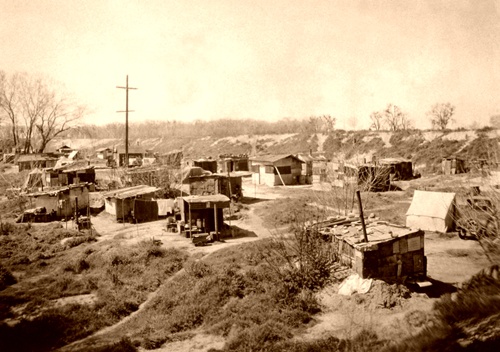
What were the villages full of shacks located in cities filled with unemployed Americans called?
a)
Hoovervilles
b)
Okies
c)
Bonus Army Bases
d)
Rooseveltowns
15.
Which economic factor contributed most directly to the start of the Great Depression?
a)
low worker productivity
b)
high income taxes
c)
decreasing tariff rates
d)
buying stocks on margin
16.
Which of the following was NOT an effect of the Great Depression?
a)
homelessness
b)
bank failures
c)
high tariffs
d)
struggling farmers
17.
What natural disaster of the 1930s added insult to injury?
a)
Flooding along the Mississippi River
b)
The Dust Bowl
c)
Tornadoes called the Helen Hunt Twisters
d)
Hurricanes along the Gulf Coast
18.
Pick the best answer. Over-production of what led to the Great Depression?
a)
farm goods
b)
consumer goods
c)
farm and consumer goods
d)
iPhones
19.
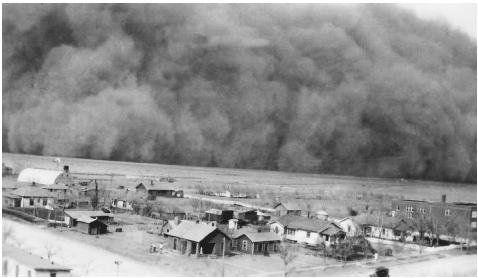
What effect did the Dust Bowl storms have on the Great Depression?
a)
Many farmers were forced to leave the Great Plains.
b)
Unemployment decreased gradually.
c)
Many homes long the Mississippi River were flooded.
d)
Hoover was re-elected as president.
20.
The Bonus Army incident in 1932 best illustrates the idea that
a)
F.D.R.'
s relief programs were unsuccessful.
s relief programs were unsuccessful.
b)
many felt that Herbert Hoover was not handling the Depression well.
c)
protests by veterans during the Depression were effective.
d)
the U.S. Army had increased in size and power during the Depression.
21.
What is another name for the Stock Market Crash?
a)
Black Friday
b)
Taco Tuesday
c)
Black Tuesday
d)
Throwback Thursday
22.
Veterans of this conflict were owed bonus pay for their service.
a)
World War I
b)
World War II
c)
Gulf War
d)
Civil War
23.
What was President Herbert Hoover's response to the Great Depression?
a)
He believed "rugged individualism" would solve the economy
b)
He created mass welfare
c)
He increased infrastructure to create jobs
d)
He violated his policy of laissez-faire
24.

Migrant farmers from Oklahoma
a)
Hooverville
b)
Okies
c)
Economy
d)
Soup Kitchens
e)
Dust Bowl
25.
The __________________ was the longest period of unemployment and low economic activity in the 1900's.
a)
New Deal
b)
Great Depression
c)
Dust Bowl
d)
Civil War
26.
A time when business activity is very slow and people are out of work is known as a _____________.
a)
crash
b)
depression
c)
party
d)
low time
27.
The president elected after Herbert Hoover who promised to give America a "New Deal" was _________________.
a)
Franklin Roosevelt
b)
Theodore Roosevelt
c)
Abraham Lincoln
d)
Grover Cleveland
28.
Which of the following is the most valid statement regarding the long-term economic effects of the Great Depression?
a)
The government placed fewer restrictions on large corporations
b)
The role of the federal government was expanded
c)
The government reduced its dependence on foreign trade
d)
The American people had greater confidence in the nation’s economic leadership
29.
What was the name of FDR's plans and programs designed to meet the needs and problems of the Great Depression?
a)
New Deal
b)
Great Deal
c)
Social Security
d)
the New Liberalism
30.
What was the "New Deal" of the 1930s?
a)
a government program that gave free land to homesteaders
b)
a government program that spread civil rights throughout the country
c)
a government program designed to help people during the depression
d)
a government program that helped women get the vote
31.
Which of these New Deal programs helped bring electricity to rural areas in SC?
a)
Civilian Conservation Corps
b)
Works Progress Administration
c)
Rural Electrification Act
d)
Social Security Act
32.
Many people lost their jobs during the Great Depression. The national government responded with President Franklin Roosevelt's "New Deal," which
a)
provided programs to help people make money to provide for their needs.
b)
helped reduce the national debt, providing more capital for businesses
c)
forced people to join the military forces to make money for their needs.
d)
forced people to use charities to help them provide for their needs.
33.
One difference between the administrations of President Roosevelt and President Hoover was that Roosevelt was-
a)
more willing to use government intervention to solve economic problems
b)
unwilling to allow government agencies to establish jobs
c)
able to ignore economic issues for most of his first term in office
d)
opposed to any type of government regulation of financial institutions
34.
What was a major result of FDR’s New Deal programs?
a)
The national deficit declined for most U.S. citizens
b)
The suffrage rights for women changed
c)
The power of the federal government was expanded
d)
The federal government lowered taxes for most Americans
35.
What was created to protect bank deposits up to $5,000?
a)
WPA
b)
CCC
c)
TVA
d)
FDIC
36.
What was a major result of FDR’s New Deal programs?
a)
The national deficit declined for most U.S. citizens
b)
The suffrage rights for women changed
c)
The power of the federal government was expanded
d)
The federal government lowered taxes for most Americans
37.
The New Deal stressed Relief, Recover, and _______.
a)
Reform
b)
Revolution
c)
Reinvention
d)
Reinforcement
38.

What were the programs started by Franklin D. Roosevelt to help the country out of the Great Depression called?
a)
Big Deal
b)
New Deal
c)
Good Deal
d)
The Depression Deal
39.

What happened to the farmers of the Great Plains who were affected by the Dust Bowl?
a)
They became migrant workers hopping to find work on the farms in California.
b)
They became migrant workers hopping to find work on the farms in Georgia.
c)
They became migrant workers hopping to find work on the farms in Texas.
d)
They became migrant workers hopping to find work on the farms in New York.
40.

What did people do during the Great Depression to forget their troubles?
a)
They went fishing
b)
They went swimming
c)
They went to the movies
d)
They sat at home and read books
41.
FDR addressed the American public in weekly broadcasts known as:
a)
FDR Hour
b)
Hangin' With Franklin
c)
Fireside Chats
d)
Around the Fire
42.
What event brought the country out of the Great Depression?
a)
the Bonus Army
b)
the building of the Hoover Dam
c)
going off of the gold standard
d)
World War II
43.
What were the major goals of the New Deal?
a)
no gold standard and free coinage of silver
b)
abolition and suffrage
c)
relief, recovery, and reform
d)
expanding the size and economic influence of the United States
44.
What New Deal program was an answer to demands for retirement?
a)
National Labor Relations
b)
Tennessee Valley Authority
c)
Works {rogress Administration
d)
Social Security
45.

Which government agency gives benefits to people when they are retired or unemployed?
a)
Federal Deposit Insurance Corporation
b)
Securities and Exchange Commission
c)
Tennessee Valley Authority
d)
Social Security Admistration
46.

Which New Deal program was chiefly designed to correct abuses in the stock market?
a)
Civilian Conservation Corps
b)
Federal Deposit Insurance Corporation
c)
Securities and Exchange Commission
d)
National Recovery Administration
47.
Many people lost their jobs during the Great Depression. The national government responded with President Franklin Roosevelt's "New Deal," which
a)
provided programs to help people make money to provide for their needs.
b)
helped reduce the national debt, providing more capital for businesses
c)
forced people to join the military forces to make money for their needs.
d)
forced people to use charities to help them provide for their needs.
48.
One difference between the administrations of President Roosevelt and President Hoover was that Roosevelt was-
a)
more willing to use government intervention to solve economic problems
b)
unwilling to allow government agencies to establish jobs
c)
able to ignore economic issues for most of his first term in office
d)
opposed to any type of government regulation of financial institutions
49.
Which "R" does NOT belong?
a)
Relief
b)
Recovery
c)
Reform
d)
Redemption
50.
These programs were designed to stimulate the economy and end the Depression?
a)
Relief
b)
Recovery
c)
Reform
d)
Reuse
51.
These created jobs and provided people with direct assistance during the Great Depression
a)
Relief
b)
Recovery
c)
Reform
d)
Reduce
52.
These programs were designed to prevent a future Depression
a)
Relief
b)
Recovery
c)
Reform
d)
Recycle
53.
What is one way the New Deal was supposed to help the economy out of the Great Depression?
a)
by eliminating trading on the stock market
b)
by encouraging war with Germany and Japan
c)
by creating jobs through various new programs
d)
by giving people money through new bank laws
100 %

