wayground logo

Free Printable Worksheets

NEW

Font size

S
M
L
XL
Worksheets

6th - Atoms and Molecules

Total questions: 59

Worksheet time: 37mins

Name
Class
Date
1.

What charge does a proton have?

a)

negative

b)

positive

c)

neutral

d)

no charge

2.

What charge does a neutron have?

a)

Negative

b)

neutral

c)

positive

d)

dog

3.

If there is no subscript, there is ______ atom(s) of that element.

a)

1

b)

2

c)

5

d)

is mayonnaise an instrument ?

4.

A subscript is the small number below a(n) ________ that tells the number of _______ of that element.

a)

element symbol; atoms

b)

atom; element symbol

c)

subscript; protons

d)

compound; elements

5.

An electron has what kind of charge?

a)

positive

b)

electronegative

c)

negative

d)

neutral

6.

_______and ______ are found inside the nucleus?

a)

Protons ; electrons

b)

electrons ; neutrons

c)

neutrons ; protons

d)

atoms ; protons

7.

The smallest building blocks of matter are called

a)

atoms

b)

cells

c)

protons

d)

elements

8.

Which particle in the atom's nucleus does not have a charge?

a)

protons

b)

neutrons

c)

negative

d)

nucleus

9.

Electrons are found in the nucleus

a)

True

b)

False

10.

The number of protons in a neutral atom is equal to the number of

a)

electrons

b)

neutrons

c)

elements

d)

protons

11.

A(n) is the smallest part of matter

a)

atom

b)

element

c)

shrek

d)

electron

12.

Which statement about atoms and molecules is correct?

a)

Elements always exist as separate atoms

b)

Elements always exist as pairs of atoms called molecules

c)

Elements and compounds can exist as molecules

13.

How many different atoms are there in a compound?

a)

1

b)

always 2

c)

two or more

d)

at least three

14.

Which one is a compound?

a)

H

b)

H2O

c)

He

d)

Al

15.

Which of these contains two carbon atoms and six hydrogen atoms?

a)

CH4

b)

C2H6

c)

C2H4

16.

Which of these contains four hydrogen atoms?

a)

CH3OH

b)

H2O

c)

H2O2

17.

Which statement best describes an element?

a)

thousands in the world

b)

pure, made of only one atom

c)

can be separated

18.

Carbon is considered an element while carbon dioxide is considered a compound. This is because carbon dioxide is –

a)

a gas at room temperature.

b)

made of two different elements.

c)

given off by green plants.

19.
What is the term for combining 2 or more atoms together?
a)
atoms
b)
elements
c)
molecules
d)
compounds
20.

All matter is made of what

a)

energy

b)

atoms

c)

electrons

d)

compounds

21.

The central region of an atom where its neutrons and protons are is called it's __________ .

a)

nucleus

b)

electron cloud

c)

core

d)

center

22.
What are the 3 particles that make-up the atom?
a)
protons, neutrons, and isotopes
b)
neutrons, isotopes, and electrons
c)
positives, negatives, and electrons
d)
protons, neutrons, and electrons
23.
What is the total number of atoms in an ammonia (NH3) molecule?
a)
1
b)
2
c)
3
d)
4
24.

What is matter?

a)

Matter has mass and takes up space.

b)

Matter is charged atoms.

c)

Matter has a charge and a mass.

d)

Matter is polar molecules.

25.

Electron shells are filled by transferring electrons from one atom to the next

a)

Metallic Bond

b)

Ionic Bond

c)

Covalent Bond

d)

Hydrogen Bonds

e)

Van de Waals

26.

Atoms like to share their electrons and this causes their outer shell to be complete

a)

Metallic Bond

b)

Ionic Bond

c)

Covalent Bond

d)

Hydrogen Bonds

e)

Van de Waals

27.
if METALS are more likely to LOSE electrons, they will form ...
a)
anions
b)
neutral atoms
c)
positive ions
d)
negative ions
28.
If an aluminum atom has 13 protons (+) and 10 electrons (-), what is it's charge?
a)
Al3+
b)
Al13+
c)
Al10+
d)
Al10-
29.
Atoms that gain electrons become...
a)
negatively charged
b)
positively charged
c)
remain neutrally charged
d)
21
30.
Which group is very nonreactive?
a)
Noble Gases
b)
Halogens
c)
Alkali Metals
d)
Transition Metals
31.

The vertical (up and down) columns in the Periodic Table are called

a)

groups

b)

towers

c)

periods

d)

atomic numbers

32.
The Modern Periodic Table of Elements is arranged by
a)
atomic mass
b)
atomic number
c)
valence electrons
d)
number of isotopes
33.
Sodium (Na) is found in period 
a)
3
b)
2
c)
4
d)
1
34.
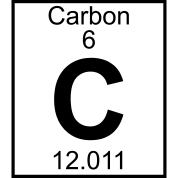
What does the 6 represent?
a)
atomic mass
b)
atomic number
c)
element name
d)
chemical symbol 
35.
What does 12.011 represent?
a)
atomic mass
b)
atomic number
c)
element name
d)
chemical symbol 
36.
What does the C represent?
a)
atomic mass
b)
atomic number
c)
element name
d)
chemical symbol 
37.
These are found on the Periodic Table.
a)
Compounds
b)
Elements
c)
Mixtures
38.

The horizontal (side to side) rows in the Periodic Table are called

a)

groups

b)

families

c)

periods

d)

atomic numbers

39.

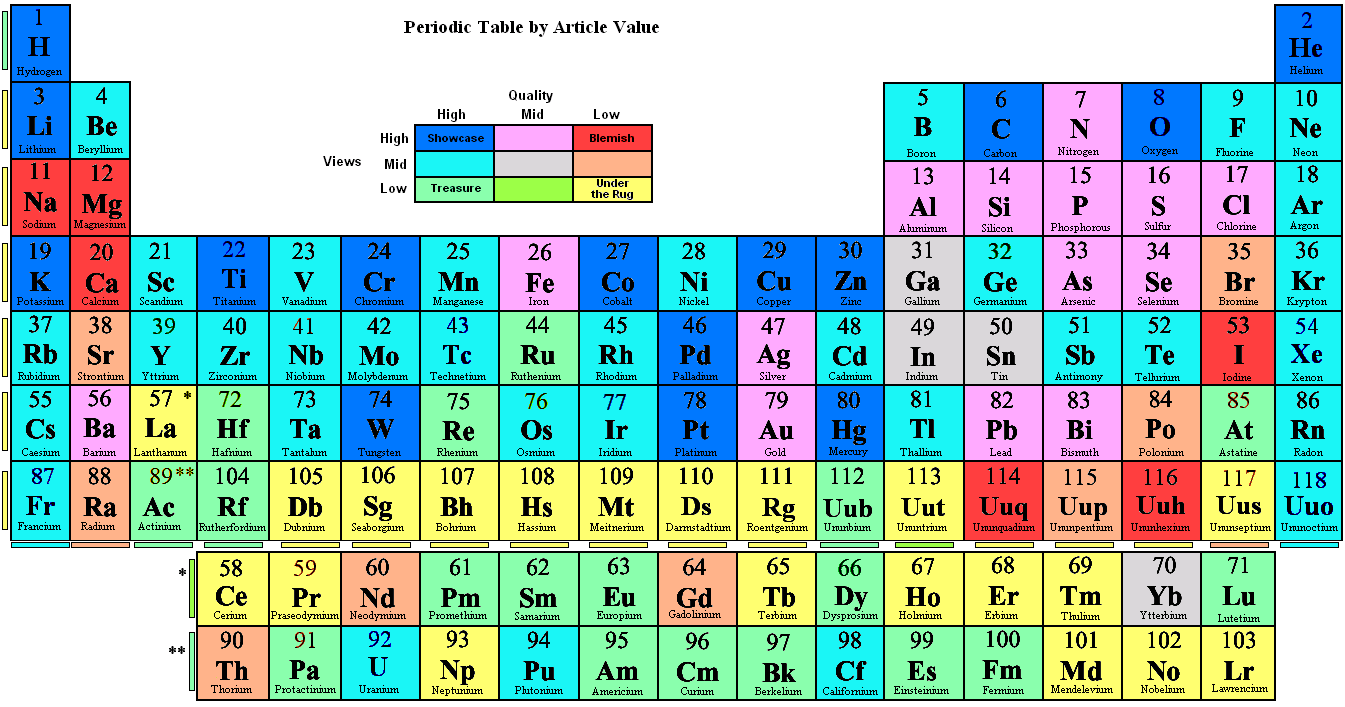
What is the name of the element? (Periodic table will be needed)

a)

sodium

b)

magnesium

c)

vanadium

40.
The atomic number tells you what?  READ THE ANSWERS CAREFULLY
a)
only the number of electrons
b)
 only the number of protons
c)
only the number of neutrons
d)
the number of both electrons and protons in an atom.
41.
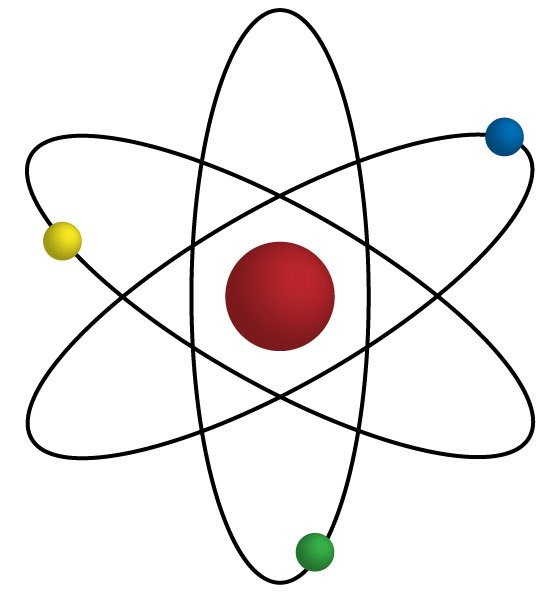
Which is an electron?
a)
A
b)
B
c)
C
42.
Which is a proton?
a)
A
b)
B
c)
C
43.
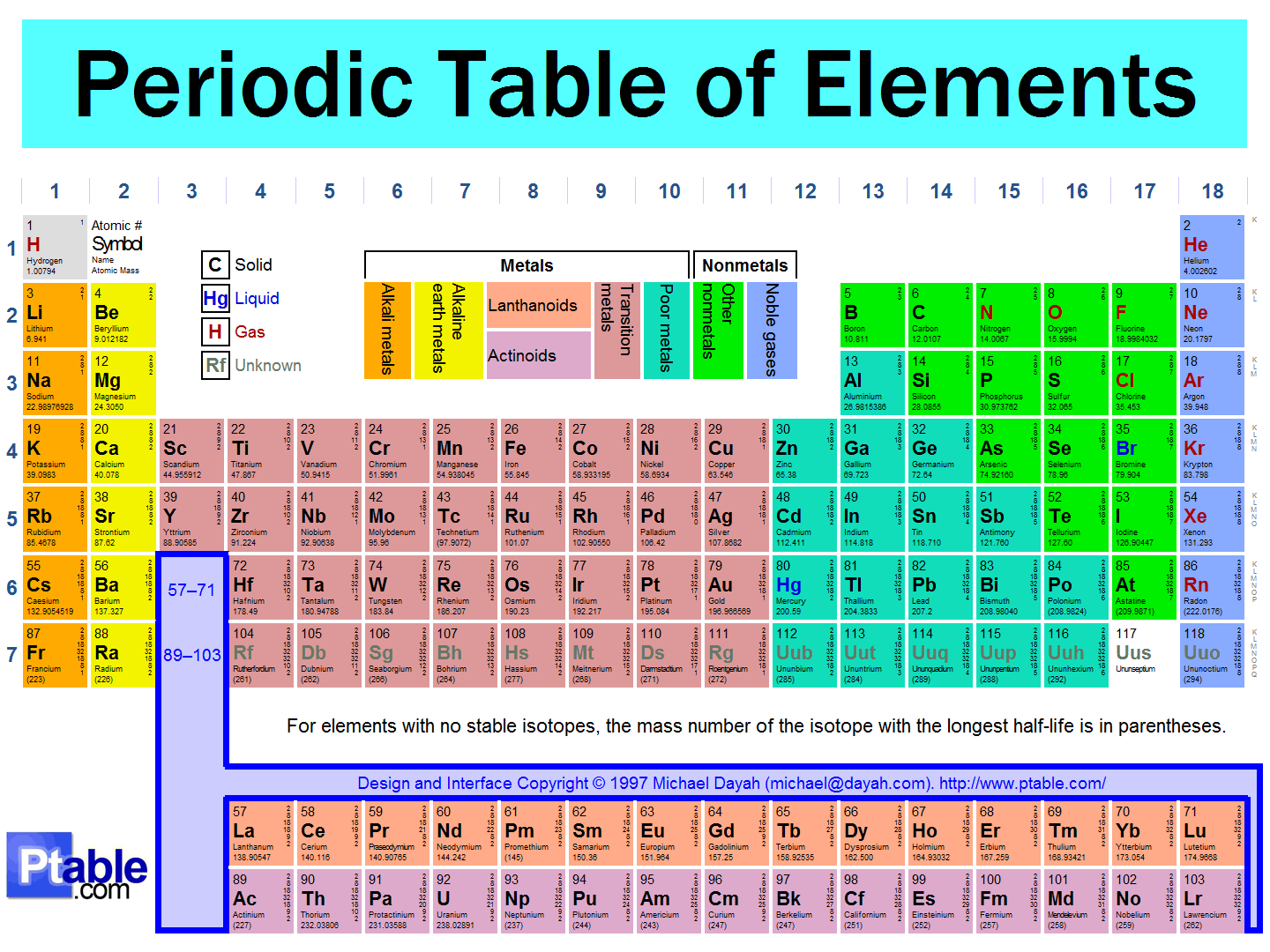
Which item on this element square is the chemical symbol?
a)
Copper
b)
29
c)
Cu
d)
63.546
44.
Which item on this element square represents the atomic number?
a)
13
b)
Al
c)
Aluminum
d)
26.981538
45.
What is the number of protons that the element in this image contain?
a)
14
b)
7
c)
15
d)
18
46.
What is the atomic mass of "F"
a)
9
b)
18
c)
17
d)
19
47.
An atom of the element with atomic number 6 always has _____.
a)
six protons in its nucleus
b)
an atomic mass of six
c)
more than six neutrons
d)
six electron clouds
48.
The pH scale is a range from:
a)
1-7
b)
0-14
c)
1-14
d)
1-20
49.
A(n) ______ is a substance with a pH less than 7
a)
Acid
b)
Alkaline
c)
Base
d)
Buffer
50.
A(n) _______ is a substance with a pH greater than 7.
a)
Base
b)
Acid
c)
Buffer
d)
Water
51.
What is the only substance with a neutral pH of 7?
a)
Milk
b)
Orange Juice
c)
Water
d)
Blood
52.
Which solution releases H+ in solution?
a)
Base
b)
Acid
c)
Buffer
d)
Water
53.
This substance releases OH- into solution
a)
Acid
b)
Base
c)
Neutral
54.
A solution with a pH of 3.6 would be...
a)
Acid
b)
Base
c)
Neutral
d)
Acid and Base
55.
A solution with a pH of 8.6 would be...
a)
Acid
b)
Base
c)
Neutral
d)
Acid and Base
56.
Tastes Sour
a)
Acids
b)
Bases
c)
Salts
d)
All
57.
Tastes bitter.
a)
Acids
b)
Bases
c)
Salts
d)
All
58.
Bleach is a strong base, what is the pH level of bleach?
a)
13
b)
14
c)
1
d)
2
59.
Feels slippery.
a)
Acids
b)
Bases
c)
All