wayground logo

Free Printable Worksheets

Font size

S
M
L
XL
Worksheets

Crime Busters (Science Olympiad)

Total questions: 69

Worksheet time: 2hrs 53mins

Name
Class
Date
1.
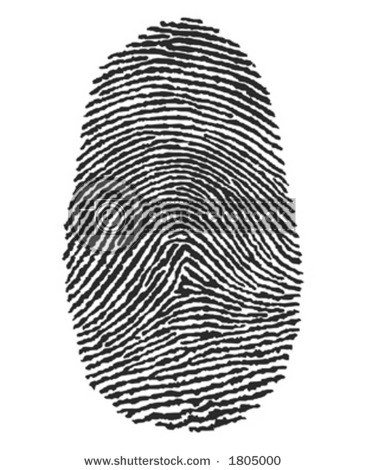
What type of fingerprint is shown in the diagram below?
a)
Plain arch
b)
Plain whorl
c)
Central Pocket whorl
d)
Double Loop whorl
2.
The area indicated by "A" in the diagram is known as a 
a)
Core
b)
Delta
c)
Whorl
d)
Arch
3.
The image was taken from the right hand.  What type of loop is it?
a)
Radial
b)
Ulnar
4.
What pattern is this?
a)
Loop
b)
Arch
c)
Whorl
5.
Baking soda and vinegar combine to make carbon dioxide
a)
Chemical Change
b)
Physical Change
6.
The physical separation of mixtures into individual components is..
a)
chromatography
b)
opacity 
c)
latent
d)
trace evidence 
7.
Two or more substances that are mixed together but not chemically combined is a ___
a)
compound
b)
mixture
c)
keratin
d)
chromatography
8.

Ink can be separated by a method of -----------------------------------------------

a)

distillation

b)

filtration

c)

chromatography

d)

sedimentation

9.
chromatography separates the mixture of dyes on the basis of their ----------------------------
a)
density
b)
solubility
c)
gravity
d)
boiling point
10.

What happens when you add iodine to corn starch?

a)

nothing

b)

bubbles creating carbon dioxide

c)

dissolves

d)

turns black and solidifies

11.
Which organelle is DNA usually found in?
a)
cell membrane
b)
vacuole
c)
chloroplast
d)
nucleus
12.
What does DNA stand for?
a)
Deoxyribonucleic acid
b)
Denitrogenous acid
c)
Deribonucleic acid
d)
Diribonucleic acid
13.

How many chromosomes do human cells have?

a)

46

b)

23

c)

2

d)

44

14.
What pattern is this?
a)
Tented Arch
b)
Arch
c)
Loop
d)
Whorl
15.

Which one of the following has cubic crystals

a)

sugar

b)

salt

c)

yeast

d)

baking Soda

16.

Which powder would NOT be used for colds?

a)

Calcium carbonate

b)

Vitamin C

c)

Gypsum

d)

Alka-Seltzer

17.

What kids of powder could someone who likes to bake have on them?

a)

salt

b)

gypsum

c)

Baking Soda

d)

alka-seltzer

18.

Which powders will turn blue when Iodine is added?

a)

Cornstarch

b)

Gelatin

c)

Vitamin C

d)

Flour

19.

Which Powder fizzes in Water?

a)

Baking Soda

b)

Alka-Seltzer

c)

Gelatin

d)

Sugar

20.

Which powder may be found in a heat pack?

a)

Cornstarch

b)

Sodium Acetate

c)

Calcium Carbonate

d)

Gelatin

21.

Which of the following are crystals?

a)

Calcium Carbonate

b)

Salt

c)

Flour

d)

Vitamin C

22.

Which of the following are powders?

a)

Baking Soda

b)

Sugar

c)

Cornstarch

d)

Sodium Acetate

23.

Which "powder" DOES NOT dissolve in water?

a)

Gelatin

b)

Vitamin C

c)

Sand

d)

Flour

24.

What is another name for Baking Soda?

a)

Sucrose

b)

Sodium Bicarbonate

c)

Sodium Acetate

d)

NaCl

25.

Which "powder" swells when placed in water?

a)

Sand

b)

Flour

c)

Vitamin C

d)

Gelatin

26.

What is another name for Vitamin C?

a)

Table Salt

b)

Ascorbic acid

c)

Limestone

d)

aragonite

27.

Which powder is used to produce plaster of Paris (and used with orthodontics)?

a)

Yeast

b)

Gypsum

c)

Baking Soda

d)

Sand

28.

Which powder is used for: rubber production-food additive, utilized as an anti-caking and glazing agent

a)

Salt

b)

Calcium Carbonate

c)

Sodium Acetate

d)

Gypsum

29.
A footprint is left in dust at a crime scene and was only found due to electrostatic lifting.  What type of impression is this?
a)
Patent
b)
Latent
c)
Plastic
d)
Lasting
30.
The deepest layer of hair (compared to the lead of a pencil) is the ___
a)
medulla
b)
cortex
c)
cuticle
d)
keratin 
31.
The middle layer of a hair (compared to the wood of a pencil) is the __
a)
medulla
b)
cortex
c)
cuticle
d)
keratin
32.
The outside layer of a hair (compared to the ink on a pencil) is the ___
a)
medulla
b)
cortex
c)
cuticle
d)
keratin
33.

When using a microscope which of the following is true

a)

always begin viewing at the lowest power

b)

always adjust with the coarse adjustment knob first

c)

always have both eyes open

d)

all of the above

34.

A homogeneous mixture is the same thing as...

a)

a solution

b)

a heterogeneous mixture

c)

a compound

d)

an element

35.

The prefix hetero means...

a)

same

b)

different

c)

together

d)

awesome

36.

A type of mixture that forms when one substance dissolves in another is known as a

a)

heterogeneous mixture

b)

solution

c)

solute

d)

solvent

37.
What does it mean to dilute a solution?
a)
lower the concentration of solute per solvent
b)
increase the concentration of solute per solvent
38.
What is a solvent
a)
the liquid in which a solute is dissolved to form a solution.
b)
Another word for solution
c)
A thing that make drinks turn colors
d)
Its a metal molecole
39.

Which substance is least soluble at 0 ºC?

a)

KI

b)

KNO3

c)

KClO3

d)

Ce2(SO4)3

40.

A homogeneous mixture is the same thing as...

a)

a solution

b)

a heterogeneous mixture

c)

a compound

d)

an element

41.

The prefix hetero means...

a)

same

b)

different

c)

together

d)

awesome

42.

A type of mixture that forms when one substance dissolves in another is known as a

a)

heterogeneous mixture

b)

solution

c)

solute

d)

solvent

43.
What does it mean to dilute a solution?
a)
lower the concentration of solute per solvent
b)
increase the concentration of solute per solvent
44.
What is a solvent
a)
the liquid in which a solute is dissolved to form a solution.
b)
Another word for solution
c)
A thing that make drinks turn colors
d)
Its a metal molecole
45.

How many grams are soluble in 100 g of water at 100 ºC?

a)

300 grams

b)

250 grams

c)

100 grams

d)

50 grams

46.
You can make a solution more concentrated by adding __________.
a)
solute
b)
solvent
c)
water
47.
Solution where more solute can still be dissolved at the given temperature. 
a)
Saturated
b)
Unsaturated
c)
Supersaturated
d)
Homogeneous solution
48.

Water is considered polar due to:

a)

its neutral poles

b)

its charged poles

c)

the odd number of atoms involved

49.
If I dissolve sugar in water, what is the solute?
a)
Water
b)
Hydrogen
c)
Sugar
d)
Carbon
50.
What will allow more solute to be dissolved in a solvent.
a)
adding more solute
b)
stiring
c)
cooling solution
d)
heat
51.
Graph that shows the amount of solute that can be dissolved in 100 g of water at a certain temperature.
a)
Solubility curve
b)
Saturation curve
c)
Concentration curve
d)
Molarity curve
52.
What is unsaturated?
a)
A solution with more solute than solvent
b)
A solution with less than the maximum amount of solutes 
c)
A solution with the  perfect balance of solutes and solvents
d)
A solution with solids at the bottom
53.

What is chromatography?

a)

A way to see pretty colors

b)

A laboratory technique used to separate a mixture.

c)

A form of distillation

54.

Two or more substances that are mixed together but not chemically combined create a...

a)

solvent

b)

compound

c)

mixture

55.

Chromatography separates a mixture of dyes on the basis of their

a)

density or weight

b)

gravity

c)

boiling point

56.

Which ink is a mixture of different inks?

a)

red

b)

black

c)

blue

d)

yellow

57.

What molecules move up the paper to carry the different colors of ink?

a)

color

b)

fat

c)

water

58.

Which color dye had the greatest density or weight?

a)

red

b)

green

c)

blue

59.

which color dye had the least density or weight?

a)

red

b)

green

c)

blue

60.

TRUE OR FALSE: The telogen phase is the most common hair sample found in crime scences

a)

YES

b)

NO

61.

What type of evidence is hair without a follicle?

a)

class evidence

b)

individual evidence

c)

direct evidence

62.

Check all descriptions appropriate for: Polyester

a)

Synthetic

b)

Natural

c)

Plant

d)

Animal

e)

Mineral

63.

A flexible, flat material made by interlacing yarns (or “threads”)

a)

monomer

b)

yarn

c)

fiber

d)

textile

64.

Which of the answers describe natural fibers?

a)

rayon, nylon, wool

b)

cotton, polyester, cashmere

c)

linen, cotton, silk

d)

silk, spandex, polyester

65.

Fibers are classified as either:

a)

natural fibers or synthetic fibers.

b)

polymers or synthetic fibers.

c)

acrylic fibers or plant fibers.

d)

olefins or synthetic fibers.

66.
Fiberglass is considered this type of fiber.
a)
Synthetic
b)
Natural
67.
The smallest indivisible unit of a textile is a...
a)
Fiber
b)
Fabric
c)
Yarn
d)
Thread
68.
In a burn test, these fibers will often shrink back away from the flame.
a)
Synthetic
b)
Natural
69.
What is the average length of human hair growth per month?
a)
1 in.
b)
1 mL
c)
1 cm
d)
1 dm