

wayground logo

Free Printable Worksheets

NEW

Font size

S
M
L
XL
Worksheets

Q3 Benchmark Rev. Earth Sci / Plants

Total questions: 67

Worksheet time: 52mins
Name
Class
Date
1.

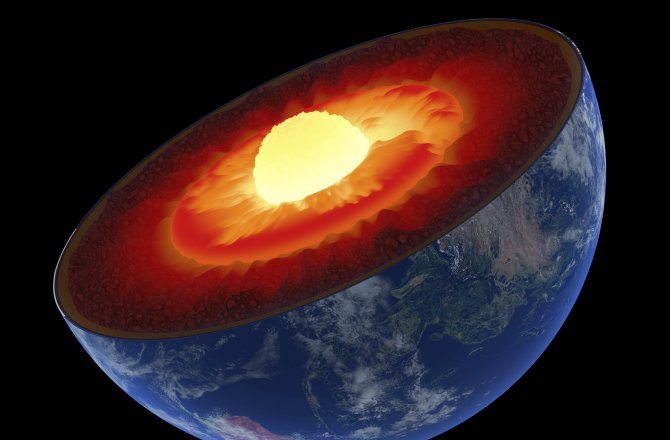
Both cores are made-up of what two elements?

a)
iron and nickel
b)
iron and oxygen
c)
nickel and silicon
d)
oxygen and silicon
2.

The mantle "flows" because of large differences in temperature from the bottom to the top, which create convection currents.

a)

True

b)

False

3.

where quake begins on surface

a)

epicenter

b)

joint

c)

fault

d)

focus

4.
The epicenter of an earthquake is the point on Earth's surface directly below the focus.
a)
False
b)
True
5.

Which feature is created by all 3 types of plate boundaries.

a)

Earthquakes

b)

Mountains

c)

Subduction Zones

d)

Volcanoes

6.

What type of boundary is the San Andreas Fault in California?

a)

Convergent

b)

Transform

c)

Optimus Prime

d)

Divergent

7.

Tsunamis are caused by

a)

underwater disturbances such as earthquakes, landslides, and volcanoes.

b)

wind and the gravitational pull of the moon.

8.
Which type of soil conservation strategy is being  used in this picture?
a)
windbreakers
b)
contour farming
c)
planting of vegetation
d)
terracing
9.
Farmer Joe plowed curved rows that followed the shape of the land in order to create water breaks, what method did he use?
a)
contour plowing
b)
crop rotation
c)
subsoil preservation
d)
terrace farming
10.
What type of erosion is slowed down by contour plowing and terracing?
a)
wind
b)
water
c)
air
11.
What is a solution to stop wind erosion on a farmer's field?
a)

Rotate crops from season to season

b)

Conservation tillage

c)

plant trees and shrubs as windbreaks

12.

A sudden shaking of Earth's surface?

a)

Tsunami

b)

Volcano

c)

Earthquake

d)

A mesosaurus walking by

13.

The large pieces of lithosphere that make up Earth's surface?

a)

Jigsaw puzzle

b)

Pattern

c)

Plate boundary

d)

Tectonic Plates

14.

Tectonic Plate movement is caused by ______________.

a)

the rotation of the Earth

b)

ocean tides

c)

convection currents in the mantle

d)

the moon's gravity

15.
In which type of boundary do the plates move away from each other?
a)
convergent
b)
normal
c)
divergent
d)
transform
16.

The Great Rift Valley in Africa and the Mid-Ocean Ridge were all created by this boundary

a)

Divergent

b)

Convergent

c)

Reform

d)

Transform

17.

Which correctly identifies the geologic process that formed the Himalayan mountains (The World's Tallest Mountains, including Mt. Everest)?

a)

Two continental plates converging

b)

An earthquake in a subduction zone

c)

A tectonic plate moving over a hot plate

d)

Movement at a transform fault boundary

18.

Volcanoes and Earthquakes typically occur _______________.

a)

along plate boundaries

b)

only under water

c)

only in hawaii

d)

where it is usually hot

19.

What evidence did Wegener use in his Continental Drift theory?

a)

Continents and fossils fitting together/matching-up like puzzle pieces

b)

Plant and animal fossils

c)

mountain ranges and coal deposits line up across continents

d)

all of the above

20.

What type of Boundary is this? What event will occur at this boundary?

a)

Transform / Earthquakes

b)

Subduction / Volcano Eruption

c)

Tornado / Rain

d)

Mountain Building / Volcanism

21.
What type of volcano is shown on the model above? 
a)
Shield Volcano
b)
Composite Volcano
c)
Cinder Cone Volcano
22.

What type of volcano is this?

a)

Shield

b)

Cinder cone

c)

Composite

23.
What type of volcano is this? It has been created with layers of cooled lava. 
a)
Shield
b)
Cinder cone
c)
Composite
24.

Which type of volcano has a steep cone-shaped hill or mountain?

a)

Cinder cone volcano

b)

Shield volcano

c)

Composite volcano

d)

Earthquake

25.

Which part of topsoil contains decayed plant and animal matter?

a)

silt

b)

sand

c)

humus

d)

clay

26.
What is humus?
a)
soil
b)
organic matter
c)
loam
d)
minerals
27.
Which of the following orders sediment particle size from smallest to largest?
a)
silt, sand, clay
b)
sand, silt, clay
c)
clay, sand, silt
d)
clay, silt, sand
28.
The dark organic material formed in soil from the decayed remains of plants and animals
a)
humus
b)
decomposer
c)
loam
d)
erosion
29.
A loose mixture of rock particles, organic material (humus), water, and air- forms from rock, support the growth of vegetation
a)
loam
b)
erosion
c)
soil
d)
A horizon
30.

Which layer has the highest density (most dense)?

a)

Crust

b)

Lower and Upper Mantle

c)

Inner Core

d)

All the layers have the same density

e)

Outer core

31.
What is the core made of?
a)
steel
b)
iron 
c)
aluminum
d)
iron and nickel
32.
Why do the liquids form different layers?
a)
They have different densities.  
b)
They have different masses.  
c)
They have different volumes.  
d)
They are different temperatures.  
33.
What is sediment?
a)
the process of rocks being broken down and carried away
b)
bits of rock, sand, and silt caused by the weathering of rocks
c)
the top layer of the soil
d)
decaying plant or animal material 
34.

Rain washing away soil from a hillside

a)

Weathering

b)

Erosion

c)

Deposition

35.
Wind blowing sand from one location to another
a)
Weathering
b)
Erosion
c)
Deposition
36.

What is tropism?

a)

A plant's response to a stimulus

b)

A plant reproducing

c)

An animal's response to a stimulus

d)

A prokaryote's response to a stimulus

37.

What is gravitropism/geotropism?

a)

The movement of a plant in response to gravity

b)

The movement of a plant in response to earthquakes

c)

The movement of bacteria in response to changes in temperature

d)

The movement of plants towards water

38.

What is hydrotropism?

a)

The movement of plants towards water

b)

The movement of plants away from water

c)

The rate of growth of a plant in response to temperature changes in water

d)

A plant's response to gravity and touch

39.

What makes a tropism positive or negative?

a)

Positive = movement towards stimulus, Negative = movement away from stimulus

b)

Negative = movement towards stimulus, Positive = movement away from stimulus

c)

Who cares? It doesn't matter whether it is positive or negative

d)

Positive = when a plant is happy, Negative = when a plant is sad

40.

What is thigmotropism?

a)

The movement of plants in response to touch

b)

The movement of plants toward the sun

c)

A prokaryote's movement inside the bloodstream

d)

The movement of plants in response to gravity

41.

What is phototropism?

a)

The movement of plants towards light

b)

The movement of plants away from light

c)

The movement of plants in response to infrared light

d)

The movement of plants towards water

42.

True or False: A stimulus can be anything that causes a reaction

a)

True

b)

False

43.

What are the 3 reactants of photosynthesis? The reactants are the things needed for photosynthesis to occur.

a)

oxygen, glucose, sunlight

b)

sunlight, oxygen, water

c)

water, oxygen, carbon dioxide

d)

carbon dioxide, sunlight, water

44.

What is the tiny openings that let in the carbon dioxide needed for photosynthesis?

a)

stomata

b)

xylem

c)

phloem

d)

chloroplast

45.

How does water travel from the roots to the plan leaf? Name the structure that carries water.

a)

stomata

b)

phloem

c)

chloroplast

d)

xylem

46.

What are the 2 products of photosynthesis? The products are the things made in the process of photosynthesis.

a)

water, sunlight

b)

glucose, carbon dioxide

c)

oxygen, glucose

d)

sunlight, oxygen

47.

Which product is "waste" and mostly released by the producer (plant)?

a)

oxygen

b)

carbon dioxide

c)

sugar

d)

glucose

48.

Which gas is needed by plants and taken from the atmosphere during photosynthesis?

a)
hydrogen
b)
oxygen
c)
nitrogen
d)
carbon dioxide
49.
The raw ingredients (reactants) of photosynthesis are sunlight along with ?
a)
CO2 and H20
b)
CO2 AND C6H12O6
c)
oxygen and water
d)
oxygen and CO2
50.
Which of the following is the correct equation for PHOTOSYNTHESIS?
a)
CO+ light + H2O --> O+ glucose
b)
CO+ glucose + H2O --> O+ light
c)
O2 + light + H2O --> CO+ glucose
d)
CO+ O2 + H2O --> Light+ glucose
51.
The male part of the flower is known as the _____.
a)
stamen
b)
pistil
c)
ovary
d)
petal
52.
The female part of the flower is known as the ____.
a)
stamen
b)
anther
c)
filament
d)
pistil
53.
What is #6 pointing to?
a)
stigma
b)
style
c)
ovary
d)
petal
54.
What is #7 pointing to?
a)
anther
b)
ovary
c)
ovule
d)
petal
55.
Where is pollen made?
a)
ovary
b)
petal
c)
pistil
d)
anther
56.
What is a pollinator?
a)
Animal that moves pollen from plant to plant
b)
Animal that eats pollen
c)
A plant that makes pollen
d)
A plant that does not make pollen
57.
After fertilization the ovule will....
a)
Be carried away by a pollinator
b)
Be blown away by the wind
c)
Will grow into a new plant
d)
Develop into a fruit that contains seeds
58.
Please select who performs cellular respiration: 
a)
Animals 
b)
Both animals and plants 
c)
plants 
59.
Cellular respiration is...
a)
the process by which cells break down glucose into energy. 
b)
the process by which cells break light down into energy. 
c)
the process by which cells communicate with other cells. 
60.
What is transpiration?
a)
Excess water being released from the leave
b)
Excess sugar being released from the leave
c)
The way a plant makes its food
d)
When the plant uses sugar for energy
61.
What is respiration?
a)
The way a plant grows
b)
The way a plant releases excess waste
c)
The way a plant makes its food
d)
When way a plant uses sugar for energy
62.
What is photosynthesis?
a)
The process of a plant using food for energy
b)
The process of a plant making its own food
c)
The process of a plant getting rid of waste materials
d)
The process of a plant growing
63.

something that carries the pollen ( wind, water, humans, bees, bats, birds, other insects, etc.)

a)

pollinators

b)

pollination

c)

germination

d)

fertilization

64.
Why might some plants have thorns?
a)
to stay safe from animals that want to eat the plant
b)
to attract insects that spread pollen to other plants
c)
to take in nutrients from the air
d)
to provide shade for the plant
65.

what type of tropism is occurring here?

a)

phototropism

b)

thigmotropism

c)

geotropism

d)

tropictropism

66.

A change in temperature and length of daylight will cause a plant to do what?

a)

grow

b)

respiration

c)

photosynthesis

d)
dormancy
67.
The gas that animals breath out that plants need to make food
a)
pistil
b)
dormancy
c)
carbon dioxide
d)
pollination
