
 Worksheets
Physics Final Lessons 1-10
Total questions: 63
Worksheet time: 51mins
Physics is the study of . . .
life
creating new substances
motion
plants
Moving energy is what kid of energy?
kinetic
potential
gravitational
thermal

Which shows greater kinetic energy based on the evidence in the table?
dropping
throwing
neither
can't tell
The more speed an object has the _______ kinetic energy the object has.
same
more
less
none
Jack uses a bowling ball that weighs 15 pounds and Jill uses a bowling ball that weighs 16 pounds. Who will use more kinetic energy when bowling?
Neither
Jack
Jill
They will be the same.
Buddy wanted to see if the size of something would impact the size of a crater created in the sand on a beach. Her decided to use one large rock and one small rock but drop them from the same height. Which of the following is a controlled variable in her experiment?
the size of the crater
the height
the large rock
the small rock
Buddy wanted to try another experiment and see if the size of something would impact the size of a crater created in the sand on a beach. He decided to use two large rock, then drop them 3 meters high and 5 meters high. Which of the following is the independent variable in his experiment?
the size of the crater
the height
the size of the rock
the sand on the beach
If the mass of an object decreases, then the kinetic energy will . .
increase
stay the same
not change
decrease
If the elevation of an object increases then the kinetic energy will ________.
increase
decrease
stay the same
do nothing
As gravitational energy decreases, kinetic energy ________.
stays the same
decreases
does nothing
increases
Potential energy is energy that is . . . .
moving
increased
decreased
stored
This makes things happen, why things stop and why things keep going.
movement
motion
energy
food
The _____________ in an investigation is the cause (what you change). Its value is independent (stands alone) of other variables in your study.
The Dependent Variable
Independent Variable
Control
Hypothesis
The ___________ in an investigation is the effect (what you measure). Its value depends on changes in the independent variable.
Dependent Variable
Independent Variable
Control
Hypothesis
The _________ in the investigation is what is kept the same throughout the experiment, and it is not of primary concern in the experimental outcome.
Dependent Variable
Independent Variable
Control
Hypothesis
True or False: Energy can be converted (transformed) from one type to another.
True
False
If an object is falling from a tower the energy converts . . .
from the top to the bottom
from kinetic to gravitational
from gravitational to kinetic
from the bottom to the top
Energy in motion is ____________ energy.
Potential
Energy
Kinetic
Friction
__________ energy is stored energy.
Potential
Kinetic
Force
Gravity
Gravitational potential energy depends on the ________ and ________ of the object.
Position (height) and mass
Friction and movement
Mass and Movement
Height and Friction
When you stretch a rubber band, you are storing __________ energy.
kinetic
potential

What kind of energy is in a moving skateboard?
Potential
Kinetic

What energy does a rock at the edge of a cliff have?
Potential
Kinetic
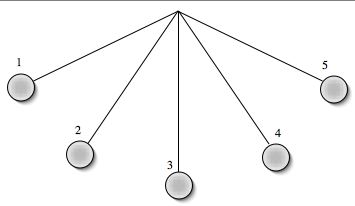
When a pendulum swings, at which point is kinetic energy greatest?
1
2
3
4


At which position does the child on the swing have the most gravitational potential energy?
W
X
Y
Z

Elastic Potential Energy is _____________________________________.
the ability of a material to return to its original shape after it has been stretched or deformed.
potential energy that is stored due to the deformation of an elastic object, such as a stretched spring.
energy stored in the bonds of chemical compounds. Chemical energy is released during chemical reactions.
the energy contained within a system that is responsible for its temperature.
the flow of thermal energy.
As an object falls, what happens to its gravitational energy?
Increases
Decreases
Stays the same
Need more information.
As an object falls, what happens to its kinetic energy?
Increases
Decreases
Stays the same.
Need more information
Select all the following that represents energy being converted.
Playing with a yo-yo
Kicking a soccer ball
Bouncing a basketball
A sitting book
When a bouncing ball hits the ground and squishes, what is the main type of energy that it has?
Kinetic
Gravitational
Elastic
Chemical
Which type of energy conversion is involved when the ball leaves the ground?
Kinetic to gravitational
Gravitational to kinetic
Elastic to kinetic
Kinetic to elastic
The total energy of all the particles in a sample of matter is called —————
Total Energy
Thermal Energy
Kinetic Energy
Particle Energy
the average kinetic energy of the particles in iced tea is —————than the average kinetic energy of the particles in hot tea.
louder
Prettier
Higher
Lower
Thermal Energy depends upon the energy of the particles as well as the number of particles.
Which would have more thermal energy, a small cube of Ice at zero Celsius or a large cube of ice at zero Celsius?
The large ice cube because it has more particles than the small ice cube
The small cube of ice because it will melt faster than the large ice cube
Neither, they are cold so they do not have thermal energy
both have the same thermal energy because they are both at zero Celsius.
Molecules with more kinetic energy move ———- than molecules with less kinetic energy
Lower
Faster
Higher
Slower
All sounds are made by ............. objects.
warm
cold
vibrating

Sound is a kind of energy that travels in ..............
waves
current
group

Sound waves cannot travel through ...................
solid
liquid
space
As sound waves move away from their source the sound become ....................
louder
softer
faster
To ..................... is to move back and forth quickly.
pitch
crest
vibrate
Sound waves carry .............. from one place to another
crests
energy
fluid
Which of the following is NOT an example of chemical energy?
A glow stick
A battery
A rock about to fall off a cliff
A burning match
A battery transforms:
Chemical energy into electrical energy
Chemical energy into kinetic energy
Electrical energy into chemical energy
Electrical energy into kinetic energy
Which of the following is an example of chemical energy being changed into kinetic energy?
Digested food giving you energy to jump.
A battery giving a flashlight energy to light up.
A hand hitting a drum making music.
Two liquids mixed together and get hot.
Why does a battery stop working?
All of its energy is destroyed.
It has transformed its energy into other types of energy.
It is too old.
Which of these is not a source of chemical energy?
Spaghetti
The Sun
Battery
Petrol

Why is a battery important in an electrical circuit?
As a source of energy.
As a path for electricity to flow through.
As a connector to connect all parts of a circuit.

When a circuit is open, the lamp is _________?
on
off
What supplies the energy or power in an electric circuit?
light bulb
wire
battery
When a circuit is open, the lamp is _________?
on
off
Turning on a space heater is an example of electrical energy being transformed into ______ energy.
light
sound
heat
chemical
When a switch or circuit is _________, the electric current can flow through the circuit.
open
closed
A(n) ________ is formed when an electric current passes through an unbroken path of conductors.
battery
insulator
surge protector
circuit

kinetic energy


