wayground logo

Free Printable Worksheets

Font size

S
M
L
XL
Worksheets

Chemistry Quiz

Total questions: 50

Worksheet time: 50mins

Name
Class
Date
1.
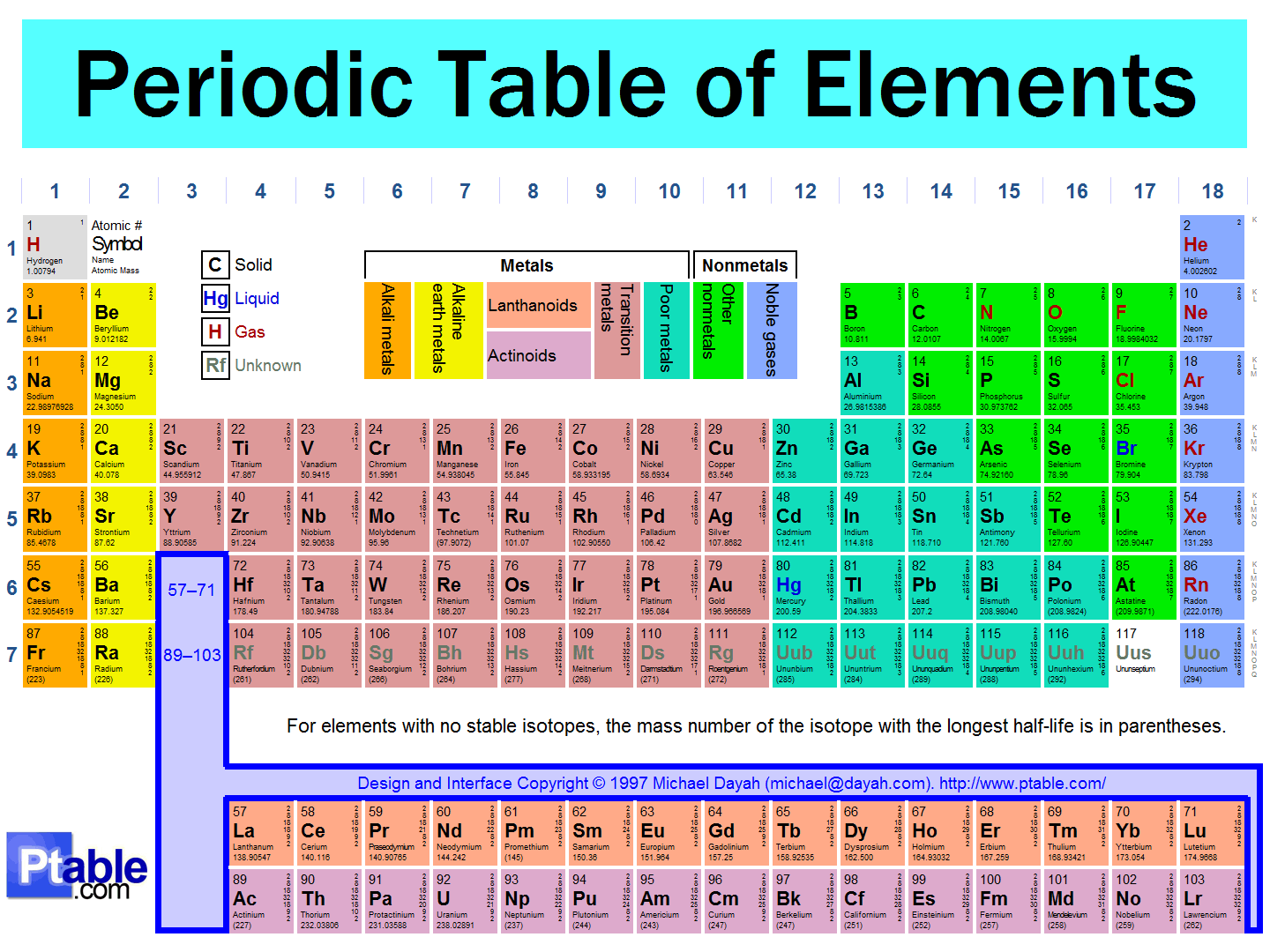
What is the atomic mass of "F"
a)
9
b)
18
c)
10
d)
19
2.
The central region of an atom where its neutrons and protons are found is the 
a)
nucleus. 
b)
electron cloud.
c)
core. 
d)
center. 
3.

Which option below is the smallest?

a)

compound

b)

molecule

c)

cell

d)

atom

4.
The atomic number can be either the number of ______________ or the number of ___________.
a)
neutrons, protons
b)
protons, electrons
c)
neutrons, electrons
d)
nucleus, protons
5.
An atom with atomic number 6 would have how many protons 
a)
6
b)
12
c)
3
d)
cannot be determined 
6.
Groups on the periodic table are __________.
a)
Horizontal Rows
b)
Vertical Columns
7.
A negatively charged particle that moves around the nucleus is a(n)...
a)
Proton
b)
Neutron
c)
Electron
d)
Quark
8.
The atomic mass or mass number equals the number of...
a)
protons plus the number of electrons
b)
protons plus the number of neutrons
c)
protons
d)
neutrons
9.

True or False? Neutrons have a negative charge

a)

True

b)

False

10.
How many neutrons does Nitrogen have?
a)
14
b)
7
c)
15
d)
18
11.
Which element is a metalloid?
a)
Titanium
b)
Selenium
c)
Potassium
d)
Polonium
12.
Which of the following is a positively charged subatomic particle found in the nucleus of an atom?
a)
Electron
b)
Proton
c)
Neutron
d)
Quark
13.
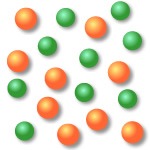
This picture represents: 
a)
Element
b)
Compound
c)
Mixture of Elements
d)
Mixture of Compounds
14.
If a substance is magnetic it is most likely a 
a)
metal 
b)
non-metal
15.
Which of these is a property of metals?
a)
It's malleable
b)
It can't conduct electricity
c)
They are used in food
d)
It's very brittle
16.

Identify the following substance

a)

an element

b)

a compound

c)

a mixture of elements

d)

a mixture of compounds

e)

a mixture of elements and compounds

17.
John was observing the physical properties of elements in order to classify them as either a metal, nonmetal, or metalloid. The first element was dull, brittle, and did not conduct heat. What would its classification be? 
a)
metal 
b)
nonmetal 
c)
metalloid
18.

This picture represents which of the following?

a)

molecule

b)

compound

c)

mixture

19.

Iron and Carbon are heated and stirred to make steel. This is an example of a--

a)

mixture

b)

element

c)

compound

d)

salt

20.

Sand added to water is an example of a --

a)

element

b)

compound

c)

mixture

d)

salt

21.
Are these molecules also compounds?
a)
YES
b)
NO
22.
A vertical column is called...
a)
group
b)
tower
c)
period
d)
crew
23.

What are the products of the chemical reaction pictured?

a)

CH4 and CO2

b)

CH4 and O2

c)

CO2 and H2O

d)

O2 and H2O

24.
Periods on the periodic table are __________.
a)
Horizontal Rows
b)
Vertical Columns
25.

Identify the substance in the picture

a)

an element

b)

a compound

c)

a mixture of elements

d)

a mixture of compounds

e)

a mixture of elements and compounds

26.
This picture represents which of the following?
a)
element
b)
compound
c)
mixture
27.

If the reactants' mass is 18g , what is the mass of the products?

a)

15 g

b)

36 g

c)

81 g

d)

18 g

28.
What is the left part of a chemical equation called?
H2 + O → H2O
a)
Reactants
b)
Products 
c)
Yields 
d)
Chemical Equation 
29.
Identify the reactant(s) and product(s) of the reaction.
a)
All three are reactants and none are products.
b)
Hydrogen and water are the reactants, and oxygen is the product.
c)
Water and oxygen are the reactants, and hydrogen is the product.
d)
Hydrogen and oxygen are the reactants, and water is the product.
30.
What is the atomic number for an element with three protons?
a)
2
b)
1
c)
3
d)
6
31.
The reactants are on the left side of the chemical equation.
a)
True
b)
False
32.
Which of these grouping of elements could have the characteristic of luster (shiny)?
a)
Metal
b)
Nonmetal
c)
metalloids
d)
Both metals and metalloids
33.

In chemical reactions, what does the principle of conservation of mass mean?

a)

The total mass of the reactants is equal to the total mass of the products.

b)

The total mass of the reactants is greater than the total mass of the products.

c)

The total mass of the reactants is less than the total mass of the products.

34.
Most of the elements on the periodic table are classified as _____.
a)
Metals
b)
Nonmetals
c)
Metalloids
d)
Periods
35.

Which pictures represent elements?

a)

B and D

b)

A and B

c)

B and C

d)

C and D

36.
The table shows the properties of four elements. Which element in the table is classified as a metal?
a)
Manganese
b)
Sulfur
c)
Silicon
d)
Neon
37.

Consider the chemical equation CH4 + 2 O2 → CO2 + 2 H2O. In this equation, CO2 is a

a)

product

b)

reactant

38.
Elements that are arranged in __________ have the most similar physical and chemical properties to each other.
a)
periods
b)
groups
39.
Each column in the periodic table is called a _________ .
a)
period
b)
group
c)
cluster
d)
unit
40.

What is this?

a)

element

b)

compound

c)

mixture

41.

How many reactants are in A + B ---> C ?

a)

1

b)

2

c)

3

d)

4

42.

Which compounds are the PRODUCTS of this reaction?

a)

CO2 + H2O

b)

C6H12O6 + O2

c)

C6H12O6 + CO2

d)

H2O + O2

43.
Are these molecules also compounds?
a)
YES
b)
NO
44.
How did Mendeleev arrange the elements?
a)
alphabetical 
b)
density
c)
melting point
d)
atomic mass
45.

If there are 4 H atoms on the reactant side, how many H atoms will be on the product side?

a)

2

b)

4

c)

6

d)

8

46.

In a chemical reaction, bonds are broken and new bonds are formed. Which has new bonds formed?

a)

Reactants

b)

Products

47.

Methane + oxygen turns into carbon dioxide + water. The methane and oxygen are called _______________.

a)

reactants

b)

products

48.
What element is will have the most similar physical and chemical properties to the element Sulfur (S)?
a)
Carbon (C)
b)
Phosphorous (P)
c)
Oxygen (O)
d)
Neon (Ne
49.
Two elements chemically bonded form
a)
element
b)
compound
c)
mixture
d)
solutions
50.
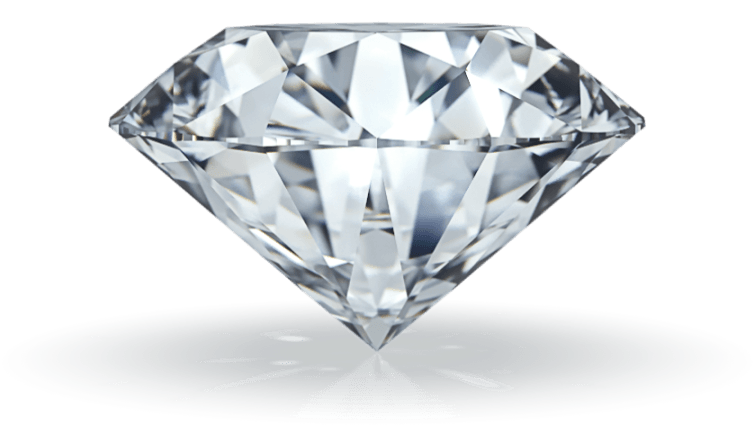
Diamonds are a pure form of what element?
a)
Carbon
b)
Oxygen
c)
Silicon
d)
Silver