NEW
Font size
 Worksheets
Earth and Space - revision
Total questions: 50
Worksheet time: 32mins
What does orbit mean?
To spin around
To move around something
To rotate around
To dance around
Why does the Sun appear larger and brighter on Earth than other stars?
It is the hottest star.
It is the bigger star in the universe.
It is the prettiest star.
It is the closest star to Earth.
How many planets does our solar system have?
8
6
18
12
What is the name of our home galaxy?
The Universe
Milky Way
Andromeda
Solar System
What is the name of the third planet from the sun?
Mars
Venus
Earth
Neptune
The eight planets in our solar system are different in many ways. Which is one thing all planets in our solar system have in common?
They all have oceans.
They all orbit the sun.
They are all gas planets.
They are all the same size.
What is a true statement about the four planets closest to the Sun?
They are all small and rocky.
They are made of gases.
They all have four moons.
They are cold and covered in ice.
What is a true statement about the four outer planets?
They are made of ice.
They are large and made of gases.
They are hot and had volcanoes.
They are all small.
When the part of Earth we live on is facing the sun, it is_____.
Day
Night
Which statement is NOT true?
Saturn has multiple moons.
Mars is the 4th planet from the Sun.
The inner planets have a shorter year than the outer planets.
Neptune has a shorter year than Mercury.
What movement causes us to see different constellations at different times?
The Earth rotates around the axis.
The moon rotates around the Earth.
The Earth rotates around its axis.
The Earth revolves around the Sun.
The sun give us heat and light
True
False
Gravity helped create planets and moons.
True
False
What are the inner planets?
Mercury, Venus, Jupiter, Saturn
Mercury, Venus, Earth, Mars
Jupiter, Saturn, Uranus, Earth
Uranus, Neptune, Saturn, Venus
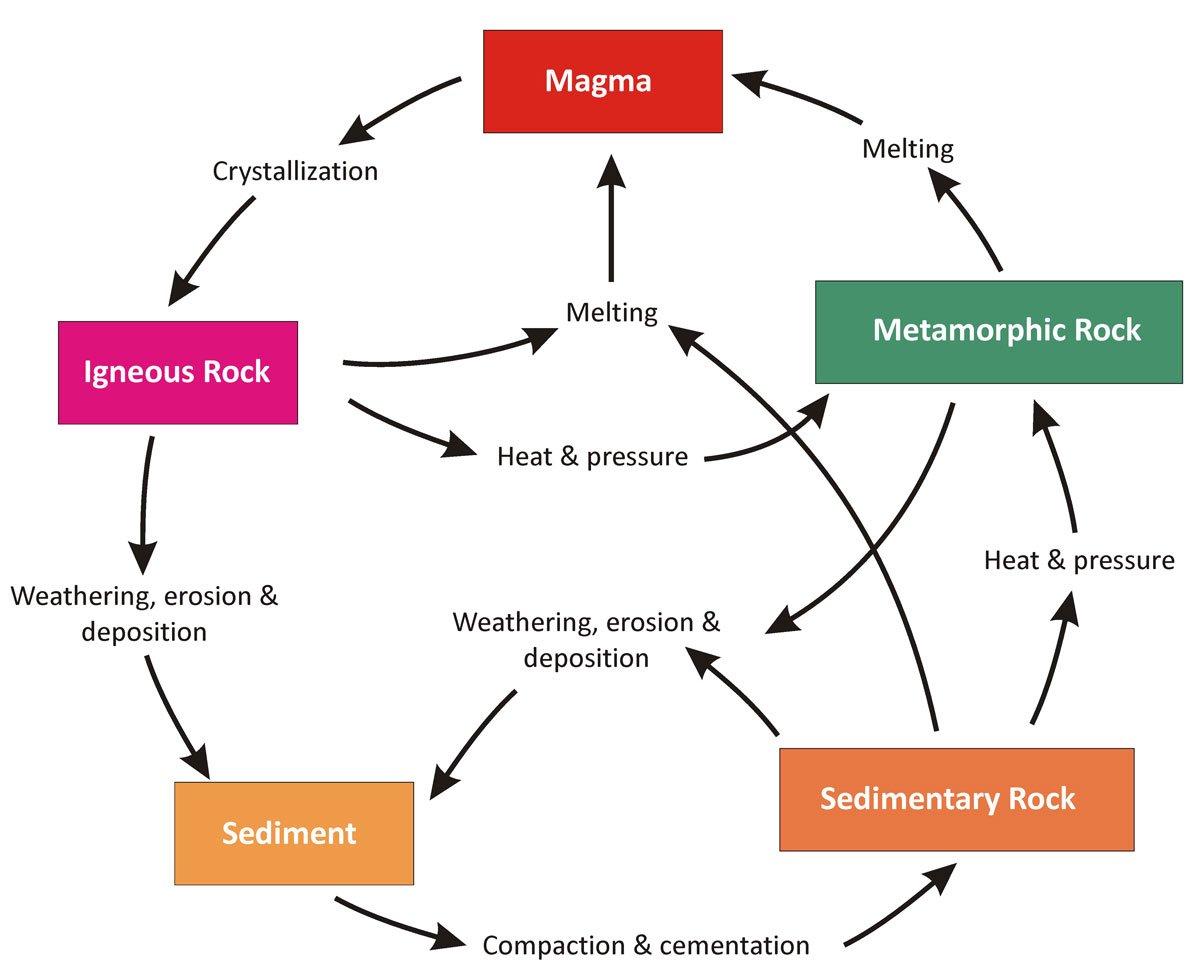

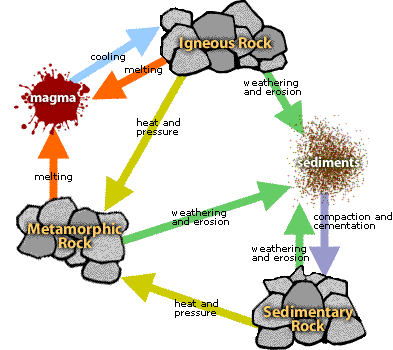


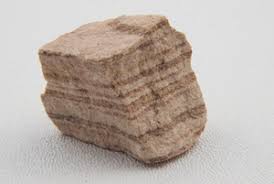

Any rock that forms from another rock as a result of changes in heat or pressure (or both) is a:
chemical rock
igneous rock
sedimentary rock
metamorphic rock
Which of the following lists the steps an igneous rock undergoes in order to become a sedimentary rock, in the correct order?
Deposition, erosion, melting, cooling
Erosion, weathering, eruption, cooling
Dissolving, deposition, cooling, fracture
Weathering, erosion, deposition, cementation

According to the diagram, what process is shown by letter A?
extrusion
erosion
crystallization
intrusion
According to the diagram, what process is shown by letter B?
compaction & cementation
weather & erosion
heat & pressure
melting
If a lot of heat is applied to a rock, it will turn into
magma
rocks
sediment
metamorphic rocks
Which is the correct order, starting with the smallest and ending with the largest?
Planet - star - galaxy
Planet - galaxy - star
Star - planet - galaxy
Galaxy - planet - star
What forces keeps the planets in orbit?
Friction
Gravity
Magnetic
repulsion
The further away from the sun:
The faster the planet moves
The hotter the planet
The longer the planets orbit takes
Why do we have seasons on Earth?
The Earth is closer to the Sun in summer than it is in winter
The sun is brighter in summer than it is in winter
The Earths axis is tilted
Which direction does the Earth spin?
From west to east
From east to west
From north to south
From south to north
The moon ____________ around the Earth.
revolves
rotates
up
down