
 Worksheets
Benchmark Review#7 Industrialization Era
Total questions: 48
Worksheet time: 38mins


Who invented the telegraph?
Samuel Adams
Samuel Morse
Robert Fulton
The first factories in the U.S. focused on creating....
Machines
Textiles
Cotton
The combination of resources, improved transportation, and technological breakthroughs all led to the
industrial revolution
adoption of gold standard
era of good feelings
During the mid-1800s the development of the factory system in the United States contributed to .....
a decline in number of immigrants
the rapid growth of cities
decrease in standard of living
Which is most likely the importance of the Erie Canal being built in 1825?
connected the Mississippi River and the Hudson River making transportation of goods easier
more water for the settlers to use for their crops
loss of business in the port of New York
Which of the following was NOT associated with early factory working conditions?
Minimum Wages for workers
Dangerous working conditions
Long hours
Mass Production led to:
products being superior in quality
laborers received higher wages
goods became less expensive
What is the movement from rural to urban areas called?
moving
inflation
urbanization
Which one of following would be a PULL factor for "people moved to the cities during the Industrial Revolution?"
Family
Jobs on the farm
Jobs in factories
The powered loom made textile production easier. What is the best synonym for "textile?"
Steel
Coal
Cloth
Which of the following was a major effect of the Industrial Revolution?
Poverty was completely eliminated.
Societies moved from agriculture to industry.
The number of wars between countries decreased.

Review Question:
Which region of the country had a lot of manufacturing?
the north
the south
the west
Alaska

Why were railroads so important during this time?
they moved goods more quickly and less expensively over greater distances
they were fun to ride on to go visit family in other states
people could ride on railroads to get to their jobs in another city
The growth of railroads during the nineteenth century affected U.S. businesses by -
discouraging congress from instituting tariffs
increasing the cost of raw materials
decreasing the wages of unskilled workers
opening new markets for goods.
What changed the way that news and information was spread in the mid 1800s?
The telephone
The Telegraph
The railroad
The Mill

Which factor best completes this diagram?
New transportaton systems
Increased government regulation
A decline in agricultural production
The growth of labor unions


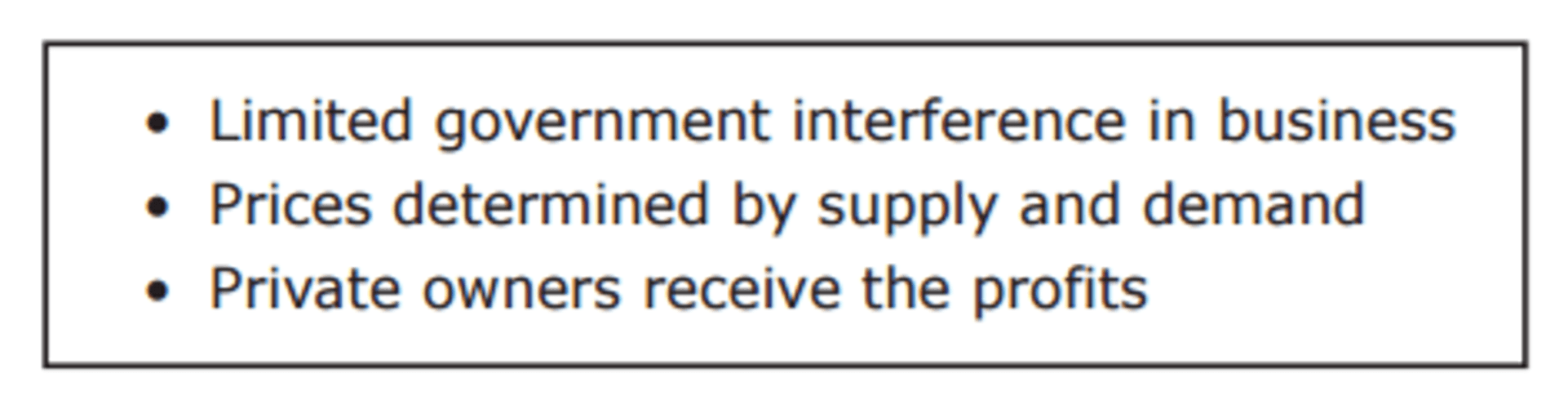


Which sentence best completes this diagram?
Cities grew rapidly.
Demand for artisans increased.
Farms experienced a shortage of labor.
Government regulation of factories increased.
Between 1846 and 1855 the population of Ireland decreased by a third, including the approximately 1.5 million Irish immigrants who left for the United States. What was the primary reason for this migration?
Massive unemployment resulting from British occupation
Political unrest during an economic recession
Famine caused by a major crop failure
Civil war between Catholics and Protestants
The completion of the Erie Canal played a key role in which development?
New York City becoming a vital commercial center with the country's busiest seaport
New Orleans becoming a leader in manufacturing and overseas trade
Washington, D.C. becoming the cultural and political center of the nation
Boston becoming one of the country's largest transportation hubs
Why did slavery become a widespread practice in the United States during the early nineteenth century?
The system of indentured servitude was banned.
The need for agriculture labor increased as a result of expanded cotton production.
Improved transportation systems made it easier for workers to migrate.
Advancements in technology led to the need for skilled workers.

Which of these best completes the diagram above?
The demand for slaves increases in the South.
More textile factories are established in the South.
The number of European immigrants arriving at southern port cities increases.
More tobacco and food crops are cultivated on southern plantation.
How did the plantation system influence the economic development of the United States?
It prevented the development of industry in the Northeast
It turned the South into a major producer of cotton used in northern mills.
It restricted agricultural expansion in the western territories.
It increased federal dependency on tariffs for revenue.
How did Samuel Morse's best-known innovation contribute to U.S. growth and development?
It enabled instantaneous long-distant transmission of information.
It allowed manufactured goods to be produced at lower costs.
It boosted the speed of cross-country mail delivery.
It increased national unity by reducing sectional differences.
How did the invention of the steamboat impact the transportation of goods in the US?
It made transportation slower and more expensive
It allowed goods to be moved more efficiently and quickly
It had no significant impact on transportation
It was primarily used for recreational purposes
Ultimately, the cotton gin resulted in...
...a slight increase in the number of slaves in the U.S.
... an enormous increase in the number of slaves in the U.S.
...a slight decrease in the number of slaves in the U.S.
... an enormous decrease in the number of slaves in the U.S.

A period of time when products go from home-made to machine made in factories.
agricutlure
industrialization
mathamatics
environmentalism
Americans who opposed immigration
Patriots
Nativists
Know-Nothing-Party
Tenements

