
Font size
 Worksheets
BASIC ELECTRICAL QUIZ
Total questions: 70
Worksheet time: 49mins
The unit for inductance is ___________
Ohm
Henry
Farad
Ampere
The resistivity of the conductor depends on
area of the conductor.
length of the conductor.
type of material.
none of these.
Which of the following is not an expression power?
P=VI
P=I2R
P=V2/R
P=I/R
Conductance is expressed in terms of
ohm / m
m / ohm
mho / m
mho
The resistance of a 100 W, 200 V lamp is
100 ohm
200 ohm
400 ohm
1600 ohm
By using two wattmeter method, power can be measured in
3 - phase, 2 - wire system
3 - phase, 3 - wire system
3 - phase, 4 - wire system
All of these
According to Kirchoff’s voltage law,
The algebraic sum of all the e.m.f’s in the circuit is zero
Algebraic sum all the voltage drops in the circuit is zero
Algebraic sum of e.m.f’s plus algebraic sum of voltage drops is equal to zero
All of these
Alternating voltage can be generated by
By rotating a coil in a magnetic field
By rotating a magnetic field within a stationary coil
Either (a) or (b)
Neither (a) or (b)
Energymeter is a / an
Indicating instrument
Integrating instrument
Recording instrument
All of these
Reluctance in a magnetic material is a property by virtue of which it opposes the creation of
Electric flux
Magnetic flux
Electric field density
Electric lines of force
The property of the conductor due to which it passes current is called
Resistance
Reluctance
Conductance
Inductance
The insulation on a current carrying conductor is provided
To prevent leakage of current
To prevent a shock
Both of the above
None of the above
Active power and apparent power are respectively represented by?
kW and kVAR
kVAR and kVA
kVA and kVAR
kW and kVA
Electricity is the movement of ________.
Atom
Electrons
Neutrons
Nucleus
Which among the following is an example of a conductor?
rubber
silver
plastic
asbestos
_________________are small drawings or pictograms used to represent various electrical devices in a diagram or plan of electrical circuit
ELECTRICAL WIRING
ELECTRICAL SYMBOLS
ELECTRICAL SIGNS
SCHEMATIC DIAGRAM
_________________a warning icon in a picture symbol intended to alert you and to instruct you on how to avoid a potentially hazardous condition
ELECTRICAL WIRING
ELECTRICAL SYMBOLS
ELECTRICAL SIGNS
SCHEMATIC DIAGRAM
Which among the following is NOT an example of an OUTLET ELECTRICAL SYMBOL?


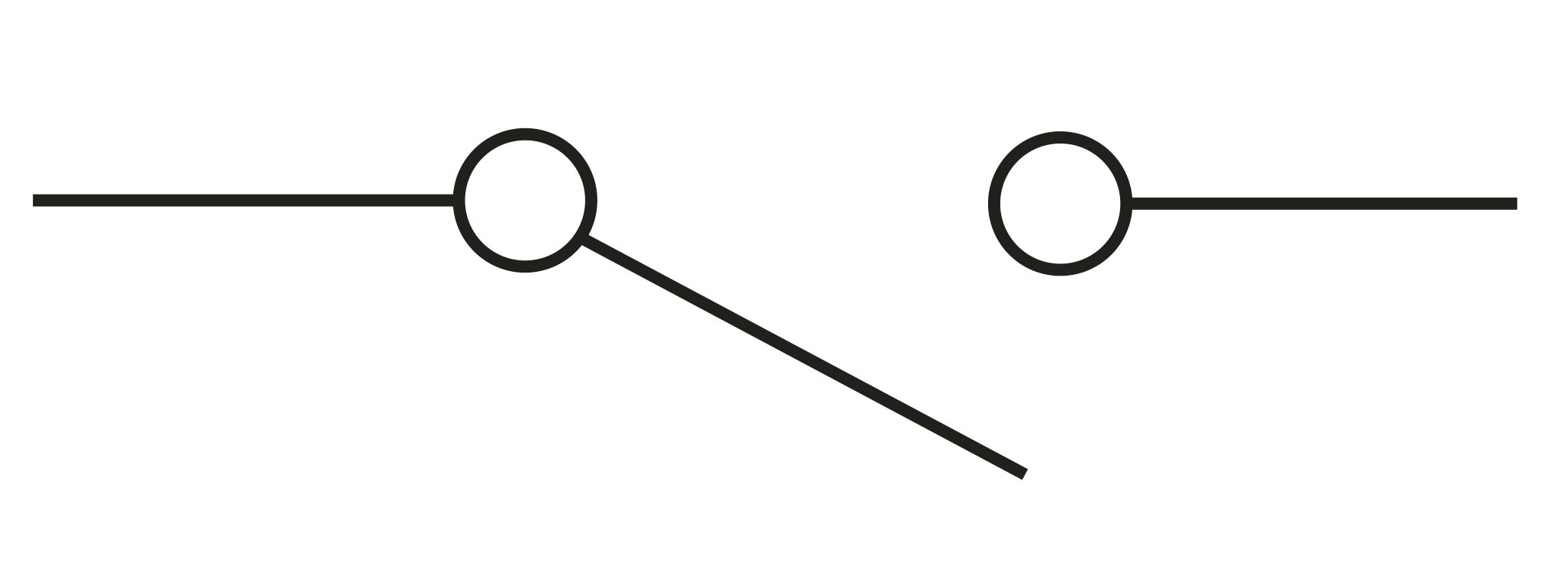
Which is the symbol for SWITCH?


The sum of all the voltages over any closed loop is equal to
1V
0V
infinity
Supply voltage
What is the basic law used to analyze any circuit
Kirchhoff's laws
Amperes's law
Faraday's law
Newton's law
In superposition theorem, when we consider the effect of one voltage source, all the other voltage sources are:
Undisturbed
Shorted
Opened
Altered
In Norton's theorem, short circuit current Isc is found across the ______ terminals of the network.
Input
Output
Neither input nor output
Both input and output
Maximum power drawn from the source depends on the:
value of the source resistance
Value of the load resistance
Neither the source nor the load resistance
Both source and load resistance
Maximum power is transferred from the source to the load end when the _____ of the circuit matches with the load impedance
Impedance
capacitance
admittance
power
Short circuit test in transformers are used to identify
Copper losses
Winding losses
Current losses
Voltage losses
Iron loss, core loss or no load loss in transformers by conducting:
Short circuit test
Open circuit test
Both short and open circuit tests
None of the above
Which is the parameter that CANNOT be measured using a multimeter
Temperature
Frequency
Resistance
Pressure
To which winding of the transformer is the supply voltage applied to:
Primary winding
Secondary winding
Both primary and secondary windings
Neither primary nor secondary winding
It is a path or line through which an electrical current flows.
electrical circuit
open circuit
short circuit
close circuit
A sketch showing the components of the circuit
using standard electrical symbols. It shows the actual
number of components and how the wiring is routed but
not the actual location.
Schematic Diagram
Pictorial Diagram
Sketch of electrical circuit that shows the
external appearance of each component. It is much like a
photograph of the circuit and uses simple images of parts.
schematic diagram
pictorial diagram
if 110V is applied across a 220V, 100W bulb the power consumed by it will be
100W
50W
25W
12.5W
minimum number of resistor required to form series parallel combination is
2
3
4
1
The no-load current drawn by transformer is usually what per cent of the full-load current ?
0.2 to 0.5 per cent
2 to 5 per cent
12 to 15 per cent
20 to 30 per cent
The efficiency of a transformer will be maximum when ?
copper losses = hysteresis losses
hysteresis losses = eddy current losses
eddy current losses = copper losses
copper losses = iron losses
In a given transformer for given applied voltage, losses which remain constant irrespective of load changes are :-
friction and windage losses
copper losses
hysteresis and eddy current losses
none of the above
In the transformer the function of a conservator is to :-
provide fresh air for cooling the transformer
supply cooling oil to transformer in time of need
protect the transformer from damage when oil expends due to heating
none of the above
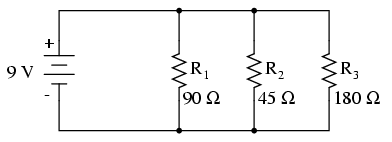
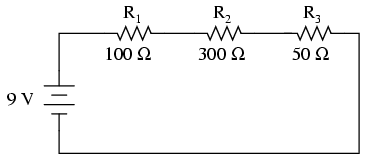

The emf of the dry cell is about
0 V
0.5 V
1 V
1.5 V
Secondary’s cells are
lead acid cell
alkaline cell
both (a) and (b)
none of these
When two batteries are connected in parallel, it should be ensured that
They have same emf
They have same make
They have same ampere hour capacity
They have identical internal resistance
Commutator in DC Motor is used for
collecting of current
reduce losses
increase efficiency
convert AC armature current in to DC
Which of the following rule is used to determine the direction of rotation of D.C motor?
Coloumb’s Law
Lenz’s Law
Fleming’s Right-hand Rule
Fleming’s Left-hand Rule
For 50 Hz and 2 pole, the maximum speed of an alternator is ---------------
(a)
The induced EMF in the armature conductors of a DC motor is
Triangular
Alternating
Rectangular
Trapezoidal
A circuit breaker is
power factor correcting device
a device to neutralize the effect of transients
a current interrupting device
a waveform correcting device
The most simplest type of resistor is ...
Wire wound resistor
Metal film resistor
Surface mount resistor
Network resistor
Kirchoff's Current Law is ...
Current does not exist.
The algebraic sum of the currents meeting at a junction in an electrical circuit is zero.
There is no such law.
V = IR
The internal impedance of an ideal current source is ...
zero
one
infinite
depends upon many factors
The internal impedance of an ideal voltage source is ...
zero
one
infinte
depends upon many factors
"Earthing" word was introduced by ...
Indian culture
British culture
US culture
French culture
"Grounding" word was introduced by ...
British culture
US culture
French vulture (not a typo)
Italian culture
A place where three or more branches meet in an electrical circuit is called as ...
Nodal analysis
Conjuction
Joint
Node
In Thevenin's theorem, the voltage source (VTh) is connected in ... with RTh.
Series
Parallel
Star Delta Configuration
cars
Maximum power is transferred in dc circuits when ... .
( RTh is thevenin's resistance OR internal resistance of source
RL is Load resistance)
RTh >>> RL
RTh <<< RL
RTh = RL
RTh = 0 and RL is infinite
Efficiency is ...
(OP = Output power
IP = Input power)
OP - IP
IP - OP
OP / IP
IP / OP
The circuit efficiency at maximum power transfer is ... %.
0
25
50
100
When source and load have same resistance, they are said to be ...
in resonance
matched
organised
couple
one coulomb of charge is equal to the charge on
625×1016 electrons
6.25×10¹⁶ electrons
62.5×10¹⁶ electrons
0.625×10¹⁶ electrons
KVL deals with the conservation of
Mass
Momentum
Charge
Energy

