
 Worksheets
Grade 7 - Cells and Reproduction
Total questions: 36
Worksheet time: 2hrs 2mins
Which of the following converts food into energy for the cell?
vacuole
mitochondria
cytoplasm
cell membrane
The fluid that surrounds the organelles is... (hint... "Try to pull a fast one and..."
chloroplast
cytoplasm
vacuole
cell wall
Which organelle takes in "sun showers" and helps plants with the process or photosynthesis?
Vacuole
Mitochondria
Cytoplasm
Chloroplast
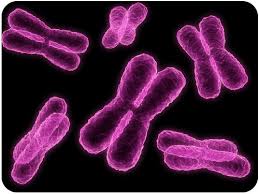
A normal human cell contains how many chromosomes?
16
26
46
14
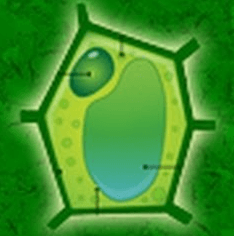

When a single-celled organism splits into 2 new organisms it is called _________________.
fragmentation
fission
budding
sporulation
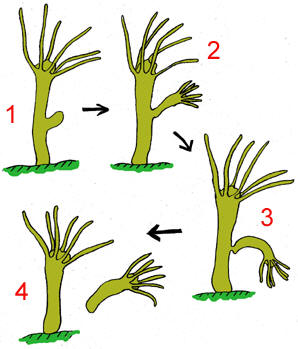
When an offspring grows off from the body of a parent organism it is called __________________.
budding
fission
fragmentation
sporulation
Some advantages of sexual reproduction include: (select all that apply)
genetic variation
improves chances of adapting to the environment
helps species survive catastrophes
it doesn't take as much energy as asexual reproduction
What are some advantages of asexual reproduction are: (select all that apply)
it only requires one organism
it takes less energy than sexual reproduction
offspring are already well-adapted for the environment
there is a lot of genetic variety
Male and female reproductive cells are collectively known as:
spores
pollen
gametes
offspring
Genetically identical offspring are _____________ the parent organism.
opposite of
clones of
superior to
inferior to
____________________ occurs when a male gamete (sperm) combines with a female gamete (egg).
sporulation
fertilization
fission
regeneration
How many parents are required for sexual reproduction?
0
1
2
3
If a sex cell has 10 chromosomes, how many chromosomes will there be after fertilization?
5
10
15
20
When one parent organism produces offspring without meiosis and fertilization:
asexual reproduction
sexual reproduction
What is an disadvantage of asexual reproduction?
An organism can reproduce without a mate
Some organisms can quickly produce a large number of offspring
There is little genetic variation within a population
Cells that have only one chromosome from each pair:
haploid cells
diploid cells
A type of reproduction in which the genetic materials from two different cells combine, producing offspring:
asexual reproduction
sexual reproduction
What is a disadvantage of sexual reproduction?
Genetic variation
Organisms must grow and develop until they are mature enough to reproduce
Selective breeding

Which of the following is not a benefit of asexual reproduction?
Offspring will be successful in an unchanged environment.
Good at adapting to changing environments.
Only requires one parent to produce offspring.
Can reproduce rapidly.
An organism that has been reproduced by asexual means receives ______________ of its chromosomes from its one parent.
3
25%
50%
100%
In asexual reproduction, all of the offspring are:
Physically Identical
Genetically Identical
Physically and Genetically Identical
Not Identical
An organism that has been reproduced by sexual reproduction received ____________ of its chromosomes from the male parent.
4
25%
50%
100%

If a cow has 60 chromosomes in a normal cell how many chromosomes would be in a cow's sex cell?
60
120
30
90
What is the type of reproduction that only requires one parent?
Asexual
Sexual
Which type of reproduction results in diversity because the offspring are a combination of the parents and genetically different?
Asexual
Sexual

