wayground logo

Free Printable Worksheets

Font size

S
M
L
XL
Worksheets

Lol can i go now

Total questions: 250

Worksheet time: 4hrs 32mins

Name
Class
Date
1.
Is budding an example of asexual or sexual reproduction?
a)
sexual
b)
both
c)
asexual
d)
neither
2.
What is a disadvantage of asexual reproduction?
a)
New species of organisms cannot come into being.
b)
The offspring does not multiply rapidly.
c)
The offspring does not live for long.
d)
All of these
3.
The genetic instructions are found in ---- within the DNA
a)
traits
b)
chromosomes
c)
genes
d)
DNA
4.
Passes genetic information
onto future generations
a)
sexual reproduction
b)
asexual reproduction
c)
both
5.
Where does an off spring get its traits in asexual reproduction?
a)
From both parents
b)
From only one parent
c)
From neither parent
d)
There are no traits handed down
6.
What percentage of chromosomes are handed down by a sperm cell?
a)
75%
b)
25%
c)
50%
d)
100%
7.
Sexual reproduction requires _____ parents and asexual reproduction requires ___ parents
a)
1,1
b)
2,2
c)
2,1
d)
1,2 
8.
When a starfish grows a new body off a broken arm, what kind of reproduction is this?
a)
Sexual
b)
Differentiation
c)
Asexual 
d)
Specialization
9.
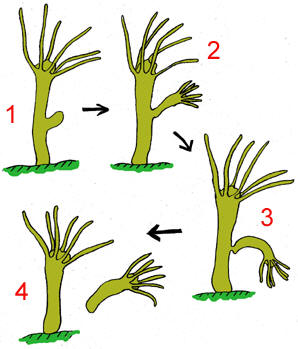
A hydra reproduces when an outgrowth, or bud, forms and continues to develop until if falls off of the parent. This is an example of:
a)
Binary Fission
b)
Sporulation
c)
Budding
d)
Vegetative Propagation
10.
Most single-celled organisms...
a)
reproduce asexually
b)
reproduce sexually
c)
have complex tissues
d)
can be seen without a microscope
11.
How many daughter cells are produced in mitosis?
a)
1
b)
2
c)
4
d)
6
12.
Mitosis is a type of ________________ reproduction.
a)
Sexual
b)
Asexual
13.
A new organism is produced from one parent organism.
a)
Sexual Reproduction
b)
Asexual Reproduction
14.
Results of cell division or mitosis include all of the following EXCEPT?
a)
growth
b)
repair damaged cells
c)
replace damaged cells
d)
dead cells
15.
How many chromosomes does a human cell have?
a)
42
b)
46
c)
24
d)
64
16.

Reproducing asexually will produce offspring ...

a)

genetically different from each other

b)

genetically identical to the parent

17.

Penguins lay 1-2 fertilized eggs that the male and female take turns incubating on their feet. What type of reproduction does this example represent?

a)

Sexual reproduction

b)

Asexual reproduction

18.

California blackworms, also known as mudworms, are able to break apart. Each body section that broke apart is able to become an identical new worm. What type of reproduction does this example represent?

a)

Sexual reproduction

b)

Asexual reproduction

19.
a)
Prophase
b)
Interphase
c)
Anaphase
d)
Telophase
20.
a)
Anaphase
b)
Cytokinesis
c)
Telophase
d)
Metaphase
21.
a)
Cytokinesis
b)
Interphase
c)
Anaphase
d)
Metaphase
22.
a)
Anaphase
b)
Cytonkinesis
c)
Interphase
d)
Prophase
23.
a)
Cytokinesis
b)
Anaphase
c)
Telophase
d)
Prophase
24.
Which is Metaphase?
a)
A
b)
E
c)
C
d)
F
25.
Chromosomes condense from long stands into rod like structures. 
a)
Prophase
b)
Interphase
26.
The phase in mitosis where chromosomes move away and are pulled apart by spindles to opposite sides of the cell.
a)
prophase
b)
anaphase
c)
metaphase
d)
telephase
27.
A chromatid is attached to a spindle fiber by the
a)
nucleolus
b)
deep furrow
c)
centromere
d)
centriole
28.
The structures that hold together sister chromatids
a)
tissues
b)
chromosomes
c)
spindle
d)
centromeres
29.
The process by which the nuclear material is divided equally between two new cells
a)
mitosis
b)
cancer
c)
spindle
d)
centromere
30.
the two halves of the doubled chromosome structure 
a)
centromeres
b)
sister chromatids
c)
spindle
d)
tissues
31.
Why would it be important to replicate DNA before a cell divides in mitosis or meiosis?
a)
In order for genetic information to be transferred into daughter cells.
b)
In order for the cell to be able to increase in size.
c)
In order for the DNA to be contained in the nucleus.
d)
In order for the cell to re-order the DNA sequencing in the new cells.
32.
In mitosis, the two resulting cells are
a)
different from the starting cell and identical to each other.
b)
different from the starting cell and different from each other.
c)
identical to the starting cell and different from each other.
d)
identical to the starting cell and identical to each other.
33.
What is the name of the structure labeled X?
a)
Centriole
b)
Centrosome
c)
Chromatid
d)
Chromosome 
34.

Which of these are part of the Cell Cycle?

a)

Mitosis

b)

Interphase

c)

Prophase

d)

Metaphase

e)

Cytokines

35.

Which of these are part of Mitosis?

a)

Metaphase

b)

Prophase

c)

Anaphase

d)

Telophase

e)

Cytokines

36.

What are the "X" shaped things in the drawing.

a)

PMATs

b)

Chromosomes

c)

Ribosomes

d)

Telophase

37.

During what phase of Mitosis do the chromosomes line up in the Middle

a)

Metaphase

b)

Prophase

c)

Telophase

d)

Anaphase

38.

Which stage of the Life Cycle of the cell is this cell in (look close-the DNA hasn't formed Chromosomes (X) yet)

a)

Interphase

b)

Prophase

c)

Anaphase

d)

Telophase

39.

PMAT helps us remember the correct order of the phases of Mitosis. Which of the following has the phases of Mitosis in the correct Order

a)

Interphase, Mitosis, Cytokinesis

b)

Prophase, Metaphase, Anaphase, Prophase

c)

Anaphase, Telophase, Prophase, Telophase

d)

Prophase, Metaphase, Anaphase, Telophase

40.

Which of the following is the correct order of the Cell Cycle?

a)

Interphase, Mitosis, Cytokinesis

b)

Mitosis, Cytokinesis, Mitosis, Interphase

c)

Prophase, Metaphase, Anaphase, Telophase

d)

Interphase, Prohase, Cytokinesis

41.

In which phase of Mitosis do the Chromosomes pull Apart

a)

Metaphase

b)

Prophase

c)

Anaphase

d)

Telophase

42.

What is the purpose of Mitosis?

a)

Growth of an organism and Repair of damaged tissue

b)

To help the body get rid of extra cells

c)

To increase the amount of classwork you have to do

d)

To get rid of the nucleus

43.

How many chromosomes to do most human cells have?

a)

2

b)

46

c)

92

d)

Identical to your age

44.
Which of these lists presents the stages of the cell cycle in the correct order?
a)
interphase, mitosis, cytokinesis
b)
cytokinesis, mitosis, interphase
c)
mitosis, interphase, cytokinesis
d)
interphase, cytokinesis, mitosis
45.
Which of these phases of mitosis take place first?
a)
anaphase
b)
telophase
c)
prophase
d)
metaphase
46.
Identify the stage of mitosis.
a)
interphase
b)
prophase
c)
metaphase
d)
anaphase
47.
Identify the stage of mitosis. 
a)
interphase
b)
prophase
c)
anaphase
d)
cytokinesis
48.
What process does a multi-cellular organism use to replace its damaged body cells?
a)
mitosis
b)
meiosis
c)
replication
d)
transcription
49.

A chromosome is packaged

a)

DNA

b)

Protein

c)

Carbohydrates

d)

Lipids

50.

What stage of mitosis is depicted here

a)

Prophase

b)

Anaphase

c)

Telophase

d)

Metaphase

51.

What stage of mitosis is depicted here

a)

Prophase

b)

Metaphase

c)

Anaphase

d)

Telophase

52.

What stage of mitosis is depicted here

a)

Prophase

b)

Metaphase

c)

Anaphase

d)

Telophase

53.

What stage of mitosis is depicted here

a)

Prophase

b)

Metaphase

c)

Anaphase

d)

Telophase

54.

Nuclear membrane breaks down, spindle fibers form describes:

a)

Prophase

b)

Anaphase

c)

Metaphase

d)

Telophase

55.

Spindle fibers attach, centrioles line chromosomes in the center of the cell describes:

a)

Prophase

b)

Telophase

c)

Metaphase

d)

Anaphase

56.

Centrioles pull the chromosomes apart towards the opposite sides of the cell describes:

a)

Prophase

b)

Metaphase

c)

Telophase

d)

Anaphase

57.

What is the image above:

a)

Chromosome

b)

Chromotid

c)

Centromere

d)

Centriole

58.

This is what phase of Mitosis?

a)

Interphase

b)

Prophase

c)

Metaphase

d)

Anaphase

e)

Telophase

59.

In which phase does a cell spend most of its life?

a)

Interphase

b)

Prophase

c)

Metaphase

d)

Anaphase

e)

Telophase

60.

What phase of mitosis is in the picture?

a)

Interphase

b)

Prophase

c)

Metaphase

d)

Anaphase

e)

Telophase

61.

What phase of Mitosis is the picture showing?

a)

Interphase

b)

Prophase

c)

Telophase

d)

Metaphase

62.

The splitting of the cytoplasm and cell membranes is called?

a)

Interphase

b)

Telophase

c)

Centromere

d)

Cytokinesis

63.

Centrioles pull the chromosomes apart towards the opposite sides of the cell describes:

a)

Prophase

b)

Metaphase

c)

Telophase

d)

Anaphase

64.
Which of these phases of mitosis take place first?
a)
anaphase
b)
telophase
c)
prophase
d)
metaphase
65.

Which is used to repair or grow cell?

a)

mitosis

b)

meiosis

c)

replication

d)

transcription

66.

Meiosis is the _____.

a)

division of sex cells

b)

division of body cells

67.

Which of the following is a sex cell?

a)

sperm

b)

bone

c)

heart

d)

muscle

68.

At the end of Mitosis, how many cells are there?

a)

1

b)

2

c)

3

d)

4

69.

At the end of cell division, what happens after telophase?

a)

cytokinesis

b)

cytoplasm

c)

Indiana Jones wins the day!

d)

telophase 2

70.

Where does Mitosis take place?

a)

where growth and repair are happening

b)

in your hair cells only

c)

in your blood cells only

71.

What is this phase of Mitosis?

a)

Prophase

b)

Metaphase

c)

Anaphase

d)

Telophase

72.

What is this phase of Mitosis?

a)

Prophase

b)

Metaphase

c)

Anaphase

d)

Telophase

73.

What is this phase of mitosis? (hint: apart)

a)

Prophase

b)

Anaphase

c)

Telophase

d)

Metaphase

74.

What is this phase of mitosis?

a)

Prophase

b)

Anaphase

c)

Telophase

d)

Metaphase

75.
Structure B is pointing to the _____. 
a)
chromosome
b)
centromere
c)
DNA
d)
chromatid
76.
Fruit fly body cells have 8 chromosomes. After mitosis, you would expect a resulting fruit fly daughter cell to have ...
a)
16 chromosomes.
b)
46 chromosomes.
c)
8 chromosomes.
d)
4 chromosomes.
77.
Name the previous phase.
a)
Prophase
b)
Metaphase
c)
Anaphase
d)
Telophase
78.
The organelle that helps in cell division and produces spindle fibers.
a)
Chromosome
b)
Centriole
c)
Cytoplasm
d)
Chloroplast
79.
What phase does DNA replication take place?
a)
G1 stage
b)
Synthesis stage
c)
G2 stage
80.
What phase of mitosis is shown in the picture?
a)
Prophase
b)
Anaphase
c)
Telophase
d)
Metaphase
81.
Chromatid pairs can be seen, spindle fibers form and nuclear membrane disappears
a)
Metaphase
b)
Telophase
c)
Anaphase
d)
Prophase
82.

Check the two correct boxes:

a)

Plant Cell - cell plate; Animal Cell - cleavage furrow

b)

Plant Cell - cleavage furrow; Animal Cell - cell plate

83.

The phase wherein sister chromatids align in one place at the center.

a)

Prophase

b)

Metaphase

c)

Anaphase

d)

Telophase

84.

What phase of mitosis is shown in the picture?

a)

Metaphase

b)

Anaphase

c)

Prophase

d)

Telophase

85.
What do experts say is the most common form of Down Syndrome?
a)
Trisomy 47
b)
Trisomy 46
c)
Trisomy 21
d)
Trisomy 23
86.
What is it called when a sperm and egg meet?
a)
meiosis
b)
fertilization
c)
cell division
d)
mitosis
87.
What causes genetic variation in meiosis?
a)
chromosomes lining up
b)
crossing over of chromosomes
c)
separation of chromosomes
d)
chromosomes pulling apart
88.
Diploid Cells are represented by
a)
2n
b)
n
c)
4n
d)
1/2 n
89.
Which process and type of resulting cells are represented?
a)
mitosis, gametes
b)
mitosis, body cells
c)
meiosis, gametes
d)
meiosis, body cells
90.
The chromosomes that pair up during meiosis, are called __________ chromosomes.  
a)
homozygous 
b)
asexual
c)
homologous
d)
genes
91.
Crossing over helps promote 
a)
male genotype
b)
genetic variation
c)
DNA replication
d)
mitosis
92.
A male shark has 40 chromosomes in each of its sex cells. How many would be present in its body cells?
a)
20
b)
40
c)
80
d)
160
93.
Chromosomes exchange genetic material during 
a)
crossing over
b)
replication
c)
synthesis
d)
translation
94.
A human zygote should have _____ chromosomes inside.
a)
46
b)
23
c)
92
d)
64
95.
What is one of the advantages, why is it better to reproduce sexually versus asexually?
a)
survival of the fittest
b)
overproduction
c)
genetic variation
d)
cloning
96.
A human being has a somatic cell that has 46 chromosomes.  What is the haploid number found in a gamete?
a)
23
b)
46
c)
69
d)
92
97.
Which letter(s) in the diagram correspond to cells that are haploid? 
a)
A
b)
B
c)
C
d)
A and B
98.
Compared to the number of chromosomes contained in a body cell, how many chromosomes would normally be contained in a gamete?
a)
The same number
b)
One-fourth as many
c)
Twice as many
d)
Half as many
99.
What is this?
a)
Trisomy 13
b)
Monosomy 21
c)
47, XXY
d)
Trisomy 21
100.
Females have ____ and males have _____ chromosomes.
a)
XX, XY
b)
XY, XX
c)
XX, XX
d)
XY, XY
101.
a)

INCREASES GENETIC VARIATION

b)

TAKES PLACE IN PROPHASE I

c)

CROSSING OVER

d)

ALL ARE TRUE

102.

CROSSING OVER INCREASES

a)

LIFE SPAN

b)

GENETIC VARIATION

c)

THE NUMBER OF OFF-SPRING

d)

ALL ARE TRUE

103.

CROSSING OVER TAKES PLACE DURING

a)

PROPHASE II

b)

PROPHASE I

c)

INTERPHASE

d)

METAPHASE I

104.

__________-RE-ORDERS THE BASE SEQUENCE ;

EXAMPLE TO CREATE MORE GENETIC DIVERSITY

(ATA-CCG) TO (TTA-GGC)

a)

CROSSING OVER

b)

MITOSIS

c)

ASEXUAL REPRODUCTION

105.

DURING WHICH PHASE OF MEIOSIS DOES GENETIC VARIATION INCREASE

a)

PROPHASE II

b)

PROPHASE I

c)

ANAPHASE I

d)

ANAPHASE II

106.

WHAT TYPE OF CELLS STORE THE GENETIC INFORMATION THAT IS PASSED TO OFF-SPRING

a)

BODY CELLS

b)

MITOSIS

c)

EGG

d)

SPERM

e)

EGG AND SPERM

107.

MEIOSIS

a)

REDUCES THE NUMBER OF CHROMOSOMES BY ONE HALF

b)

PRODUCES UNIQUE SEX CELLS-1N

c)

ALLOWS TRAITS TO BE PASSED TO OFFSPRING

d)

ALL ARE TRUE

e)

INCREASE GENETIC VARIATION

108.

MITOSIS

a)

INCREASES GENETIC VARIATION

b)

ALLOWS TRAITS TO BE PASSED ON TO OFFSPRING

c)

PRODUCES 2 IDENTICAL DAUGHTER CELLS

d)

ALL ARE TRUE

109.

FERTILIZATION OCCURS WHEN

a)

THE SPERM UNITES WITH THE EGG

b)

THE SPERM UNDERGO MEIOSIS

c)

THE EGG UNDERGOES MEIOSIS

d)

THE EGG AND SPERM UNDERGOES MEIOSIS

110.

MEIOSIS PRODUCES 4 CELLS-THE CHROMOSOME NUMBER IS ...

a)

DIPLOID

b)

HAPLOID

111.

MEIOSIS PRODUCES 4 CELLS, THEY ARE

a)

N

b)

2N

c)

3N

112.

1N AND N MEAN THE SAME THING (LIKE MATH)

a)

TRUE

b)

FALSE

113.

NORMAL HUMANS HAVE 46 CHROMOSOMES, HOW MANY WILL THE GERM CELLS HAVE AFTER MEIOSIS?

a)

46

b)

23

c)

12

d)

92

114.

MOVING MOLECULES AGAINST A CONCENTRATION GRADIENT IS

a)

PASSIVE TRANSPORT

b)

ACTIVE TRANSPORT

115.

PHOTOSYNTHESIS REACTANTS

C02+H20---------> C6H12O6+O2

a)

C02+H20

b)

C6H12O6+O2

c)

C02+H20---------> C6H12O6+O2

d)

ALL ARE TRUE

116.

WHICH OF THE FOLLOWING DO NOT OCCUR DURING THE MITOSIS STAGE OF THE CELL CYCLE

a)

SISTER CHROMATIDS SEPARATE LIKE IN ANAPHASE

b)

DNA IS REPLICATED LIKE IN THE S PHASE

c)

CHROMOSOMES LINE UP AT THE EQUATOR LIKE METAPHASE

d)

CHROMATIN CONDENSES INTO CHROMOSOMES

117.

CANCER CELLS ARE DIFFERENT BECAUSE THE DON'T ENTER THE G-0 PHASE AND THEY ARE LIKELY TO DO WHICH OF THE FOLLOWING

a)

FAIL TO COMPLETE S PHASE

b)

MUTATE DURING G1 PHASE

c)

REPEAT THE CELL CYCLE CONTINUOUSLY

d)

DIE AFTER COMPLETING MITOSIS

118.
The cells produced via meiosis are called:
a)
sex cells
b)
somatic cells
c)
body cells
d)
skin cells
119.
A human usually has xx amount of chromosomes.
a)
6
b)
22
c)
4
d)
46
120.
Meiosis makes sperm and egg cells. In humans, sperm and egg cells each have _____ chromosomes. Therefore a fertilized human egg cell (sperm and egg cell combined) would create a cell with _____ chromosomes.
a)
23, 46
b)
46, 23
c)
2, 4
d)
50, 100
121.
Unlike mitosis, meiosis in male mammals results in the formation of
a)
one haploid gamete
b)
three diploid gametes
c)
four diploid gametes
d)
four haploid gametes
122.
What kind of cells are made in MEIOSIS?
a)
Haploid Gametes
b)
Diploid Somatic Cells
c)
Skin Cells
d)
Liver Cells
123.
Goes through P.M.A.T two rounds 
a)
Mitosis
b)
Meiosis
c)
Osmosis
d)
Transcription
124.
Which process and type of resulting cells are represented?
a)
mitosis, gametes
b)
mitosis, body cells
c)
meiosis, gametes
d)
meiosis, body cells
125.
If a somatic cell in a butterfly contains 24 chromosomes, a butterfly egg would contain
a)
3
b)
6
c)
12
d)
24
126.
The process of crossing over occurs in what phase of meiosis?
a)
anaphase 1
b)
prophase 1
c)
prophase 2
d)
telophase 1
127.
Which of these cells would be produced through meiosis?
a)
skin cells
b)
liver cells
c)
brain cells
d)
sperm cells
128.
The chromosomes that pair up during meiosis, are called __________ chromosomes.  
a)
homozygous 
b)
asexual
c)
homologous
d)
genes
129.
Crossing over helps promote 
a)
male genotype
b)
genetic variation
c)
DNA replication
d)
mitosis
130.
A male shark has 40 chromosomes in each of its sex cells. How many would be present in its body cells?
a)
20
b)
40
c)
80
d)
160
131.
What is another reason we need meiosis?
a)
So the offspring has genes from both parents
b)
So the offspring has genes from one parent
c)
So the offspring has genes from neither parents
d)
So the offspring makes its own genes
132.
Chromosomes exchange genetic material during 
a)
crossing over
b)
replication
c)
synthesis
d)
translation
133.
A human zygote should have _____ chromosomes inside.
a)
46
b)
23
c)
92
d)
64
134.
Human eggs and sperm are _____, and each has ____ chromosomes.
a)
diploid, 23
b)
diploid, 46
c)
haploid, 23
d)
haploid, 46
135.
What is it called when a sperm and egg meet?
a)
meiosis
b)
fertilization
c)
cell division
d)
mitosis
136.
Unlike mitosis, meiosis in male mammals results in the formation of
a)
one haploid gamete
b)
three diploid gametes
c)
four diploid gametes
d)
four haploid gametes
137.
Identify the phase.
a)
Metaphase I
b)
Metaphase II
c)
Anaphase I
d)
Anaphase II
138.
Identify the process.
a)
Mitosis
b)
Meiosis I
c)
Meiosis II
d)
Interphase
139.
After meiosis II the daughter cells will contain ____ chromosomes if the original cell contained 78.
a)
78
b)
39
c)
23
d)
46
140.
Which of the following cells is a gamete?
a)
egg
b)
bone
c)
heart
d)
muscle
141.
The pair of chromosomes that contain the same genes (but may be coded differently) and are inherited from a male and female parent are termed ___.
a)
gametes
b)
alleles
c)
zygote
d)
homologs
142.
The fertilized egg is termed a/an _____.
a)
gamete
b)
allele
c)
homolog
d)
zygote
143.
When does replication of chromosomes occur in animal cell meiosis?
a)
Before Meiosis I and Meiosis II
b)
Before Meiosis II Only
c)
Before Meiosis I Only
d)
During Prophase I and Prophase II
144.
Identify the phase.
a)
Telophase I
b)
Telophase II
c)
Metaphase I
d)
Metaphase II
145.
Meiosis is the _____.
a)
 nuclear division of gametes
b)
nuclear division of body cells
c)
division of body cells
d)
division of sex cells
146.
In mitosis cells are genetically _______, but in meiosis cells are genetically ______.
a)
diverse, identical
b)
identical, diverse/different
147.
Identify the phase:
a)
Metaphase I
b)
Metaphase II
c)
Anaphase I
d)
Anaphase II
148.
This type of RNA moves amino acids to the ribosomes.
a)
mRNA
b)
tRNA
c)
rRNA
149.
In sexual reproduction, chromosome reduction is necessary to ___.
a)
ensure that all offspring have the correct diploid number of chromosomes
b)
ensure that all offspring have the correct haploid number of chromosomes
c)
ensure that all daughter cells are identical
150.

Is the following cell diploid or haploid?

a)

Diploid

b)

Haploid

151.

1n indicates that the cell is ____.

a)

Diploid

b)

Haploid

152.

This type of asexual reproduction has the offspring growing off of the parent.

a)

Budding

b)

Regeneration

c)

Runner

d)

Binary Fission

153.

Is this karyotype for a male or female?

a)

MALE

b)

FEMALE

154.

Mitosis makes sure that all daughter cells are _____.

a)

genetically identical, diploid

b)

genetically identical, haploid

c)

genetically diverse, diploid

d)

genetically diverse, haploid

155.

Is this a normal human karyotype?

a)

YES

b)

NO

156.

This type of asexual reproduction occurs when pieces of the parent divide to form new organisms.

a)

Regeneration

b)

Binary Fission

c)

Budding

d)

Runner

157.

___________________ is a type of asexual reproduction in which a piece of a parent organism breaks off to form an new organism (ex. starfish).

a)

fission

b)

budding

c)

fragmentation

d)

fertiliztion

158.

When an offspring grows off from the body of a parent organism it is called __________________.

a)

budding

b)

fission

c)

fragmentation

d)

sporulation

159.

Male and female reproductive cells are collectively known as:

a)

spores

b)

pollen

c)

gametes

d)

offspring

160.

Genetically identical offspring are _____________ the parent organism.

a)

opposite of

b)

clones of

c)

superior to

d)

inferior to

161.

____________________ occurs when a male gamete (sperm) combines with a female gamete (egg).

a)

sporulation

b)

fertilization

c)

fission

d)

regeneration

162.

How many parents are required for sexual reproduction?

a)

0

b)

1

c)

2

d)

3

163.

Asexual reproduction is associated with what type of cell division?

a)

Mitosis

b)

Meiosis

164.

What is the type of cell division associated with sexual reproduction?

a)

Mitosis

b)

Meiosis

165.

Some advantages of sexual reproduction include: (select all that apply - there are 3)

a)

genetic variation

b)

improves chances of adapting to the environment

c)

helps species survive catastrophes

d)

it doesn't take as much energy as asexual reproduction

166.

What are some advantages of asexual reproduction are: (select all that apply - there are 3)

a)

it only requires one organism

b)

it takes less energy than sexual reproduction

c)

offspring are already well-adapted for the environment

d)

there is a lot of genetic variety

167.

Reproduction is the process by which new organisms or offspring are produced by existing individual or parent to ensure that the species __________

a)

will extinct

b)

does not extinct

c)

for survival

168.

There are two types of reproduction :

a)

semisexual reproduction

b)

asexual reproduction

c)

bisexual reproduction

d)

sexual reproduction

169.

Sexual reproduction involve the _______________

a)

one parent

b)

two parents

c)

fusion of male gamete and female gamete

d)

have same characteristic with parents

e)

have different characteristic with parents

170.

There are two types of fertilisation

a)

Internal fertilisation

b)

External fertilisation

c)

Asexual fertilisation

171.

Asexual reproduction involve

a)

two parents

b)

one parent

c)

produced large numbers of individuals

d)

same characteristics with parent

e)

different characteristics with parent

172.

Division of mature parents cell into two individual is called binary fission. Example :

a)

Hydra

b)

Yeast

c)

Amoeba

d)

Planaria

173.

Budding involved a parent forms buds. Example :

a)

Planaria

b)

Mushroom

c)

Amoeba

d)

Yeast

174.

Regeneration means regrowth of a damaged or missing body parts. Example :

a)

Hydra

b)

Amoeba

c)

Mosses

d)

Planaria

175.

Vegetative parts of the plant that involve in asexual reproduction

a)

Roots

b)

Stems

c)

Leaves

d)

Flowers

e)

Seeds

176.

Vegetative parts of stems involve :

a)

Bulbs - onions

b)

Leaves - begonia

c)

Roots - carrot

d)

Tubers - potato

e)

Rhizomes - ginger

177.

Tissue culture involved :

a)

is a type of vegetative propagation

b)

fusion of female gamet and male gamet

c)

small pieces of plant tissue

d)

same characteristics with parent

e)

to produce large number of quality crops

178.

Internal fertilisation occurs in the following animals

a)

Mammals - Cat

b)

Birds - Eagle

c)

Amphibians - Frog

d)

Reptiles - Crocodile

e)

Fish - goldfish

179.

The smallest biological unit of a living organism is a

a)

cell

b)

compound

c)

element

d)

molecule

180.

Pairs of thread-like molecules, which live in the cell's nucleus, and carries heredity information are called

a)

chromosomes

b)

genes

c)

DNA

d)

mitosis

181.

Made of DNA this is the basic physical and functional unit of heredity.

a)

chromosomes

b)

genes

c)

DNA

d)

nucleus

182.

Fully grown parent cells split into two halves resulting in two daughter cells with the exact DNA as the parent.

a)

Binary Fission

b)

Budding

c)

Fragmentation

d)

Vegetative Reproductions

183.

A parent cell breaks into pieces and each piece becomes a new offspring.

a)

Binary Fission

b)

Budding

c)

Fragmentation

d)

Vegetative Reproductions

184.

Which is not an advantage for asexual reproduction?

a)

Less genetic variation

b)

No need for a mate

c)

Quick

d)

Produces more offspring

185.

Changes in an organism that affect its appearance, how it behaves, and its functions.

a)

Complication

b)

Gamete

c)

Mutation

d)

Zygote

186.

Sexual reproduction involves which type of cell division?

a)

Mitosis

b)

Meiosis

c)

Both Types

d)

Neither Types

187.

Which female organ is responsible for producing the ova in sexual reproduction?

a)

Gametes

b)

Ovaries

c)

Testes

d)

Uterus

188.

Which male organ is responsible for producing the sperm in sexual reproduction?

a)

Gametes

b)

Penis

c)

Sperm Ducts

d)

Testes

189.

What type of asexual reproduction is taking place?

a)

Binary Fission

b)

Budding

c)

Fragmentation

d)

Regeneration

e)

Vegetative Reproduction

190.

What type of asexual reproduction is taking place?

a)

Binary Fission

b)

Budding

c)

Fragmentation

d)

Regeneration

e)

Vegetative Reproduction

191.

What type of asexual reproduction is taking place?

a)

Binary Fission

b)

Budding

c)

Fragmentation

d)

Regeneration

e)

Vegetative Reproduction

192.

What type of asexual reproduction is taking place?

a)

Binary Fission

b)

Budding

c)

Fragmentation

d)

Regeneration

e)

Vegetative Reproduction

193.

What type of asexual reproduction is taking place?

a)

Binary Fission

b)

Budding

c)

Fragmentation

d)

Regeneration

e)

Vegetative Reproduction

194.

Happens when a single parent cell divides into two daughter cells.

a)

mitosis

b)

meiosis

195.

Happens when the parent's chromosomes are halved.

a)

mitosis

b)

meiosis

196.

Gives an outcome of varied or diverse offspring.

a)

mitosis

b)

meiosis

197.

The offspring genetic information is exactly like the parents.

a)

mitosis

b)

meiosis

198.
Cytokinesis is a phase of mitosis. 
a)
True
b)
False 
199.
Cells spend the majority of their lives in
a)
Interphase
b)
Mitosis
c)
Synthesis 
d)
Gap 2
200.
What does NOT happen during interphase?
a)
growth
b)
DNA replication 
c)
obtaining nutrients
d)
cell divison
201.
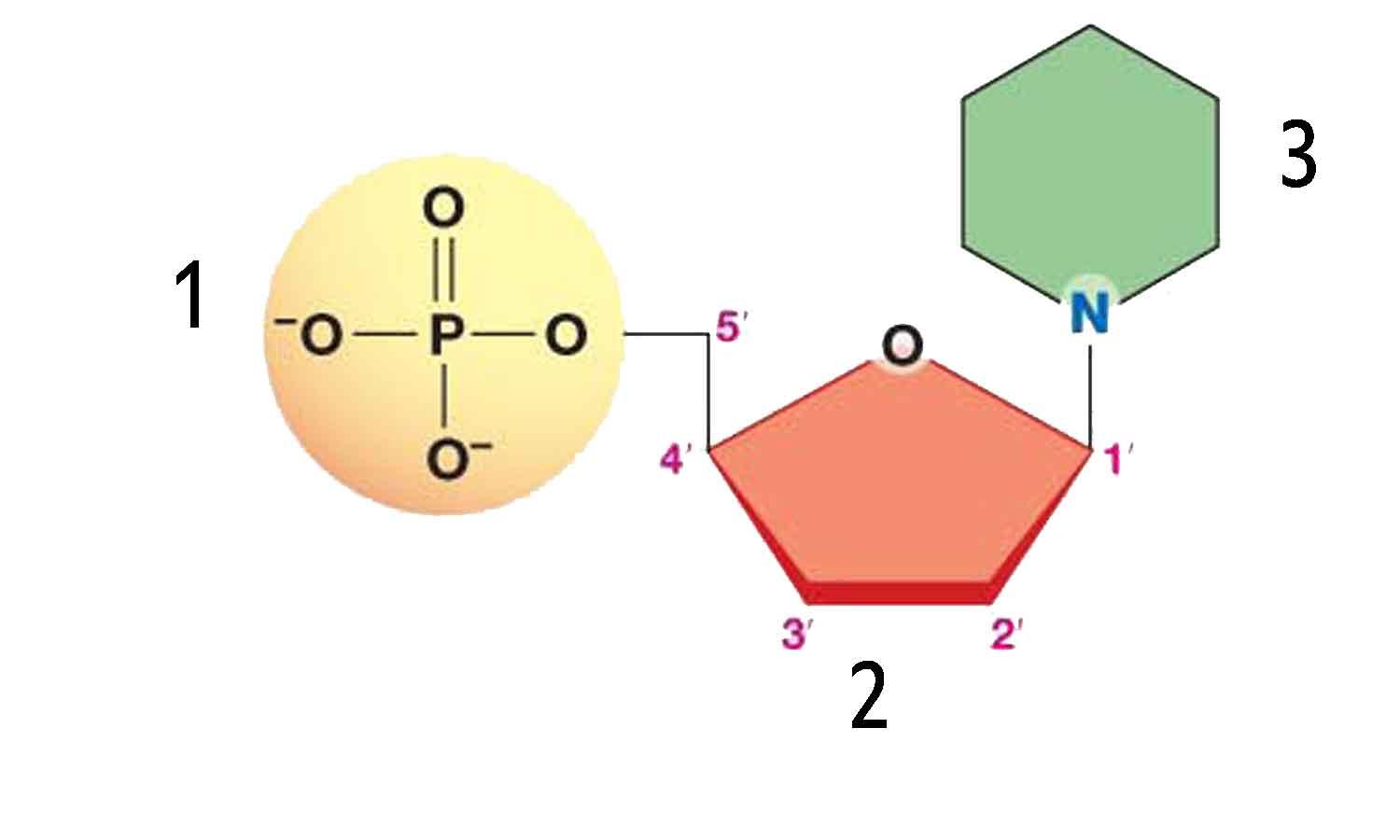
Identify the parts of the nucleotide shown:
a)
1) Ribose Sugar      2) Phosphate 
3)  Nitrogen Base
b)
1) Deoxyribose Sugar
2) Phosphate
3) Nitrogen Base
c)
1) Phosphate
2) Ribose Sugar
3) Nitrogen Base
d)
1)  Phosphate
2) Deoxyribose Sugar
3)  Nitrogen Base
202.
What occurs during G1?
a)
Checkpoint after S phase
b)
Chromosomes line up at the equator.
c)
The cell grows and develops.
d)
Spindle fibers separate chromosomes to opposite poles of the cell. 
203.
True or False:
Normal cells grow and divide continuously.
a)
True
b)
False
204.

DNA is replicated during ______ of the cell cycle.

a)

Gap 1

b)

Synthesis (S phase)

c)

Gap 2

d)

Gap 0

205.
What is cytokinesis?
a)
This is when two cells merge together to make one giant cell.
b)
The stage where chromosomes migrate to the opposite ends of the cell. 
c)
The stage of the cell cycle where the rest of the cell divides after mitosis is complete.
d)
The stage in which DNA condenses into chromosomes.
206.

Cells of organisms must go through cell division for?

a)

growth

b)

repair of damaged cells

c)

replacement of dying cells.

d)

All of these

207.

During most of interphase, DNA is found in a relaxed form called

a)

chromosome

b)

centromere

c)

centriole

d)

chromatin

208.

During mitosis, DNA is found in the condensed form called a

a)

chromosome

b)

centromere

c)

centriole

d)

chromatin

209.

In prophase of mitosis, chromosomes

a)

form and the nuclear envelope disappears.

b)

are pulled toward opposite ends of the cell.

c)

chromosomes line up along the equator of the cell

d)

chromosomes begin to decondense and the two new nuclei begin to form.

210.

In metaphase of mitosis, chromosomes

a)

form and the nuclear envelope disappears.

b)

are pulled toward opposite ends of the cell.

c)

chromosomes line up along the equator of the cell

d)

chromosomes begin to decondense and the two new nuclei begin to form.

211.

In anaphase of mitosis, chromosomes

a)

form and the nuclear envelope disappears.

b)

are pulled toward opposite ends of the cell.

c)

chromosomes line up along the equator of the cell

d)

chromosomes begin to decondense and the two new nuclei begin to form.

212.

In telophase of mitosis, chromosomes

a)

form and the nuclear envelope disappears.

b)

are pulled toward opposite ends of the cell.

c)

chromosomes line up along the equator of the cell

d)

chromosomes begin to decondense and the two new nuclei begin to form.

213.

After mitosis, the cytoplasm and organelles are divided between the two new forming cells in a process called

a)

centriole

b)

chromatin

c)

cytokinesis

d)

centromere

214.

This process is the programmed death of a cell

a)

stem cell

b)

regulation

c)

apoptosis

d)

cytocide

215.

These undifferentiated cells can become specialized cells after receiving a chemical signal.

a)

stem cells

b)

generic cells

c)

blank cells

d)

empty cells

216.

The cell cycle is regulated by this

a)

cyclins

b)

stem cells

c)

cyclin-dependent kinases

d)

both cyclins and cyclin-dependent kinases

217.

When cells go through mitosis repeatedly without entering interphase, this results

a)

arthritis

b)

cancer

c)

mutation

d)

diabetes

218.
What is the cell cycle?
a)
The gradual development of something, especially from a simple to a more complex form.
b)
The study of heredity and the variation of inherited characteristics.
c)
The branch of biology that deals with the relations of organisms to one another and to their physical surroundings.
d)
The series of events that take place in a cell leading to its division and duplication of its DNA to produce two daughter cells.
219.
Which part of the Cell Cycle takes the longest?
a)
Interphase
b)
Mitosis
c)
Prophase
d)
Cytokinesis
220.
What happens in the first part of Interphase?
a)
Mitosis
b)
Cell Growth
c)
DNA Replication
d)
Anaphase
221.
What part of the cell cycle results in the splitting of the new cells?
a)
Interphase
b)
Mitosis
c)
Metaphase
d)
Cytokinesis
222.
What does DNA Replication mean?
a)
DNA is made.
b)
DNA makes new cells. 
c)
DNA copies itself.
d)
DNA starts the cell cycle.
223.
True or False. 
After a cell goes through cytokinesis, it starts mitosis all over again.
a)
True
b)
False
224.
True or False.
Mitosis is a continuous process.
a)
True
b)
False
225.
What phase is this cell in?
a)
Cytokinesis
b)
Mitosis
c)
Prophase
d)
Metaphase
226.
What phase is this cell in?
a)
Mitosis
b)
Interphase
c)
Anaphase
d)
Telophase
227.
What phase is this cell in?
a)
Mitosis
b)
Cytokinesis
c)
Prophase
d)
Telophase
228.
What phase is this cell in?
a)
Mitosis
b)
Interphase
c)
Prophase
d)
Telophase
229.
What part of the cell cycle is this cell in?
a)
Mitosis
b)
Interphase
c)
Telophase
d)
Cytokinesis
230.
True or False.
Mitosis is made up of 5 phases.
a)
True
b)
False
231.
What is the longest phase in MITOSIS?
a)
Prophase
b)
Metaphase
c)
Interphase
d)
Anaphase
232.
In what phase do the chromosomes line up in the middle of the cell?
a)
Cytokinesis
b)
Metaphase
c)
Prophase
d)
Telophase
233.
In what phase does chromatin condense to form chromosomes?
a)
Mitosis
b)
Interphase
c)
Prophase
d)
Anaphase
234.
In what phase do the chromosomes get pulled apart into sister chromatid to opposite sides of the cell?
a)
Prophase
b)
Interphase
c)
Metaphase
d)
Anaphase
235.
In what phase do the organelles disperse out into the daughter cells, and the cell prepares for cytokinesis?
a)
Prophase
b)
Interphase
c)
Mitosis
d)
Telophase
236.
What can the cell cycle also be called?
a)
Cell growth
b)
DNA Replication
c)
Preparation for Mitosis
d)
Cell Divison
237.
BONUS:
How long is the whole cell cycle for most animal cells?
a)
2-3 days
b)
24 hours
c)
2-3 hours
d)
23 hours
238.
Fruit fly body cells have 8 chromosomes. After mitosis, you would expect a resulting fruit fly daughter cell to have ...
a)
16 chromosomes.
b)
46 chromosomes.
c)
8 chromosomes.
d)
4 chromosomes.
239.
During what phase of the cell cycle does cell division occur?
a)
Interphase
b)
M phase
c)
S phase
d)
G2 phase
240.
Put the following actions in order: DNA replicates, cell grows, cell divides, cell prepares for mitosis. 
a)
DNA replicates, cell grows, cell prepares for mitosis, cell divides
b)
cell grows, cell prepares for mitosis, DNA replicates, cell divides
c)
cell grows, DNA replicates, cell prepares for mitosis, cell divides
d)
DNA replicates, cell prepares for mitosis, cell grows, cell divides
241.
What is the longest stage of the cell cycle called?
a)
Cytokinesis
b)
M phase
c)
Interphase
d)
G1 Phase
242.
Mitosis
a)
body cells
b)
sex cells
243.
Stem cells are
a)
cells that grow uncontrollably.
b)
undifferentiated and can develop into many types of cells.
c)
cells that never go through cell division.
d)
only found in embryos.
244.
Which type of cell is unspecialized?
a)
skin cell
b)
stem cell
c)
liver cell
d)
muscle cell
245.
Medical researchers are interested in stem cells because they?
a)
are found in all types of tissues
b)
can produce different cells types
c)
are highly specialized
d)
are found only in embryos
246.
The process by which cells become specialized is known as?
a)
stem cell research
b)
embryonic development 
c)
totipotent cell strucutre
d)
cell differentiation 
247.

What is the result of the cell cycle?

a)

Three cells

b)

Four daughter cells

c)

Two identical cells

d)

One clone cell

248.

Our body are to adjust to changes because of the growth and repair that takes place at the _________ level?

a)

Tissue

b)

Organ

c)

Atomic

d)

Nuclear

e)

Cellular

249.

Responsible for carrying instructions for growth, development and reproduction.

a)

Cancer

b)

DNA

c)

Protein

d)

Bacteria/Virus

250.

yes

(a)