
Font size
 Worksheets
Measurements in Space
Total questions: 50
Worksheet time: 25mins
An astronomical unit is...
The average distance between the Earth and the Sun
The average distance between the Sun and Neptune
The diameter of the sun
The time it takes light to travel across our solar system
The distance that light can travel in a year is called....
A light second
A light minute
A light month
A light year
This geometrically derived unit equals about 3.26 light years
Astronomical Unit
Light year
Parsec
Light second
_____________ would be the best to use to measure the distance between galaxies
Astronomical units
Light seconds
Light years
Parsecs
_______________ would be the best unit to use to measure the distance between the asteroid belt and Pluto
Astronomical units
Light seconds
Light years
Parsecs
_______________ would be the best unit to use to measure the distance between the our sun and Proxima Centauri (our nearest star neighbor).
Astronomical units
Light seconds
Light years
How far away is Earth from the sun in Astronomical Units?
1
150 million
92 million
3
Lightyear is the measurement of...
the speed of light
the amount of time light can travel one parsec
the distance light can travel in one year
the distance light can travel in one second
True or false? Parsecs are used to measure time.
True
False
If a star has a parallax angle of 1 arcseconds, how far away from Earth is it in lightyears?
1
2
.5
3.26
How many Lightyears are in a Parsec?
3.26
1
150 million
30.1
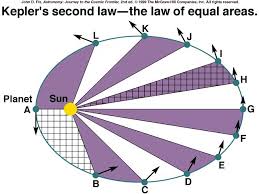
Which ellipse has an eccentricity of 0.7.


How does Newton's Law of Universal Gravitation describe the relationship between gravity and mass?
As mass increases, gravitational force increases
As mass increases, gravitational force decreases
As mass increases, gravitational force does not change
According to Newton's 2nd Law of Motion...
An object at rest will stay at rest unless acted on by a force
The more mass an object has, the more force will be required to accelerate it
Every action has an equal and opposite reaction
Gravity accelerates all objects at a constant rate
The force experienced by an object due to gravity is called its...
Mass
Acceleration
Weight
Velocity
Why do objects in Space take curved orbital paths?
Massive objects bend Space and time
The gravity of planets and stars oppose one another
Ellipses are the most efficient orbital shape
Black holes bend Space to form circular orbits
How does orbital velocity scale with distance?
Objects closer to the Sun have greater orbital velocity
Object further from the Sun have less orbital velocity
Orbital velocity does not scale with distance
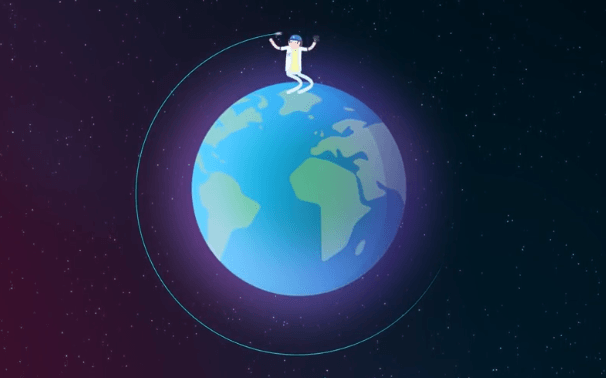
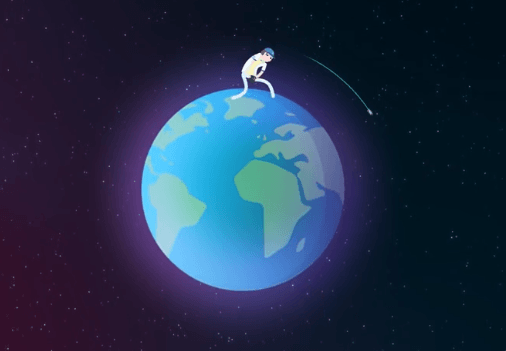
When will the gravity between two objects be the LEAST?
when the masses of both objects is small and the objects are close together
when the masses of both objects is small and the objects are far apart
when the masses of both objects is large and the objects are close together
when the masses of both objects is large and the objects are far apart

Which is newtons first law states
An object at rest will remain at rest unless a force is applied
An object is moving
An object has stopped
An moving object will keep going when a force is applied to it
Which is newtons 3rd law
for every thing there is reaction
for every reaction there is a unusual action
For every reaction there is an equal and opposite reaction
for every reaction there is an good action
Which is newtons 2nd law
Acceleration is a change in speed
Acceleration is a change in action
Acceleration is a change in name
Acceleration is a change in velocity

A person would weigh more on Jupiter than on the Earth because _?_.
Jupiter has more mass, and therefore more gravity
Jupiter has less mass, and therefore more gravity
Jupiter has more mass, and therefore less gravity
Jupiter has less mass and therefore less gravity
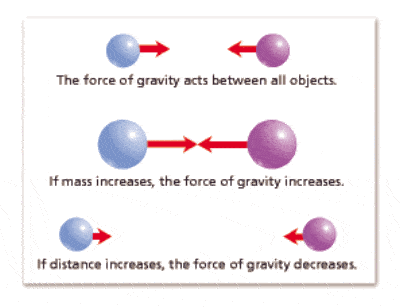
As mass increases, what happens to gravitational force?
increases
decreases
stays the same
Do planets affect the sun? Why?
No. The Sun pulls on the planets and keep them in orbit.
Yes. Sun pulls on planets; planets pull on Sun.
What forces combine to keep Earth in its orbit around the sun and the moon in orbit around Earth.
Mass and Gravity
mass and weight
Mass and Inertia
Gravity and Inertia
With greater distance, the parallax angle
increases
decreases
stays the same
doesn't change
Which of the following stars is closest to us?
Procyon (parallax angle = 0.29")
Ross 780 (parallax angle = 0.21")
Regulus (parallax angle = 0.04")
Sirius (parallax angle = 0.38")

Below are two star photos taken six months apart and laid on top of one another so the background stars (circles) line up. There are two nearby stars also shown. Which of these stars is closer?


True or False?
Neglecting air resistance, all objects will free fall at a rate of 9.8 m/s2 on Earth.
True
False

