
NEW
Font size
 Worksheets
Tissue Practice Quiz
Total questions: 56
Worksheet time: 31mins
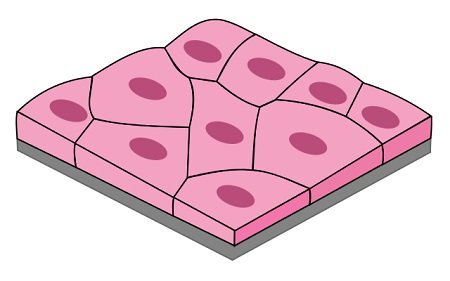
Name the type of epithelium
simple cuboidal
simple squamous
simple columnar
stratified squamous
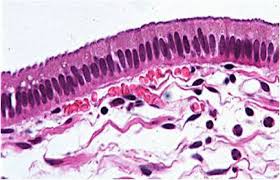
Name the type of epithelium
simple squamous
stratified squamous
simple cuboidal
simple columnar
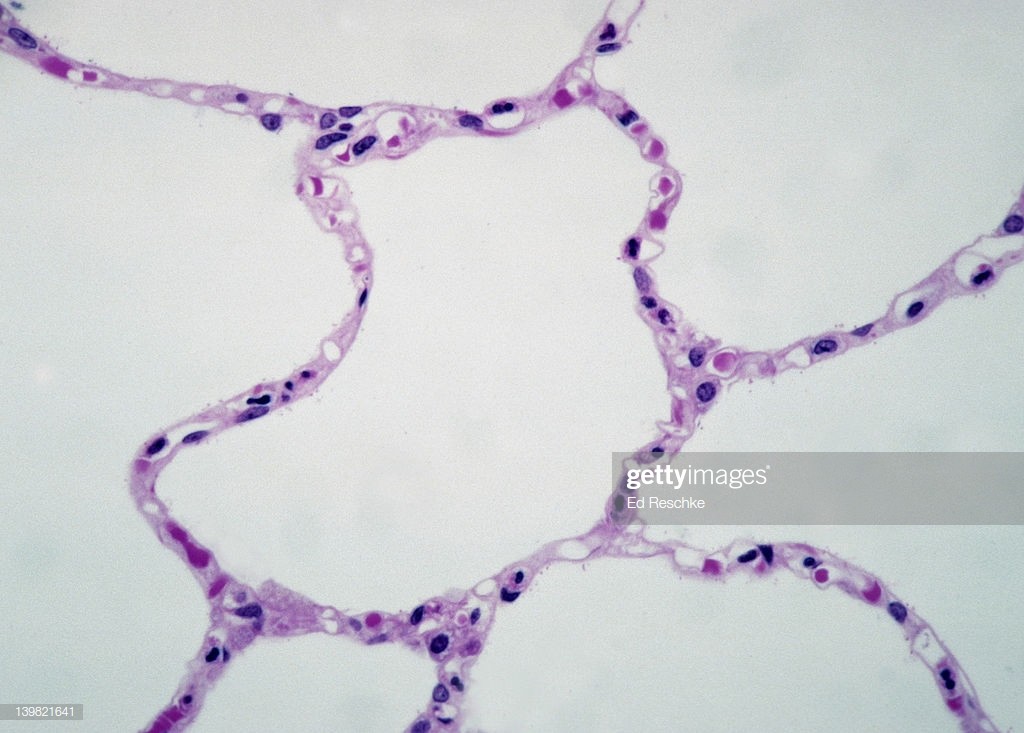
What type of epithelium lines the air sacs in this slide of lung tissue?
simple cuboidal
simple columnar
simple squamous
pseudostratified columnar

What feature found on the surface of this epithelial layer greatly increases the surface area for absorption?
cilia
microvilli
endoplasmic reticulum
multiple nuclei

The tiny protections you see on the apical surface of this cell layer are microvilli. Where in the body would you most likely find this type of cell layer?
lungs
heart
small intestine
pancreas
What physiological functions are enhanced by epithelial cells bearing microvilli?
increased surface area for absorption & capturing debris
decreased surface area for absorption & capturing debris
increased surface area for absorption of oxygen
decreased surface area for absorption of oxygen
This type of tissue forms tubules in glands and one of its functions is secretion.
Simple Cuboidal Epithelium Tissue
Stratified Squamous Epithelium Tissue
Simple Squamous Epithelium Tissue
This type of tissue is a single layer of very thin cells that lines the alveoli of the lungs.
Simple Cuboidal Epithelium Tissue
Stratified Squamous Epithelium Tissue
Simple Squamous Epithelium Tissue
The main function of this type of tissue is protection. This tissue makes up your skin and is found inside your mouth (cheek cells).
Simple Cuboidal Epithelium Tissue
Stratified Squamous Epithelium Tissue
Simple Squamous Epithelium Tissue
More tall than wide
Squamous
Cuboidal
Columnar
Transitional
Flat and scalelike
Squamous
Cuboidal
Columnar
Transitional
Varying shapes than can stretch
Squamous
Cuboidal
Columnar
Transitional
Cube shaped
Squamous
Cuboidal
Columnar
Transitional
Single layer of cells of the same shape
Simple
Stratified
Many layers of cells
Simple
Stratified
Type of tissue that appears to have multiple layers, but only has one layer with cilia.
Simple Squamous Epithelial
Stratified Squamous Epithelial
Pseudostratified Columnar Epithelial
Transitional Epithelial
Multiple layers of cells; cell shape can vary; cells have the ability to stretch. Found in the urinary bladder.
Simple Squamous Epithelial
Stratified Squamous Epithelial
Pseudostratified Epithelial
Transitional Epithelial
Hair like projections found in Pseudostratified Epithelium and function to move materials.
Nuclei
Cilia
Mucus
Goblet Cells

This tissue is found between the disc of vertebrae and contains many collagen fibers. It is very strong and compressible.
Fibrocartilage

This tissue type is very strong and is avascular (lacks a good blood supply)? Also, this tissue makes your tendons and ligaments.

What tissue is this? Hint: stores fat as a food reserve.


Dense connective tissue that attaches muscles to bones
Which type of fiber is long and thin and allows for stretch and recoil?
collagen
elastin
reticular
Which type of fiber is the thickest and has the highest tensile strength?
collagen
elastin
reticular
Which type of loose connective tissue is the most widely distributed, supports and binds other tissues, the universal packing material?
adipose
bone
reticular
areolar
Which type of tissue provides insulation and a storage of fuel?
areolar
elastic connective
adipose
hyaline cartilage
Which type of cartilage is found in your trachea, nose, larynx and cartilage of ribs?
elastic cartilage
hyaline cartilage
fibrocartilage

Which type of tissue is shown?
blood
adipose
reticular
bone
Connective tissue has varied levels of vascularity (some have blood vessels, some do not).
True
False

What type of tissue is this?
adipose
areolar
elastic cartilage
fibro cartilage
The two types of involuntary muscles are
smooth and skeletal
cardiac and skeletal
smooth and cardiac
There is only one group of involuntary muscles.
Which type of muscle is striated?
Cardiac only
Cardiac and smooth
Smooth and skeletal
skeletal and cardiac
What are the three types of muscle?
Smooth, Hard, Cardiac
Cardiac, Smooth, Skeletal
Skeleton, Heart, Bladder

Which muscle tissue type is shown in the picture?
cardiac muscle tissue
smooth muscle tissue
skeletal muscle tissue

Which muscle tissue type is shown in the picture?
cardiac muscle tissue
smooth muscle tissue
skeletal muscle tissue

Which muscle tissue type is shown in the picture?
cardiac muscle tissue
smooth muscle tissue
skeletal muscle tissue

Which muscle tissue type is shown in the picture?
cardiac muscle tissue
smooth muscle tissue
skeletal muscle tissue

What is the purpose of nervous tissue?
send electrical signals
strengthen muscle
make blood cells
This tissue controls body functions:
muscle
connective
epithelial
nervous

Where are nervous tissues found?
Brain
Spinal Cord
Nerves
All of the above

