Wayground logo

Free Printable Worksheets

Font size

S
M
L
XL
Worksheets

Chemical Reactions

Total questions: 41

Worksheet time: 27mins

Name
Class
Date
1.

A substance that is formed as the result of a chemical reaction is a __________________

a)

Product

b)

Reactant

c)

Starters

d)

Enders

2.

Which of the following is an example of a chemical change?

a)

water freezes to form ice

b)

sugar dissolves in water

c)

gasoline burns in a car engine

d)

a piece of metal expands when it is heated

3.

A change in the shape of an object is an example of _________________.

a)

a chemical change

b)

energy

c)

an endothermic change

d)

a physical change

4.
Which of the following is an example of a chemical change?
a)
rusting of a bicycle
b)
painting a house
c)
washing a dog
d)
tearing up a newspaper
5.

Which one shows that a chemical reaction has occurred?

a)

dissolving

b)

melting

c)

formation of a gas

d)

bending

6.
What type of change occurs when a new substance is formed that has different properties from the original substances?
a)
chemical change
b)
nuclear change
c)
physical change
d)
mutation
7.
What does the Law of Conservation of Mass state?
a)
Matter cannot be gained or lost in a chemical reaction.
b)
Matter can only be lost in a chemical reaction.
c)
Matter can only be gained in a chemical reaction.
d)
Matter can be gained and lost in a chemical reaction. 
8.
What is the left part of a chemical equation called?
2H2 + O2 --> 2H2O
a)
Reactants
b)
Products 
c)
Yields 
d)
Chemical Equation 
9.
What is the right part of a chemical equation called...
2H2 + O2 --> 2H2O
a)
Reactants
b)
Products 
c)
Yields 
d)
Chemical Equation 
10.
How many atoms of carbon (C) are in C6H12O6?
a)
3
b)
6
c)
12
d)
24
11.
How many Sodium (Na) are in 6NaCl?
a)
1
b)
12
c)
6
12.
How many Aluminum are in Al2O3?
a)
3
b)
2
c)
5
13.
How many Hydrogen are in 4H2O?
a)
6
b)
8
c)
2
d)
4
14.
Is the following equation balanced?...
Al + O2 --> 2Al2O3
a)
Yes!
b)
No!
15.
Which of the following reactions is balanced?
a)
2CH4 + O2 -> CO2 + H2O
b)
CH4 + 2O2 -> CO2 + H2O
c)
CH4 + 2O2 -> CO2 + 2H2O
d)
None of the chemical equations are balanced.
16.
When a scientist mixed two chemicals, an exothermic reaction takes place. Which of the following would be proof that the reaction was exothermic?
a)
a change of color
b)
a change of state
c)
a temperature decrease
d)
a temperature increase
17.
In the reaction methane + oxygen turns into carbon dioxide + water, the methane and oxygen are called _______________.
a)
reactants
b)
products
c)
neutrals
d)
energizers
18.
Increasing the concentration of a reactant in a chemical reaction will _____________.
a)
decrease the rate of the reaction
b)
stop the reaction from happening
c)
increase the rate of the reaction
d)
have no effect on the rate of the reacion
19.
Which of the following represents a chemical change?
a)
cutting a piece of paper with scissors
b)
cooling a mixture of air and kerosene vapor to obtain liquid kerosene
c)
burning a piece of notebook paper in the presence of oxygen
d)
heating water over a flame to its boiling point
20.
Which of the following is an example of a physical change?
a)
souring milk
b)
mixing baking soda and vinegar
c)
rusting metal
d)
mixing oil and vinegar
21.
Which is an example of an endothermic reaction?
a)
burning wood
b)
airplane using fuel
c)
plant leaves using photosynthesis
d)
digesting food
22.
If you combine two substances in a beaker at room temperature and the beaker feels cold to the touch, it means that the substances:
a)
have not reacted with each other
b)
have undergone an endothermic reaction
c)
have undergone a physical change
d)
have undergone an exothermic reaction
23.
In any chemical reaction, the mass of the products is always:
a)
slightly less than the mass of the reactants
b)
much less than the mass of the reactants
c)
the same as the mass of the reactants
d)
greater than the mass of the reactants
24.
Raising the temperature of a chemical reaction would make the reaction __________________.
a)
happen slower
b)
happen faster
c)
stop completely
d)
proceed as normal
25.
Your mother used pancake mix, eggs, and milk to make pancakes.  Which of these is the product?
a)
the pancake mix
b)
the eggs
c)
the milk
d)
the pancakes
26.
How do chemical reactions turn substances into new substances?
a)
with burning acid
b)
the molecules mix together and create new substances
c)
the atoms break apart and combine back together in new ways
d)
the ionic compounds mix in water to form solutions
27.

The smallest particle of an element; made of electrons, protons, and neutrons

a)

Atoms

b)

Elements

c)

Molecules

d)

Products

28.

A solid that is deposited from a solution

a)

Solid

b)

Liquid

c)

Product

d)

Precipitate

29.

A chemical reaction or process that absorbs heat from the surroundings

a)

Endothermic

b)

Exothermic

30.

A chemical reaction or process that releases heat.

a)

Endothermic

b)

Exothermic

31.

What type of reaction is this?

a)

Exothermic

b)

Endothermic

c)

Energy Producing

d)

No way to tell

32.
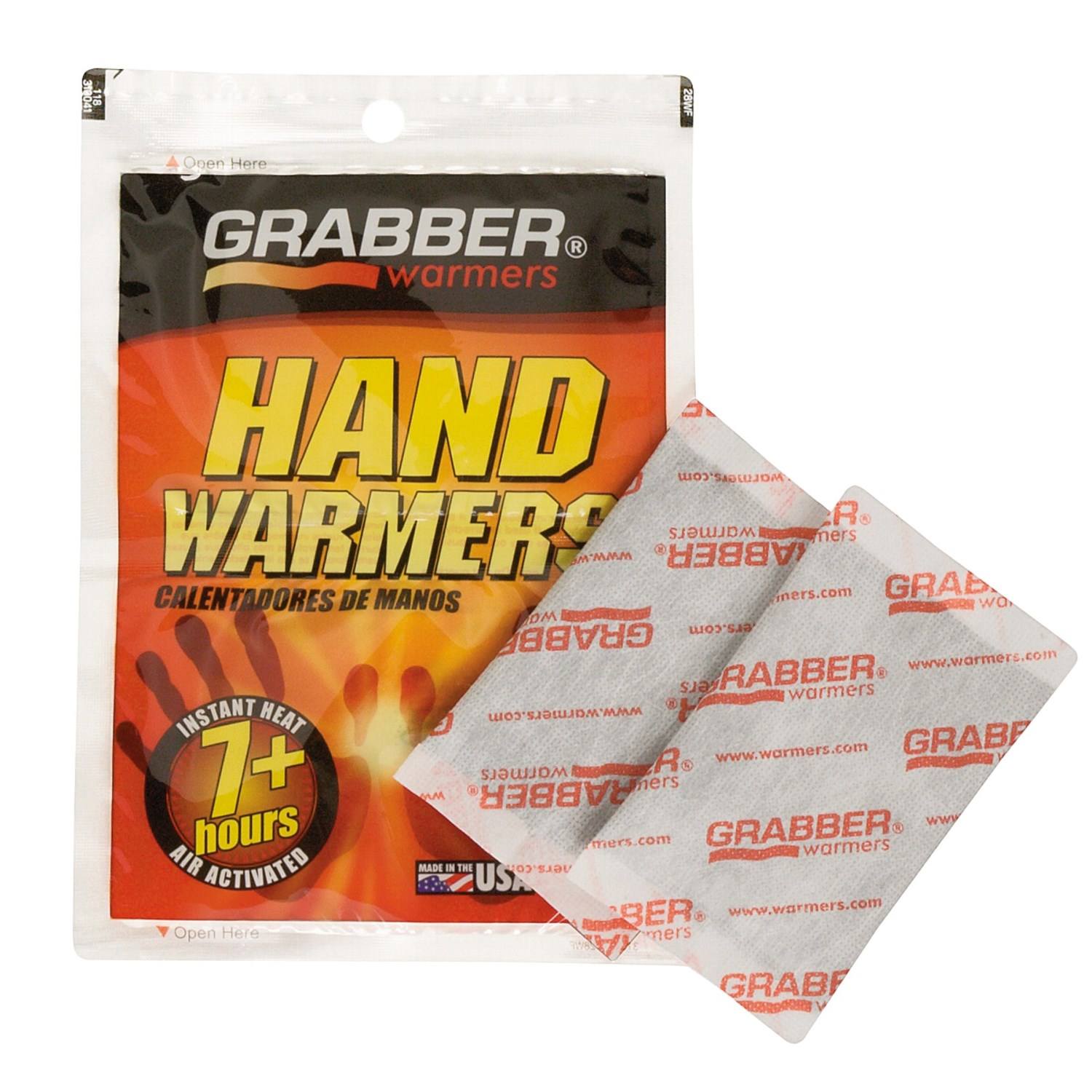
What type of reaction occurs in a hand warmer
a)
exothermic
b)
endothermic
33.
Exothermic reactions...
a)
Absorb energy
b)
Release energy
c)
Release Color
d)
Absorb Color
34.
In an endothermic reaction, heat is ...
a)
taken in or absorbed
b)
given out or released 
35.

In general, what happens when you increase the temperature of a reaction?

a)

The heat destroys the reactants

b)

The rate of the reaction decreases

c)

The rate of the reaction increases

d)

The rate of the reaction stays the same

36.

Which shows a balanced chemical equation for the decomposition of aluminum oxide (Al2O3)? Hint: Which of the following is observing the Law of Conservation of Matter: Matter cannot be created or destroyed so there must be the same number of atoms on both sides of the equation.

a)

Al2O3 → 2 Al + O2

b)

Al2O3→ 2 Al + 3O2

c)

2 Al2O3 → 4Al + O2

d)

2Al2O3 → 4Al + 3O2

37.

Which of the following reactions describes a synthesis reaction? Hint: synthesis means “to make”.

a)

2 Na + Cl2 → 2NaCl

b)

Mg + CuSO4 → MgSO4 + Cu

c)

2KI → 2K + I2

d)

CH4 +2 O2 → CO2 + 2H2O

38.

Hydrogen and oxygen react to form water. At an atomic level, how do we know that a chemical reaction has occurred? 

a)

Hydrogen molecules are negative, and oxygen molecules are positive. 

b)

For every oxygen atom, two hydrogen atoms are needed. 

c)

The hydrogen and oxygen atoms regroup into a new molecule. 

d)

Oxygen atoms are much larger than hydrogen atoms. 

39.

Which of the following provides the best evidence that this reaction follows the law of conservation of mass?

a)

There are the same number and type of each kind of atom on both sides of the equation. 

b)

All of the reactants that were present before the reaction are present after the reaction. 

c)

The number of molecules after the reactions changes from three molecules to two. 

d)

More chlorine and hydrogen atoms are generated during the chemical reaction. 

40.

Students want to gather evidence for the claim that the number of atoms present before a chemical reaction is equal to the number of atoms present after the chemical reaction. They decide to react vinegar and baking soda in a sealed plastic bag. Which of the following would provide the evidence students need?

a)

The mass of the plastic bag, baking soda, and vinegar before the reaction was equal to the mass after the reaction.

b)

Bubbles were produced during the reaction, which meant that a gas was being produced. 

c)

The plastic bag did not change in any way, indicating that it was not involved in the reaction. 

d)

The mass of the baking soda was exactly equal to the mass of the vinegar used to create the chemical reaction. 

41.

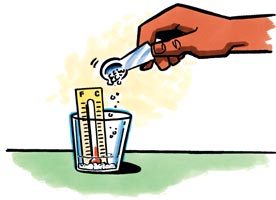
Is this showing an endothermic or an exothermic reaction?

a)

Endothermic

b)

Exothermic