Wayground logo

Free Printable Worksheets

Font size

S
M
L
XL
Worksheets

HEAT

Total questions: 85

Worksheet time: 1hrs 3mins
Name
Class
Date
1.
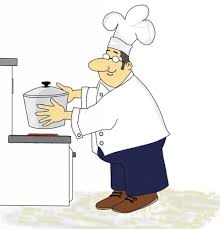
The man goes to take the hot pot off the stove with his bare hands.
a)
conduction
b)
convection
c)
radiation
2.
A chair is several feet from a fireplace. The side of the chair facing the fireplace gets warm due to
a)
conduction
b)
convection
c)
radiation
3.
"Lava lamps" contain colored liquids. These liquids form globs that rise to the top due to
a)
conduction
b)
convection
c)
radiation
4.
A house burns down. The vinyl siding of the house next door warps due to
a)
conduction
b)
convection
c)
radiation
5.
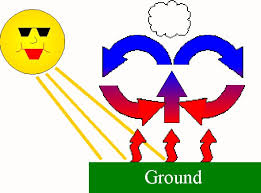
Warm air over the beach rises while cooler, dense air from the ocean rushes in due to
a)
conduction
b)
convection
c)
radiation
6.
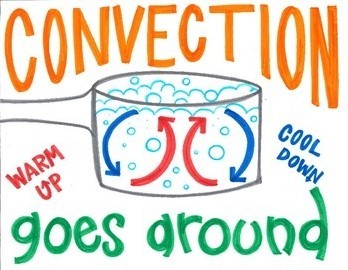
What is the definition of CONVECTION
a)
When heat transfers through waves.
b)
When heat transfers from objects that are touching.
c)
a  hot liquid or air that  expands, becomes less dense, and rises or becomes more dense, and sinks.
d)
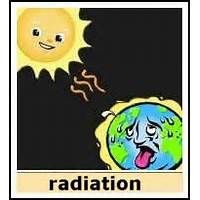
Heat traveling from the sun
7.
Which of the following is an example of convection?
a)
A hair dryer is drying up your hair.
b)
When the AC or heater changes the temperature.
c)
When a car engine turns hot after being turned on.
d)
When you are making soup and the water is rising and lowering.
8.
Warm air rises and the cool air sinks demonstrates this type of heat transfer. 
a)
conduction
b)
convection
c)
radiation
d)
Insolation 
9.
Heat transfers from an area of ____temperature to an area of ___ temperature.
a)
high to low
b)
low to high
c)
high to high
d)
It can travel high to low and low to high. 
10.
What happens when ice cubes melt in a glass?
a)
Heat travels from the ice to the warmer water.
b)
No energy is transferred.
c)
Heat is transferred from the warmer water to the ice cubes.
d)
The water warms up due to the humidity
11.
What is the definition of CONDUCTION?
a)
When heat is transferred from objects like rays of light or electromagnetically.
b)
a  hot liquid or air that  expands, becomes less dense, and rises or becomes more dense, and sinks.
c)
When heat transfers from objects that are touching.
d)
When heat transfers through the heater or AC in your house.
12.
Why do we wear sweaters in cold weather?
a)
To keep cold out.
b)
To generate heat.
c)
To reduce heat loss.
d)
All of the above.
13.
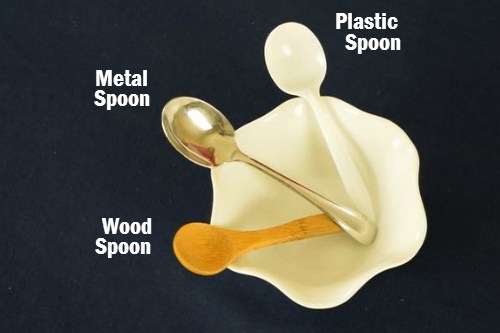
If you put a metal spoon and a wooden spoon into a pot of boiling water, one will become too hot to touch.  Why?
a)
Metals conduct heat better than wood.
b)
Wood conducts heat better than metals.
c)
Metals pull in heat because heat is attracted to metals.
d)
Wood isn't as strong as metals.
14.
Molecules in cold things move more _________
than in hot things.
a)
quickly
b)
slowly
c)
happily
d)
merrily
15.
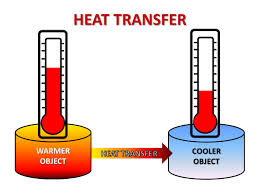
In heat transfer, heat always flows from the _______________ substance to the _______________ substance.
a)
Hotter to colder
b)
Colder to hotter
c)
Hotter to hotter
d)
Colder to colder
16.
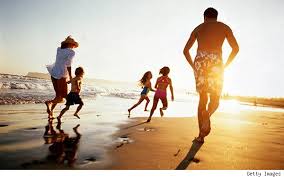
The sun shines down on this family as the play on the beach.
a)
conduction
b)
convection
c)
radiation
17.
On a hot day, the upstairs rooms in a house are usually hotter than the downstairs rooms. Why?
a)
Cool air is less dense than hot air.
b)
Warm air rises and cool air sinks
c)
 The roof insulation warms the air
d)
 Heat rises
18.
When you use a microwave, what is the main way that heat is transferred?
a)
Convection
b)
Conduction
c)
Radiation
d)
insulation.
19.

The quicker a molecule moves, the warmer it is

a)

True

b)

False

20.

As water in a freezer turns to ice, the freezer air absorbs heat from the water

a)

True

b)

False

21.

What is the transfer of heat by circulation of the heated parts of a liquid or gas?

a)

Conduction

b)

Convection

c)

Coriolis Effect

d)

Radiation

22.

What is the transfer of heat by circulation of the heated parts of a liquid or gas?

a)

Conduction

b)

Convection

c)

Coriolis Effect

d)

Radiation

23.

Which best explains how the Earth’s atmosphere is warmed?

a)

Radiation from the sun warms the surface and the atmosphere is heated through conduction and convection.

b)

Radiation from the sun warms the surface and the atmosphere is heated through evaporation and convection.

c)

Convection from the sun warms the surface and the atmosphere is heated through conduction and radiation.

d)

Convection from the sun warms the surface and the atmosphere is heated through evaporation and conduction.

24.

What two processes of heat transfer would cause the water in a pot on the stove to boil?

a)

radiation and convection

b)

conduction and radiation

c)

radiation and evaporation

d)

conduction and convection

25.

What type of energy transfer occurs when two things are in direct contact (touching)?

a)

Condensation

b)

Conduction

c)

Convection

d)

Radiation

26.

Which of the following shows a transfer of energy by means of conduction?

a)

Standing near a warm fire.

b)

Watching a microwave oven cook your food.

c)

Grabbing a metal seat belt buckle after a car has been closed up in the sun all day.

d)

Feeling the breeze that blows over the land during the day and toward the sea later that night.

27.

What is the transfer of heat by the circular movement of molecules?

a)

Condesation

b)

Conduction

c)

Convection

d)

Radiation

28.

To check if an iron is hot, you place your hand near the iron and feel that it is warm without touching it. What type of heat transfer is this?

a)

Condensation

b)

Conduction

c)

Convection

d)

Radiation

29.

When you play outside in the sun too long and receive a sunburn, which type of heat transfer is this?

a)

Conduction

b)

Convection

c)

Evaporation

d)

Radiation

30.

A student must choose three items to demonstrate conduction, convection, and radiation from solar energy. The student quickly chooses water and a metal bowl. Which of the following items should the student choose to complete the experiment?

a)

Rubber ball

b)

food coloring

c)

heat lamp

d)

ice cube

31.

What is the main source of energy that drives all weather patterns?

a)

Sun

b)

Moon

c)

Oceans

d)

Mountains

32.

Which material will heat travel through the fastest?

a)

Plastic

b)

Wood

c)

Metal

33.

How do molecules react when heat energy is added to them?

a)

They feel warmer but stay in place

b)

They feel warmer and move slower.

c)

They feel warmer and move faster

d)

Molecules do not react with heat energy only solar energy

34.

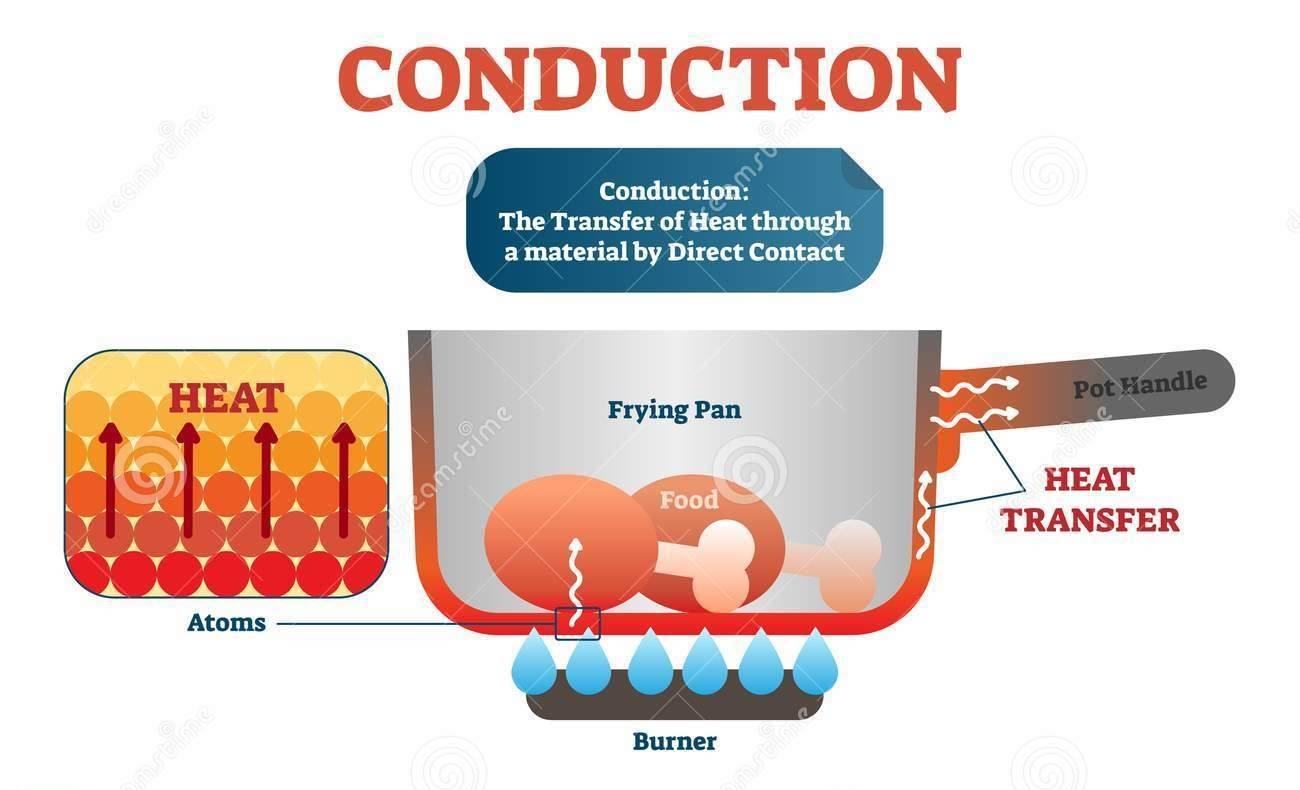
What is Conduction?

a)

When heat is passed from particle to particle through an object.

b)

When particles get heated, expand, and become less dense.

c)

When heat transfers by waves through empty space.
35.

What is Convection?

a)

When heat is passed from particle to particle through an object.

b)

When particles get heated, expand, and become less dense.

c)

When heat transfers by waves through empty space.

36.

What is Radiation?

a)

When heat is passed from particle to particle through an object.

b)

When particles get heated, expand, and become less dense.

c)

When heat transfers by waves through empty space.

37.

Which of the following is an example of heat transfer by Conduction?

a)

Burning your fingers on a hot iron.

b)

Heat from a heater warming up your whole house

c)

Standing by a campfire and feeling the heat.

d)

All of the above.

38.

Which of the following is an example of heat transfer by Convection?

a)

Burning your fingers on a hot iron.

b)

Heat from a heater warming up your whole house

c)

Standing by a campfire and feeling the heat.

d)

All of the above.

39.

Which of the following is an example of heat transfer by Radiation?

a)

Burning your fingers on a hot iron.

b)

Heat from a heater warming up your whole house

c)

Standing by a campfire and feeling the heat.

d)

All of the above.

40.

What is heat?

a)

The temperature of hot objects

b)

The energy transferred between hot objects

c)

The fire hot objects give off.

d)

All of the above

41.

How does heat move?

a)

From cooler objects to warmer objects.

b)

From warmer objects to cooler objects

c)

From metal objects to nonmetal objects

d)

Very quickly in all directions

42.
Hot coffee is stirred with a spoon; the spoon gets hot due to
a)
conduction
b)
convection
c)
radiation
43.
A chair is several feet from a fireplace. The side of the chair facing the fireplace gets warm due to
a)
conduction
b)
convection
c)
radiation
44.
"Lava lamps" contain colored liquids. These liquids form globs that rise to the top due to
a)
conduction
b)
convection
c)
radiation
45.
Near the ceiling of a room the air is warmer; the warm air rises because of
a)
conduction
b)
convection
c)
radiation
46.
Some cook pans have cooper on the bottom to heat evenly.
Copper transfers heat to the pan by
a)
conduction
b)
convection
c)
radiation
47.
In a swimming pool, water near the surface is slightly warmer. The warm water rises because of
a)
conduction
b)
convection
c)
radiation
48.
The metal skewer gets so hot that you drop your marshmallow into the campfire because of
a)
conduction
b)
convection
c)
radiation
49.
A house burns down. The vinyl siding of the house next door warps due to
a)
conduction
b)
convection
c)
radiation
50.
Warm air over the beach rises while cooler, dense air from the ocean rushes in due to
a)
conduction
b)
convection
c)
radiation
51.
A huge rock at the state park gets hot during the day. The rock was warmed from the Sun by
a)
conduction
b)
convection
c)
radiation
52.
You lay on the same hot rock at night and keep warm from the rock by
a)
conduction
b)
convection
c)
radiation
53.
Weather systems in the Earth's atmosphere are due to
a)
conduction
b)
convection
c)
radiation
54.
Hot coffee is stirred with a spoon; the spoon gets hot due to
a)
conduction
b)
convection
c)
radiation
55.
A chair is several feet from a fireplace. The side of the chair facing the fireplace gets warm due to
a)
conduction
b)
convection
c)
radiation
56.
"Lava lamps" contain colored liquids. These liquids form globs that rise to the top due to
a)
conduction
b)
convection
c)
radiation
57.
Near the ceiling of a room the air is warmer; the warm air rises because of
a)
conduction
b)
convection
c)
radiation
58.
Some cook pans have cooper on the bottom to heat evenly.
Copper transfers heat to the pan by
a)
conduction
b)
convection
c)
radiation
59.
In a swimming pool, water near the surface is slightly warmer. The warm water rises because of
a)
conduction
b)
convection
c)
radiation
60.
The metal skewer gets so hot that you drop your marshmallow into the campfire because of
a)
conduction
b)
convection
c)
radiation
61.
A house burns down. The vinyl siding of the house next door warps due to
a)
conduction
b)
convection
c)
radiation
62.
Warm air over the beach rises while cooler, dense air from the ocean rushes in due to
a)
conduction
b)
convection
c)
radiation
63.
A huge rock at the state park gets hot during the day. The rock was warmed from the Sun by
a)
conduction
b)
convection
c)
radiation
64.
You lay on the same hot rock at night and keep warm from the rock by
a)
conduction
b)
convection
c)
radiation
65.
Weather systems in the Earth's atmosphere are due to
a)
conduction
b)
convection
c)
radiation
66.

The Kinetic Molecular theory states that

a)

all matter is made of particles

b)

particles are in constant motion

c)

particles collide with each other & their containers

d)

all the above

67.

During thermal contraction, the volume _____________.

a)

increases

b)

decreases

c)

stays the same

d)

isn't effected

68.

During thermal expansion, thermal energy has to be ______________.

a)

added

b)

removed

c)

remain the same

d)

thermal energy doesn't effect expansion

69.

What is the movement of thermal energy called?

a)

temperature

b)

radiation

c)

heat

d)

conduction

70.

Boiling and evaporation are examples of what?

a)

vaporization

b)

melting

c)

freezing

d)

condensation

71.

A puddle disappearing on a hot day is an example of what?

a)

melting

b)

freezing

c)

condensation

d)

vaporization

72.

What is it called when a solid turns directly into a gas without going through the liquid state first?

a)

melting

b)

freezing

c)

sublimation

d)

deposition

73.

Frost is an example of which state change?

a)

sublimation

b)

deposition

c)

melting

d)

freezing

74.

The grass feeling wet in the morning (even though it didn't rain) is an example of which state change?

a)

freezing

b)

sublimation

c)

condensation

d)

vaporization

75.

Which heat transfer is being shown at box #1?

a)

conduction

b)

radiation

c)

convection

d)

heat

76.

Which heat transfer is being shown in box #2?

a)

conduction

b)

radiation

c)

convection

d)

freezing

77.

Which heat transfer is being shown in box #3?

a)

conduction

b)

radiation

c)

convection

d)

vaporization

78.

A material in which thermal energy moves quickly/ easily is called what?

a)

insulator

b)

wood

c)

plastic

d)

conductor

79.

A material in which thermal energy does NOT move quickly/ easily through is called what?

a)

conductor

b)

convection

c)

insulator

d)

metal

80.

What state change occurs when a liquid turns into a solid?

a)

melting

b)

conduction

c)

vaporization

d)

freezing

81.

What state change occurs when a solid turns into a liquid?

a)

freezing

b)

deposition

c)

sublimation

d)

melting

82.

What state change occurs when the mirror fogs up after you shower?

a)

melting

b)

depositon

c)

condensation

d)

vaporization

83.

What is the transfer of thermal energy through electromagnetic waves?

a)

conduction

b)

radiation

c)

convection

d)

vaporization

84.

What is the transfer of thermal energy due to the collisions between particles?

a)

conduction

b)

radiation

c)

convection

d)

sublimation

85.

What is the transfer of thermal energy by the movement of particles in a material?

a)

conduction

b)

radiation

c)

convection

d)

vaporization