
 Worksheets
Energy
Total questions: 87
Worksheet time: 1hrs 18mins
Name
Class
Date
1.

At which point is potential energy greatest
a)
W
b)
X
c)
Y
d)
Z
2.

When a pendulum swings, at which point is kinetic energy highest:
a)
1
b)
2
c)
3
d)
4
3.
A cell phone battery dies. It gets plugged into an electrical outlet to recharge. Which of the following energy transformations occur during the charging?
a)
mechanical to chemical
b)
electrical to solar
c)
chemical to light
d)
electrical to chemical
4.

Solar Energy is transferred to _____ Energy.
a)
Mechanical
b)
Solar
c)
Sound
d)
Electrical
5.

When you eat pizza, Chemical Energy is transferred to _____ Energy.
a)
Solar
b)
Electrical
c)
Mechanical
d)
Chemical
6.
LT4: When heat is transferred by the movement of currents within a fluid it is called
a)
conduction
b)
convection
c)
radiation
7.
LT4: the transfer of energy by electro-magnetic waves is called
a)
conduction
b)
convection
c)
radiation
8.

LT4: Identify the heat transfer occurring in this picture
a)
conduction
b)
convection
c)
radiation
9.

LT4: Identify the heat transfer happening in this image
a)
conduction
b)
convection
c)
radiation
10.
The transfer of heat energy by heat traveling through a metal is known as
a)
conduction
b)
convection
c)
radiation
d)
reflection
11.
If a particular substance is a good electrical insulator, then you can assume it probably
a)
has no isotopes.
b)
does not lose electrons easily.
c)
is a liquid at room temperature.
d)
is a compound, rather than an element.
12.
Heat may be transferred through a vacuum by
a)
conduction
b)
convection
c)
radiation
d)
reflection
13.
A toaster browns bread by converting
a)
electric energy to heat energy.
b)
heat energy to electric energy.
c)
mechanical energy to heat energy.
d)
chemical energy to electric energy.
14.
Heat energy transferred by conduction will travel best through
a)
solids
b)
liquids
c)
gases
d)
a vacuum
15.
Which is the best heat conductor?
a)
air
b)
iron
c)
wood
d)
glass
16.
When solar energy is transmitted through space to the earth, the process by which it is transferred is
a)
convection
b)
conduction
c)
deduction
d)
radiation
17.
A person sitting in front of a fireplace feels what type of heat energy?
a)
convection energy
b)
conduction energy
c)
solar energy
d)
radiation energy
18.
Thermal (heat) energy always flows from
a)
gas to a liquid
b)
a liquid to a solid
c)
a warmer region to a cooler region.
d)
a freezing material to a boiling material.
19.
It is possible to pour a mile long stretch of concrete when building a highway, but it is NOT done. Contractors pour a series of short sections with spaces called joints separating the sections. This is done to
a)
provide space for the concrete to expand during hot weather.
b)
provide space for the concrete to contract during hot weather.
c)
give rain water a place to drain off of the road surface during bad weather.
d)
make the road easier to replace since only small sections will need to be done at one time.
20.
Which of the following substances has the properties of a good thermal insulator?
a)
copper
b)
plastic
c)
aluminum
d)
silver
21.
A microwave oven is used to boil water for making hot tea. Explain how the water would be affected if a vacuum were used to remove all the air from the microwave before the heating began. (Assume the microwave has all of the same settings.)
a)
The water would get hotter due to reduced interference by air molecules.
b)
The water would not get as hot due to lack of transmission by the air molecules.
c)
The water would stay the same temperature because air molecules are not involved in the heat transfer.
d)
The water could not heat up because air molecules are required to transfer the energy from the microwave to the water.
22.
In this type of heat transfer, no molecular motion is necessary. Heat can be transferred across large distances without any particles being present.
a)
conduction
b)
convection
c)
radiation
d)
transformation
23.
Many restaurants and kitchens use iron skillets to cook bacon, eggs, and biscuits for breakfast. A standard skillet has a mass of 850 g. When cooking bacon for breakfast the skillet starts at a temperature of 25 degrees Celsius. At the end of cooking, the temperature of the skillet reaches 120 degrees Celsius. The specific heat of iron is 0.45 J/(g°C).
Determine the heat energy gained by the iron skillet.
Determine the heat energy gained by the iron skillet.
a)
4.03 J
b)
382.5 J
c)
36,337.5 J
d)
179,444.4 J
24.
Albert stirs a mug of hot chocolate with a metal spoon. What type of heat transfer is responsible for the spoon getting hot?
a)
conduction
b)
convection
c)
thermoelectric
d)
radiation
25.
Which of the following could be used to convert light energy to electrical energy?
a)
a windmill
b)
a chemical storage battery
c)
a solar cell
d)
rotating coils in a magnetic field
26.
A rock dropped from a cliff has greater kinetic energy just before it reaches the ground than it did at the top of the cliff. Which of the following explains this fact?
a)
The rock's mass decreases as it falls.
b)
Falling has increased the rock's total energy.
c)
The rock's potential gravitational energy has been converted into kinetic energy.
d)
Chemical analysis will reveal that the rock's chemical energy has been consumed.
27.
Electricity generated from sunlight is often used to power small devices like electronic calculators and less often used to power larger devices. Which of the following explains this?
a)
There is very little energy in the sunlight that reaches Earth.
b)
Solar energy is rarely used because it is generated by nuclear fusion.
c)
Photosynthesizing plants use up most of the energy reaching Earth from the sun.
d)
Technologies that convert light into electricity are usually inefficient.
28.
When running a bath, the temperature of the water in the tub is too cold. To remedy this, you add hot water from the tap. Due to convection
a)
all of the hot water stays together.
b)
the hot water gradually moves throughout the tub.
c)
the cooler water is forced to the surface of the tub.
d)
the hot water molecules transfer energy through collisions to cooler water molecules.
29.
Which of these examples shows the conversion of mechanical energy into thermal energy?
a)
A plant produces sugars during photosynthesis from sunlight, water, and carbon dioxide.
b)
A solar-powered water heater warms water for a house.
c)
A camper starts a fire from two sticks and some tinder.
d)
A power plant burns coal to generate electricity.
30.
In which of the following situations does a stone have the greatest kinetic energy?
a)
a stone at a cliff's edge
b)
a stone falling from a cliff
c)
a stone lying at the bottom of a cliff
d)
a person carrying a stone up a mountain
31.
Which of the following is the best restatement of the law of conservation of energy?
a)
In a closed system, kinetic energy equals potential energy.
b)
Energy is not created nor destroyed, but only changes from one form to another.
c)
Energy resulting from gravitational acceleration is constant throughout the universe.
d)
Energy within a biological community remains constant due to the interaction of producers, consumers, and decomposers.
32.
Which is an example of energy from chemical bonds being formed or broken transformed into energy of motion?
a)
lighting a match
b)
turning on a battery-operated toy car
c)
pushing a button on the TV remote control
d)
the wind turning the blades of a windmill
33.
In a coal burning power plant, coal is burned to heat steam to turn a turbine. The turbine generates power that is sent to homes and businesses.
Order the energy transformations of the power plant.
Order the energy transformations of the power plant.
a)
chemical, mechanical, electrical
b)
electrical, chemical, mechanical
c)
mechanical, chemical, electrical
d)
mechanical, electrical, chemical
34.
Every person uses energy stored in the fat cells of his or her body. This stored energy is in the form of
a)
heat energy.
b)
nuclear energy.
c)
chemical energy.
d)
mechanical energy.
35.
A hang glider is able to sail through the air on warm winds which are heated by Earth's surface. This best illustrates one use of which principle of heat transfer?
a)
conduction
b)
convection
c)
radiation
d)
velocity
36.
A softball is thrown and is hit high into the air. As it rises, the softball possesses
a)
only kinetic energy.
b)
only potential energy.
c)
both potential and kinetic energy.
d)
potential, kinetic, and electromagnetic energy.
37.
In a copper wire, a temperature increase is the result of which of the following?
a)
an increase in the size of the copper particles
b)
a decrease in the mass of the copper particles
c)
an increase in the motion of the copper particles
d)
a decrease in the distance between the copper particles
38.
A student in a laboratory transfers a beaker containing a hot solution from the lab table to a cool water bath. Which of the following parts of the system experiences an increase in heat energy?
a)
beaker
b)
lab table
c)
water bath
d)
solution
39.
A pot with 2400 g of water at a temperature of 25 °C is heated on a stove until the water boils (100°C). The specific heat of water is 4.18 J/(g°C).
Determine the heat energy needed to heat the water in the pot to boiling.
Determine the heat energy needed to heat the water in the pot to boiling.
a)
133.76 J
b)
43,062.2 J
c)
752,400 J
d)
1,003,200 J
40.
Solid magnesium has a specific heat of 1.01 J/g°C. How much heat is given off by a 20.0 gram sample of magnesium when it cools from 70.0°C to 50.0°C?
a)
202 J
b)
404 J
c)
808 J
d)
1010 J
41.
Convection is the result of —
a)
currents caused by the motion of heated molecules.
b)
increases in the density of solids.
c)
colder portions of liquids rising.
d)
the lack of heat transfer.
42.
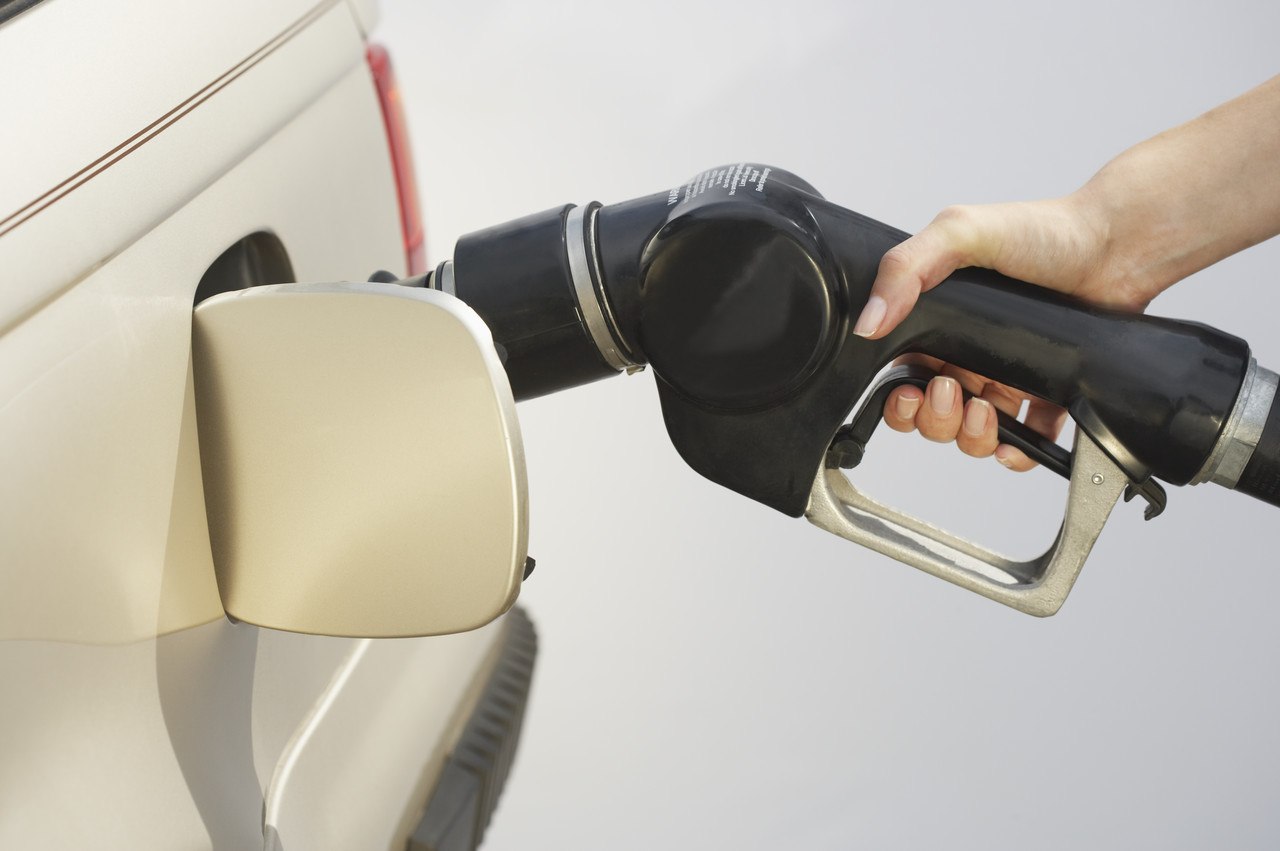
Which energy conversion is taking place when you put gasoline in a car?
a)
thermal -> electrical
b)
mechanical -> electrical
c)
chemical -> mechanical
d)
mechanical -> electromagnetic
43.

what type of energy is stored in a battery?
a)
electrical
b)
chemical
c)
thermal
d)
mechanical
44.

Electrical Energy is transferred to _____ Energy.
a)
Thermal
b)
Solar
c)
Electrical
d)
None
45.
Energy transformations occur when...
a)
energy is created through conduction
b)
energy changes from one form to another
c)
two forces slide together that are touching
d)
a chemical reaction takes place
46.
Mechanical energy
a)
energy built up before being in motion
b)
energy released in a chemical reaction
c)
energy of motion
d)
sum of kinetic and potential energy
47.
Gravitational potential energy depends on the ________ and ________ of the object.
a)
Height and mass
b)
Friction and movement
c)
Mass and Movement
d)
Height and Friction
48.

The roller coaster cart has the most gravitational potential energy at position-
a)
W
b)
X
c)
Y
d)
Z
49.
On a roller coaster, where is maximum kinetic energy?
a)
At the bottom of a big hill
b)
When going around a corner
c)
When going upside down
d)
At the top of a big hill
50.
Which items would have this energy transformation: chemical energy -> electrical, light and thermal energy?
a)
turning on a flashlight
b)
nuclear power plant
c)
digesting an apple
d)
tanning bed
51.
Which items would have this energy transformation: chemical energy -> mechanical energy?
a)
person running
b)
candle burning
c)
windmill turning
d)
playing a violin
52.

The diagram below shows a hot air balloon rising. Propane gas tanks are seen at the bottom of the balloon. What energy transformations occur when propane gas is used to lift the balloon?
a)
Mechanical to light to chemical
b)
Chemical to mechanical to thermal
c)
Thermal to chemical to light
d)
Chemical to thermal to mechanical
53.
Which of the following energy transformations occur when a lamp that is plugged into a wall socket is functioning correctly?
a)
Chemical to light
b)
Electrical to chemical
c)
Electrical to light
d)
Chemical to electrical
54.
What energy transformations take place when a battery-operated radio is in use?
a)
Electrical to chemical to light
b)
Sound to chemical to mechanical
c)
Chemical to electrical to sound
d)
Light to electrical to thermal
55.

The diagram shows a complete circuit with a battery and a buzzer making noise. This circuit works by transforming -
a)
chemical energy to electrical to sound.
b)
electrical energy to thermal to light.
c)
sound energy to electrical to chemical.
d)
mechanical energy to electrical to sound.
56.
Which of the following shows the correct order of the energy transformations that occur when green plants produce their food from the Sun’s energy?
a)
chemical to thermal
b)
light to chemical
c)
thermal to light
d)
chemical to electrical
57.

As a pendulum swings from its highest to lowest position, what happens to its kinetic and potential energy?
a)
Both the potential energy and kinetic energy decrease
b)
The potential energy decreases while the kinetic energy increases
c)
The kinetic energy decreases while the potential energy increases
d)
Bothe the potential energy and kinetic energy increase
58.

At which point is kinetic energy greatest
a)
W
b)
X
c)
Y
d)
Z
59.

Which of the following is NOT true about Potential Energy?
a)
An object's position affects its potential energy
b)
Potential energy is Stored energy
c)
Potential energy only occurs when an object is in motion
d)
All objects have potential energy
60.
A cell phone battery dies. It gets plugged into an electrical outlet to recharge. Which of the following energy transformations occur during the charging?
a)
mechanical to chemical
b)
electrical to solar
c)
chemical to light
d)
electrical to chemical
61.
Electrical -> Mechanical -> Sound
a)
A triple beam balance measuring an object’s mass
b)
A pencil sharpener plugged into a wall outlet
c)
A projector displaying a diagram on the screen
d)
A working flashlight used to light up a dark corner
62.
Which of the following are NOT examples of kinetic energy?
a)
roller coaster at the top of the first hill
b)
roller coaster speeding down the first hill
c)
Ball flying through the air on its way to a catcher
d)
pistons moving up and down in an engine
63.
Hot objects begin to cool as-
a)
cooler air is transferred to the hot object.
b)
thermal energy in the object is transferred to the surrounding air.
c)
atoms in the object react with the oxygen in the air.
d)
thermal energy in the object cancels out energy in the air
64.

This is an example of-
a)
Conduction
b)
Convection
c)
Radiation
65.

This is an example of-
a)
Conduction
b)
Convection
c)
Radiation
66.

This is an example of-
a)
Conduction
b)
Convection
c)
Radiation
67.
Which is more dense?
a)
Hot Liquid
b)
Cold Liquid
68.
What happens to particles as they heat up?
a)
They slow down
b)
Nothing
c)
They don't move
d)
They speed up
69.
What happens to particles as they cool down?
a)
They slow down
b)
Nothing
c)
They don't move
d)
They speed up
70.
Conduction, Convection and Radiation are three types of...
a)
Electrical energy
b)
Thermal Energy
c)
Chemical Energy
d)
Sound Energy
71.

When the 2nd story of a house is warmer than the 1st floor of a house is heat transfer through
a)
conduction
b)
convection
c)
radiation
d)
thermal equilibrium
72.
What is the formula to calculate heat energy required to raise the temperature of any substance?
a)
Q=mc∆t
b)
Q=mc
c)
Q= ½mv
d)
m=QC
73.
The specific heat of aluminum is 0.21 cal/g°C. How much heat(Q) is released when a 10 g piece of aluminum foil is taken out of the oven and cools from 100° to 50°?
a)
105 J
b)
10.5 J
c)
1.05 J
74.
A material was cooled from 100ºC to 40ºC. What is the temperature change?
a)
60ºC
b)
40ºC
c)
-60ºC
d)
-40ºC
75.
If the specific heat of water is 4,186 J/kg∙°C, how much heat is required to increase the temperature of 1.2 kg of water from 23 °C to 39 °C?
a)
-80,371.2
b)
44,938.6
c)
80,371.2
d)
112,575.9
76.

What would be the effect on the particles if more heat is supplied to the system?
a)
They would slow down
b)
They would stop moving
c)
They would speed up
d)
There would be no effect
77.

How is the cat being heated?
a)
condensation
b)
conduction
c)
convection
d)
radiation
78.
Which statement correctly compares the difference between conduction and convection in common classroom settings?
a)
Conduction can only occur in solids and gases, while convection can occur in both liquids and gases
b)
Convection can only occur in solids, while conduction can occur in both liquids and gases
c)
Conduction can only occur in liquids and gases, while convection can occur in solids, liquids, and gases
d)
Convection can only occur in liquids and gases, while conduction can occur in solids, liquids, and gases
79.
A student leaves a hot plate plugged in for an hour. He quickly realizes this as he accidentally touched it with his finger. Which of the following best describes the heat transfer?
a)
The hot plate conducts heat to the student's finger and radiates heat to the air.
b)
The hot plate conducts heat to the students' finger and the air radiates heat to the hot plate.
c)
The students' finger transfers heat to the hot plate and to the air
d)
The student's finger conducts heat to the hot plate and hot plate radiates heat to the air
80.

Three blacksmiths are making new cooking pots. One uses aluminum, one uses copper, and one uses iron. Which substance will cool the fastest?
a)
aluminum
b)
copper
c)
iron
d)
they all cool at the same rate
81.
The symbol for specific heat is .......
a)
c
b)
Q
c)
m
d)
t
82.
What unit do you use to measure Thermal Energy?
a)
J/Kg ºC
b)
Kg
c)
ºC
d)
J
83.
20 g of water. specific heat of water is 4.18 J/x°C. temperature changes from 25° C to 20° C, how much heat energy (Q) moves from the water to the surroundings?
a)
418 Joules
b)
209 J
c)
83 J
d)
4.18 J
84.
What does temperature measure?
a)
Heat
b)
ºC
c)
Kinetic Energy
d)
Thermal Energy
85.
What is Specific Heat?
a)
The amount of thermal energy required to increase the temperature of 1kg of a material by 1°C.
b)
The amount of radiant energy required to increase the temperature of 1kgof a material by 1°C
c)
The amount of energy required to increase the temperature of 1kgof a material by 1°C.
d)
The amount of friction required to increase the temperature of 1kgof a material by 1°C.
86.
A sample of iron receives 50.J of heat energy that raises the temperature of the iron 25.0°C. If iron has a specific heat of .10 J/g°C, what is the mass of the iron sample?
a)
25g
b)
30g
c)
20g
d)
50g
87.
The unit(s) for heat are?
a)
calories
b)
joules
c)
calories or joules
100 %

