wayground logo

Free Printable Worksheets

Font size

S
M
L
XL
Worksheets

Exam 2 Part 1 Review-Micro

Total questions: 81

Worksheet time: 2hrs 44mins

Name
Class
Date
1.
ATP is 
a)
Adenosine Diphosphate
b)
Adenosine Triphosphate
c)
not an energy molecule
d)
Adenotriplet phosphate
2.
The energy is stored 
a)
in the carbon bonds
b)
in the phosphate bonds
c)
in the hydrogen bonds
d)
in all of thesse
3.
Which process occurs in the cytoplasm?
a)
glycolysis
b)
aerobic respiration
c)
Krebs' cycle
d)
Electron transport
4.
Glycolysis converts
a)
glucose into ATP
b)
glucose into pyruvate (pyruvic acid)
c)
glucose into oxygen
d)
glucose into ADP
5.
Why is oxygen so important for aerobic respiration?
a)
It is the final electron acceptor which increases the H+ concentration gradient
b)
It is the final electron acceptor which maintains the H+ concentration gradient
c)
It is the final proton acceptor which maintains the oxygen concentration gradient
d)
It is the final enzyme acceptor which maintains the H+ concentration gradient
6.
Which process produces the most ATP?
a)
glycolysis
b)
Krebs' cycle
c)
Electron transport
d)
fermentation
7.
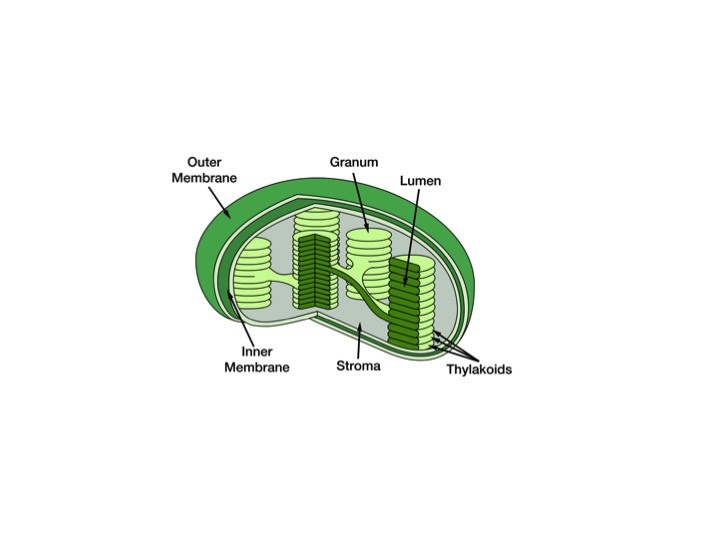
Chloroplasts are...
a)
Structures of animal cells to produce ATP
b)
Organelles where lipids are elaborated
c)
Specialized structures of plants where food is made
d)
Waste organelle of plants
8.
Using the figure, which parts of the molecule must the bonds be broken to form an ADP molecule?
a)
A and B
b)
B and C
c)
C and D
d)
all of the above
9.
How many carbon atoms does pyruvate have?
a)
2 atoms
b)
3 atoms
c)
6 atoms
d)
1 atom
e)
5 atoms
10.
For each molecule of glucose that enters glycolysis how many molecules of acetyl CoA will be produced?
a)
2 because 2 pyruvates are produced for every 1 glucose molecule in glycolysis
b)
3 because 6 carbons divided by 2 goes 3 times
c)
once only
11.
How many ATP molecules are produced in Glycolysis?
a)
4 net
b)
2 net
c)
2 total
d)
3 net
12.
Where does glycolysis take place in cells?
a)
Cytoplasm
b)
Mitochondrion
c)
Endoplasmic Reticulum
d)
Ribosomes
13.

After the NAD+ receives electrons, what does it change to?

a)

ATP

b)

NADH

c)

ADP

14.
What is the name of the process that helps make beer and wine?
a)
Fermentation
b)
Alcoholic fermentation
c)
Lactic acid fermentation
d)
Glycolysis
15.
How does the amount of energy resulting from fermentation compare with that of aerobic respiration? 
a)
Aerobic respiration results in less energy.
b)
Each process results in equal amounts of energy.
c)
Aerobic respiration results in more energy.
d)
Each process results in variable amounts of energy. 
16.
What green pigment is used to trap light energy from the Sun to be used for photosynthesis?
a)
Chlorophyll
b)
Xanthophyll
c)
Carotene
d)
Chloroplast
17.
In which organelle inside of plant cells does the process of photosynthesis occur?
a)
Mitochondria
b)
Ribosomes
c)
Cell Wall
d)
Chloroplasts
18.
The number of ATP molecules produced out of Krebs Cycle is:
a)
2
b)
3
c)
4
d)
0
19.
How many FADH2 molecules are produced by 1 molecule of glucose?
a)
1
b)
2
c)
3
d)
4
20.
How many CO2 molecules are produced by the Krebs Cycle for a molecule of glucose?
a)
2
b)
4
c)
6
d)
3
21.

NADH and FADH2

a)

carry energy/electrons to the ETC.

b)

bind with Acetyl CoA.

c)

make pyruvic acid

d)

make water.

22.

Where in the cell does aerobic respiration take place in a bacterium?

a)

Nucleus

b)

Cytoplasm

c)

Mitochondria

d)

Cell membrane

23.

The final electron acceptor in electron transport chain is

a)

NAD+

b)

FAD

c)

Oxygen

d)

Water

24.

What is the correct order for aerobic cellular respiration?

a)

glycolysis-->ETC--> Krebs Cycle

b)

ETC-->glycolysis-->Krebs Cycle

c)

glycolysis-->Krebs Cycle-->ETC

d)

Krebs Cycle-->glycolysis-->ETC

25.
Plants need carbon dioxide from their environment to produce glucose during which stage of photosynthesis? 
a)
The light-dependent stage
b)
The light-independent stage 
c)
The electron transport chain
d)
ATP formation
26.
Which term is the part of photosynthesis which uses ATP from the first stage in order to produce glucose? Hint:  Occurs in the stroma!
a)
light- independent reactions
b)
cellular respiration
c)
light- dependent reactions
d)
 photosynthesis
27.

What two energy molecules are made by the light reaction? Select both answers.

a)

NADPH

b)

glucose

c)

ATP

d)

oxygen gas

28.

What is the ultimate goal of Fermentation?

a)

to make more ATP for the cell

b)

to make more NADH for the Electron Transport Chain

c)

to remake NAD+ for Glycolysis

d)

to make glucose for the cell

29.

in which organisms does lactic acid occur?

a)

Animals, yeast, plants

b)

humans, plants, bacteria, animals

c)

Animals only

d)

yeast only

30.
Enzymes are capable of increasing the rate of a chemical reaction within a living cell.  Enzymes accomplish this through which of the following means?
a)
reducing the number of products   
b)
reducing the activation energy
c)
increasing the temperature of the cell
d)
increasing the concentration of reactants 
31.
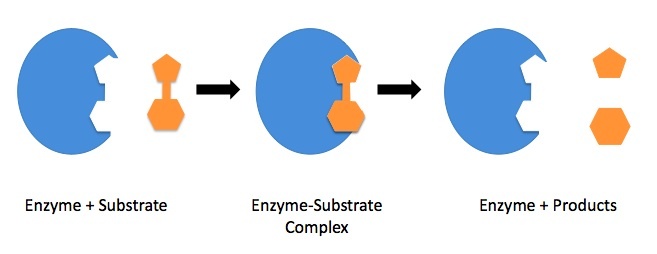
What is structure A?
a)
Substrate
b)
Active site
c)
Enzyme
d)
Products
32.
What is structure C?
a)
Substrate
b)
Active site
c)
Enzyme
d)
Products
33.
What is structure E, F, G?
a)
Substrate
b)
Active site
c)
Enzyme
d)
Products
34.
What is a substance called if it speeds up a chemical reaction?
a)
reusable
b)
catalyst
c)
specific
d)
fragile
35.
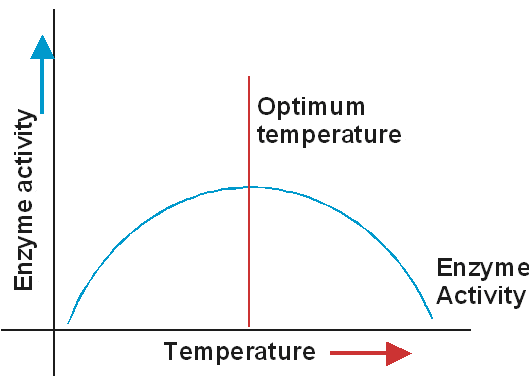
Some bacteria are metabolically active in hot springs because ____________
a)
their enzymes are insensitive to temperature
b)
they use molecules other than proteins as their main catalysts
c)
their enzymes have high optimal temperatures
d)
they are able to maintain an internal temperature much cooler than that of the surrounding water
36.
At high temperatures enzyme activity declines because of:
a)
Denaturation
b)
Decreased Kinetic Motion
c)
Increased H-Bonding
d)
Dissociation of Ionic Compounds
37.
The energy needed to start a reaction
a)
activation energy
b)
adhesion energy
c)
chemical energy
d)
cohesion energy
38.
Which factors can change the shape of an enzyme and thus denatures a enzyme?
a)
Excessive heat and changes in pH
b)
Nothing can
c)
Exposure to light and sound
d)
Exposure to bacteria and Amoebas
39.
When a molecule can occupy the same active site as the substrate, a situation called __________________ can result
a)
Competitive lnhibition
b)
Allosteric Regulation
c)
Non-Competitive Inhibition
d)
Feedback Inhibition
40.

The protein part of an enzyme that binds to prosthetic group to form a functional enzyme is called

a)

holoenzyme

b)

apoenzyme

c)

coenzyme

d)

conjugated protein

41.

Which is TRUE about non-competitive inhibitor?

a)

It changes the conformation of enzyme

b)

It binds to the active site of the enzyme

c)

Increasing substrate concentration can reduce the effect of non competitive inhibitor

d)

It has similar shape with substrate

42.

Enzymes that are always present, regardless of the amount of substrate, are ______.


a)

apoenzymes

b)

exoenzymes

c)

constitutive enzymes

d)

regulated enzymes

e)

endoenzymes

43.

Enzymes that function inside a cell are ______.

a)

apoenzymes

b)

exoenzymes

c)

constitutive enzymes

d)

regulated enzymes

e)

endoenzymes

44.

In bacterial cells, the electron transport system is located in the ______.


a)

cell membrane

b)

mitochondria

c)

chloroplasts

d)

ribosomes

e)

cytoplasm

45.

The space between the cell membrane and the cell wall is important during aerobic respiration. Why?

a)

Hydrogen ions are transported out into the space to set up a hydrogen gradient.

b)

Cytochrome electron carriers are located in the space.

c)

Oxygen combines with electrons in that space to form water.

d)

Pyruvate is transported into the space to be converted into acetyl coenzyme A to enter the Krebs cycle.

46.

In bacterial cells, when glucose is completely oxidized by all the pathways of aerobic cellular respiration, what is the maximum number of ATP generated?

a)

2

b)

3

c)

24

d)

36

e)

38

47.

Exotoxins

a)

Host specific

b)

Cause more damage than endoxins

c)

are bound to the cell wall of pathogenic organisms

d)

are secreted by pathogenic organisms

48.

The picture below shows the steps of DNA replication beginning with step one and ending with step three.


​Because you are reusing the old, or parent, DNA strand DNA replication is said to be

a)

Semi- Conservative

b)

Semi-discontinuous

c)

Continuous

d)

Fully-Conserveative

49.

The picture below shows an enzyme unwinding and unzipping DNA.

​What is the name of this enzyme?

a)

DNA Helicase

b)

DNA Ligase

c)

DNA polyermase

d)

RNA Polymerase

50.
Which sequence of DNA bases would pair with this partial strand
CAT TCA CTG
a)
ATG TGA CAG
b)
TAC ACT GTC
c)
GTA AGT GAC
d)
CAT TCA CTG
51.
Which of the following units are repeatedly joined together to form a strand of DNA?
a)
amino acids
b)
nucleotides
c)
fatty acids
d)
polysaccharides
52.
Which enzyme is responsible for adding nucleotides?
a)
Topoisomerase
b)
DNA Polymerase
c)
Ligase
d)
Primase
53.
Seals the Okazaki fragments together
a)
DNA Polymerase
b)
ligase
c)
helicase
d)
primase
54.

What are the three components of a nucleotide?

a)

sugar, hydrogen, nitrogen base

b)

sugar, oxygen, nitrogen base

c)

sugar, phosphate, nitrogen base

d)

sugar, phosphate, protein

55.
If a strand reads:
3' A A A T T T C 5'
The matching strand would read...
a)
5' T T T A A A G 3'
b)
3' T T T A A A G 5'
c)
5' A A A T T T C 3'
d)
3' U U U A A A G 5'
56.
One difference between DNA and RNA is that....
a)
Only RNA has the base Uracil
b)
only RNA contains the base Thymine
c)
only RNA contains the base Cytocine
d)
only RNA contained the base Guanine
57.
A triplet of mRNA is called a
a)
codon
b)
anticodon
c)
amino acid
d)
peptide bond
58.
Which RNA bases would pair with CGTAGG in transcription
a)
AUGCUU
b)
ATGCTT
c)
GCATCC
d)
GCAUCC
59.
DNA codes for...
a)
cholesterol
b)
proteins
c)
fatty acids
d)
a sandwich
60.
Which process is happening in this picture?
a)
Transcription
b)
Translation
c)
Replication
61.
Which of the following polypeptides is coded for by the mRNA sequence 5' AUGGUUAAA 3'?
a)
Val, Lys, Phe, Gly
b)
Met, Asp, Phe
c)
Met, Val, Lys
d)
Ile, Gln, Leu, Ser
62.
What is the correct amino acid for the following codon:
 GGU
a)
Gly
b)
Met
c)
Ser
d)
Ala
63.

The genetic instructions for forming a polypeptide chain are carried to the ribosome by the

a)

tRNA

b)

rRNA

c)

mRNA

d)

ATP

e)

DNA

64.
tRNA is involved in
a)
carrying amino acids 
b)
carrying ribosomes
c)
carrying glucose
d)
carrying lipids
65.
ATTTGAGCC- Original
ATTGAGCC - Mutated
The example above is an example of a 
a)
Insertion- Frameshift
b)
Deletion- Substitution
c)
Deletion -Frameshift
d)
All of the above
66.
This type of substitution codes for a stop codon
a)
Missense
b)
Nonsense
c)
Silent
d)
Deletion
67.
A type of substitution in which no  amino acids change is called 
a)
Missense
b)
Nonsense
c)
Silent
d)
Deletion
68.

In which of the following ways does genetic information typically flow in an organism?

a)

trait --> proteins --> RNA --> DNA

b)

RNA --> trait -->protein --> DNA

c)

DNA --> RNA --> protein --> trait

d)

DNA --> protein --> trait--> RNA

69.
DNA molecule segment is : TTACGCAAG
The mutated DNA segment is TTCGCAAG. This is an example of ___ mutation.
a)
Substitution
b)
Deletion
c)
Insertion
d)
Inversion
70.

What type of mutation happens to just one base.

a)

Chromosome mutation

b)

Point mutation

c)

DNA mutation

d)

Deletion mutation

71.

What does a nonsense mutation do?

a)

Changes one amino acid to a stop codon.

b)

Changes one amino acid to a different amino acid.

c)

Changes one amino acid to a start codon.

d)

It does not change the amino acids.

72.

What does a missense mutation do?

a)

Changes one amino acid to a stop codon.

b)

Changes one amino acid to a different amino acid.

c)

Changes one amino acid to a start codon.

d)

It does not change the amino acids.

73.
The "on/off" switch for an operon is called the
a)
promoter
b)
repressor
c)
operator
d)
gene
74.
Operons are found in the cells of which of the following types of organisms?
a)
prokaryotes (bacteria)
b)
eukaryotes (plant and animals)
c)
animals only
d)
viruses
75.

What is transformation?

a)

The use of viruses to transform or genetically


engineer cells.

b)

The measure of how well cells are transformed in a new phenotype.

c)

The insertion of a foreign plasmid into a bacterial cell which results in new acquired traits.

d)

Genetic engineering or transformation of mammalian cells.

76.

Which image is a plasmid?

a)
b)
c)
d)
77.

The transfer of genetic material from one cell to another cell through Bacteriphage is called

a)

Conjugation

b)

Tranduction

c)

Transformation

d)

Recombination

78.

Transduction occurs when ________________.

a)

None of these.

b)

a virus accidentally transfer bacterial DNA to another bacterium.

c)

a plasmid is transferred from one bacteria to another.

d)

bacteria take up DNA from the environment.

79.

Transfer of genetic material is done through one of 3 processes. What are the 3 processes?

a)

Conjugation, Transformation, Spores

b)

Conjugation, Transformation, Transduction

c)

Transformation, Transduction, Fission

80.

_____ is the genetic makeup of an organism.

a)

phenotype

b)

genotype

81.

The ____ is the physical appearance of an organism.

a)

genotype

b)

phenotype