
 Worksheets
Newtonian Mechanics Review
Total questions: 79
Worksheet time: 54mins

Which chart is correct for the problem: "A car accelerates from 20 m/s to a stop in 4 seconds. Determine acceleration?"
A
B
C
D

How many times does the object change the direction is it going in, based on this graph?
0
1
2
3

How many times is this object at rest?
0
1
2
3
Between which time intervals does the object speed up/increase velocity?(velocity moves away from 0 m/s point)
0-10 sec and 40-55 sec
15-30 sec and 40-55 sec
0-10 sec and 30-40 sec
15-30 sec and 30-40 sec
Between which time intervals does the object slow down/decrease velocity?(velocity move towards 0 m/s point)
0-10 sec and 40-55 sec
15-30 sec and 40-55 sec
0-10 sec and 30-40 sec
15-30 sec and 30-40 sec
How many times does this object have no acceleration?(no acceleration means velocity doesn't change so acceleration = 0 m/s2)
0
1
2
3
What is the rate of acceleration during the first line segment? (slope between 0 - 10 sec)
0 m/s2
2.7 m/s2
6 m/s2
- 4 m/s2
What is the rate of acceleration during the 2nd line segment? (slope between 10 - 15 sec)
0 m/s2
2.7 m/s2
6 m/s2
- 4 m/s2
What is the rate of acceleration during the 3rd line segment? (slope between 15 - 40 sec)
0 m/s2
2.7 m/s2
6 m/s2
- 4 m/s2
What is the slope of the 3rd line segment?
0 m/s2
2 m/s2
4 m/s2
- 3 m/s2

An object moves at a constant velocity and then stops
An object speeds up and then moves with constant velocity
An object slows down and then stops
An object speeds up and then stops

An object moves with constant velocity and the speeds up
An object slows down, stops, and then moves at a constant velocity
An object slows down, stops turns around, and then speeds up
An object slows down, stops, and then speeds up without turning around

An object moves with constant velocity and the speeds up
An object slows down, stops, and then moves at a constant velocity
An object slows down, stops turns around, and then speeds up
An object slows down, stops, and then speeds up without turning around

An object is at rest initially and then slows down
An object is at rest initially and then speeds up
An object moves at a constant velocity and then slows down
An object moves at a constant velocity and then speeds up

Explain the motion from 0-1s
Stationary
Constant speed
Constant acceleration
Non-constant acceleration
Explain the motion from 1-3s
Stationary
Constant speed
Constant acceleration
Non-constant acceleration
Explain the motion from 3-5s
Stationary
Constant speed
Constant acceleration
Non-constant acceleration
Explain the motion from 5-7s
Stationary
Constant speed
Constant acceleration
Constant deceleration
Explain the motion from 7-8s
Stationary
Constant speed
Constant acceleration
Constant deceleration
Explain the motion from 8s onwards. The blue line runs along the x-axis. Hint: What is the velocity from 8s onwards.
Stationary
Constant speed
Constant acceleration
Constant deceleration

Explain the motion
Stationary
Constant speed
Constant acceleration
Non-constant acceleration

Describe the velocity in this graph.
constant and positive
constant and negative
decreasing
increasing
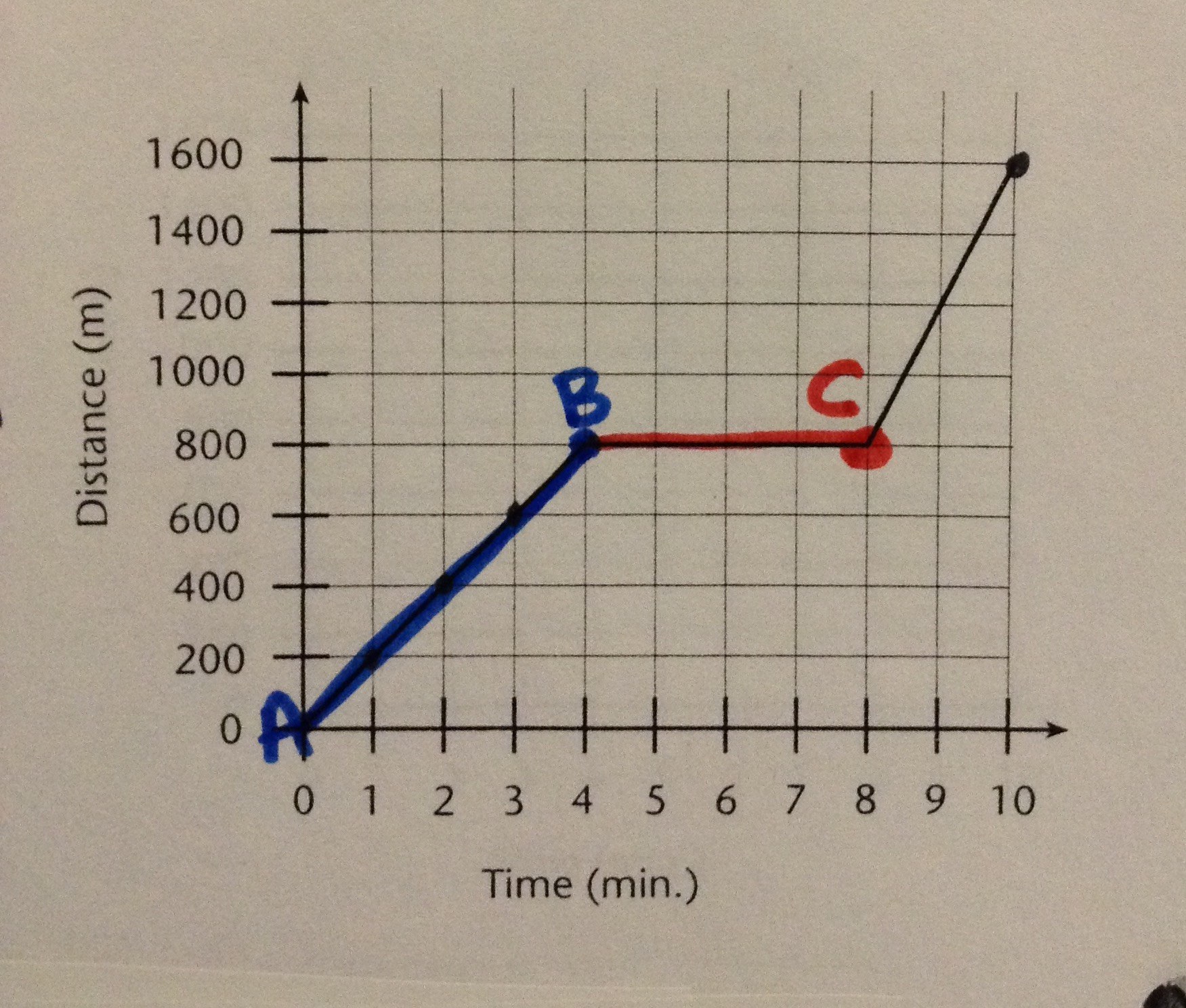
The graph shows Ashley riding her bike to Maria's house.
What was occurring from point B to point C?
She was increasing her speed.
She stopped for 4 minutes
She was decreasing in speed
She was moving forward at a steady 800 m/s


During which time interval is this object moving forward?
0 s to 4 s
1 s to 6 s
1 s to 4 s
4 s to 6 s

During which time interval does this object has positive acceleration?
0 s to 4 s
1 s to 4 s
4 s to 6 s
0 s to 6 s

What acceleration does this object have from 1 s to 4 s?
3 m/s2
15 m/s
5 m/s2
4 m/s2
When an object resists change, like a body in a turning car, it is called ________________.
inertia
force
friction
drag force


The diagram illustrate the force diagram
false
true
An object traveling at 4.0 m/s has a momentum of 16 kg*m/s. What is the mass of the object ?
20 kg B
64 kg
4.0 kg
12 kg
Inertia is most often experienced when…
Earth stop rotating for a second
a moving vehicle is stopped
It rains
Rockets are launched
What is one of the benefits of wearing a seat belt?
It keeps you in from falling out of the car.
It allows you to share the same motion as the car
It prevents car accidents
It is connected to air bags
The rate at which an object’s velocity changes is _____
Acceleration
Speed
Time
Oscillation
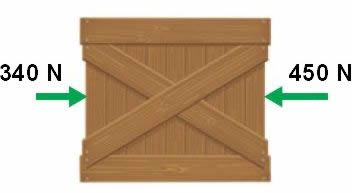
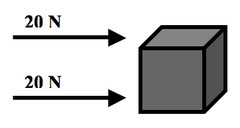

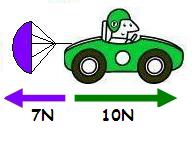
What is the net force?
3 N
3 N, right
17 N, right
3 N, left


When your position changes, you're in ____________.
motion
force
What is energy?
moving energy
stored energy
renewable energy
The ability to do work.
What is potential energy?
moving energy
stored energy
renewable energy
non renewable energy
What is kinetic energy?
moving energy
potential energy
stored energy
renewable energy
What is NOT a renewable energy source?
coal
wind
solar
water


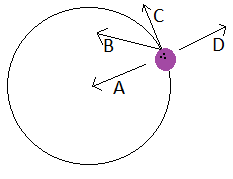
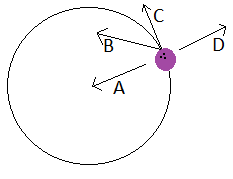

moving or tending to move toward a center...
centripetal force
centrifugal force
Tangent
Curvature
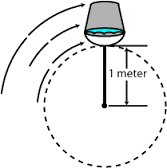

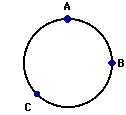
A 10kg car travels at a constant speed of 20.0 m/s around a horizontal circular track. Which diagram correctly represent the direction of the car's velocity (v) and the direction of the centripetal force (Fc) acting on the car at a particular moment?


How fast are you going?
it depends
0 m/s
0 m/s/s
the speed limit
What time is it?
afternoon
Morning time
Noon
It depends
How old is our species?
7000 years
200000 years
165 million years
4.5 million years
How long has man been writing history down?
7000 years
200000 years
165 million years
4.5 million years
How old is Earth?
7000 years
200000 years
165 million years
4.5 billion years
Where did water come from?
the sun
space
earth
the ocean
How old is the Universe?
14.75 billion
4.5 million
1 million
12 billion

