Wayground logo

Free Printable Worksheets

Font size

S
M
L
XL
Worksheets

Ionic and Covalent Bond Review

Total questions: 50

Worksheet time: 2hrs 40mins

Name
Class
Date
1.

The positive ions tend to _____________ electrons.

a)

lose

b)

gain

2.

The negative ions tend to _____________ electrons.

a)

lose

b)

gain

3.

When an atom loses an electron, it becomes a

a)

positive ion

b)

negative ion

c)

neutral ion

d)

neutral atom

4.

Why do all bonds form?

a)

so the number of protons equals the number of electrons

b)

so an atom can become unstable

c)

to fill the outermost energy level

5.
Ionic bonds are between...
a)
Metal and Non-metal
b)
Non-metal and Non-metal
c)
Metal and Metal
6.
How are ionic bonds formed?
a)
Transfer of electrons
b)
Sharing of electrons
7.
Why do elements bond?
a)
To be friends
b)
To create a new element
c)
To become stable
8.
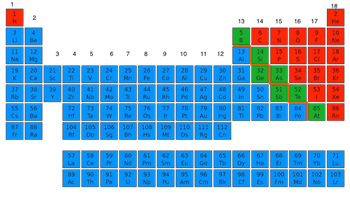
Where are the nonmetals located on the periodic table? 
a)
Blue
b)
Red
c)
Green
9.
Where are metals located on the periodic table?
a)
Blue
b)
Green
c)
Red
10.
Ionic bonds form between two ions that have...
a)
ionic compounds
b)
negative charges
c)
positive charges
d)
opposite charges
11.

What type of elements form cations?

a)

metals

b)

nonmetals

c)

metalloids?

12.

Anions

a)

Gain electrons, has an overall positive charge

b)

Lose electrons, has an overall positive charge

c)

Lose electrons, has an overall negative charge

d)

Gain electrons, has an overall negative charge

13.

Cations

a)

Gain electrons, has an overall positive charge

b)

Lose electrons, has an overall positive charge

c)

Lose electrons, has an overall negative charge

d)

Gain electrons, has an overall negative charge

14.

How does magnesium become an magnesium ion?

a)

it loses 2 electrons

b)

it gains 2 electrons

15.

How does oxygen become an oxide ion?

a)

it loses 2 electrons

b)

it gains 2 electrons

16.
How do covalent bonds form?
a)
Donating & receiving valence e- between atoms.
b)
Opposite slight charges attract each other between compounds.
c)
Scientists are still not sure how they form.
d)
Sharing valence e- between atoms.
17.
What two types of atoms make a covalent bond?
a)
2 Nonmetals
b)
1 Nonmetal and 1 Metal
c)
2 Metals
d)
2 Noble Gases
18.
Which of the following is NOT formed by a covalent bond?
a)
K2S
b)
H2O
c)
I2
d)
CO2
19.

Compared to ionic compounds, covalent compounds generally have...

a)
good conductivity
b)
greater densities
c)
more chemical bonds
d)
a low boiling point
20.

Compared to ionic compounds, covalent compounds generally have...

a)
stronger chemical bonds
b)
poor conductivity
c)
a high melting point
d)
lower densities
21.

An ionic compound forms between a _______ and _______.

a)

metal and non-metal

b)

two metals

c)

two non-metals

22.

Name the ionic compound, LiCl

a)

lithium chlorine

b)

lithium chloride

c)

lithium chlorate

d)

lithium monochloride

23.
K20 - name?
a)
potassium dioxide
b)
potassium oxide
c)
potassium oxygen
d)
dipotassium dioxide
24.

What is the formula for diphosphorus pentoxide?

a)

P2O5

b)

PO5

c)

P5O2

d)

Po2O5

25.

What is the name for SiCl4?

a)

silicon tetrachloride

b)

silicon quadchloride

c)

monosilicon tetrachloride

d)

silicon chloride

26.

What is the chemical formula of sulfur hexabromide?

a)

SBr₆

b)

S₆Br

c)

S(VI)Br

d)

SBr4

27.

Name the molecular compound CO

a)

carbon monoxide

b)

monocarbon monoxide

c)

carbide

d)

oxygen carbide

28.
What is the proper name for CaCl2?
a)
Calcium dichloride
b)
Monocalcium dichloride
c)
Calcium chloride
d)
Calcium chlorine
29.

What is the correct formula of phosphorus trichloride?

a)

P2Cl3

b)

P3Cl3

c)

PCl3

d)

PCl5

30.

What is the name for AlBr3?

a)

aluminum bromide

b)

aluminum tribromide

c)

aluminum bromine

d)

monoaluminum tribromide

31.
Name this compound:
Cs2S
a)
cesium sulfide
b)
cesium sulfate
c)
cesium II sulfate
d)
cesium II sulfide
32.
Name this compound.
MgF2
a)
magnesium fluoride
b)
manganese Phosphide
c)
magnesium(III) fluoride
d)
magnesium fluoride(II)
33.
Name this formula: 
Al2O3
a)
Aluminum Oxide
b)
Aluminum Oxygen
c)
Antimony Oxide
d)
Aluminum (VII) Oxide
34.
Name the compound Na2O
a)
Sodium Oxide
b)
Sodium Dioxide
c)
Sodium Oxygen
d)
Natride Oxide
35.
What is the correct formula for the compound, lithium oxide?
a)
LiO
b)
Li2O
c)
LiO2
d)
Li2O2
36.
How do the following two elements bond together?
Na1+  F1-         
a)
NaF
b)
NaF3
c)
Na3F
d)
Na1F2
37.
How do the following two elements bond together?
Cr3+  O2-         
a)
CrO
b)
Cr3O2
c)
Cr2O3
d)
CrO3
38.
How do the following two elements bond together?
K1+  S2- 
a)
KS
b)
K8S
c)
K6S3
d)
K2S
39.
How do the following two elements bond together?
Al3+  O2-         
a)
AlO
b)
Al2O3
c)
Al3O6
d)
Al3O2
40.
The formula of this atom when it becomes an ion would be
a)
N-2
b)
N+3
c)
N-3
d)
N+2
41.
Na +  and  S -2
a)
Na2S
b)
NaS2
c)
Na2S2
d)
NaS
42.
K +  and  N-3
a)
KN
b)
KN3
c)
K3N3
d)
K3N
43.
How many valence electrons does a bromine atom have?
a)
1
b)
2
c)
6
d)
7
44.
What is the correct name for P₃Cl₆?
a)
Potassium chloride
b)
Phosphorous chloride
c)
Triphosphorous hexachloride
d)
Tetraphosphorous heptachloride
45.
The correct name of Mg₃N₂ is
a)
manganese nitride
b)
magnesium nitride
c)
magnesium (III) nitride
d)
trimagnesium dinitride
46.
What is the correct formula for phosphorous trichloride?
a)
P₃Cl
b)
PCl₃
c)
KCl₃
d)
K₃Cl
47.
What is the correct name for SO₂?
a)
Sulfur oxide
b)
Sulfite
c)
Sulfur dioxide
d)
Sulfur II Oxide
48.

Name the following covalent compound: SO3

a)

sulfur oxide

b)

sulfur trioxide

49.

Name the following covalent compound: N2O5

a)

dinitrogen pentoxide

b)

nitrous oxide

50.

Name the following covalent compound: CO2

a)

carbon dioxide

b)

carbide oxygen