
 Worksheets
Two Types of Reproduction
Total questions: 37
Worksheet time: 19mins
Name
Class
Date
1.
In asexual reproduction, all of the offspring are:
a)
Physically Identical
b)
Genetically Identical
c)
Physically and Genetically Identical
d)
Not Identical
2.

a)
budding
b)
binary fission
c)
sporulation
d)
regeneration
3.
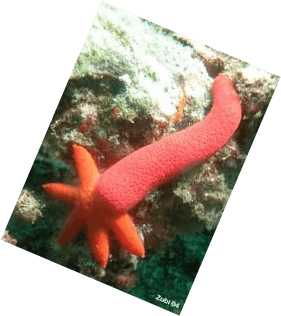
What type of asexual reproduction is taking place?
Fishermen work hard to catch and remove all the starfish that get into their favorite shell fishing beds and the “underwater farms” where they raise clams and oysters. In the past, they put the starfish into their boats, cut them up with knives, and then throw the pieces of starfish overboard. They thought this would kill the starfish. What they did not know was that each piece of starfish will grow into a whole new animal.
Fishermen work hard to catch and remove all the starfish that get into their favorite shell fishing beds and the “underwater farms” where they raise clams and oysters. In the past, they put the starfish into their boats, cut them up with knives, and then throw the pieces of starfish overboard. They thought this would kill the starfish. What they did not know was that each piece of starfish will grow into a whole new animal.
a)
Regeneration
b)
Vegetative propagation
c)
Budding
d)
Fission
4.
How many parent(s)are needed for asexual?
a)
4
b)
1
c)
9
d)
100
5.
What is organized DNA called?
a)
Genes
b)
Deoxyribonucleic Acid
c)
Chromosomes
d)
Nucleus
6.
What parts of the chromosomes code for traits?
a)
Genes
b)
Deoxyribonucleic Acid
c)
Chromosomes
d)
Nucleus
7.
Where is all the genetic material inside a cell?
a)
nucleus
b)
vacuole
c)
cell membrane
d)
ribosome
8.
Requires two parents
a)
sexual
b)
asexual
9.
The female reproductive cell:
a)
Sperm
b)
Zygote
c)
Egg
d)
Larvae
10.
The male reproductive cell:
a)
Sperm
b)
Zygote
c)
Egg
d)
Larvae
11.
joining of an egg cell and sperm cell
a)
DNA
b)
fertilization
c)
homologous chromosomes
d)
zygote
12.
new cell formed through fertilization
a)
fertilization
b)
zygote
c)
meiosis
d)
haploid
13.
asexual reproduction in which a new organism grows on the body of its parent
a)
budding
b)
fission
c)
cloning
d)
regeneration
14.
Which is another term for gamete?
a)
Sex cell
b)
Somatic cell
c)
Body cell
d)
Diploid
15.
The ultimate advantage of sexual reproduction - genetically unique and diverse offspring!
a)
Fertilization
b)
Variation
c)
Gamete
d)
Homologous Chromosomes
16.
Type of reproduction that makes an identical copy of a parent cell
a)
sexual reproduction
b)
Asexual reproduction
17.
When an organism splits into an exact copy
a)
Binary fission
b)
Budding
c)
regenerartion
18.
A small growth on an organism that splits and grows into a new organism.
a)
Budding
b)
sprouting
c)
spidering
19.
When an organism grows back a part that it lost
a)
budding
b)
Regeneration
c)
fission
20.
identical copy of parent
a)
diverse offspring
b)
sibling
c)
Clone (Uniform)
21.
involves two parents and produces offspring different from parents
a)
Sexual reproduction
b)
Asexual Reproduction
22.
the joining of male and female sex cells
a)
regeneration
b)
fragmentation
c)
vegetation
d)
Fertilization
23.
female reproductive cell
a)
egg/ovum
b)
daughter cell
c)
eukaryote
24.
male reproductive cell in animals
a)
egg
b)
sperm
c)
pollen
d)
ovum
25.
The scientific study of heredity
a)
Genetics
b)
biology
c)
geography
d)
theory
26.
a self-replicating material present in nearly all living organisms as the main constituent of chromosomes. It is the carrier of genetic information.
a)
cells
b)
nucleus
c)
microbes
d)
DNA
27.
Made of DNA and has genetic information
a)
zygote
b)
Chromosome
c)
ekaryote
d)
atom
28.
specialized cell involved in sexual reproduction
a)
membrane
b)
nucleus
c)
Gamete
d)
mutation
29.
a section of DNA (aka a section of chromosome
a)
Gene
b)
molecule
c)
element
d)
polen
30.
Made of a single cell
a)
mutation
b)
gene
c)
molecule
d)
unicellular
31.
Made up of more than one cell.
a)
Multicellular
b)
prokaryote
c)
bacteria
d)
protazoa
32.
The cells that are produced as a result of mitosis. These cells are identical to each other and to other offspring
a)
babies
b)
Daughter Cells
c)
twins
d)
cellulite
33.
fertilized egg cell
a)
mutation
b)
sperm
c)
yeast
d)
Zygote
34.
Fusion of an egg and sperm cell
a)
Fertilization
b)
regeneration
c)
fragmentation
d)
vegetation
35.
cell division in which the nucleus divides into nuclei containing the same number of chromosomes
a)
mitosis
b)
chromatid
c)
theory
d)
mutation
36.
oldest of organisms. Unicellular, Has no true nucleus
a)
eukaryote
b)
prokaryote
37.
All fungi,protists, plants and animals
a)
prokaryote
b)
eukaryote
100 %

