wayground logo

Free Printable Worksheets

Font size

S
M
L
XL
Worksheets

Cell organelles

Total questions: 140

Worksheet time: 4hrs 33mins

Name
Class
Date
1.
Stem cells are
a)
cells that grow uncontrollably
b)
undifferentiated and can be any type of cell
c)
never go through cell division
d)
only found in embryos
2.
Stem cells can be obtained from
a)
embryos
b)
some adult tissues
c)
umbilical cord blood
d)
all of the above
3.
Which best explains why muscle cells are different from blood cells?
a)
Muscle cells are produced by the brain, but blood cells are produced by the heart. 
b)
Different genes are activated in muscle cells than in blood cells. 
c)
Muscles cells experience different environmental influences than blood cells. 
d)
A mutation occurs during the development of muscle cells but not in blood cells. 
4.

cell with no membrane bound structures and no

nucleus

a)

Eukaryote

b)

Prokaryote

c)

Plant

d)

Animal

5.

long hair like projection used for movement in

cells; uses a whip-like motion

a)

Cilia

b)

Flagella

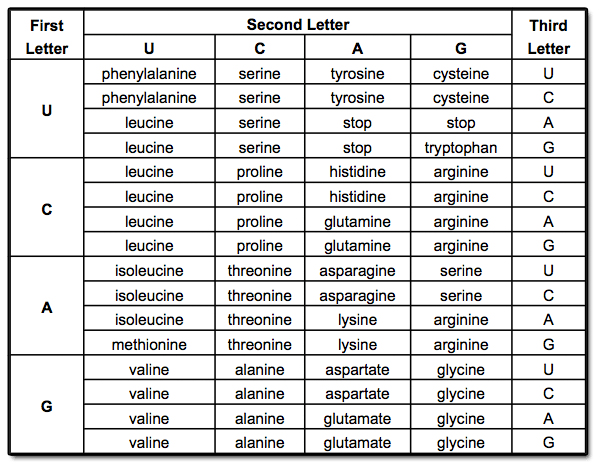
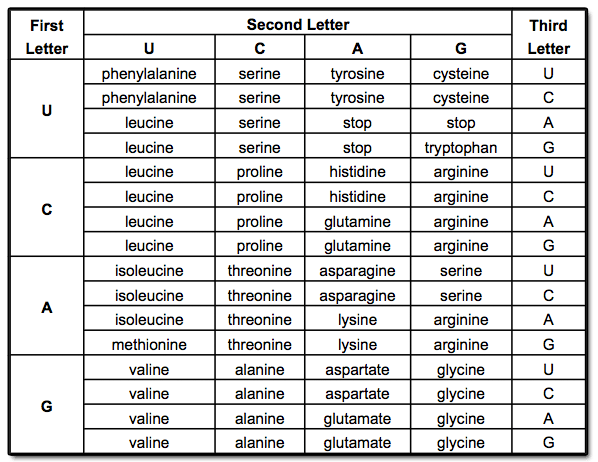
c)

Microsome

d)

Vesicle

6.

where DNA is stored in a eukaryotic cell

a)

vacuole

b)

mitochondria

c)

lysosome

d)

nucleus

7.

where proteins are made

a)

flagella

b)

ribosome

c)

lysosome

d)

centriole

8.

firm, fairly rigid structure found outside of

plants for support

a)

cell membrane

b)

cell wall

c)

golgi apparatus

d)

chloroplast

9.

breaks down food into energy that the cell can

use in a process called cellular respiration

a)

chloroplast

b)

ribosome

c)

mitochondria

d)

nucleus

10.

used for storage in the cell

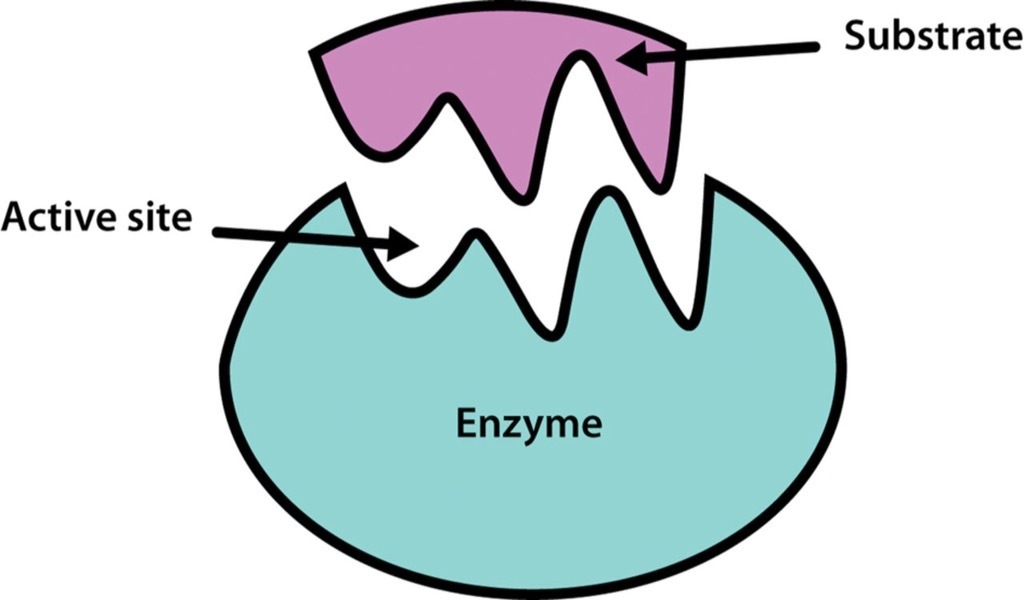
a)

lysosome

b)

vacuole

c)

mitochondria

d)

chloroplast

11.

cell with membrane bound organelles and a

nucleus

a)

prokaryote

b)

eukaryote

c)

bacteria

d)

peroxisome

12.

short numerous hair-like projections that move

in wave patterns for movement

a)

flagella

b)

vesicle

c)

microtubules

d)

cilia

13.

serves as a boundary between the cell and the

environment; has selective permeability

a)

cell membrane

b)

cell wall

c)

cytoskeleton

d)

mitochondria

14.

structure that packages and modifies proteins

a)

smooth ER

b)

golgi apparatus

c)

rough ER

d)

lysosome

15.

chlorophyll containing organelle in plants that

uses light energy to help create glucose in a

process called photosynthesis

a)

mitochondria

b)

chloroplast

c)

vacuole

d)

lysosome

16.
Which of the following is a characteristic of both Eukaryotic and Prokaryotic cells?
a)
ribosomes
b)
nucleus
c)
membrane bound organelles
d)
simple
17.
Prokaryote are?
a)
simple, mostly single-celled organism that lacks a nucleus, or any other membrane-bound organelle.
b)
have a peptidoglycan cell wall and many have polysaccharide capsules.
c)
have a true nucleus, which means the cell's DNA is surrounded by a membrane.
d)
contain membrane-bound organelles, such as the nucleus
18.
Which structures are found in every living cell?
a)
cell membrane and cytoplasm
b)
chloroplasts and mitochondria
c)
a cell wall and nucleus
d)
chloroplasts and cell wall
19.
Cells with a nucleus and membrane-bound organelles are called ____________________.
a)
prokaryotes
b)
eukaryotes
c)
bacteria
d)
protists
20.
The main difference between prokaryotic and eukaryotic cells? 
a)
Prokaryotic cells have a cell membrane but eukaryotic cells do not.
b)
Eukaryotic cells contain DNA in a nucleus while prokaryotic cells do not.
c)
Eukaryotic cells have flagella but prokaryotic cells do not.
d)
Prokaryotic cells contain membrane-bound ribosomes while eukaryotic cells do not. 
21.
Where is the DNA found in a prokaryotic cell? 
a)
floating around in the cytoplasm 
b)
in the nucleus 
22.
What is cell differentiation?
a)
Process by which cells produce more cells
b)
Process by which cells become specialized
c)
Process by which cells become unspecialized
d)
Process by which cells die
23.
What is one goal of cellular differentiation/specialization?
a)
To create specialized cells to help organism maintain homeostasis.
b)
To many cells.
c)
To make stem cells
d)
to make single celled organisms
24.
what is the role of stem cells in the body 
a)
fight against infection 
b)
provide specialized roles in the body 
c)
used for fertility treatment 
d)
they produce new specialized cells in the body to replace old cells that are used up 
25.
What is the difference between embryonic stem cells and adult stem cells?
a)
Embryonic stem cells can differentiate into more cell types than adult stem cells
b)
Adult stem cells are pluripotent, just like embryonic stem cells
c)
Adult stem cells can differentiate into more cell types than embryonic stem cells
d)
Adult stem cells grow bigger than embryonic stem cells
26.
Which best explains why muscle cells are different from blood cells?
a)
Muscle cells are produced by the brain, but blood cells are produced by the heart. 
b)
Different genes are activated in muscle cells than in blood cells. 
c)
Muscles cells experience different environmental influences than blood cells. 
d)
A mutation occurs during the development of muscle cells but not in blood cells. 
27.
What is the difference between embryonic stem cells and adult stem cells?
a)
Embryonic stem cells can differentiate into more cell types than adult stem cells
b)
Adult stem cells are pluripotent, just like embryonic stem cells
c)
Adult stem cells can differentiate into more cell types than embryonic stem cells
d)
Adult stem cells grow bigger than embryonic stem cells
28.
This type of cell sends messages throughout the body in the form of electrical impulse.
a)
nerve cell
b)
sperm cell
c)
muscle cell
d)
skin cell
29.
This type of cell carries oxygen throughout the body.
a)
gamete
b)
platelet
c)
white blood cell
d)
red blood cell
30.

What are the "X" shaped things in the drawing.

a)

PMATs

b)

Chromosomes

c)

Ribosomes

d)

Telophase

31.

During what phase of Mitosis do the chromosomes line up in the Middle

a)

Metaphase

b)

Prophase

c)

Telophase

d)

Anaphase

32.

PMAT helps us remember the correct order of the phases of Mitosis. Which of the following has the phases of Mitosis in the correct Order

a)

Interphase, Mitosis, Cytokinesis

b)

Prophase, Metaphase, Anaphase, Prophase

c)

Anaphase, Telophase, Prophase, Telophase

d)

Prophase, Metaphase, Anaphase, Telophase

33.

In which phase of Mitosis do the Chromosomes pull Apart

a)

Metaphase

b)

Prophase

c)

Anaphase

d)

Telophase

34.

What is the purpose of Mitosis?

a)

Growth of an organism and Repair of damaged tissue

b)

To help the body get rid of extra cells

c)

To increase the amount of classwork you have to do

d)

To get rid of the nucleus

35.
DNA is replicated during the ______ phase of the cell cycle.
a)
G1
b)
Synthesis
c)
G2
d)
G0
36.
Cells spend 90% of their time in this stage of the cell cycle. This is the reason you would see most cells in this stage if viewed under a microscope.
a)
Prophase
b)
Metaphase
c)
Anaphase
d)
Interphase
37.

What is the correct order of the cell cycle?

a)

Interphase, Cytokinesis, Mitosis

b)

Interphase, Mitosis, Cytokinesis

c)

Cytokinesis, Mitosis, Interphase

d)

Anaphase, Telophase, Cytokinesis

38.
Which of these lists presents the stages of the cell cycle in the correct order?
a)
interphase, mitosis, cytokinesis
b)
cytokinesis, mitosis, interphase
c)
mitosis, interphase, cytokinesis
d)
interphase, cytokinesis, mitosis
39.

What stage of mitosis is depicted here

a)

Prophase

b)

Anaphase

c)

Telophase

d)

Metaphase

40.
What is Flagella?
a)
A tail like structure that help protist move
b)
Hair like fibers that help protist move
c)
A place where spores are kept
d)
A fake foot that help protist move
41.
What is a pseudopod?
a)
A tail like structure that help protist move
b)
Hair like fibers that help protist move
c)
A place where spores are kept
d)
A fake foot that help protist move
42.

Amoeba sp. moves and engulfs food particles using ..............................

a)

cilia

b)

pseudopodium

c)

flagellum

d)

feet

43.

Paramecium using its ..................... to move and pull food particles into the oral groove.

a)

pseudopodium

b)

flagellum

c)

cilium

d)

feet

44.

Both amoeba and paramecium form ............................. to undergo food digestion.

a)

food vacuole

b)

contractile vacuole

c)

lysosome

d)

cell sap

45.

Protozoa live in freshwater that can cause a lot of water diffusion into the cell. They use ............................ to excrete out excess water from the cell.

a)

Macronucleus

b)

Lysosome

c)

Food vacuole

d)

Contractile vacuole

46.
Two organisms both benefit from the relationship
a)
Commensalism
b)
Mutualism
c)
Parasitism
47.
A bird makes a nest in a tree.  The bird gets a house, but the tree is unharmed.
a)
Commensalism
b)
Mutualism
c)
Parasitism
48.
Coyotes and Foxes both live in Maryland and both eat rabbits and mice
a)
Parasitism
b)
Commensalism
c)
Mutualism
d)
Competition
49.
A relationship between two organisms in which one organism benefits and the other is unharmed...
a)
Mutualism 
b)
Competition
c)
Parasitsm 
d)
Commensalism 
50.
Which process and type of resulting cells are represented?
a)
mitosis, gametes
b)
mitosis, body cells
c)
meiosis, gametes
d)
meiosis, body cells
51.
A male shark has 40 chromosomes in each of its sex cells. How many would be present in its body cells?
a)
20
b)
40
c)
80
d)
160
52.
What causes genetic variation in meiosis?
a)
chromosomes lining up
b)
crossing over of chromosomes
c)
separation of chromosomes
d)
chromosomes pulling apart
53.

CROSSING OVER TAKES PLACE DURING

a)

PROPHASE II

b)

PROPHASE I

c)

INTERPHASE

d)

METAPHASE I

54.

WHAT TYPE OF CELLS STORE THE GENETIC INFORMATION THAT IS PASSED TO OFF-SPRING

a)

BODY CELLS

b)

MITOSIS

c)

EGG

d)

SPERM

e)

EGG AND SPERM

55.
The process to go from DNA to mRNA is _______
a)
translation
b)
transcription
c)
replication
56.
The process to go from mRNA to a protein is called ____
a)
transcription
b)
rRNA
c)
replication
d)
translation
57.
What process is going on in this photo? 
a)
Transcription 
b)
Translation 
c)
Replication 
d)
All the above 
58.
What is the location in the cell for translation?
a)
nucleus
b)
mitochondria
c)
ribosome
d)
chloroplast
59.
DNA sequence ACCTG produces which mRNA strand? 
a)
UGGAC
b)
TGGAC
c)
GTCCA
60.

Transcribe the following DNA strand: CTG AAT

a)

GAC TTA

b)

CTG AAT

c)

GAC UUA

d)

CUG AAU

61.

If the DNA sequence of a gene is TAC CCC GGA GAG, what mRNA sequence will be produced in transcription?

a)

RNA Polymerase

b)

AUG GGG CCU CUC

c)

ATG GGG GGT GTG

d)

AUG GGG CCU CUG

e)

AUG CCG GCA CGG

62.

What amino acid would be added to the protein being formed during translation if the mRNA codon reads "AUG?"

a)

Phenylalanine

b)

Tyrosine

c)

Leucine

d)

Methionine

63.

What amino acid would be added to the protein being formed during translation if the mRNA codon reads "CCU?"

a)

Isoleucine

b)

Stop

c)

Methionine

d)

Proline

64.
What is the correct amino acid sequence for the mRNA code AUGCCAGUAUGA
a)
Met-Pro-Ala-Val
b)
Met-Pro-Val
c)
Tyr-Gly-His
d)
Tyr-Gly-Arg-His
65.

What is the correct amino acid sequence for the mRNA code AUG GCA AAC CGU

a)

Met-Ala-Asn-Ala

b)

Met-Ala (because the third codon codes for STOP)

c)

Ileu-Ala-Asn-Ala

d)

Met-Ala-Asn-Arg

e)

Ileu-Ala-Asn-Ala

66.

What is the correct amino acid sequence if the DNA code of the gene is TAC CGT TTG GCA?

*You will have to figure out the mRNA codons before figuring out the amino acid sequence

a)

Met-Ala-Asn-Ala

b)

Met-Ala (because the third codon codes for STOP)

c)

Ileu-Ala-Asn-Ala

d)

Met-Ala-Asn-Arg

e)

Ileu-Ala-Asn-Ala

67.
What type of gene mutation has occurred here? 
T-G-A-C-C-A
T-G-A-C-C-A-A
a)
Base Substitution
b)
Base Deletion
c)
Base Insertion
d)
Frameshift 
68.
When one base replaces another, this is a common type of mutation called what?
a)
Insertion
b)
Substitution
c)
Inversion
d)
Deletion
69.
Biotech foods look and taste the same as traditional foods and crops. The only difference is that biotech food has
a)
fewer calories.
b)
the addition of specific minerals.
c)
genes with traits that improve something about the plant.
d)
a better chance of surviving a frost during the growing season.
70.

In preparation for an electrophoresis procedure, enzymes are added to DNA in order to

a)

convert the DNA into gel

b)

cut the DNA into fragments

c)

change the color of the DNA

d)

produce longer sections of DNA

71.

The parents of a new baby believe they brought the wrong child home from the hospital. Gel electrophoresis was performed using DNA samples from the parents and the child. A section of the gel

electrophoresis results is shown below. Which conclusion is valid based on the gel electrophoresis results?

a)

They have the correct child, because her genetic information is identical to that of the father.


b)

They have the wrong child, because her genetic information does not match that of either parent.

c)

They have the correct child, because her genetic information came from both parents.


d)

They have the wrong child, because her genetic information matches only that of the mother.

72.

A student performed a gel electrophoresis experiment. The results are represented in the diagram

below. Compared to the fragments at the top of the gel, the fragments at the lower end are

a)

larger, and move slower

b)

larger, and move faster

c)

smaller, and move faster

d)

smaller, and move slower

73.

Which chemicals are used to cut DNA into fragments for a gel electrophoresis procedure?

a)

enzymes

b)

molecular bases

c)

hormones

d)

ATP molecules

74.

This technique used to analyze DNA involves the

a)

synthesis of new DNA strands from subunits

b)

separation of DNA fragments based on size

c)

production of genetically engineered DNA molecules

d)

removal of defective genes from DNA

75.

What is the result of step 3?

a)

a new type of molecular base is formed

b)

different types of minerals are joined together

c)

DNA from the bacterial cell is cloned

d)

DNA from different organisms is joined together

76.

A student performed a gel electrophoresis experiment. The results are represented in the diagram

below. Compared to the fragments at the top of the gel, the fragments at the lower end are

a)

larger, and move slower

b)

larger, and move faster

c)

smaller, and move faster

d)

smaller, and move slower

77.
Based on these results whose blood was found in the blood stain at the crime scene?
a)
Bob
b)
Sue
c)
John
d)
Lisa
78.
Which suspect is likely guilty?
a)
Suspect #1
b)
Suspect #2
c)
Suspect #3
79.

According to this diagram, plants absorb ______________

a)

nitrates

b)

animals

c)

nitrogen fixing bacteria

d)

decomposers

80.

A correct path that nitrogen could take would be _____

a)

air -> animals->plants->bacteria

b)

animals->air->bacteria->plants

c)

air -> bacteria ->plants -> animals

d)

bacteria ->air -> animals->plants

81.

What would happen to this nitrogen cycle if a virus killed all the bacteria?

a)

Nitrogen would just keep on cycling

b)

The cycle would stop

c)

Plants would take over for the bacteria

d)

Fish would grow more because there's no bacteria

82.

What would happen to the plants in this nitrogen cycle if all the bacteria died?

a)

They would not get the nitrogen they need to make DNA and proteins

b)

They would get their nitrogen from eating animals

c)

They would get their nitrogen from the atmosphere

d)

They would turn the poop into fish food

83.
How nitrogen is "fixed" into useable form for plants...
a)
through action of bacteria only
b)
through lightning only
c)
through action of bacteria & lightning
d)
through photosynthesis
84.

Which plant is an example of a legume?

a)

strawberries

b)

carrots

c)

peanuts

d)

corn

85.
What is the process of combining nitrogen gas with other elements to make nitrogen into usable compounds?
a)
nitrogen composition
b)
ammonia 
c)
nitrogen fixation
d)
denitrification
86.
What biomolecule do enzymes belong to? 
a)
Carbohydrate
b)
Lipid
c)
Nucleic Acid
d)
Protein
87.
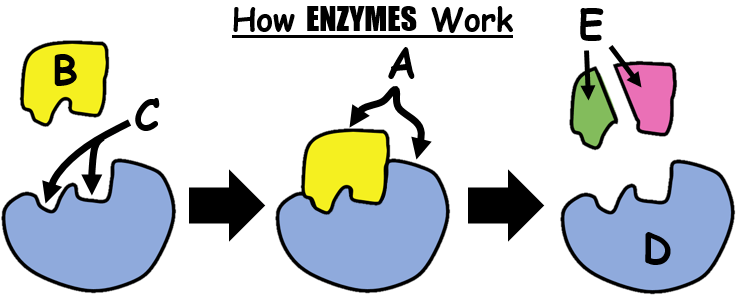
Letter D...
a)
active site
b)
enzyme
c)
substrate
d)
products
88.
Which biomolecule is important source of energy for humans; glucose for human cells, tissues, and organs; provides fiber, sugar, and starches; provides structural support, cell wall, and cell membrane maker?
a)
Nucleic Acid
b)
Lipid
c)
Carbohydrate
d)
Protein
89.
Which biomolecule includes fats, such as triglycerides, oils, waxes, and steroids (cholesterol); insoluble in water; provides energy storage, insulation, part of cell membrane, and hormones 
a)
Nucleic Acid
b)
Lipids
c)
Carbohydrate
d)
Protein
90.
Lipids are made up of which of the following?
a)
glycerol and fatty acids tails
b)
glycerol and monolipids
c)
fatty acids and phosolipids
d)
amino acids and nucleotides
91.
What is the monomer of nucleic acids?
a)
Glycerol
b)
Monosaccharides
c)
Amino Acids
d)
Nucleotides
92.
Cellular Respiration's goal is to
a)
make water
b)
make ATP
c)
make glucose
d)
make  oxygen
93.
In photosynthesis ...
a)
water is chloronated
b)
light energy is changed to glucose
c)
osmosis happens
d)
ATP is made
94.
What are the products of photosynthesis?
a)
sugar and glucose
b)
carbon dioxide 
c)
sugar and Oxygen
d)
water and energy
95.
What is the correct equation for cellular respiration?
a)
6O2 + C6H12O6 -> 6CO2 + 6H2O + Energy
b)
6O2 + C6H12O6 + Energy -> 6CO2 + 6H2O
c)
6CO2 + 6H2O -> 6O2 + C6H12O6 + Energy
d)
6CO2 + 6H2O + Energy -> 6O2 + C6H12O6
96.
The mitochondria is responsible for ...
a)
photosynthesis
b)
anaerobic respiration
c)
aerobic respiration
d)
fermentation
97.
Which statement about photosynthesis is correct?
a)
Plants get the energy they need for photosynthesis from water.
b)
Plants get the energy they need for photosynthesis from soil.
c)
Plants get the energy they need for photosynthesis from sunlight.
d)
Plants do not require energy to perform photosynthesis.
98.

Match the process with the correct organelle.

a)

Photosynthesis occurs in the chloroplast; Respiration occurs in the chloroplast

b)

Photosynthesis occurs in the mitochondria; Respiration occurs in the ribosome

c)

Photosynthesis occurs in the chloroplast; Respiration occurs in the mitochondria

d)

Photosynthesis occurs in the ribosome; Respiration occurs in the mitochondria

99.

Which of the following are the reactants of photosynthesis?

a)

O2 + CO2 + Sunlight

b)

H2O + Glucose + Sunlight

c)

ATP + CO2

d)

H2O + CO2 + Sunlight

100.

Which of the following are the products of photosynthesis?

a)

O2 + Glucose

b)

Glucose + Sunlight

c)

Glucose + CO2

d)

CO2 + Sunlight

101.

Which of the following are the reactants of respiration?

a)

O2 + CO2

b)

H2O + Glucose

c)

Glucose + O2

d)

H2O + CO2 + Sunlight

102.

Which of the following are the products of respiration?

a)

O2 + Glucose + ATP

b)

Glucose + Sunlight + CO2

c)

CO2 + H2O + ATP

d)

CO2 + H2O + Sunlight

103.

Which organisms normally perform photosynthesis?

a)

Heterotrophs

b)

Autotrophs

c)

All organisms

d)

Green things

104.

How are photosynthesis and respiration related?

a)

ATP is a product of both reactions

b)

The same products are made in both reactions

c)

The two processes occur in the same organelle

d)

The products of one are the reactants of the other

105.
In which organelle inside of plant cells does the process of photosynthesis occur?
a)
Mitochondria
b)
Ribosomes
c)
Cell Wall
d)
Chloroplasts
106.
What green pigment is used to trap light energy from the Sun to be used for photosynthesis?
a)
Chlorophyll
b)
Xanthophyll
c)
Carotene
d)
Chloroplast
107.
What is the formula for photosynthesis?
a)
Carbon dioxide + Water → Glucose + Oxygen
b)
Glucose + Oxygen
→ Carbon dioxide + Water
c)
Carbon dioxide + Glucose
→ Oxygen + Water
d)
Carbon dioxide + Oxygen
→ Glucose + Water
108.
Which statement BEST compares aerobic and anaerobic respiration?
a)
Less ATP is generated during anaerobic respiration than during aerobic respiration
b)
more water is generated during anaerobic respiration than during aerobic respiration
c)
more oxygen is generated during anaerobic respiration than during aerobic respiration
d)
less lactic acid is generated during anaeobic respiration than during aerobic respiration
109.
What is the purpose  of an enzyme?
a)
give permission for the reaction
b)
raise activation energy
c)
speed up reactions
d)
control how many reactions occur
110.
Where do substrates bind on an enzyme?
a)
voltage-gated channels
b)
surface receptor
c)
calcium channels
d)
active site
111.
How do enzymes increase the speed of chemical reactions?
a)
reducing the number of products   
b)
reducing the activation energy
c)
increasing the temperature of the cell
d)
increasing the concentration of reactants 
112.
What is the name for the mechanism of enzyme activity?
a)
Lock and key
b)
jigsaw puzzle
c)
hammer and nail
d)
two hands pattern
113.
After the enzyme and substrate bind together and perform the reaction, what does the substrate become?
a)
a substrate
b)
an enzyme
c)
a product
d)
an active site
114.
Which of these is NOT true?
a)
Enzymes can denature (change shape) when the temperature gets too high.
b)
Enzymes can only be used once in a chemical reaction. 
c)
Extreme pH can denature enzymes.
d)
Enzymes speed up chemical reactions. 
115.
What happens when enzymes are heated to a high temperature?
a)
The enzymes die.
b)
The shapes of the enzyme are altered or denatured
c)
The enzymes' amino acid sequence changes.
d)
The enzymes remain the same
116.
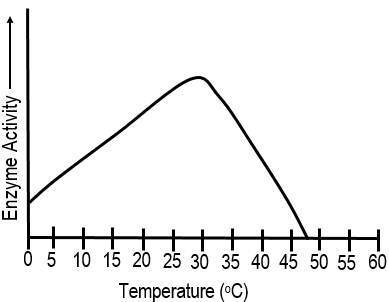
Based on the graph, what temperature does this enzyme work best? 
a)
15 C
b)
40 C
c)
30 C
d)
47 C
117.
Letter B...
a)
active site
b)
enzyme
c)
substrate
d)
products
118.
What is structure E, F, G?
a)
Substrate
b)
Active site
c)
Enzyme
d)
Products
119.

Which is Heterozygous?

a)

Tt

b)

BB

c)

ff

d)

Dominant

120.

What are the chances that the offspring will have homozygous recessive traits?

a)

1 in 4

b)

3 out of 4

c)

75%

d)

50%

121.

What are the chances of heterozygous genotypes in offspring?

a)

50%

b)

25%

c)

1 in 4

d)

75%

122.

What is the dominant trait here?

a)

Bb

b)

Recessive eyes

c)

Blue eyes

d)

Brown eyes

123.
Red-green color blindness is an X-linked recessive trait. A red-green color-blind woman and a red-green color-blind man have a son. What is the probability that the son is also red-green color-blind?
a)
0%
b)
25%
c)
50%
d)
100%
124.
Black hair color is dominant to white hair color in mice.  Determine the phenotypic ratio for the offpring of a heterozygous black mouse and a white mouse.
a)
4 Black: 0 White
b)
3 Black: 1 White
c)
2 Black: 2 White
d)
0 Black: 4 White
125.
Red-green color blindness is an X-linked recessive trait. A red-green color-blind woman and a red-green color-blind man have a son. What is the probability that the son is also red-green color-blind?
a)
0%
b)
25%
c)
50%
d)
100%
126.
What allele combination should go in the missing box?
a)
AA
b)
Aa
c)
aa
d)
none of these
127.

"The modification of characteristics in an organism through the manipulation of genes," describes which term?

a)

Genetic engineering

b)

DNA fingerprinting

c)

Gel electrophoresis

d)

Cloning

128.

When fragments of DNA are connected from different sources, this creates:

a)

A plasmid

b)

A clone

c)

Recombinant DNA

d)

Fragmented DNA

129.

Bacterial DNA that is often circular or in the shape of a ring is called a:

a)

Clone

b)

Plasmid

c)

Fragment

d)

Recombinant DNA

130.

Which of the following is a medical application of genetic engineering?

a)

Inserting human DNA into bacterial DNA for insulin production

b)

Manipulating of DNA to produce glowing monkeys

c)

Engineering crops for greater nutritional content

d)

Modifying genes to achieve a desirable phenotype

131.

Inserting human DNA into a bacterial plasmid to create insulin-producing bacteria is an example of:

a)

Recombinant DNA

b)

Bacterial Transformation

c)

Cloning

d)

Selective breeding

132.

What was the purpose of the Human Genome Project?

a)

To develop the first human clones

b)

To map out the entire human genome

c)

To create new antibiotics

d)

To improve stem cell research

133.

What are the steps of bacterial transformation in order?

a)

cut insulin gene and plasmid with same restriction enzyme, wait for insulin gene to start making insulin, put the plasmid into the bacteria cell

b)

cut insulin gene and plasmid with same restriction enzyme,isolate insulin gene, , combine insulin gene and plasmid at sticky ends to make a recombinant plasmid, insert the recombinant plasmid into a bacteria cell

c)

isolate insulin gene, cut insulin gene and plasmid with same restriction enzyme, combine insulin gene and plasmid at sticky ends to make a recombinant plasmid, insert the recombinant plasmid into a bacteria cell

d)

isolate plasmid, cut insulin gene and plasmid with same restriction enzyme, wait for insulin gene to start making isulin,combine insulin gene and plasmid at sticky ends to make a recombinant plasmid
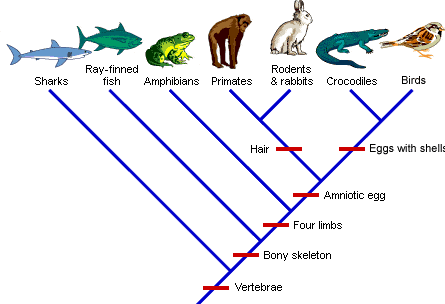
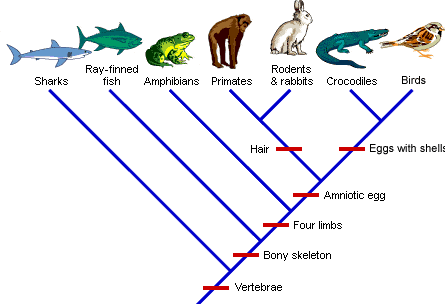
134.
According to this cladogram, sharks are MOST closely related to which organism? 
a)
Amphibians
b)
Ray finned fish
c)
Crocodiles
d)
Birds
135.
According to this cladogram, birds are LEAST related to: 
a)
Amphibians
b)
Sharks
c)
Ray Finned Fish
d)
Crocodiles
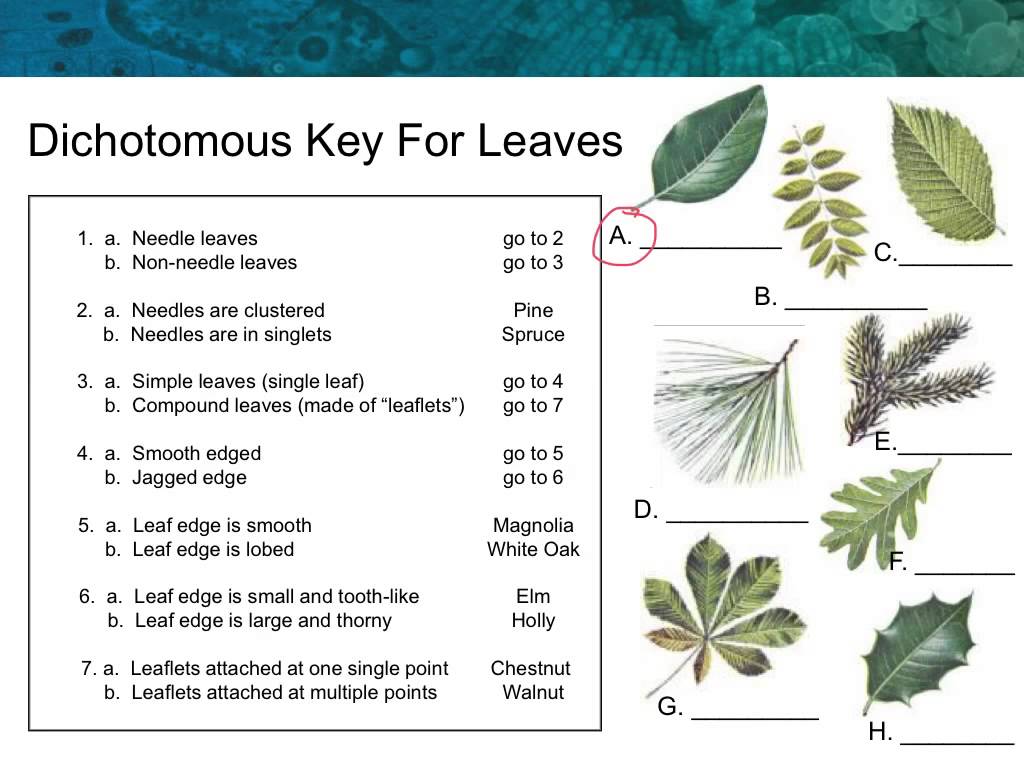
136.
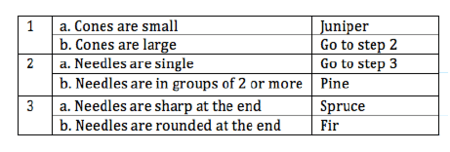
A dichotomous key for trees is provided. Hikers found a tree that has large brown cones and single sharp needles. What species of tree have the hikers found?
a)
Juniper
b)
Pine
c)
Spruce
d)
Fir
137.
A dichotomous key for insects is given. To what order does an insect with two pairs of scaly wings belong?
a)
Coleoptera
b)
Heteroptera
c)
Diptera
d)
Lepidoptera
138.
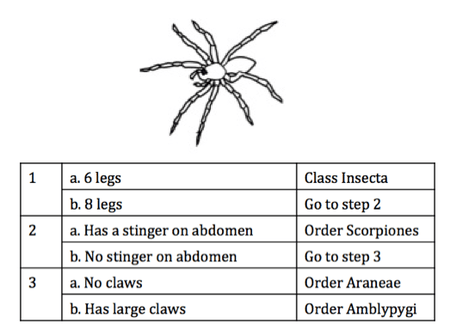
An illustration and a dichotomous key are given. What is the correct classification for this organism?
a)
Class Insecta
b)
Order Amblygygi
c)
Order Araneae
d)
Order Scorpiones
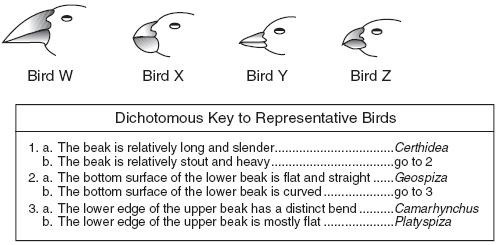
139.
What is the name of bird W?
a)
Certhidea
b)
Geospiza
c)
Camarhynchus
d)
Platyspiza
140.
What is a dichotomous key used for in science?
a)
To organize biomes
b)
Classify organisms
c)
Identify bacteria only
d)
None of these