
 Worksheets
Evolution Unit Review
Total questions: 78
Worksheet time: 56mins
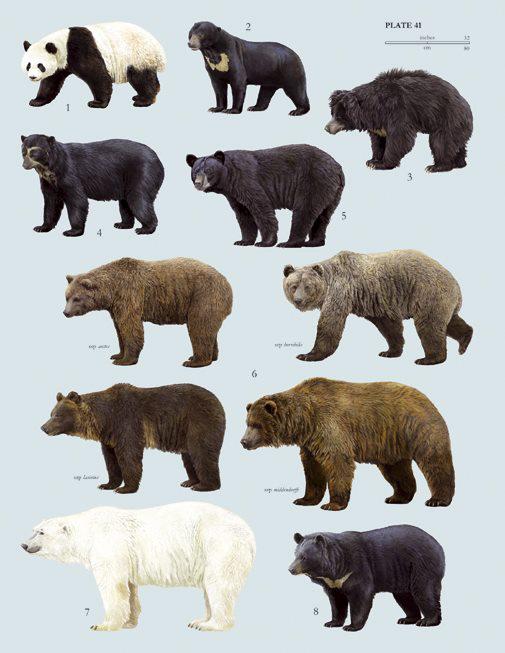
Mutations are a change in what?
DNA
tRNA
protein
rRNA
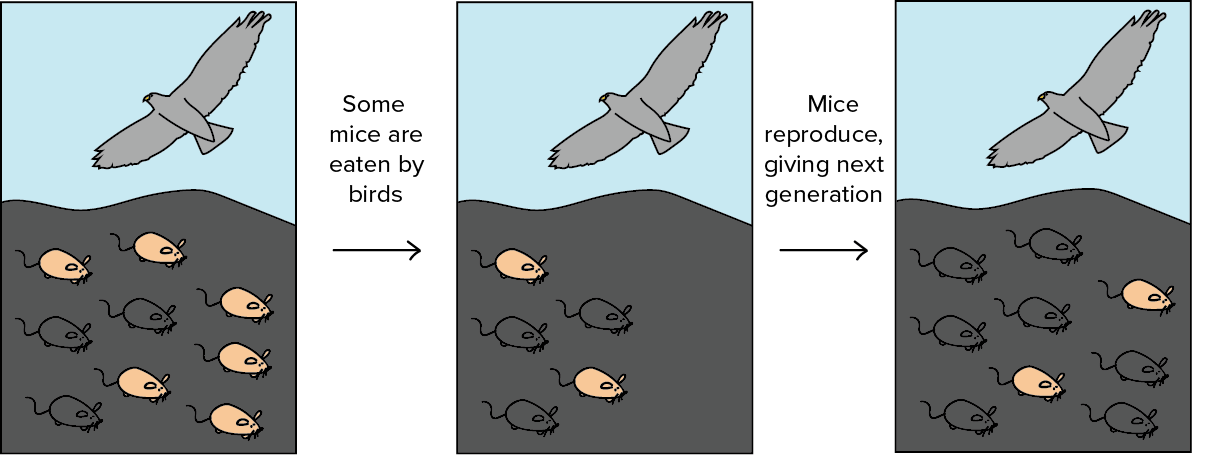
Where do adaptations come from?
The individual organism decides to adapt
Mutations that give an organism an advantage in its environment
Genetic recombination during meiosis
Both mutations and genetic recombination are sources of adaptation

All rabbits of the same species living in a particular area would be an example of a(n)
population
species
community
ecosystem
A random change in allele frequencies over generations brought about by chance.
genetic drift
gene flow
Emigration
genetic drift
gene flow
In the 1800s, hunters killed all but twenty of a large population of northern elephant seals
genetic drift
gene flow
When allele frequencies change due to individuals leaving a population
genetic drift
gene flow
Mutations are random while natural selection is NOT
True
False
the gradual change in a species over time
natural selection
evolution
adaptation
difference, variety; a condition of having many different types or forms
homologous
vestigial
diversity
All the genes, including all the different alleles for each gene, that are present in a population at any one time
genotype
genetic drift
gene pool
the formation of new and distinct species in the course of evolution.
speciation
special
adaptation


The beaver in North America and the capybara in South America share a common ancestor, but have evolved over time to look different
Convergent Evolution
Divergent
Coevolution
The Galápagos finches evolved through natural selection from a common ancestor into a wide variety of different looking species.
Convergent Evolution
Divergent Evolution
Coevolution
Which evidence show patterns of change in organisms from early life to modern life?
homologous structures
transitional fossils
vestigial structures
proteins
Which of the following is the collection of life's remains found in sedimentary rock?
natural selection
homologous structures
Charles Darwin
the fossil record
Similar structures with different purposes found in different species are known as _____
vestigial structures
DNA
homologous structures
the fossil record
The study of organisms at their earliest stage of life
embryology
the fossil record
DNA
vestigial structures
DNA and RNA are known as types of ________
vestigial structures
transitional fossils
trace fossil
genetic material

The picture shows a/an ___________
homologous structure
vestigial structure

The picture shows a/an ___________
homologous structure
vestigial structure

Which structure is shown in the picture?
analogous structure
homologous structure
vestigial structure
DNA

Vestigial structures
structures that perform a similar function but are not similar in origin
remnants of once-important structures that have slowly lost all or most of their function
features found in different organisms that share structural similarities but may have very different functions
preserved remains of an organism
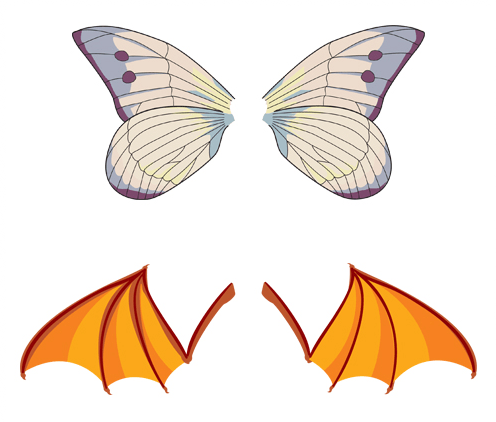
What is this an example of?
Homologous structure
Analogous structure
Vestigial organs
Functional adaption
In any undisturbed sequence of rocks deposited in layers, the youngest is on top and the oldest on bottom.
morphology
phylogeny
evolutionary relationship
law of superposition
An ancestor that two or more descendants have in common
biological diversity
common ancestor
law of superposition
a cousin
Branch of science concerned with fossil animals and plants
embryology
morphology
evolutionary biology
paleontology
Branch of biology that deals with the form of living organisms, and with relationships between their structures
morphology
paleontology
embryology
evolutionary biology
What is is the study of how and why plants and animals live where they do?
Evolution
Adaptive Radiation
Biogeography
Biogeology
The field of biology that classifies organisms is called...
Taxonomy
Phylogeny
Paleontology
Embryology
Which level of biological classification is the MOST specific?
Phylum
Kingdom
Order
Species
Which level of biological classification is the LEAST specific?
Domain
Kingdom
Genus
Family
In binomial nomenclatures, in which order are the names listed?
Genus, Species
Species, Genus
Phylum, Order
Order, Phylum
Phylogeny is...
The study of classification of different species
The study of the evolutionary history of a species
The study of prehistoric life
The study of the distribution of different species
Which of the following statements about endosymbiotic theory is FALSE?
Two (2) prokaryotes coevolved the form the first eukaryote
One prokaryote absorbed another prokaryote
Explains the evolution of the mitochondria and chloroplast
Prokaryotes evolved from the first eukaryotes
Phylogenetic trees show...
Evolutionary relationships between different species
How one species has evolved through time
Which species has evolved the most
Which species have evolved from other species
According to maximum parsimony...
The simpler your phylogenetic tree, the better
Phylogenetic trees should have many branches
All organisms in a phylogenetic tree must descend from a common ancestor
Phylogenetic trees must show all traits
The groups in a phylogenetic tree are called...
Taxa
Nodes
Roots
Branches
Phylogenetic trees show...
Homologous structures through divergent evolution
Homologous structures through convergent evolution
Analogous structures through divergent evolution
Analogous structures through convergent evolution
Places on a phylogenetic tree where organisms share a common ancestor are called...
Nodes
Branches
Taxa
Species

Based on the data given in the table, which two are most closely related?
Human & Gorilla
Gorilla & Orangutan
Human & Chimpanzee
Chimpanzee & Orangutan

Based on the figure, which organism is most closely related to the polar bear?
black bear
european brown bear
western north american brown bear
asian brown bear

Based on the figure, how long ago was the common ancestor of the European Brown Bear and the Asian Brown Bear?
4.5 hundreds of thousands of years ago
3.5 hundreds of thousands of years ago
2.2 hundreds of thousands of years ago
1.4 hundreds of thousands of years ago
Which evidence would be the most accurate when developing a cladogram?
morphological
molecular
ecological
fossil
Forming of a new species by evolution from pre-existing species.
Speciation
Extinction
Gradualism
Punctuated equilibrium
Elimination of a species.
Extinction
Gradualism
Coevolution
Adaptive radiation
Two organisms change in response to each other forming a specialized relationship.
Coevolution
Convergent Evolution
Gradualism
Extinction

