
 Worksheets
Biology CA 2 Review
Total questions: 75
Worksheet time: 1hrs 11mins
Name
Class
Date
1.
Enzymes are considered to be
a)
Lipids
b)
Carbohydrate
c)
Protein
d)
Nucleic Acid
2.
What is the purpose of an enzyme?
a)
give permission for the reaction
b)
raise activation energy
c)
speed up reactions
d)
control how many reactions occur
3.
Where do substrates bind on an enzyme?
a)
voltage-gated channels
b)
surface receptor
c)
calcium channels
d)
active site
4.
Enzymes are capable of increasing the rate of a chemical reaction within a living cell. Enzymes accomplish this through which of the following means?
a)
reducing the number of products
b)
reducing the activation energy
c)
increasing the temperature of the cell
d)
increasing the concentration of reactants
5.

What is structure A?
a)
Substrate
b)
Active site
c)
Enzyme
d)
Products
6.

What is structure C?
a)
Substrate
b)
Active site
c)
Enzyme
d)
Products
7.

What is structure E, F, G?
a)
Substrate
b)
Active site
c)
Enzyme
d)
Products
8.
How do enzymes speed up chemical reaction?
a)
Increasing activation energy
b)
Decreasing activation energy
c)
Increasing deactivation energy
d)
Decreasing deactivation energy
9.
What 3 letters do enzymes typically end in?
a)
-ose
b)
-ase
c)
-ese
d)
-tic
10.

The graph shows how enzymes affect reactions in cells. Which statement best summarizes the information shown in the graph?
a)
Enzymes increase the energy of the reactants.
b)
Enzymes decrease the energy level of the products.
c)
Enzyme decrease the activation energy of the reaction.
d)
Enzymes reverse the direction of the reaction.
11.

Which of the following conclusions can be drawn from this graph?
a)
The optimum pH of the enzyme is 6.6.
b)
The optimum pH of the enzyme is 5.8
c)
The enzyme’s activity increases as pH increases 5.0 to 9.0
d)
The enzyme’s activity is greater around pH of 8.0 .
12.
Any substance that is acted upon by an enzyme is called a(n)?
a)
Coenzyme
b)
Substrate
c)
Vitamin
d)
Polypeptide
13.
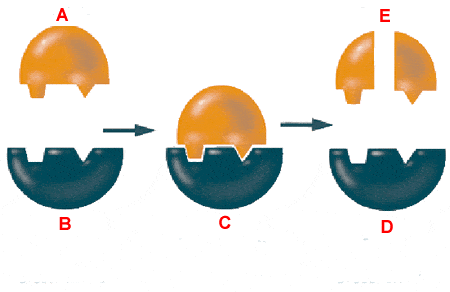
This reaction shows a(n) ____________ reaction
a)
Catabolic
b)
Anabolic
c)
Dehydration Synthesis
d)
Halogenation
14.
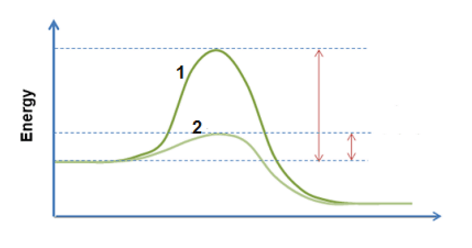
Which line represents an enzyme-catalyzed reaction?
a)
Line 1
b)
Line 2
15.

Which statement explains the effect of the inhibitor?
a)
The inhibitor changes the shape of the active site preventing the substrate from attaching.
b)
the inhibitor causes the substrate to attach to the active site
c)
the inhibitor has no effect on the enzyme
16.
At high temperatures, the rate of enzyme action decreases because the increased heat
a)
changes the pH of the system
b)
alters the active site of the enzyme
c)
neutralizes the acids and bases in the system
d)
increases the concentration of the enzyme
17.
Which type of reactions release energy when they break down large molecules into smaller ones?
a)
anabolic
b)
catabolic
18.
Which type of reactions require energy to build large molecules from smaller ones?
a)
anabolic
b)
catabolic
19.
When molecules are being built by chemical reactions it is called
a)
anabolism
b)
catabolism
c)
fermentation
d)
respiration
20.
When molecules are being broken down in a chemical reaction it is called
a)
anabolism
b)
catabolism
c)
photosynthesis
d)
uptake
21.
What type of metabolism allows you to break down food into energy for your cells?
a)
anabolism
b)
catabolism
c)
exercise
d)
autotroph
22.
What is anabolism?
a)
Synthesis of polymers from monomers
b)
Synthesis of monomers from polymers
c)
Break down of large molecules into small ones
23.
What is the hydrolysis (breakdown) of organic polymers into monomers known as?
a)
Anabolism
b)
Catabolism
c)
Metabolism
24.
What is metabolism?
a)
Catabolism + Anabolism
b)
Catabolism - Anabolism
c)
Anabolism - Catabolism
25.
When a carbohydrate polymer breaks apart using water it is called ______________
a)
hydrolysis
b)
carbolysis
c)
dehydration synthesis
d)
metabolism
26.

What reaction is shown in the diagram and how do you know?
a)
Hydrolysis because water is removed
b)
Dehydration synthesis because a larger molecule is being broken down into monomers
c)
Hydrolysis because a larger molecule is being made
d)
Dehydration synthesis because water is removed, forming a polymer
27.

This image is an example of which chemical reaction?
a)
hydrolysis
b)
dehydration synthesis
28.

I make proteins for the cell. What am I?
a)
ribosome
b)
mitochondria
c)
chloroplast
d)
lysosome
29.

I am a protein packaging and shipping machine! Who am I?
a)
vacuole
b)
ribosome
c)
endoplasmic reticulum
d)
golgi apparatus
30.

You might think of me as the trash collector or recycler is maybe more accurate. What am I?
a)
cytoplasm
b)
lysosme
c)
vacuole
d)
ribosome
31.

I store water in both plant and animal cells. What am I?
a)
cytoplasm
b)
ribosomes
c)
vacuole
d)
lysosomes
32.
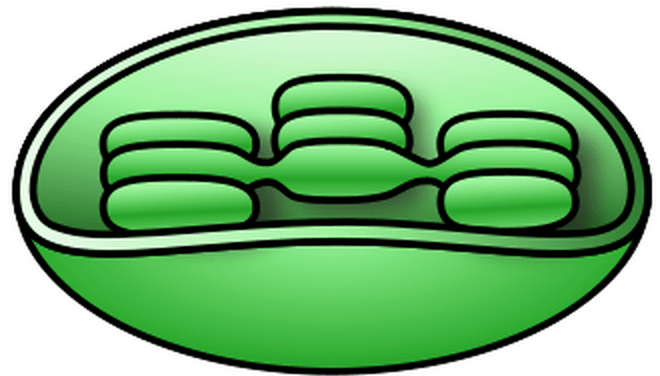
I am only found in a plant cell. What am I?
a)
cell wall
b)
mitochondria
c)
cytoplasm
d)
chloroplast
33.

What is this?
a)
mitochondria
b)
lysosomes
c)
chloroplast
d)
endoplasmic reticulum
34.

What does this structure do?
a)
supports the cell
b)
cell's control center
c)
converts energy to food
d)
makes proteins
35.

Under a microscope, what kind of cells lack membrane-bound internal organelles?
a)
Prokaryotes
b)
Eukaryotes
c)
Plants
d)
Animals
36.
Where is the DNA found in a prokaryotic cell?
a)
floating around in the cytoplasm
b)
in the nucleus
37.
What type of cell has a nucleus?
a)
eukaryotic
b)
prokaryotic
38.
Controls what enters/leaves a cell
a)
cell membrane
b)
Nuclear membrane
c)
cell wall
d)
cytoplasm
39.
stiff, protective outer layer of plant cells
a)
cell membrane
b)
nuclear membrane
c)
cell wall
d)
cytoplasm
40.
releases energy for cells to use, most common in animal cells
a)
mitochondria
b)
ribosomes
c)
lysosomes
d)
nucleolus
41.

Amino acids link together to form proteins. In which organelle would this process occur?
a)
Lysosome
b)
Ribosome
c)
Centriole
d)
Mitochondria
42.
packages proteins for delivery
a)
Endoplasmic reticulum
b)
ribosomes
c)
golgi apparatus
d)
lysosomes
43.
collect sunlight which it converts to sugars
a)
chloroplasts
b)
cytoplasm
c)
cell wall
d)
mitochondria
44.
This organelle takes food and turns it into ENERGY for plant and animal cells.
a)
Chloroplast
b)
Mitochondria
c)
Lysosome
d)
Ribosome
45.

What cell part is NOT found in all cells?
a)
Cell Wall
b)
Cell Membrane
c)
Cytoplasm
d)
Genetic Material
46.
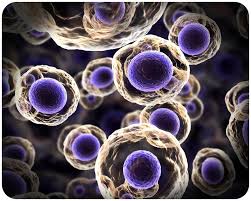
The two kinds of cells are Prokaryotes and Eukaryotes. How are they different?
a)
Prokaryotes have a nucleus.
b)
Eukaryotes have a nucleus.
c)
Prokaryotes are plant cells.
d)
There is no difference.
47.

Using this image, what organelle is C?
a)
Cell Wall
b)
Mitochondria
c)
Large Cell Vacuole
d)
Chloroplast
48.
What organelle is called the "powerhouse" of a cell?
a)
Endoplasmic Reticulum
b)
Nucleus
c)
Mitochondria
d)
Nucleolus
49.

Complex cell. Can be plant or animal. Contains membrane bound organelles.
a)
Eukaryotic Cell
b)
Prokaryotic Cell
c)
Bacteria
d)
Blood cell
50.
Gives the cell a rigid, box-like shape; outside of the cell membrane; in plants.
a)
cytoplasm
b)
chromatin
c)
cell wall
d)
cell membrane
51.
What can only be found in plant cells?
a)
Cell membrane
b)
Vacuole
c)
Chloroplast
d)
Mitochondrion
52.
What makes the endoplasmic reticulum rough?
a)
Vessicles
b)
Vacuoles
c)
Ribosomes
d)
Chromosomes
53.

Which organelle is only found in a plant cell?
a)
nucleus
b)
chloroplast
c)
mitochondria
d)
cell membrane
54.

This organelle creates energy.
a)
Nucleus
b)
Ribosome
c)
Mitochondria
d)
ER
55.

Where is DNA stored in a cell?
a)
Lysosomes
b)
Golgi Complex
c)
Ribosomes
d)
Nucleus
56.

What is the fluid inside a cell called?
a)
Endoplasimic Reticulum
b)
Orange Juice
c)
Water
d)
Cytoplasm
57.

Which of these is NOT a part of the Cell Theory?
a)
All cells are independent.
b)
Cells are the basic unit of living things.
c)
All living things are one or more cells.
d)
Cells come from cells.
58.

This organelle moves materials throughout the cell.
a)
ER
b)
Ribosomes
c)
FedEx
d)
Golgi Complex
59.

This organelle eliminates waste.
a)
Nucleus
b)
ER
c)
Vacuole
d)
Lysosome
60.

This organelle makes proteins.
a)
Cell membrane
b)
Nucleus
c)
Ribosome
d)
ER
61.

Plant and animal cells are identical.
a)
True
b)
False
62.

Which structure helps plants stand up?
a)
cell membrane
b)
lysosome
c)
Golgi apparatus
d)
cell wall
63.

The chloroplast _____.
a)
uses sugar to make energy
b)
eliminates waste products from the cell
c)
uses light energy to make sugar
d)
manufactures proteins for cell export
64.

What organelle destroys bacteria in the cell?
a)
lysosomes
b)
peroxisome
c)
centrosomes
d)
ribosomes
65.
This is a double layer of phospholipids that creates a barrier between the cells internal and external environments; it controls what comes in or out of the cell (selective permeable)
a)
Nucleus
b)
Cilia
c)
Cell membrane
d)
Flagella
66.
You are made up of...
a)
eukaryotic cells
b)
prokaryotic cells
c)
plant cells
d)
bacterial cells
67.
This is a system of membranous tubules and sacs in eukaryotic cells that functions as a path along which molecules move from one part of the cell to another. Can be rough or smooth.
a)
Mitochondria
b)
Chloroplast
c)
Endoplasmic reticulum
d)
Centrioles
68.
This is part of the endoplasmic reticulum that is used to make proteins that will be used by other cells. It is lined with ribosomes.
a)
Vesicles
b)
Lysosomes
c)
Rough ER
d)
Smooth ER
69.
A large fluid-filled vesicle located in the cytoplasm of a plant cell; stores water, enzymes, and waste; keeps toxic wastes away from the rest of the cell.
a)
Lysosome
b)
Vacuole
c)
Flagella
d)
Centrioles
70.

The Golgi apparatus _____.
a)
packages cell products for export
b)
eliminates waste
c)
stores DNA
d)
makes energy
71.

Which structure would be identified as the vacuole?
a)
1
b)
2
c)
3
d)
4
72.

The Smooth Endoplasmic Reticulum is covered in ribosomes.
a)
True
b)
False
73.
Where are proteins made?
a)
Golgi body
b)
Mitoichondrion
c)
Chromosomes
d)
Ribosomes
74.
What organelle helps with cell digestion?
a)
Lysosomes
b)
Ribosomes
c)
Golgi Complex
d)
ER
75.

A rigid layer that lies outside the cell's membrane is...
a)
Cytoskeleton
b)
Cilia
c)
Cell Wall
d)
Flagella
100 %

