
 Worksheets
Chemistry MP4 Mastery Review
Total questions: 100
Worksheet time: 2hrs 40mins
When two nonmetals do not share electrons evenly, the resulting covalent bond will be
nonpolar
polar
ionic
metallic
Which category of elements usually form negative ions?
metals
nonmetals
metalloids
noble gases
What is a valence electron?
an electron that is found in the outermost shell of an atom.
an electron found in the innermost shell of an atom.
an electron found in the middle shell.


This atom in a water molecule has more of a negative charge
hydrogen
oxygen

The positive ions tend to _____________ electrons.
lose
gain
The negative ions tend to _____________ electrons.
lose
gain
When an atom loses an electron, it becomes a
positive ion
negative ion
neutral ion
neutral atom
Why do all bonds form?
so the number of protons equals the number of electrons
so an atom can become unstable
to fill the outermost energy level
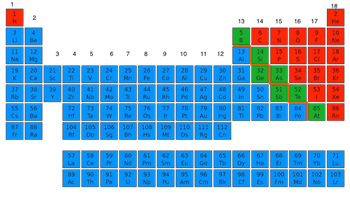
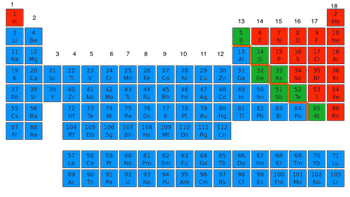

What type of elements form cations?
metals
nonmetals
metalloids?
How does calcium become an calcium ion?
it loses 2 electrons
it gains 2 electrons
Cations
Gain electrons, has an overall positive charge
Lose electrons, has an overall positive charge
Lose electrons, has an overall negative charge
Gain electrons, has an overall negative charge
How does magnesium become an magnesium ion?
it loses 2 electrons
it gains 2 electrons
How does oxygen become an oxide ion?
it loses 2 electrons
it gains 2 electrons

How many Aluminum atoms are in Al2O3?
3
5
2
1
What two types of atoms make a covalent bond?
2 nonmetals
2 metals
1 metal and 1 nonmetal`
How many valence electrons does Boron have?
1
2
3
4
Group numbers on the periodic table help us determine
number of valence electrons
state of the element (solid, liquid, gas)
Water is an example of what?
molecular compound (covalent compound)
ionic compound
Salt is an example of what?
ionic compound
covalent compound

What happens when two negatively charged ions are pushed together?
they will repel (move apart)
they will be attracted to each other (move together)

What happens when two oppositely charged ions are pushed together?
they will repel (move apart)
they will be attracted to each other (move together)
Why do all bonds form?
so the number of protons equals the number of electrons
so an atom can become unstable
to fill the outermost energy level
Neutral atoms have the same number of
protons and neutrons
neutrons and electrons
Protons and electrons
isotopes and electrons
An atom becomes an ion through:
Losing electrons
Gaining electrons
Both options are correct
None of them are correct
An atom has 7 valence electrons. In order to get a full valence shell, it is easier for that atom to:
lose 7 electrons
gain 1 valence electron
lose 1 valence electron
gain 2 more valence electrons
An ion made of more than one atom is a:
isotope
covalent compound
polyatomic ion
polyion
When naming ionic compounds, the ______ comes first
nonmetal (negative ion)
nonmetal (positive ion)
metal (negative ion)
metal (positive ion)
Why do all bonds form?
so the number of protons equals the number of electrons
so an atom can become unstable
to fill the outermost energy level
What two types of atoms make a covalent bond?
2 nonmetals
2 metals
1 metal and 1 nonmetal`
How do covalent bonds form?
by sharing electrons between atoms
by donating or receiving electrons
Atoms involved in a covalent bond are not charged, while atoms involved in an ionic bond are charged (negative or positive)
true
false
Name the type of bonding in which the electrons are shared.
Ionic bonding
Covalent bonding
Metallic bonding
The number of pairs of electrons shared in triple covalent bond
Two
Three
One
What is it called if there are three-pairs of electrons being shared?
Triple Bond
Three Single Bonds
Tribond
Double and Single Bond Combo


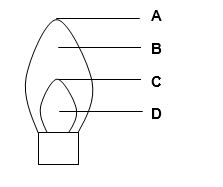

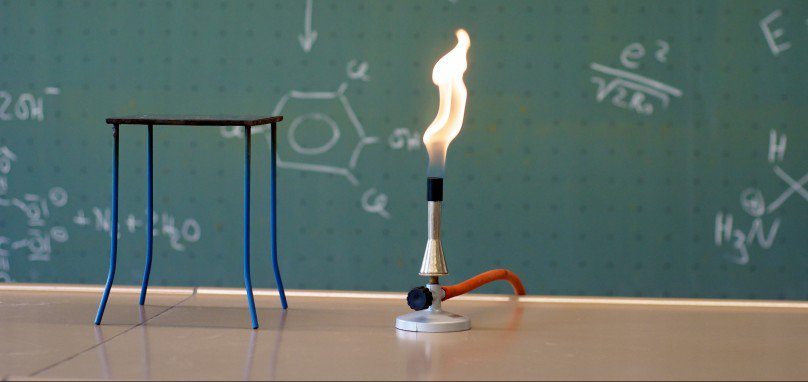
When the air hole is closed, what color is the flame?
Blue/Yellow/Orange
Dark and Light Blue

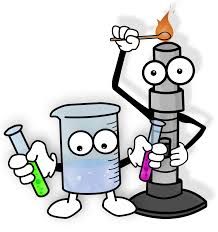
What do you call the part of the burner that "twists" ?
Base
Collar
Cylinder
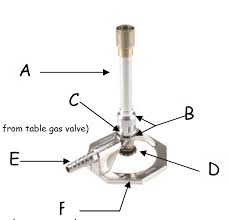
Name this part of the Bunsen Burner: A
Barrel
Collar
Air Hole
Base

Name F
Collar
Chimney
Base
Air Hole
Which of the following substances would conduct electricity if dissolved in water to form a solution?
C6H12O6
CH4
KI
CO2
A conductivity tester is placed in a solution of water and an unknown solute. The bulb doesn't light up. What can you determine about the unknown solute?
It is an ionic compound.
It is a metallic compound.
It is a covalent compound.
Not enough information is given to answer this question.
Which of the following will conduct electricity when dissolved to make a solution?
KCl
NH3
CO2
C12H22O11
A light bulb connected to two electrodes is immersed in the following solutions. Which one will make the light bulb light up the brightest?
1 g of sugar in 1 cup of water
1 g of salt in 1 cup of water
10 g of salt in 1 cup of water
10 g of sugar in 1 cup of water.
Which of the following will produce ions to conduct electricity when dissolved in water?
CaCl2
NH3
CH4
P2O5

What can you conclude based on the diagram? There could be more than one correct answer.
Liquid A a concentrated ionic solution
Liquid B is a concentrated ionic solution
Liquid A is a concentrated covalent solution.
Liquid B is a concentrated covalent solution.
How can a scientist safely tell whether an unknown solution is salt in water or sugar in water?
taste the solution
smell the solution
test the electrical conductivity of the solution
filter the solution

When a solid compound dissolves in water, …
each of its particles are surrounded by water molecules.
its particles surround individual water molecules.
Table sugar and table salt are examples of ...
atoms
elements
mixtures
compounds
Which of the following would conduct more electricity - Distilled water OR Tap water ?
(a)
True or False: Ions are charged particles.
true
false
What conditions must be met for electricity to be conducted?
ionic compound dissolved in water (aq)
dry ionic compound (s)
molecular compound dissolved in water (aq)
dry acid (s)


what symbol is this?
Battery
Volt
Resi
Switch
Electrical lights will not come on unless their electrical circuit is a --
parallel circuit
series circuit
closed circuit
short circuit


What is the following symbol represent?
Wire
Resistor
Battery
Switch
The first step in naming an ionic compound is always...
Naming the anion (non-metal)
Changing the ending to -ide
Naming the cation (metal)
Writing the cation charge
What is the compound formula for the ions Na+ and Cl- ?
Na2Cl4
NaCl
sodium chloride
Monatomic means _________
1 element
1 atom
2 or more elements
2 or more atoms

