
 Worksheets
Inventions of the Industrial Revolution
Total questions: 90
Worksheet time: 57mins
water frame
flying shuttle
spinning mule
Which one of the inventions from your chart changed the way goods and people were transported?
Telephone
Light Bulb
Steam Engine
Cotton Gin
Which one of the inventions from your chart changed the way cotton was processed?
Cotton Gin
Spinning Jenny
Bessemer Steel Process
Light Bulb
Who invented the Spinning Jenny?
Thomas Edison
James Hargreaves
Albert Einstein
Eli Whitney
The invention of these made it possible to replace a broken part with ease instead of having to wait for custom replacements
mass production
division of labor
interchangeable parts

John Deere
This invention turned rivers into busy routes for traders and travelers.
Railroads
Steamboat
Telegraph
Mechanical Reaper

How did the cotton gin change cotton production in the South?
Cotton was made faster.
Cotton became the most important cash crop in the United States.
It could clean more cotton in minutes than a whole group of workers could clean in a day.
all of the above
The introduction of interchangeable parts led directly to the —
A. formation of the patent system
B. creation of labor unions
C. use of mass-production techniques (assembly lines)
D. eight-hour workday
How did new methods of mass production (assembly lines) contribute to the Industrial Revolution?
by having skilled workers
by creating products more quickly and cheaply
by making many products that were more expensive
by allowing products to be made more slowly and carefully
The mechanical reaper...
increased farming production
decreased farming production
made farming more difficult
planted seeds automatically for farmers
What was the invention that quickly and cheaply, produced stronger steel that could be used in a wider variety of ways?
Steel Works
Double Boiling
AC Current
Bessemer Process
What provided an efficient source of industrial power?
Chromebook Charger
Combustion Engine
Solar Panel
Steam Engine
This inventor is credited with inventing the long-lasting light bulb
Henry Ford
Abraham Lincoln
Thomas Edison
Mrs. Fain
What could send messages in a short amount of time through the use of signals transmitted by wire?
Text Message
Fax
Telegraph
This man invented the steam engine?
Alexander G. Bell
Thomas Watt
Will Muschamp
Dabo Swinney


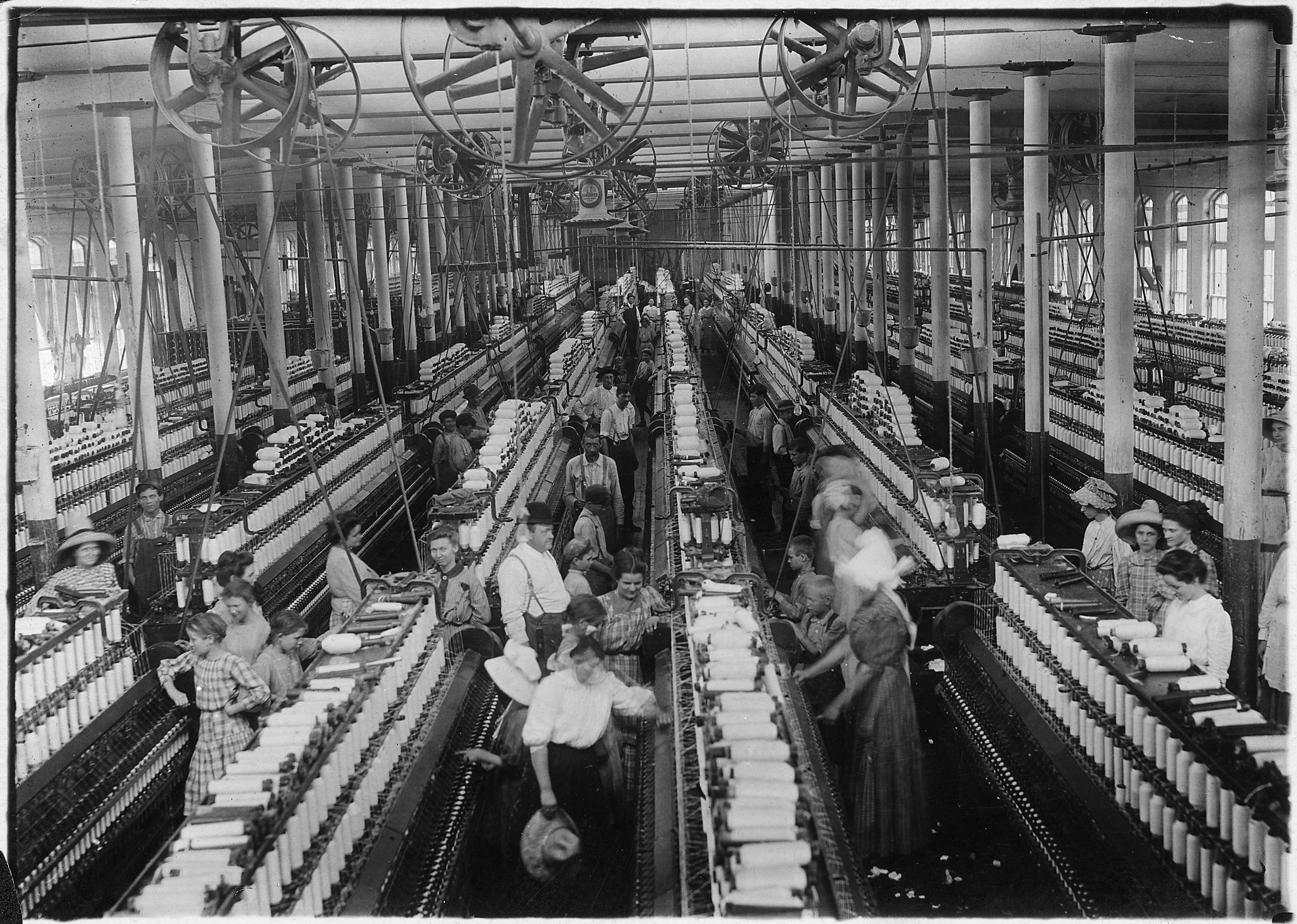
The assembly line had which effect on production?
Created advertising
Led to lower costs
Decreased productivity
Increased prices
These inventions were controlled by the government and therefore limited their role in American politics.

Reduced the amount of work needed to produce yarn, with a worker able to work eight or more spools at once
Phonograph
Radio
Spinning Jenny
Model T

Could power machines automatically and led to the development of moving vehicles
steam engine
radio
cotton gin
spinning jenny

Who invented the steam engine?
James Watt
Marconi
Thomas Edison
Bell

This caused a need for more labor (slaves) to pick the cotton
Airplane
Cotton Gin
Phongraph
Smallpox Vaccine
Edward Jenner created a vaccine that prevented people from catching the deadly disease called _______________
influenza
shingles
ebola
smallpox
Who invented a quicker and cheaper way to make steel?
John D. Rockefeller
Henry Bessemer
George Pullman
Nikolaus Otto
Who invented the Spinning Jenny?
Which one of the inventions from your chart changed the way goods and people were transported?
Telephone
Light Bulb
Steam Engine
Cotton Gin

Inventor of the mechanical reaper used as a farming tool for cutting and gathering crops at harvest time.
John Deere
Samuel Morse
Cyrus McCormick
Eli Whitney
A patent on the idea of manufacturing identical components used in place of another; thereby, making repairs easier via mass production of parts.
Eli Whitney
John Deere
Samuel Slater
Samuel Morse
Inventor of the telegraph and the code used for helping bring the nation together via electronic communications.
John Deere
Samuel Morse
Eli Whitney
Robert Fulton

What was the purpose of this invention during the Industrial Revolution?
Increased production levels, allowed for the mass production of products efficiently.
The steam locomotive allowed for people, supplies, and goods to move across the country much faster.
Enabled long-distance communication.
Allowed for the cost to transport goods to decrease, and for a tourist industry to develop.

What was the purpose of this invention during the Industrial Revolution?
Enabled long-distance communication.
Production of cotton will increase and slavery becomes more profitable.
Allowed for the cost to transport goods to decrease and a tourist industry to develop.
The cost of shipping goods decreased and allowed for the rapid growth of cities in the Northeast.

During the early Industrial Revolution, production of goods went from being made in ________________ to being made in __________________
homes / factories
factories / homes
homes / stores
pubs / factories

Which of the following was most needed to help the building of railroads throughout the country?
Interchangeable Parts
Bessemer Steel Process
Telegraph
Spinning Jenny
Who invented the elevator?
Thomas Edison
Gustavus Swift
Elisha Otis
Henry Ford


This was the first fast and inexpensive way to make steel.
Bessemer Process
Cotton Gin
Telegraph
Railroad
This led to building bigger, stronger buildings
Bessemer Process
Steamboat
Canals
The Reaper
Eli Whitney is credited with creating which pair of inventions?
The Cotton Gin and Interchangeable Parts
The Reaper and the Cotton Gin
The Steam Engine and Interchangeable Parts
Hot Dogs and Nuclear Fisson

This is how the machine 'ginned' cotton
Removed the seeds from cotton
Washed and dried the cotton
Picked the cotton from the field
Wove the cotton into cloth

This was the first instant long-distance communication device, sending signals along a wire.
The Telegraph
The Cell Phone
Letters
The Bessemer Process

This invention allowed farmers to harvest more grain faster.
The Mechanical Reaper
the Cotton Gin
The Plow
the Bessemer Process
In the early days of the Industrial Revolution, many factories were built along swift flowing rivers primarily because
water was a major source of irrigation
ships could easily deliver goods to factories
water power was used to drive factory machines
factory owners preferred to build on inexpensive land

Who is the inventor of the first electric battery ?
Louis Pasteur
Humphry Davy
Alessandro Volta
John Froelich

Who invented the sewing machine ?
Alexander Bell
Leonardo Da Vinci
Thomas Edison
Isaac Meritt Singer
Who invented the steam-driven locomotive?
Charles Babbage
Isaac Newton
James Wattwrong
George Stephenson
Who invented flying shuttle ?
John Kay
Thomas Telford
Humphry Davy
Morsey
Who invented the water frame?
Spinning Jenny
Samuel Crompton
Henry Bessemer
Richard Arkwright
Who invented the Seed Drill?
John Kay
James Watt
Jethro Tull
Eli Whitney
Who invented the spinning mule ?
Spinning Jenny
Samuel Crompton
Richard Gatling
Eli Whitney
Who invented the power loom?
Spinning Jenny
Edmund Cartwright
Richard Gatling
Alfred Nobel
Which Alex Cummings invention improved sanitary conditions?
flushing toilet
water frame
Spinning Jenny
cotton gin
The man responsible for the invention of the typewriter is
Richard Gatling
Alfred Nobel
Benjamin Franklin
Christopher Latham Sholes
The person to took the first permanent camera image is?
Joseph Niepce
Cyrus Field
Henry Bessemer
Eli Whitney
From what invention did Alfred Nobel make his fortune?
Dynamite
X-rays
Antibiotics
Interchangeable parts
For what communication innovation is Cyrus Field known?
telegraph
transatlantic telegraph cable
Morse code
telephone
Known for creating a multi-barrel rapid-fire gun which allowed higher rates of fire to be achieved without the barrels overheating quickly
Richard Gatling
Elisha Otis
Edmund Cartwright
Cyrus Field
Had great success in filling a large balloon with hot air making it a unique mode of travel
Joseph and Jacques Montgolfier
George Stephenson
Benjamin Franklin
John McAdam

