wayground logo

Free Printable Worksheets

NEW

Font size

S
M
L
XL
Worksheets

Evolution and Diversity of Life Application and Scenario Questio

Total questions: 35

Worksheet time: 2hrs 45mins
Name
Class
Date
1.
When the DNA of an organism is altered it is referred to as…
a)
Mutation
b)
Gene Flow
c)
Genetic Drift
d)
Sexual Selection
2.
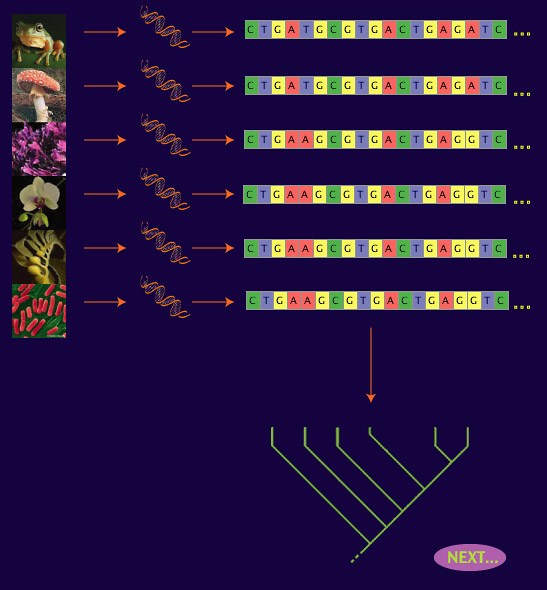
Two organisms that are closely related would have
a)
very similar DNA sequence
b)
exactly the same DNA sequences
c)
no proteins in common
d)
completely different DNA sequence
3.
The ability of an organism to survive and reproduce in its specific environment 
a)
diversity.
b)
evolution
c)
adaptation
d)
 fitness
4.
What is this an example of?
a)
diversity of species
b)
variation
c)
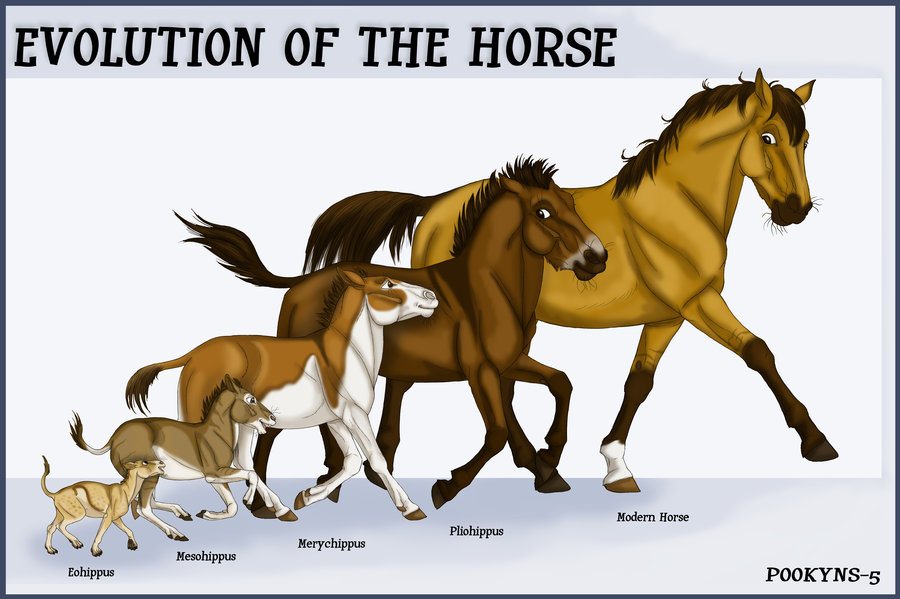
vestigial structures
d)
DNA studies
5.
Some organisms that share a common ancestor have features that have different functions, but similar structures.  These are known as
a)
vestigial structures
b)
analogous structures
c)
homologous structures
d)
fossil structures
6.
The diagram above shows a model of species divergence among some primates. If this model is correct, the greatest genetic differences would be found in the DNA sequences of which two species?
a)
Tarsius bancanus and Cebus albifrons
b)
Macaca sylvanus and Macaca mulatta
c)
Hylobates lar and Pongo pygmaeus
d)
Pan troglodytes and Lemur catta
7.
The limbs of several organisms are shown in the illustrations below. Scientists sometimes compare the limbs of these organisms to look for evidence of common ancestry.

These limbs provide evidence of common ancestry because they —
a)
have the same basic structure
b)
perform the same function
c)
are the same size
d)
are parts of mammals
8.
The opossum, which is native to North America, and the kangaroo, which is native to Australia, are marsupials.

The fact that both these mammals incubate their immature offspring in a pouch provides evidence that they —
a)
belong to the same species
b)
must range great distances to eat
c)
have very similar skeletal structures
d)
are descended from a common ancestor
9.
After examining the fossil record, scientists have determined that scorpions today are much smaller than their extinct ancestors. For example, Jaekelopterus rhenaniae, a giant scorpion species that lived 255 million to 460 million years ago, was 2.5 meters long. Which of the following conclusions is supported by this information?
a)
Scorpions living today have increased their numbers since they first appeared.
b)
Scorpions in the fossil record are smaller than their descendants are.
c)
Scorpions have changed as a result of natural selection.
d)
Scorpions do not appear in their original state in the fossil record.
10.
The cladogram shows the evolution of land plants as indicated by fossil records.

Which discovery would challenge the validity of this cladogram?
a)
A large aquatic vascular plant about 200 million years old
b)
A species of algae that has existed for less than one million years
c)
A moss species that has existed for less than 380 million years
d)
A fossil of a fern more than 425 million years old
11.
Which condition is essential for natural selection to result in a new species?
a)
Unlimited resources
b)
An inherited variation
c)
A static environment
d)
A long life span
12.
A harmless scarlet king snake and a venomous eastern coral snake have similar band patterns, as shown below. For the scarlet king snake, the adaptation of having a banding pattern like the eastern coral snake’s is known as mimicry.

The outcome of this adaptation in the scarlet king snake is to —
a)
make it easier for the scarlet king snake to attract prey
b)
make it easier for the scarlet king snake to interbreed with the other snake
c)
allow the scarlet king snake to blend in with its environment
d)
protect the scarlet king snake from predators
13.
Scientists estimate that there are more than 20,000 species of ants. The species range in size from 1 mm long to 38 mm long and live in most environments. The diets of ants range from flowers and seeds to fluids from their own larvae. Ants have been able to successfully inhabit so many different environments because their populations have been able to —
a)
hybridize with other species of insects
b)
adapt to a variety of habitats and food sources
c)
fill niches usually occupied by mammals
d)
occupy habitats that have no other life-forms
14.
Plants have developed many methods of seed dispersal. The table below shows seeds of two different plants.

How has the seed dispersal method developed by these plants given them a reproductive advantage?
a)
The method ensures that offspring will be dispersed and reduces competition for resources.
b)
The method reduces the chance that herbivores will consume the seeds.
c)
The method lengthens the life cycle of each of these plants.
d)
The method reduces the plants’ need for water and other nutrients.
15.
New alleles recently appeared in a population of deer. The new alleles were not introduced into the existing population through mutation. Which of the following mechanisms is most likely responsible for the introduction of the new alleles?
a)
Independent assortment
b)
Gene flow
c)
Natural selection
d)
Genetic drift
16.
The concept of gene flow is demonstrated when a cow is driven off from its herd, joins another herd, and reproduces. When the cow contributes to the gene pool of the new herd, which of these most likely increases?
a)
Natural selection
b)
Genetic variation
c)
Environmental fitness
d)
Reproductive mutations
17.
Two populations of mice living in the same forest are separated by a large water-filled ditch. After a rainstorm, flooding brings several mice from one population to the other population. When the mice from the first population reproduce with members of the second population, which of the following will likely occur?
a)
All the offspring will die as a result of reproductive mutations
b)
The offspring will be forced to leave the second population
c)
The offspring will be genetically identical to their parent from the first population
d)
The offspring in the second population will have greater genetic variety
18.

The Indian leaf butterfly has traits that allow it to resemble a leaf. The bright colors of the monarch butterfly indicate that the butterfly tastes bad and can be poisonous. How does the appearance of these butterflies help them to survive?

a)

The Indian leaf butterfly is able to avoid predators while the monarch butterfly warns predators away.

b)

The Indian leaf butterfly frightens predators away while the monarch butterfly poisons predators before they can eat it.

c)

Both butterflies rely on camouflage to avoid predation

d)

Both butterflies cooperate with one another to avoid predation.

19.

Scientists can determine relatedness among organisms by comparing partial amino acid sequences. The table shows four partial amino acid sequences from four organisms.


Which organism is the LEAST related to the other three organisms?

a)

Organism 1

b)

Organism 2

c)

Organism 3

d)

Organism 4

20.

The diagram shows light- and dark-colored beetles that live on a tree.


The diagram shows light- and dark-colored beetles that live on a tree.

a)

The number of light-colored beetles in the population will increase.

b)

There will be more dark-colored beetles than light-colored beetles.

c)

The number of light-colored beetles will decrease.

d)

The dark-colored beetles will move to a different type of tree.

21.

Adaptations that result from natural selection are expected to increase the fitness of an organism. In terms of natural selection, which of the following best describes fitness?

a)

Being able to escape from predators

b)

Being among the strongest organisms in a population

c)

Being able to survive, find a mate, and produce offspring

d)

Being able to survive long enough to reach the adult stage

22.

The relationships among different orders of millipedes are shown in the cladogram.


Based on this cladogram, which statement best describes relationships among millipede orders?

a)

Stemmiulida is more closely related to Merocheta than Penicillata is to Merocheta.

b)

Spirostreptida is more closely related to Glomerida than Sphaerotheriida is to Glomerida.

c)

Polyzoniida is more closely related to Glomeridesmida than Sphaerotheriida is to Glomeridesmida.

d)

Merocheta is more closely related to Glomeridesmida than Glomerida is to Glomeridesmida.

23.

The concept of gene flow is demonstrated when a cow is driven off from its herd, joins

another herd, and reproduces. When the cow contributes to the gene pool of the new herd,

which of these most likely increases?

a)

Natural selection

b)

Genetic variation

c)

Environmental fitness

d)

Reproductive mutations

24.

Some organisms have genes that improve their ability to survive and reproduce. If the genes

also help their offspring survive and reproduce, then which of the following will most likely

increase?

a)

The frequency of the genes in one individual

b)

The frequency of the genes in the population

c)

The number of genes in one chromosome

d)

The number of genes in the species

25.

Zoogeographic regions are characterized by the presence of specific groups of animals. These

regions are determined by the taxonomic or phylogenetic relationships of animals. The map

shows the zoogeographic regions proposed by the naturalist Alfred Russel Wallace in 1876.The similarities of organisms in which two areas numbered above provide the best evidence

for common ancestry between the organisms in both locations?

a)

1 and 2

b)

3 and 4

c)

5 and 6

d)

7 and 8

26.

Bactrian camels, dromedaries, llamas, and alpacas are all members of the same taxonomic family, Camelidae. Members of this family all have two toes, no hooves, true canine teeth, and a split upper lip. The family Camelidae originated in North America. The physical features of animals in this family and the family’s geographical origin provide evidence that all these animals —

a)

live in the same type of ecosystem

b)

have slowly evolved to become herbivores

c)

have a common ancestor

d)

exchanged DNA at some point in the past

27.
How can the change in the fossil record be explained?
a)
The Molluscks were well adapted, but a change favored the larger size.
b)
The Molluscks were well adapted, but they hybridized with a smaller species of mollusck, resulting in the larger shell.
c)
The Molluscks were not well adapted and the shell size changed gradually over time.
d)
The mulluscks were well adaptaed, but humans introduced a new species of molluscks.
28.
Which claim is best supported from the genus Gallotia from the map?
a)
The common ancestor of the lizards first colonized the island El Hierro
b)
The ancestors of each species came from different continents at different times
c)
The common ancestor of the lizards probably came from Africa
d)
The ancestors of each species evolved in Spain and were brought to the islands at the same time.
29.

Species vary globally =

a)

Organisms are similar in different places of the world.

b)

Organisms are different in the same parts of the world.

c)

Organisms change over time.

30.

Species vary locally =

a)

Organisms are similar in different places of the world.

b)

Organisms are different in the same parts of the world.

c)

Organisms change over time.

31.

Species vary over time =

a)

Organisms are similar in different places of the world.

b)

Organisms are different in the same parts of the world.

c)

Organisms change over time.

32.

This is an example of

a)

artificial selection

b)

natural selection

33.

This is an example of

a)

artificial selection

b)

natural selection

34.

This example of evidence for evolution is

a)

biogeography (fossils)

b)

anatomy

c)

development

d)

molecular biology

35.

This example of evidence for evolution is

a)

biogeography (fossils)

b)

anatomy

c)

development

d)

molecular biology