wayground logo

Free Printable Worksheets

NEW

Font size

S
M
L
XL
Worksheets

Chemical Bonding Review

Total questions: 58

Worksheet time: 1hrs 3mins

Name
Class
Date
1.

An atom that gains or loses an electron becomes

a)

an isotope

b)

a new element

c)

an ion

d)

a molecule

2.

When an atom gains an electron it becomes

a)

negatively charged

b)

positively charged

c)

neurtal

3.

Ionic bonds happen when valence electrons are

a)

shared

b)

too heavy

c)

transferred

4.

Valence electrons are

a)

neutral (no charge)

b)

found in the outer most energy level of the atom

c)

equal to the number of protons

5.

Which type of bond occurs between non metals?

a)

covalent bonds

b)

ionic bonds

c)

metallic bonds

d)

all types of bonds

6.

How many valence electrons does Oxygen have?

a)

0

b)

16

c)

6

d)

8

7.

How many different elements are in the C6H12O6

a)

3

b)

6

c)

12

d)

24

8.

How many total atoms are in C6H1206

a)

3

b)

6

c)

12

d)

24

9.

What type of bond forms CaF2

a)

covalent bond

b)

ionic bond

c)

metallic bond

d)

all answers are correct

10.

Which type of bond creates MgFe?

a)

covalent bond

b)

ionic bond

c)

metallic bond

d)

all the bonds

11.

What is the charge of an aluminum ion that has 13 protons and 10 electrons?

a)

3+

b)

3 -

c)

no charge

12.

Compounds that share specific valence electrons are formed by

a)

covalent bonds

b)

ionic bonds

c)

metallic bonds

d)

all types of bonds

13.
What elements generally make an ionic bond?
a)
metal and nonmetal
b)
2 nonmetals
c)
metal
d)
none of the above
14.
Predict the bond that will form between Be and F.
a)
Ionic
b)
Covalent
15.
Predict the bond that will form between Se and Cl
a)
Ionic
b)
Covalent
16.
How many electrons does Si contain? (click to see image)
a)
14
b)
28
c)
2
d)
4
17.
How many electrons can the first energy level hold?
a)
1
b)
2
c)
8
d)
0
18.
What happens when an atom loses an electron?
a)
It becomes Negatively Charged
b)
It remains neutral because the proton also leaves.
c)
It becomes Positively Charged
d)
It stays the same.
19.
The number of _____ is most important in determining how an atoms will bond. 
a)
Neutrons
b)
Protons
c)
Valence Electrons
d)
Electron sin the innermost shell
20.
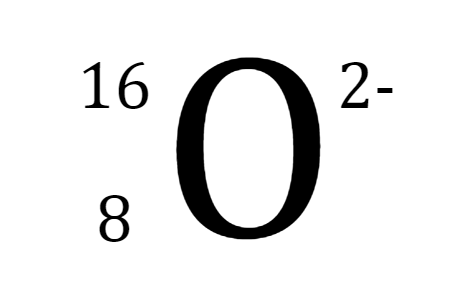
If an oxygen atom has 8 protons (+) and 10 electrons (-), what is it's charge?
a)
O10-
b)
O8+
c)
O2-
d)
O10+
21.

What is the number of valence electrons for Neon and the other Noble Gases?

a)

5

b)

6

c)

7

d)

8

22.
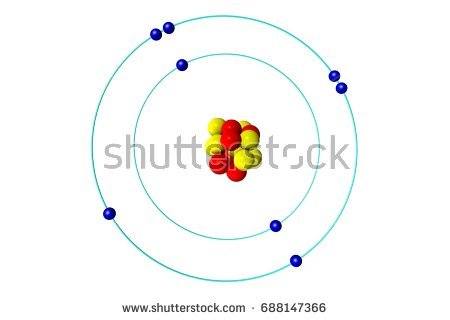
How many valence electrons in this structure?
a)
6
b)
5
c)
4
d)
7
23.

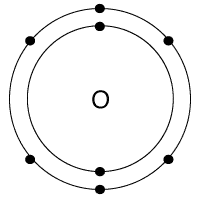
Which is the correct Lewis Structure for oxygen?

a)
b)
c)
d)
24.
How many more electrons are needed to fill an outermost energy level of a Carbon atom?
a)
its already full, 0 needed
b)
2
c)
4
d)
carbon is a nonmetal, it has no electrons
25.

Why do atoms bond?

a)

They typically don't bond

b)

To add or take away energy levels

c)

To have a full valance shell.

d)

To have a full inner shell

26.

Which bond does this picture best represent?

a)

Metallic bond

b)

ionic bond

c)

covalent bond

d)

James Bond

27.

What is the chemical formula for Lithium Nitride?

a)

Li3N

b)

LiN3

c)

NLi3

d)

N3Li

28.

What is the ionic formula for a bond between Calcium and Phosphorus?

a)

Ca2P3

b)

Ca3P2

c)

Ca2P5

d)

P5Ca2

29.

What category of element usually forms a positive ion?

a)

Metals

b)

Nonmetals

c)

metalloids

d)

Noble gases

30.

Which category of elements usually form negative ions?

a)

metals

b)

nonmetals

c)

metalloids

d)

noble gases

31.
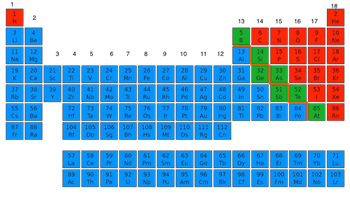
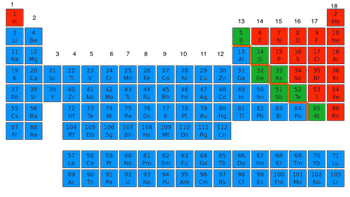
Where are the nonmetals located on the periodic table? 
a)
Blue
b)
Red
c)
Green
32.
Where are metals located on the periodic table?
a)
Blue
b)
Green
c)
Red
33.
What is the charge on a Hydrogen ion?
a)
+1
b)
1
c)
2
34.

What happens when two oppositely charged ions are pushed together?

a)

they will repel (move apart)

b)

they will be attracted to each other (move together)

35.

Will a chlorine atom gain or lose electrons?

a)

gain

b)

lose

36.

Will a sodium atom gain or lose electrons?

a)

gain

b)

lose

37.

How does magnesium become an magnesium ion?

a)

it loses 2 electrons

b)

it gains 2 electrons

38.

What type of elements form cations?

a)

metals

b)

nonmetals

c)

metalloids?

39.

Anions

a)

Gain electrons, has an overall positive charge

b)

Lose electrons, has an overall positive charge

c)

Lose electrons, has an overall negative charge

d)

Gain electrons, has an overall negative charge

40.
Which of the following is the correct Lewis structure for the compound PBr3?
a)
structure A
b)
structure B
c)
structure C
d)
structure D
41.
According to the octet rule most elements need _______ valence electrons.
a)
2
b)
8
c)
6
d)
18
42.
In the correct Lewis structure for CH4, how many unshared electron pairs surround the carbon?
a)
2
b)
8
c)
0
d)
4
43.
In CO2, how many UNSHARED pairs of electrons does each oxygen have?
a)
2
b)
1
c)
4
d)
6
44.
This is the correct dot diagram for sodium (Na)
a)
true
b)
false
45.
This is a correct dot diagram for oxygen (O)
a)
true
b)
false
46.
Three pairs of electrons are shared in a
a)
Single bond
b)
Double bond
c)
Triple bond
47.

What is the correct Lewis Dot Structure for ammonia NH3

a)
b)
c)
d)
48.

Which is the correct molecular structure for carbon dioxide?

a)
b)
c)
d)
49.
Which of the following is the correct Lewis dot structure for the molecule fluorine (F2)?
a)
A
b)
B
c)
C
d)
D
50.
Each line in a Lewis Structure represents __________ electron(s).
a)
3
b)
2
c)
1
d)
4
51.
Hydrogen needs _____ electrons in its valence shell to be stable.
a)
4
b)
6
c)
8
d)
2
52.
Atoms of H only form _________ bonds.
a)
Double
b)
Single
c)
Multiple
d)
Triple
53.

How many total valence electrons are participating in bonding in the molecule above?

a)

8

b)

4

c)

2

d)

3

54.

CCl4 has how many double bonds?

a)

0

b)

1

c)

2

d)

3

55.

In HCN (Carbon is usually the central atom) what kind of bond is between the C and N

a)

Single

b)

Double

c)

Triple

56.

CHCl3 has how many double bonds?

a)

0

b)

1

c)

2

d)

3

57.

What is the valence of carbon?

a)

1

b)

4

c)

2

d)

3

58.

What is the valence of phosphorus?

a)

1

b)

2

c)

3

d)

4