
Font size
 Worksheets
Week 6 Homework G11 CIE
Total questions: 40
Worksheet time: 40mins
Structure of phloem consists all below, except?
Sieve tube element
Tracheids
Companion cell
Sieve plate
What is the most abudant solute in phloem sap?
amino acids
hormones
sugar
minerals
What is the best words to describe sugar source and sugar sink
Both are plants organ and act as storage
Sugar sink can be either roots, fruit or mature leaves and sugar source is shoots
Sugar source act as site for sugar production and sugar sink will store sugar
Companion tube carry food from a sugar source to a sugar sink
Process in which food substances are moved to the rest of plant by phloem is known as
transpiration
respiration
photosynthesis
translocation
Recall that the movement of food in the phloem is called.
Translocation
Transpiration stream
Evaporation
Respiration
ATP and protein are supplied to sieve tube elements by which other cell?
Xylem vessel
Sieve tube element
Companion cell
Tracheid
Which of the statement is true?
sinks: places where sugar is made
sinks: places where water is made
sinks: places where sugar is delivered to
sinks: places where water is delivered to
Active transport is the movement of substances
from an area of lower concentration to higher concentration
from an area of lower concentration to lower concentration
from an area of higher concentration to lower concentration
from an area of higher concentration to higher concentration
How is sugar transported in the plant?
though diffusion which requires energy
through active transport which requires energy
though diffusion which does not require energy
though active transport which does not require energy
The phloem is made up of sieve tube plates and companion cells. The companion cells
has pores to allow sugar to be transported in a continuous flow
provides energy for the transport of glucose
gives company to the phloem
connects xylem to phloem

Select the correct term for the following definition:
"The nutrient transport system in plants."
Enzyme
Guard cells
Phloem
Proteins

Recall the main funtion of a phloem cell.
To transport nutrients (mainly sucrose) to different parts of a plant.
To transport water to different parts of a plant.
To make energy for the plant via photosynthesis.
To provide structural support to a plant.
What is the most abudant solute in phloem sap?
amino acids
hormones
sucrose
minerals
Translocation is the
transport of water in the xylem
transport of water in the phloem
transport of sugar in the xylem
transport of sugar in the phloem
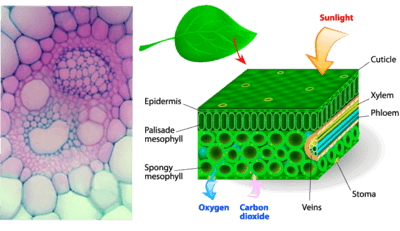
which of the following are vascular bundle
pallisade mesophyll and stoma
xylem and stoma
xylem and phloem
phloem and epidermis

diagran show the cross section of
stem
root
leaf
flower

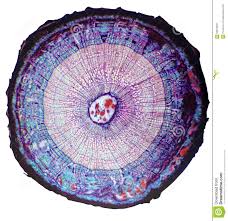
diagram show the cross section of
stem
leaf
root

what is M
phloem
xylem
What is the best words to describe sugar source and sugar sink
Both are plants organ and act as storage
Sugar sink can be either roots, fruit or mature leaves and sugar source is shoots
Sugar source act as site for sugar production and sugar sink will store sugar
Companion tube carry food from a sugar source to a sugar sink

Select the correct term for the following definition:
"The water transport system in plants."
Villi
Bronchi
Bolus
Xylem

Recall what is dissolved in the water in the xylem.
Glucose
Amino acids
Mineral ions
Starch

Recall what the pathway of water from roots to leaves is called.
Respiration
Translocation
Transpiration stream
Evaporation
Recall what substance is used to thicken and strengthen xylem walls in woody plants.
Protein
Mineral ions
Lignin
Glucose
vascular bundle is a tissue
yes
no
xylem vessel is made of dead cells?
yes
no
why xylem veseel is long and continuos
to give support to woody plant
to continuosly supply water to the whole part of plant
to transport food
to make plant wilt
wall of xylem veseel is covered with
wax
stoma
pit
lignin
which of phloem cell transport product of photosynthesis
sieve tube
companion cell
sieve plate
companion cells have abundance of which organelle?
chloroplast
cytoplasm
cell wall
mitochondria
which process carried by phloem
transpiration
translocation

what is A
xylem
phloem
cambium
cortex
Adaptation to reduce transpiration
Broader leaves
Stunted growth
More stomata
Narrow leaves
Why would the roots die without translocation?
They would get no water
They would get no oxygen and carbon dioxide
They would get no sugars from the leaves to survive
They would rot
Plants growing in desert have their________ modified into spines.
stem
leaves
root
flower
What is it called when a plant or animal has a trait that helps it survive in a specific environment?
instinct
mimicry
camouflage
adaptation
Identify 3 plant adaptations of Xerophytes
More leaves during the summer months
Sunken stomata
Leaves modified into spines or hairs
Thick stem
To investigate the action of the phloem tissue, we can conduct a ______ experiment
ringing
bleaching
washing
Transpiration is part of the process in xylem transportation
True
False
Transportation in Phloem involves these product except
Amino acids
Hormones
Sugars
Minerals
Tension and cohesion is the basis for water movement upwards in the xylem
True
False

