
 Worksheets
Thermal Energy
Total questions: 63
Worksheet time: 1hrs 16mins
Heat will always transfer from the ___________ object to the ________ object.
The hottest object to the coolest object.
The coolest object to the hottest object.
The solid object to the liquid object.
The liquid object to the solid object.


What type of heat transfer takes place in liquids and gasses?
Conduction
Convection
Radiation
Thermal Equilibrium

What is defined as a measure of the average kinetic energy of the particles in a sample of matter?
Temperature
Heat
Specific Heat
Mechanical Energy
_____________ is the form of energy that is transferred between systems or objects with different temperatures.
Temerature
Heat
Specific Heat
Mechanical Energy

A lava lamp is an example of which type of heat transfer?
Conduction
Convection
Radiation

What is occurring between points B and C on the heating curve above?
Melting
Freezing
Boiling
Condensing
Why doesn't the temperature increase between points B and C, and points D and E on the heating curve above?
Heat isn't being added.
Heat is being removed.
The added energy is being used to cause a phase change.
Time has stopped.
What tool is used to measure temperature?
a stove
a beaker
a thermometer
a glove
Temperature is a measure of how
the particles are stationary.
energy remains the same.
hot or cold an object is compared to a reference point.
The amount of heat needed to raise the temperature of one gram of a material by one degree Celsius is called
Specific Temperature.
Specific Heat
Absolute Heat
The lower a material's specific heat, the more its temperature rises when a given amount of energy is absorbed by a given mass.
True
False

The instrument used for measuring thermal energy.
barometer
thermometer
calorimeter
The transfer of thermal energy when particles of a fluid move from one place to another is called
conduction.
convection.
radiation.
This law states the energy is conserved.
Newtons 1st Law of motion
1st law of thermodynamics
2nd law of thermodynamics

Which is an example of decreasing entropy in a closed system?
Boiling water
Freezing water
Cells in a body coming together
Ice melting


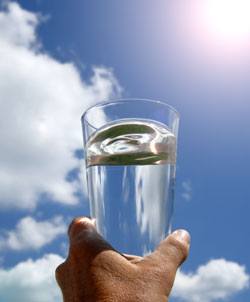
Celsius Scale
water freezes at 0 degrees and boils at 100 degrees
water boils at 212 degrees and freezes at 32 degrees
Water boils at 273 degrees and boils at 373 degrees
The variable foe HEAT
Q
C
T
The variable for Specific Heat
Q
C
T
A student volunteers to bring ice tea to a class picnic. She boils water to which she has added tea bags. Time is running short, so she places hot tea into an insulated, steel container, adds some ice cubes then seals the container. Assume that there is no heat exchange with the surroundings. Which of the following would be true?
The total energy and entropy both remain the same.
The total energy decreases while the entropy increases.
The total energy and entropy decreases.
None of the above.
nothing
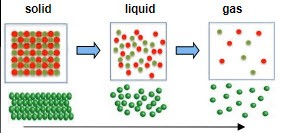
The heat absorbed while a solid is melting is known as....
heat of fusion
heat of solid
heat of liquid
heat of vaporization
Temperature when a substance changes from a solid to a liquid
freezing point
heat of fusion
thermal expansion
melting point
The Temperature when a liquid turns to a solid
freezing point
heat of fusion
thermal expansion
melting point
Temperature when a substance changes from a liquid to a gas
Heat of Vaporization
Boiling point
Heat Energy
Phase change
Water molecules have the greatest kinetic energy in
Ice at 0 ⁰C
Water at 90 ⁰C
Water at 373 K
Steam at 150 ⁰C
Which of the following best explains why the sand at the beach is hotter than the water?
Sand has a higher specific heat than water.
Sand has a lower specific heat than water.
There is more water than sand at the beach.
There is more sand than water at the beach.
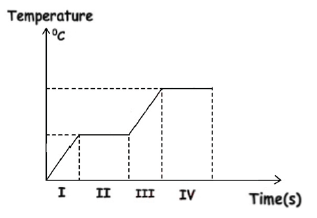
Consider the following temperature-time graph when a solid is heated. which part of the graph involves latent heat of vaporization?
Part I
Part II
Part III
Part IV

Equal mass samples of Copper, Stainless Steel, Carbon Steel, and Zinc were all heated using 10,000 JOULES of thermal energy. What material would have the LARGEST change in temperature?
Copper
Carbon Steel
Zinc
Stainless Steel
Equal mass samples of Copper, Stainless Steel, Carbon Steel, and Zinc were all heated using 10,000 JOULES of thermal energy. Based on the chart, which material would be have the SMALLEST change in temperature?
Copper
Carbon Steel
Zinc
Stainless Steel

