
 Worksheets
Meteorology Test REVIEW
Total questions: 20
Worksheet time: 46mins

If air masses and fronts move from west to east in the United States, which state will experience rain by the afternoon?
Oklahoma
Tennessee
Louisiana
Missouri
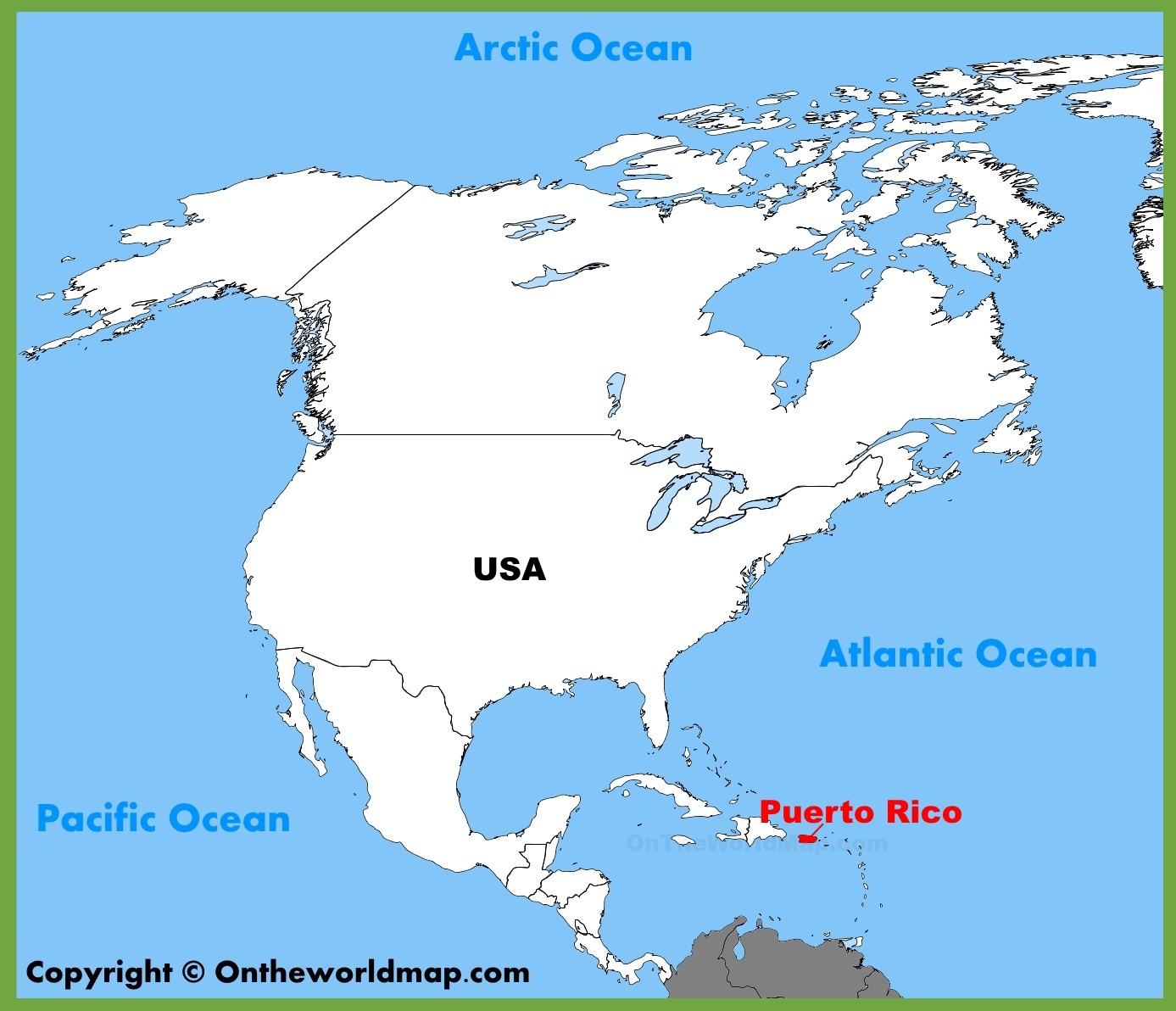
What type of air mass is found over PUERTO RICO?
Maritime Polar
Maritime Tropical
Continental Polar
Continental Tropical

Seattle, Washington is known for having a cool climate and many days of rainfall and humid weather throughout the year. Which of the following would be the air mass that mostly affects Seattle's weather?
(Click on image to enlarge)
Maritime Tropical
Continental Tropical
Maritime Polar
Continental Polar

Use the weather map to predict which location will soon experience thunderstorms and rain (due to the cold front)?
(click on image to enlarge)
1
2
3
4

What layer does weather occur in?
(click on image to enlarge)
mesosphere
troposphere
thermosphere
stratosphere

What type of front is this?
(click on image to enlarge)
cold front
occluded front
stationary front
warm front

What type of wind is forming here?
(click on image to enlarge)
Land Breeze
Day Breeze
Sea Breeze
Left Breeze

A psychrometer and hygrometer measure ___.
amount of rain
temperature
air pressure
humidity

Air masses are classified by which 2 characteristics or ingredients?
(click on image to enlarge)
temperature and air pressure
air pressure and wind speed
air pressure and humidity
temperature and humidity
The different layers of Earth's atmosphere are divided because of _____.
air pressure
humidity
temperature
dew point

Air masses have the same properties as the surface over which they develop. If an air mass develops over Region 1, which properties will it most likely have?
(click on image to enlarge)
hot and dry
cold and dry
hot and moist
cool and moist

When ice crystals fall toward the ground, partly melt, then refreeze again, it's called
(click to enlarge image)
sleet
snow
rain
hail
Suppose in the future, the ozone layer disappeared completely. What impact would that have on the Earth’s environment?
Earth’s temperature would drop.
Life on Earth would die from exposure to ultraviolet rays.
More meteors would fail to burn in the atmosphere, destroying Earth’s surface.
The Earth would stop rotating on its axis.

Select ALL OF THE the CONTRIBUTING FACTORS to the uneven warming of Earth’s surface from the list below. (2 correct answers)
Different surfaces warm and cool at different rates.
Our entire planet is farther from the sun during the spring.
The sun’s rays hit the surface at various angles because earth is tilted.
Air pressure increases as altitude increases.

The map has two arrows showing which directions the air masses are coming from. Based on those arrows, select the TWO types of air masses that MOST LIKELY formed the cold front we see on the map?
(click on image to enlarge)
Maritime Tropical
Continental Tropical
Continental Polar
Maritime Polar
Continental Arctic

What season would it be at position A in the northern hemisphere?
(click on image to enlarge)
winter
spring
summer
fall

In which direction does the weather travel across the U.S.?
(click to enlarge image)
north to south
east to west
west to east
south to north
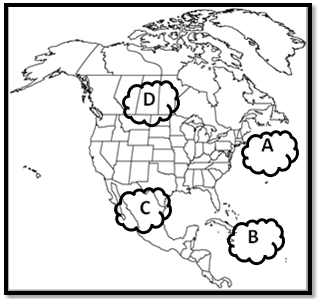
Which type of air would you find at air mass A?
(click on image to enlarge)
cold, dry
warm, humid
warm, dry
cold, humid

At the time indicated in this diagram, what season is it in the SOUTHERN hemisphere?
(click on image to enlarge)
summer
spring
winter
fall

