wayground logo

Free Printable Worksheets

NEW

Font size

S
M
L
XL
Worksheets

Covalent Bonds

Total questions: 48

Worksheet time: 2hrs 50mins
Name
Class
Date
1.
What two types of atoms make a covalent bond?
a)
2 Nonmetals
b)
1 Nonmetal and 1 Metal
c)
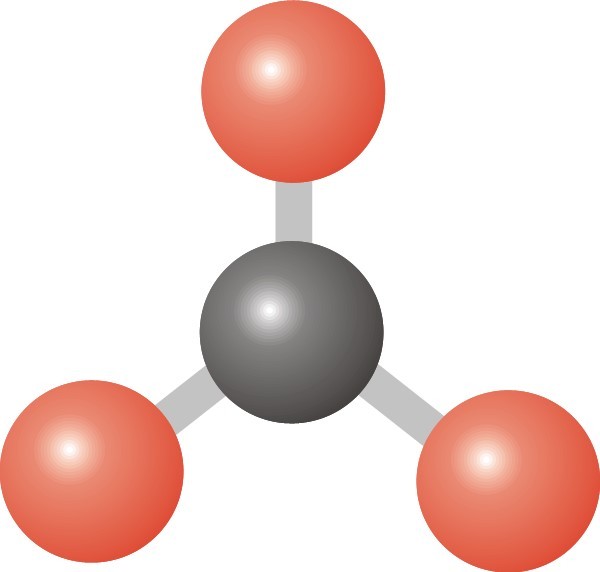
2 Metals
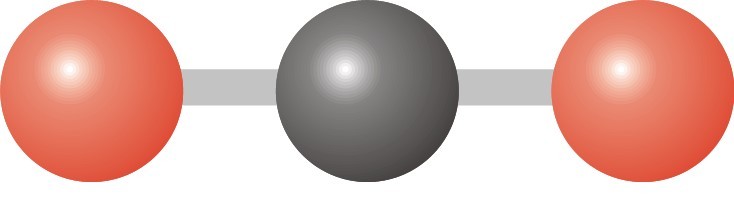
d)
2 Noble Gases
2.
How are covalent bonds explained?
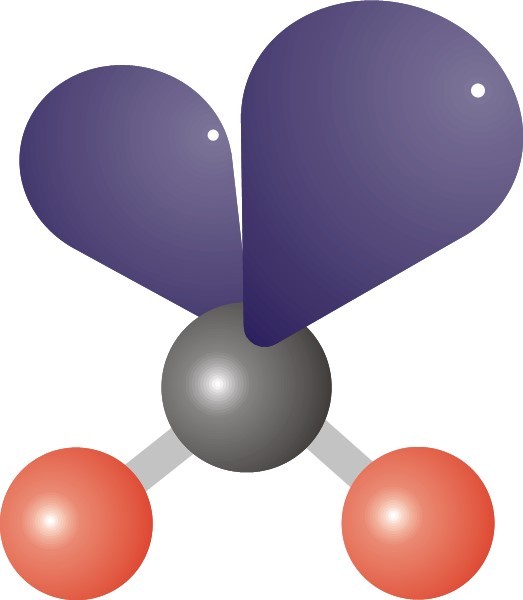
a)
When one atom takes the other atom's electron
b)
When the atom shares an electron with an another atom
c)
When the two nucleus merge
d)
When the neutrons leave the nucleus
3.
How many are shared in a single bond?
a)
2 pairs
b)
4
c)
2
d)
1
4.
How many are shared in a double bond?
a)
2
b)
4 pairs
c)
6
d)
4
5.
How many electrons are shared in a triple bond?
a)
6
b)
3
c)
6 pairs
d)
5
6.
Covalent compounds
a)
Share electrons
b)
transfer electrons
c)
contain a sea of electrons
d)
conduct electricity
7.
How many valence electrons does oxygen have?
a)
2
b)
3
c)
6
d)
4
8.
What is the correct formula for this molecule?
a)
NH
b)
N3H
c)
NH3
d)
NH4
9.
Which of these is not a real bond in chemistry?
a)
James
b)
Ionic
c)
Covalent
10.
A molecule with a single covalent bond is....
a)
HCl
b)
SO
c)
CO
d)
SO2
11.
A molecule with a double covalent bond is....
a)
HCl
b)
SO
c)
I2
d)
N2
12.
How many bonds does carbon have to create in order to satisfy the octet rule
a)
1
b)
2
c)
3
d)
4
13.
Which element is most likely to form a covalent bond?
a)
Nitrogen
b)
Lithium
c)
Sodium
d)
Potassium
14.
phosphorus trichloride
a)
KCl3
b)
PCl3
c)
K3Cl
d)
P3Cl
15.

dinitrogen pentoxide

a)

N2O5

b)

NO5

c)

N5O2

d)

N2O6

16.
SiCl4
a)
silicon tetrachloride
b)
silicon quadchloride
c)
monosilicon tetrachloride
d)
silicon chloride
17.

P₄S₁₀

a)

tetrapotassium decasulfide

b)

phosphorus decasulfide

c)

tetraphosphorus decasulfide

d)

phosphorus (X) sulfide

18.

What is the OFFICIAL name for H2O? Hint.. This is a trick question so choose carefully!

a)

Hydrogen Oxide

b)

Oxygen Dinitride

c)

Water

d)

Dihydrogen Monoxide

19.

The acronym VSEPR stand for

a)

very strong electron pair repulsion.

b)

varied symmetry electrostatic proton reaction.

c)

venomous snakes enjoy pink ribbons.

d)

valence shell electron pair repulsion.

20.

VSEPR theory is used to predict

a)

the number of unshared pairs of electrons in a Lewis structure.

b)

the number of multiple bonds in a Lewis structure.

c)

the three-dimensional geometry of a molecule.

d)

the three-dimensional crystal lattice structure of ionic compounds.

21.

Any molecule with only two atoms must be linear. Three-atom molecules such as BeCl2 can also be linear. For linear molecules, the bond angle is

a)

360°360\degree

b)

180°180\degree

c)

120°120\degree

d)

90°90\degree

22.

Molecules such as boron trichloride that have three bonded atoms and no unshared pairs have what shape?

a)

trigonal planar

b)

trigonal pyramidal

c)

trigonal bipyramidal

d)

tetrahedral

23.
Which molecule would have this molecular geometry?
a)
BF3
b)
CH4
c)
PCl5
d)
CO2
24.
What molecule could this be? 
a)
BF3
b)
CH4
c)
H2O
d)
CO2
25.
Who could this be? 
a)
CO2
b)
NH3
c)
H2S
d)
CH4
26.

What molecular geometry would PH3 have?

a)

Trigonal Pyramidal

b)

Trigonal Bipyramidal

c)

Bent

d)

Linear

27.

What shape would this have?

a)

Trigonal planar

b)

Pyramidal

c)

Tetrahedral

d)

Bent

28.
How many lone pairs are in this molecule's structure?
a)
6
b)
2
c)
0
d)
4
29.
According to VSEPR, molecules adjust their shapes to keep which of the following as far away as possible?
a)
Pairs of valence electrons
b)
Inner shell electrons
c)
Mobile Electrons
d)
Electrons closest to the nucleus
30.
*
a)
linear
b)
trigonal planar
c)
trigonal pyramid
d)
bent of angular
31.
What molecular shape is the structure shown here? (BeCl2)
a)
linear
b)
bent
c)
trigonal planar
d)
tetrahedral
32.

Identify the molecule structure

a)

Bent

b)

Linear

c)

Trigonal Planar

d)

Pyramidal

33.
In a polar bond, the more electronegative element will assume a partial ________ charge.
a)
positive
b)
negative
34.
In a polar covalent bond, electrons are shared ___________.
a)
equally
b)
unequally
c)
between non-metals with similar electronegativities
d)
between a metal and a non-metal
35.

Use your knowledge and electronegativity sheet to predict what the following compound is classified as.

a)

non-polar covalent

b)

polar covalent

c)

ionic

d)

metallic

36.

Use your knowledge and electronegativity sheet to predict what type of bond would form between calcium and bromine.

a)

non-polar covalent

b)

polar covalent

c)

ionic

d)

metallic

37.

Use your knowledge and electronegativity sheet to predict what type of bond would form between phosphorus and fluorine.

a)

non-polar covalent

b)

polar covalent

c)

ionic

d)

metallic

38.

Electronegativity is a measurement of the ability of a nucleus to:

a)

attract bonding electrons

b)

attract other nuclei

c)

attract electrons in the non-valence energy levels

39.
In this Lewis structure, the symbol above F means...
a)
electrons are being transferred to Fluorine
b)
electrons are less attracted to F than H
c)
electrons are more attracted to F than H
d)
Fluorine has formed a cation
40.

When you are asked to find bond polarity, you should compare electronegativity values of each bonding atom to the central atom.

a)

true

b)

false

41.

The electronegativity difference in the bonds of CCl4 (carbon tetrachloride) is:

a)

0.4

b)

0.5

c)

9.5

d)

5.5

42.

The electronegativity difference in the bonds of CH4 is:

a)

0.4

b)

5.9

c)

-0.4

d)

1.7

43.
This is an example of a __________ bond.
a)
non-polar covalent
b)
polar covalent
c)
ionic
d)
metallic
44.
Partial charges like the ones shown here are called:
a)
dipoles
b)
deltas
c)
ions
d)
magnetic poles
45.
Which molecule contains bonds of GREATER polarity?
a)
H2O
b)
OF2
46.
Which molecule contains bonds with a GREATER polarity?
a)
HCl
b)
CCl4
47.
A diatomic molecule like O2 is always_______ because electrons are shared ________.
a)
nonpolar; equally
b)
polar; equally
c)
nonpolar; unequally
d)
nonpolar; unequally
48.
If Boron bonds with Hydrogen, a ____________ bond forms.
a)
polar covalent
b)
nonpolar covalent
c)
metallic
d)
ionic