
 Worksheets
Genetics Review
Total questions: 46
Worksheet time: 2hrs 18mins


How many pairs of chromosomes do humans have ?
12 pairs
23 pairs
46 pairs
10 pairs
The passing of traits from parent to offspring and including gender is called
Trait
Inherited trait
characteristics
chromosomes
Structure made of long chains of DNA and hundreds of thousands of genes is called -
nucleus
DNA
chromosomes
mitochondria
A long coiled molecule that looks like twisted yarn inside a cell's nucleus is called-
DNA
Eukaryotic
Nucleus
Cell

An opossum playing dead to confuse its predators is an example of
a behavioral trait
a physical trait

Hawks have sharp claws to help them catch their prey, this is an example of
a behavioral trait
a physical trait
Dd would look
Dominant
Recessive
Both
None
dd would look
Dominant
Recessive
Both
None
Facial hair
Genotype
Phenotype
Having two different colored eyes
Genotype
Phenotype
Two alleles that are different
Genotype
Phenotype
Two of the same allele
Genotype
Phenotype
Aa
Genotype
Phenotype
TT is
heterozygous
homozygous
Ff is
heterozygous
homozygous

The physical appearance of an organism based on traits
Genotype
Phenotype
Meiosis
Genetics
Trait of an organism that can be HIDDEN by the dominant form of a trait.
Recessive Trait
Phenotype
Allele
Having two of the SAME alleles for a trait.
Recessive Trait
Homozygous
Genotype
The trait that overshadows and is expressed.
Dominant Trait
Phenotype
Allele
Having two DIFFERENT alleles for a trait.
Recessive Trait
Heterozygous
Genotype
The genotype tt is considered to be....
Homozygous dominant
Heterozygous
Homozygous recessive
The genotype GG is considered to be....
Homozygous dominant
Heterozygous
Homozygous recessive
The genotype Gg is considered to be....
Homozygous dominant
Heterozygous
Homozygous recessive


A dog that can sit on command.
inherited
acquired
The language you speak, how you wear your hair and what music you like to listen to are all examples of
DNA
heredity
acquired traits
inherited traits
Why is a person’s height something that is both inherited and acquired?
A person’s height is determined completely by DNA.
Height is neither in a person’s DNA nor affected by the environment.
Height is determined completely by what environment a person lives in.
A person’s potential height is inherited, but they might not get enough nutrition to reach it.
“Nature vs. nurture” is a debate about
whether a trait is learned or inherited.
the traits of plants vs. the traits of animals.
whether animals can teach humans new traits.
whether a trait was acquired outdoors or indoors.
Which of the following statements is true?
You get new acquired traits all your life, but once you acquire them they never change.
You are born with inherited traits, but they change over your lifetime as you learn new things.
Both your inherited and acquired traits are unchangeable from the moment you’re born.
Your inherited traits don’t change, but your acquired traits can change over your lifetime.
DNA stands for
Deoxyribonucleic Acid
Dunder Nucleic Acid
Dopamine Nucleic Acid
Deciduous Nucleic Acid
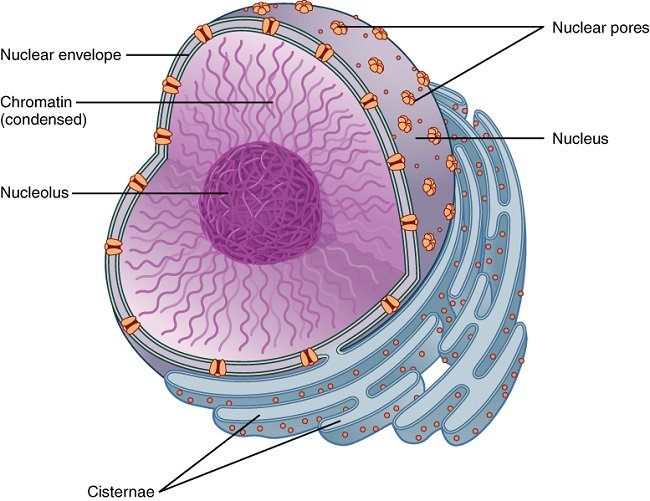
The control center of the cell.
cytoplasm
nucleus
nucleoplasm
chromatin
An organism’s physical appearance is its
dominance
genotype
phenotype
allele
An organism that has two identical alleles for a trait is
homozygous
heterozygous
a phenotype
tall
A heterozygous organism has
three different alleles for a trait.
two identical alleles for a trait.
only one allele for a trait.
two different alleles for a trait.
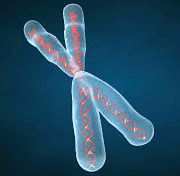
The number of human chromosomes is
23
46
92
64
From smallest to largest how would genetic information be organized?
genes, cell, nucleus, chromosome, DNA
chromosome, cell, gene, DNA, nucleus
gene, DNA, chromosome, nucleus, cell
nucleus, cell, gene, DNA, chromosome

