
 Worksheets
Final-Midterm Physics
Total questions: 62
Worksheet time: 1hrs 3mins
The sum of all movements from start to the end of motion is best described as____.
distance
displacement
motion
velocity
What is the change in an objects' position from the final position to initial position?
displacement
distance
motion
speed
Vector quantities need both a magnitude and a _____.
A man walks 5 miles backwards, 6 miles backwards and then 2 miles forwards. What is his displacement?
11 miles backwards
13 miles forward
9 miles backwards
9 miles
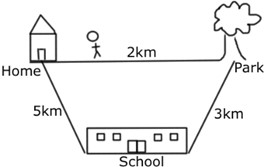
Jerry walked from home to school, then from the school to the park, then back home. What is his total distance?
2 km
5 km
8 km
10 km
After completing one trip on a roller coaster, the roller coaster's ________ is zero.
displacement
reference point
length
distance
Give three examples of scalar quantities.
Select the vector quantities.
velocity
displacement
force
acceleration
speed
A person walks 5 meters north and then 5 meters south in a total of 10 seconds. Calculate the person's displacement.
Two cars are travelling at 10 m/s, in different directions. Select the sentences that are true.
Their speeds are the same.
Their speeds are different.
Their velocities are the same.
Their velocities are different.
Is weight a vector quantity? If so, explain why below.
A person walks 5 meters north and then 5 meters south in a total of 10 seconds. Calculate the person's distance.
A person walks 5 meters north and then 5 meters south in a total of 10 seconds. Calculate the person's speed.
A person walks 5 meters north and then 5 meters south in a total of 10 seconds. Calculate the person's velocity.

What does this motion map indicate?
Forward at a constant velocity
Backward at a constant velocity
Forward getting faster
Backward getting faster
Forward slowing down then backwards getting faster.

What does this motion map indicate?
Forward at a constant velocity
Backward at a constant velocity
Forward getting faster
Backward getting faster
Forward slowing down then backwards getting faster.

What does this motion map indicate?
Forward at a constant velocity
Backward slowing down forwards getting faster
Backwards getting faster forwards slowing down
Forwards getting faster backwards slowing down
Forward slowing down then backwards getting faster.

What does this motion map indicate?
Forward at a constant velocity
Backward at a constant velocity
Forward slowing down
Forward getting faster
Backwards slowing down
Weight is _________.
the quantity of matter in an object.
the measure of an object's inertia.
the force exerted by gravity on an object's mass.
equal to the mass of an object.
Weight is the same wherever you are in the universe.
True
False
The force of gravity acting on an object is the same as the object's ______.
inertia
If an object has more mass, then it will ____________.
become a vector
have less inertia
become a vector and scalar
have more inertia
A train travels 25 km in 0.5 hrs. How fast is the train going?
250 km/hr
5 km/hr
33 miles
0.1 miles

The brick has a mass of 10kg. The balloon has a mass of 1kg. Which object has more inertia?
The brick
The balloon
They both have the same amount of inertia

What is the net force in this example?
180N to the right
0N
90N to the left
180N to the left
It's stationary and has no acceleration
All objects have inertia, whether they are moving or not.
TRUE
FALSE
Which choice best describes Newton's First Law?
An object that is sitting at rest will stay at rest, and an object that is in motion will stay in motion until a force acts upon it.
Every action has an equal and opposite reaction

Which direction is the is the treasure chest going to go?
It will move to the left towards Spongebob.
It will move to the right towards Larry.
It will not move at all.

What is the net force of the vectors?
12N to the right
17N to the right
5N to the left
12N to the left

A truck that is travelling to the left at a constant speed is carrying some boxes that are not tied down. If the truck comes to a sudden stop, what will most likely happen to the boxes?
friction force
gravitational force
drag force
friction force
A book weighs 4 N. When held at rest in your hands, the net force on the book is
8 N.
0 N.


A 20 kg bike accelerates at 10 m/s2. What was the force?
0.5 Newtons
2 Newtons
100 Newtons
A force of 250 N is applied to an object that accelerates at a rate of 5 m/s2. What is the mass of the object?
50 kg
0.02 kg
1,250 kg
A 5 kg block is pulled across a table by a net force of 32 N. Calculate the acceleration of the object.
6.4 s2m
0.16 s2m
160 s2m
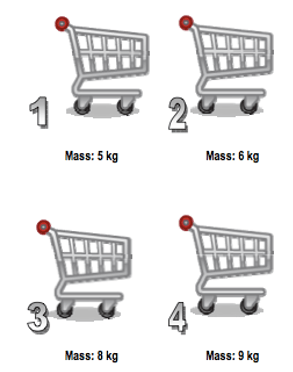
A force of 90N is applied to each cart. Which cart will accelerate the fastest?
They will all have the same acceleration
A 2 kg brick is pulled by a force of 10N. Friction force is 4 N. What is the acceleration?
4 s2m
3 s2m
5 s2m
2 s2m
F=ma. If force is kept the same but the mass is doubled, then the acceleration will....
stay the same
be halved
be doubled
be zero
Which will cause a change in an object's motion?
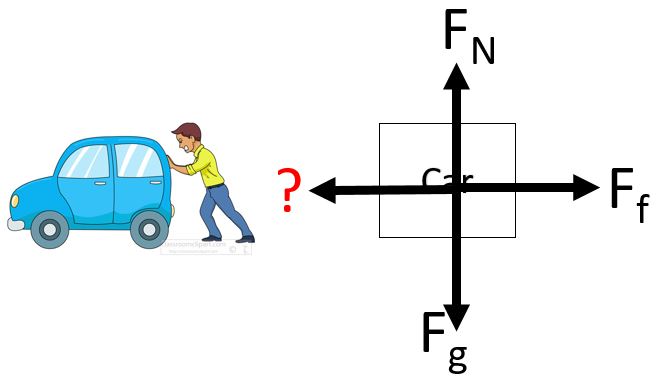
air resistance

gravity


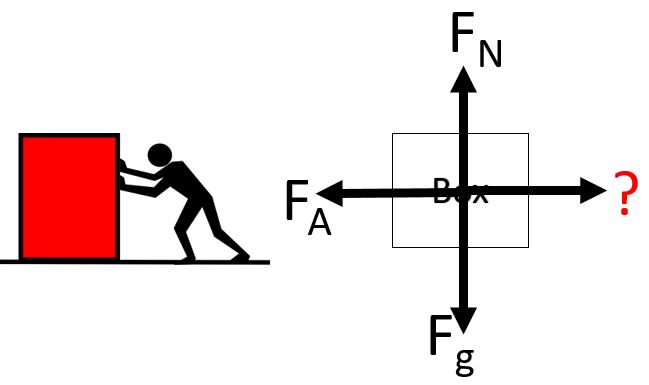
support or normal force
applied force
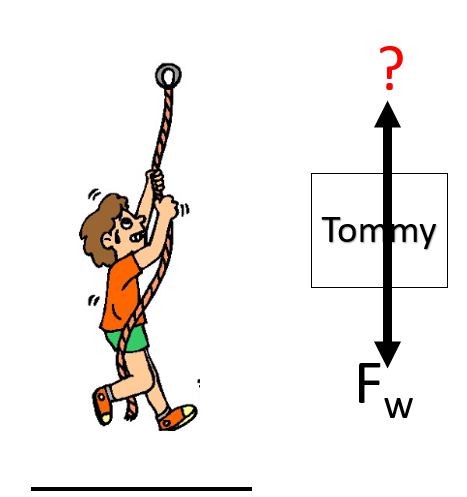
Tommy is hanging in the air on a rope in gym class. Name the missing force.
spring force
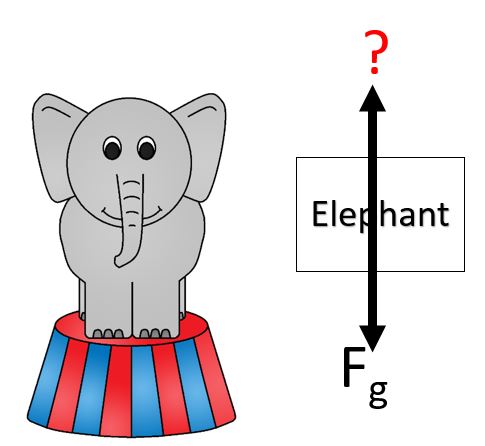
support or normal force
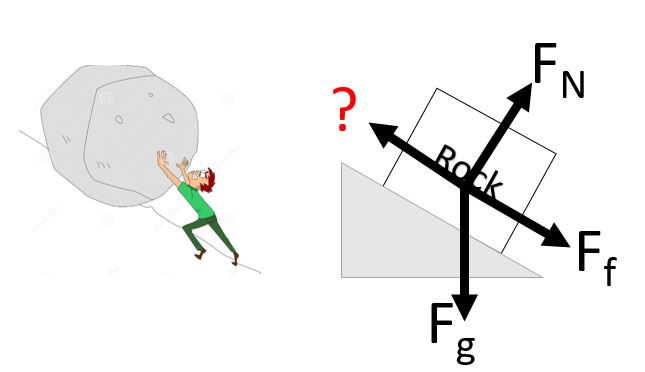
weight
friction
Friction is a force that acts in a(n) ___________ direction of movement.
same
perpendicular
A type of friction that occurs when air pushes against a falling skydiver causing the skydiver to slow down
aerodynamics
air support

spring force
gravitational force
A bat hits a ball with a force of 1,000 N. This also means that the ball hits the bat with a force of
A rocket pushes on the air to the right with force of 10,000 N. How much force does the air "feel"?
10,000 N to the left
10,000 N to the right
0 N (no force)
less than 10,000N
As stated in Newton's 1st Law, forces always come in pairs.

