
 Worksheets
AP Unit 4-7 Review
Total questions: 97
Worksheet time: 57mins
Bolivar's main goal was to establish ________ in South America.
A utopian society
Thriving industry and commerce
A strong military
Independent, democratic nations
How was the founding of Gran Colombia similar to the founding of the United States?
Both happened during the 19th century
Both involved colonies of European countries that won their independence
Both resulted in strong nations that continue to exist today
Both involved major military defeats of England
All of the following modern-day countries were liberated by Simon Bolivar, EXCEPT:
Chile
Venezuela
Colombia
Ecuador

Mercantilism can BEST be described as
economic trade policy in which a country exports more than it imports in order to create a favorable balance of trade
religious policy in which European countries established missions in the New World
alliance system used by European nations to maintain peace with the Native Americans of the New World
political structure implemented by European nations that divided society into a very rigid class system of haves and have nots

According to the economic policy of mercantilism, select the role of the colony.
provide raw materials
provide natural resources
exert governmental control over the mother country
serve as a market for manufactured goods
How is industrialization related to imperialism?
Industrialized countries need markets and resources which can be gained through imperialism.
Imperialism pushed for industrial development in Africa due to all the resources on the continent.
Imperialism convinced industrial countries to increase the production of goods.
Industrialized countries needed more trade partners. Imperialism provided greater opportunities for global trade.
What happened as a result of the Berlin Conference?
European and African nations went to war with each other.
The European leaders allowed the African leaders to be apart of the governing process of the colonies.
Imperialism in Africa ended.
Europeans divided Africa into colonies without considering the cultural and ethnic differences of the African people.
Some Europeans believed that their industrial progress and wealth (being fit) allowed them to take advantage of those areas of the world not industrialized or civilized (the unfit). This concept is called
Nationalism
Racism
Assimilation
Imperialism
Social Darwinism
In China the terms "Long March," "Little Red Book," and "Great Leap Forward" are most closely associated with the
economic policies of the Kuomintang
expulsion of foreigners during the Boxer Rebellion
foreign policy under Deng Xiaoping
leadership of Mao Zedong
One similarity between the Reign of Terror during the French Revolution and the Cultural Revolution in China was that both
limited the power of absolute leaders
illustrated the power of public opinion in forming national
policy
established social stability and economic growth
used violent methods to eliminate their opponents


peasants who made up much of the Russian population and lived in a condition of virtual slavery
prolitariat
middle class
serfs
3rd Estate
Which of the following were important socialists of 19th century Europe?
Rousseau and Voltaire
Lenin and Stalin
John Locke and Karl Marx
Karl Marx and Friedrich Engels
The Central powers during the First World War included countries like Germany, Turkey and
France
Austria
Britain
Russia
An agreement among nations to defend one another.
Militarism
Alliances
Nationalism
Imperialism

Which country had the largest sphere of influence in Latin America during the Age of Imperialism?
United States
Spain
Mexico
England

What was Japan's response to foreign interference in the nineteenth century?
Adapt to Western politics and culture (Meiji Restoration)
Isolate themselves further by resisting and fighting
Became allies with the Chinese to become the dominant power in the region
Adapt to the ideas of the islanders and tribal people to resist

In the time period c. 1750-1900, where did migrant workers typically seek work?
Industrial cities
Tropical plantations
Small grain farms
Uncharted territory, such as the Great Plains
Select all of the accurate migration patterns in the time period c. 1750-1900.
*Migration group: reason, destination
British: prisoners, to Australia
Indian: indentured servants, to the Caribbean
Japanese: voluntary laborers, to South America
West Africans: slaves, to North America
Irish: plagued by famine, to Germany

Why does Napoleon invade Egypt?
To conquer the people to fight in the Revolution
To take over Egypt for its wealth
To stop British trade to Africa
To stop British trade routes to India
Which statement best expresses a major idea of Pan-Africanism?
African doctors should be trained in
Western schools.
European nations should reestablish
economic relationships with their former
African colonies.
African nations should work together to
solve their problems.
African nations should send
peacekeeping forces to settle disputes in
other areas of the world.
The most significant occurrence in Africa since 1950 has been the
decrease in the birthrate in most nations
decline of European colonialism
unification of East African nations
establishment of communist regimes in most nations
Which of the following was a primary cause of the Cold War between the United States and the Soviet Union?
direct, armed conflict between the two nations
the founding of the United Nations
a deep reduction in military expenditures
a competition for political influence over other countries
What did China and Japan have in common in the 1300-1600
Both were strictly Hindu
Both were expanding using gunpowder
Both chose to isolate themselves
Both had powerful female rulers
What allowed the Ottomans and Safavids to expand their territory
Peasants who fought in battles
Powerful weapons that used gunpowder
Extreme hatred for all their enemies
Money from trade allowed them to buy territory
The enlightenment is also called the
"Age of Reason"
"Time of Trials"
"Days of Thunder"
"Winter of Wisdom"
What was a major cause of the French Revolution
Catholic Priests united against the government
The Nobles were upset at paying too many taxes
the Peasants had to pay the majority of taxes for the country
The Nobles wanted religious freedom
What did Japan do after they were forced to sign the Treaty of Kanagawa
They began trading with USA
They isolated themselves
They gave Korea back to China
They attacked Germany
What was a consequence of losing the Russo-Japanese War
Russia was seen as weak by other countries
Russia improved their military
Russia lost all land west of Moscow
Japan signed the Treaty of Versailles
What impact do machines have
Things are made faster so they are more expensive
Things are made faster so they are cheaper
Less things can be made than by hand
In the 1800s, African and Asian rulers usually were seeking which western technologies in trade negotiations?
medicine
weapons
navigational instruments
chemical fertilizer
Which development explains Britain's growth in industrialization and economy?
coerced labor to make luxury goods
abundance of natural resources near homelands
use of steam powered machinery for large scale production
mercantilist policies favorable toward the workers and poor
Germany's joining in the industrial revolution is most greatly affected by which 19th Century processes?
spread of new industrial technologies like cars
development of new production methods in second industrial revolution
diversity in manufactured goods produced in agricultural factories
importance of coal in industrialized production
descendants of Portuguese or Spanish settlers born in the colonies
mestizos
peninsulares
creoles
caudillos
mulattos

Which of these is not a consequence of World War I or II?
Independence of Brazil
Independence of Indonesia
The Cold War
Democratic Constitution of Japan
What was the goal of communism, according to Marx?
the oppression of the working class
a more equal and fair society
making everybody rich
making everybody poor

which of these statements is a general aspect of Marxism in IR ?
all countries in the world must be governed by an international central government
one country has the right to intervene in another for the purpose of increasing its power
the people must form their own international organization
Consider the world not divided into states but into antagonistic classes.
In what way did the assimilation policies of European colonial powers in Africa affect the region?
African colonies were industrialized.
New cultural practices were introduced.
An extensive network of highways and railroads was built.
European colonial populations outnumbered native populations.
Many colonized people responded to European imperialism by —
organizing resistance movements against European colonists
teaching European colonists how to survive in tropical environments
cooperating with European colonists to share the profits from industrialization
aiding European colonists in establishing borders consistent with the ethnic settlements
In part because Belgian colonial rulers did little to prepare the Belgian Congo for self-government or independence, the Democratic Republic of Congo has been characterized by which of the following?
Ethnic conflict
Religious strife
Economic growth
Racial tolerance

Which of the following is the best way to complete the chart?
universal education
exploitation of resources
two-party system
labor unions
Which of the following events was a result of foreign imperialism in China?
Tiananmen Square protest
Manchurian invasion
World War I
Boxer Rebellion
All of the following elements of Indian society were profoundly affected by British imperialism EXCEPT the —
language
religion
government
economy
Why did the French and English governments sponsor a military intervention of Egypt in the mid-nineteenth century?
The Library of Alexandria had opened again after burning down.
The Suez Canal made the country an important center of trade.
The Nile River had avoided the damages of industrial pollution.
The Pyramids became a popular resort area for tourists.
One result of the rise of European imperialism during the nineteenth century included the --
creation of a British empire that was concentrated in North America
dissolution of the British empire as the French rose to prominence
establishment of a British empire that extended into all continents
colonization of China by large numbers of British immigrants
Which of these best describes the Scramble for Africa?
Imperialist powers sliced Africa amongst themselves by drawing borders on a map
Diplomats worked with tribal leaders to determine how to colonize countries in Africa
European countries worked to finance capital expansion in African nations through loans.
The United States used the Roosevelt Corollary to prevent nations from colonizing Africa.
After their communist revolution, China's modernization and economic strategy was closest to...
India
Russia/ Soviet Union
Britain/ UK
America/ USA
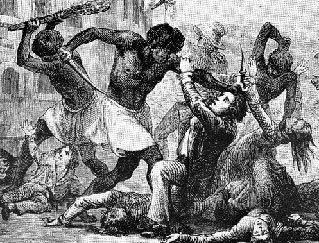
Why did the Haitian Revolution start?
The revolution started because of slaves wanting social equality and freedom.
The Haitian Revolution was influenced by the French Revolution
All of the above
The Haitian Revolution was influenced by the American Revolution
Which of the following best describes how 19th C industrialization affected women?
married women found it hard to balance family and wage work
positively affected by freedom
negatively affected by lack of work
In the early 20th C, some governments responded to growing ideas of Karl Marx and Lenin by doing?
increasing the number of finance instruments
opening large sectors of the economy to foreign investments
passing reforms to improve life conditions
expanding colonial territories and increasing industrial production
Which of the following supports the idea that Total war was no longer a rational option in the Cold War following WWII?
a large movement protesting the arms buildup occurred
the US and USSR actively sought ways to neutralize each other's nuclear missiles
both the US and USSR armed and supported rival countries and faction in Africa
several nonaligned countries tried to obtain nuclear weapons tech
Commodore Matthew Perry’s visits to Japan in 1853 and 1854 resulted in the
colonization of Japan by the United States
transfer of spheres of influence to China
introduction of Christianity to Japanese society
opening of trade and diplomatic relations with Japan
One effect of industrialization on Meiji Japan was that it
strengthened the power of the Shogunate
decreased the level of pollution
modernized transportation
increased the number of small farms
One reason for Japan’s rapid industrialization during the Meiji Restoration was that Japan had
rejected Western ideas
used its access to the sea for fishing
relied on traditional isolationist policies
reformed its political and economic systems
Which action taken by the Meiji government encouraged industrialization in 19th-century Japan?
building a modern transportation system
limiting the number of ports open to foreign trade
forcing families to settle on collective farms
establishing a system of trade guilds
In the years following the Meiji Restoration in Japan and the unification of Germany in the 19th century, both nations experienced
an increase in military production and strengthened military forces
a reduction in tensions with neighboring nations
a restructuring of government that included popularly elected monarchs
a decrease in the reliance on industrialization and trade

A belief in common history, culture, and future goals is known as
Fascism
Capitalism
Socialism
Nationalism
In Germany, there were 39 "city-states". These were the two most powerful in the confederation:
Hannover and Prussia
Nassau and Austria
Nassau and Hannover
Prussia and Austria
What was "realpolitik", as utilized by Otto von Bismarck?
politics shaped by military force and power.
politics shaped by a renewed interest in the arts.
politics shaped by religious fervor.
reactionary politics.
This was the Kaiser (Emperor) of the new German Empire.
Wilhelm I
Frederick the Great
Louis VIII
George Washington
What religion did the Ottoman Empire help spread throughout their empire?
Buddhism
Christianity
Shintoism
Islam
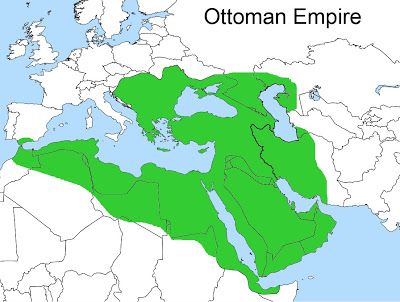
Which continents did the Ottoman Empire have some control over? Click all that apply.
Europe
Asia
Africa
North America
South America
Due to its diverse population, the Ottomans were known for
Forcing its subjects to convert to Islam
Creating harsh laws against Christians and Jews
Allowing many non-muslims into the government
Allowing religious practice for all, at a price
Which of the following was a system in which the Ottomans took Christian boys, converted them to Islam, and had them work in the military and government?
Millet System
Sultan System
Vizier System
Devshirme System
A system used by the Ottomans whereby subjects were divided into religious communities, with each millet (nation) enjoying autonomous self-government under its religious leaders
Devshirme System
Millet System
Safavid Empire
Ottoman Empire
When did the Ottoman Empire OFFICALLY end?
1933
1923
1922
1988

In Russia, a pogrom was an act of violence against _______.
Poles
Germans
Jews
Austrians

A Serb killed the heir to the Austrian Emperor, ______, in June 1914.
Franz Ferdinand
Franz Joseph
Alexander III
Nicolas II
What led to the end of the Ottoman Empire?
They were on the losing side of WWI
They were on the losing side of WWII
A famine led to a farmer revolt
The empire went bankrupt
Decline of the Ottoman Empire was the result of both allying with Germany in WWI and...
attempts to make a parliamentary democracy
attempts to reconcile Islamic Law with Marxism
attempts to convert the empire's non-muslim populations
Efforts to reform the goverment despite internal opposition
What did Enlightenment thinkers question that people previously took for granted?
Traditional authority
The teachings of the Catholic Church
The right of Kings to rule over common people without their say
All of the above
What movement coincided with the Enlightenment and ALSO challenged the power of the Catholic Church in Europe?
The Scientific Revolution
The Great Awakening
The Diet of Worms
The Protestant Reformation
A ruler who has total power
Dictator
Absolute ruler
Total ruler
Total jerk
Who declared that, "woman is born free and her right are the same as those of a man"?
Marquis de Lafayette
Marie Antoinette
Olympe de Gouges
Jacobins
sugar cane, cotton, tobacco, palm oil
cotton, wheat, corn and kale

