wayground logo

Free Printable Worksheets

Font size

S
M
L
XL
Worksheets

AKS 5 Life Science (GA)

Total questions: 133

Worksheet time: 1hrs 7mins

Name
Class
Date
1.
I have cell walls
I am an autotroph
I am multicellular
What am I?
a)
Plant
b)
Animal
c)
Eubacteria
d)
Unicorn
2.
I am unicellular
I am prokaryotic
I am found in extreme ecosystems
What kingdom do I belong to?
a)
The Candy Kingdom
b)
Kingdom Plantae
c)
Kingdom Animalia
d)
Kingdom Archaebacteria
3.

I can be either a heterotroph or an autotroph-

I can be either multicellular or unicellular-

I can have cell walls or not-

The only thing for sure about me is that I have a nucleus in my cells...

I am Kingdom ____________ .

a)

Plantae

b)

Protista

c)

Animalia

d)

Fungi

4.

An organism that must use other organisms for food.

a)

Heterotroph

b)

Autotroph

5.

Multicellular

a)

a Organism made of only one cell

b)

b Organism that does not contain DNA

c)

Organism made of many cells

6.

Which kingdom would this organism be considered?

a)

Plant

b)

Protist

c)

Fungi

7.
Autotroph is when..
a)
An organism makes it's own food
b)
An organism has to eat other things
8.
Heterotroph is when an organism...
a)
Has to eat other things
b)
has to make it's own food
9.
How many kingdoms are there?
a)
2
b)
3
c)
6
d)
8
10.
What do protists, plants, fungi, and animals ALWAYS have in common? They are all...
a)
Multicellular
b)
Eukaryotic
c)
Prokaryotic
d)
Consumers
11.
What is the difference between Archaebacteria and Eubacteria?
a)
Eubacteria are eukaryotic.
b)
Archaebacteria are multicellular.
c)
Archaebacteria can live in extreme environments.
d)
Archaebacteria are found everywhere.
12.
I'm unicellular, asexual, prokaryotic and you can find me in almost all environments. What am I?
a)
Animalia
b)
Protista
c)
Fungi
d)
Bacteria
13.
Which of the following sets of traits could be used to describe the organism whose characteristics are in the list?
a)
Prokaryotic, Autotrophic, Multicellular
b)
Eukaryotic, Autotrophic, Multicellular
c)
Prokaryotic, Autotrophic, Unicellular    
d)
Eukaryotic, Heterotrophic, Multicellular  
14.

Based on the information above, what type of organism is being described?

a)

Animal

b)

Protist

c)

Plant

d)

Bacteria

15.
What type of organism is being described?
a)
Bacteria
b)
Plant
c)
Animal
d)
Fungus
16.
A unicellular organism is found in a sample of water collected from a local pond.  Upon examination of the organism under the microscope, it is determined that the organism contains a nucleus as well as other membrane bound organelles.  It also possesses a flagellum which allows it to move through the water.  This organism most likely belongs to which kingdom?
a)
Protista
b)
Archaea
c)
Eubacteria
d)
Fungi
17.

What characteristics do organisms in Kingdoms Eubacteria and Archaebacteria share? Select all that apply

a)

Unicellular - made of just one cell

b)

Reproduce Asexually

c)

Eukaryotic - cells have a nucleus

d)

Prokaryotic - Cells don't have a nucleus

e)

Found almost everywhere

18.

Which domain does Kingdom Archaebacteria belong to?

a)

Eukarya

b)

Bacteria

c)

Archaea

19.

Which domain does Kingdom Eubacteria belong to?

a)

Eukarya

b)

Bacteria

c)

Archaea

20.
Which kingdom has the following characteristics... Eukaryotic, Sexual, Multicellular, Heterotrophic.
a)
Bacteria
b)
Protista
c)
Plant
d)
Animal
21.
True or False: Bacteria and Protista can both be autotrophic and heterotrophic. 
a)
True 
b)
False
22.
What kingdom does the organism in the picture belong to:
a)
Plant
b)
Animal
c)
Bacteria
d)
Protista
23.
Which kingdom has the following characteristics... Eukaryotic, Sexual, Multicellular, and Autotrophic
a)
Bacteria
b)
Protista
c)
Plant
d)
Animal
24.
True or False: Organisms that reproduce sexually only have one parent.
a)
True
b)
False
25.
Which kingdom has the following characteristics... Eukaryotic, Asexual, Unicellular, and can be both Autotrophic and Heterotrophic.
a)
Bacteria
b)
Protista
c)
Plant
d)
Animal
26.
The kingdom Bacteria is...
a)
Eukaryotic
b)
Prokaryotic
27.
Which of the following kingdoms have organisms that reproduce asexually? 
a)
Bacteria
b)
Protista
c)
Fungi
d)
All of the above
28.
True or False: Asexual reproduction is uniform and these organisms only have one parent.
a)
True
b)
False
29.
Which kingdom has the following characteristics... Eukaryotic, Asexual, Unicellular and Multicellular, and Heterotrophic.
a)
Fungi
b)
Protista
c)
Plant
d)
Animal
30.
Which kingdom has the following characteristics... Prokaryotic, Asexual, Unicellular, and can be both Autotrophic and Heterotrophic.
a)
Bacteria
b)
Protista
c)
Fungi 
d)
Plant
31.
Which type of cells contain a nucleus?
a)
Prokaryotes
b)
Eukaryotes
c)
Both prokaryotes and eukaryotes 
32.
What kingdom do we as humans belong to?
a)
Protista
b)
Fungi
c)
Plantae
d)
Animalia
33.
Plants and animals are...
a)
Unicellular
b)
Multicellular
c)
Vertebrates
34.
Heterotrophic organisms obtain energy by
a)
Eating other animals
b)
Photosynthesis
c)
Autotrophism
d)
Converting electrical energy to chemical energy
35.
An organism made up of more than one cell is
a)
Unicellular
b)
Multicellular
c)
Eukaryotic
d)
Prokaryotic
36.
An organism made up of one cell is:
a)
Multicelluar
b)
Eukaryotic
c)
Unicellular
d)
Prokaryotic
37.
What kingdom does E-coli (shown in picture) belong to:
a)
Bacteria
b)
Protista
c)
Animal 
d)
Plant
38.
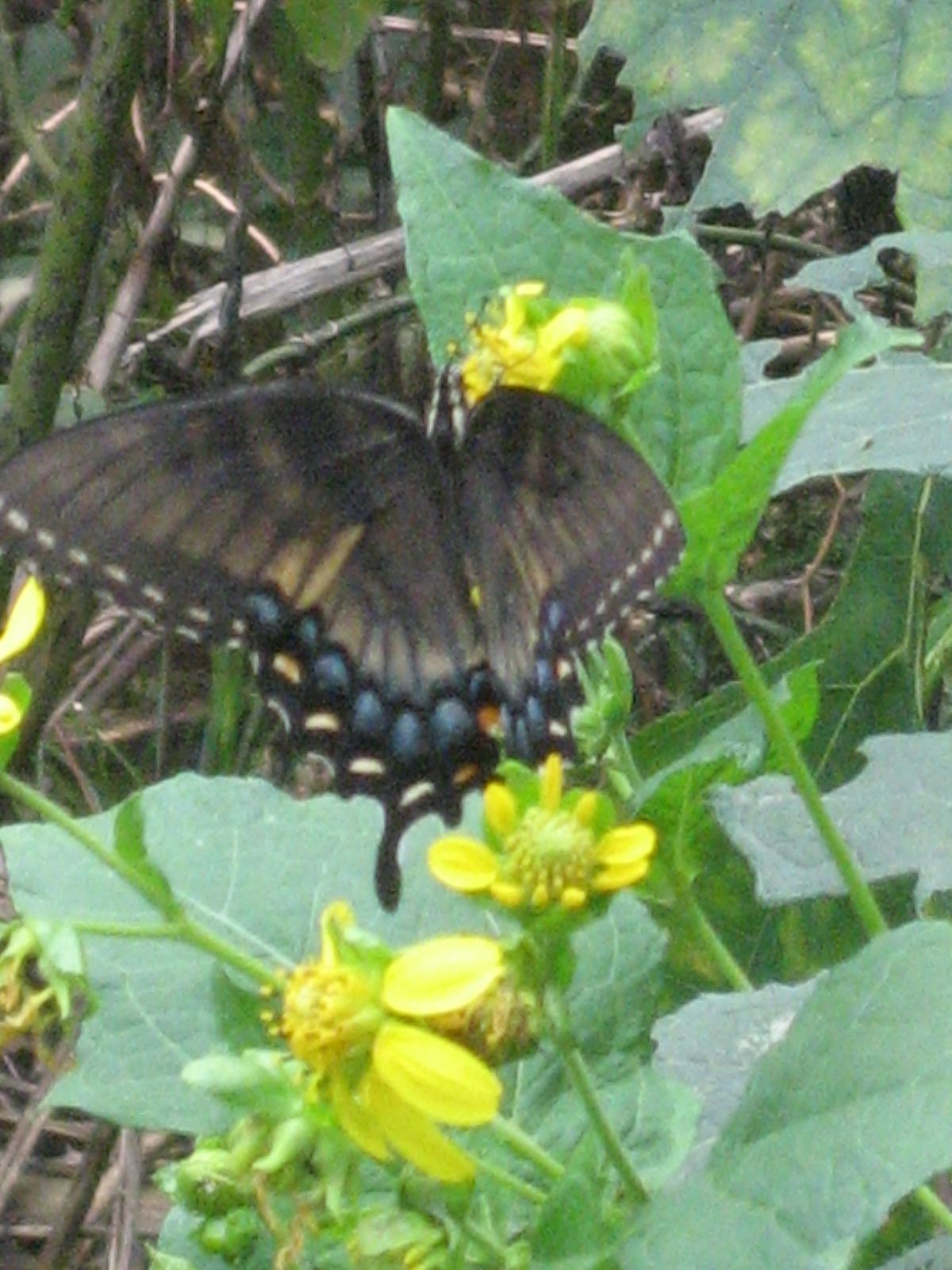
What kingdom does the organism in the picture belong to:
a)
Plant
b)
Animal
c)
Bacteria
d)
Protista
39.
True or False: Fungi reproduce through the process of sexual reproduction.
a)
True
b)
False
40.
All living factors within an environment
a)
Sexual Reproduction
b)
Biotic
c)
Abiotic
d)
Unicellular
41.
An organism that is able to make its own food
a)
Biotic
b)
Heterotroph
c)
Asexual Reproduction
d)
Autotroph
42.
A method of reproduction that requires both a male and a female parent
a)
Sexual Reproduction
b)
Autotroph
c)
Asexual Reproduction
d)
Abiotic
43.
An organism made up of more than one cells and often made up of different types of cells
a)
Autotroph
b)
Multicellular
c)
Unicellular
d)
Heterotroph
44.
A cell lacking a nucleus or any other membrane-enclosed organelle
a)
Eukaryote
b)
Prokaryote
c)
Heterotroph
d)
Unicellular
45.
A method of reproduction that only requires one parent
a)
Prokaryote
b)
Eukaryote
c)
Asexual Reproduction
d)
Sexual Reproduction
46.
All nonliving factors within an environment
a)
Biotic
b)
Abiotic
c)
Prokaryote
d)
Heterotroph
47.
An organism that cannot make its own food
a)
Autotroph
b)
Heterotroph
c)
Multicellular
d)
Unicellular
48.
An organism made up of one cell
a)
Multicellular
b)
Autotroph
c)
Heterotroph
d)
Unicellular
49.
A cell containing a membrane-enclosed nucleus and organelles
a)
Prokaryote
b)
Eukaryote
c)
Heterotroph
d)
Sexual Reproduction
50.

What is binomial nomenclature?

a)

system of 3 names

b)

system of 2 names

c)

the names of the kingdoms

d)

the levels of classification

51.

Which animal is invertebrate?

a)
b)
c)
d)
52.

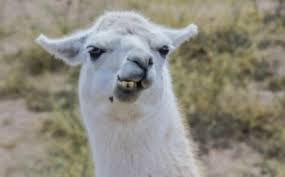
Which animal is a mammal?

a)
b)
c)
53.

Which animal is a reptile?

a)
b)
c)
54.
What are the 8 levels of classification of living things from most general to most specific?
a)
domain, kingdom, phylum, class, order, family, genus, species
b)
domain, kingdom, phylum, class, order, family, genius, species
c)
domain, kingdom, phamily, class, order, family, genus, species
d)
domain, king, phillip, class, order, family, genus, species
55.
A student discovers an arachnid with a segmented abdomen, long legs, and a tail with no stinger. The student uses the dichotomous key below to identify it. Which arachnid has the student found?
a)
Whip Scorpion
b)
Wind Scorpion
c)
Daddy long legs
d)
Scorpion
56.
An illustration and a dichotomous key are given. What is the correct classification for this organism?
a)
Class Insecta
b)
Order Amblygygi
c)
Order Araneae
d)
Order Scorpiones
57.

Which of the following is the correct way to show the scientific name for tiger?

a)

Panthera Tigris

b)

Panthera tigris

c)

panthera Tigris

d)

panthera tigris

58.

Which of the following is a reason scientists use scientific names as opposed to their common names?

a)

Scientists around the world use the same names so there is no language barrier

b)

No two species have the same name, so there is no confusion about which organism is being studied

c)

Scientific names can help you know which organisms are related if they share a common genus name

59.

Scientists group similar organisms together through a process called .....

a)

identification

b)

Estimation

c)

Classification

d)

Organization

60.

What is the genus name here:

Canis lupus

a)

Canis

b)

lupus

61.

Biologist group living things based on ____.

a)

Habitat

b)

Size

c)

Colors

d)

Shared Characteristics

62.
An organism that has cells that lack a nucleus are called:
a)
Eukaryote
b)
Heterotroph
c)
Prokaryote
d)
Autotroph
63.
This is a 
a)
bird
b)
fish
c)
mammal
d)
reptile
64.

Which of the following organisms is a vertebrate?

a)

insect

b)

sponge

c)

monkey

d)

earthworm

65.

Which term describes an animal without a

backbone?

a)

chordate

b)

invertebrate

c)

protozoan

d)

vertebrate

66.

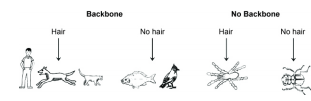
According to the classification key above, which pair of animals could be classified as mammals?

a)

humans and dogs

b)

birds and fish

c)

birds and fish

d)

cats and birds

67.
Are human beings prokaryotic or eukaryotic?
a)
prokaryotic
b)
eukaryotic
68.
Term used to describe a one-celled organism is ________________
a)
multicellular
b)
cellular
c)
single organism
d)
unicellular
69.
Which describes an  organism that produces its own food
a)
heterotroph
b)
chef
c)
autotroph
d)
homeostasis
70.
What does "multicellular" mean?
a)
Has many animals
b)
made up of more than one cell
c)
 has one cell
d)
shows similar characteristics to other cells
71.
How many parents are necessary for asexual reproduction?
a)
2
b)
0
c)
3
d)
1
72.

How do autotrophs get their food? Choose all that apply.

a)

chemosynthesis

b)

by eating other animals

c)

photosynthesis

d)

by eating plants

73.
In what type of reproduction is the rate slow?
a)
sexual
b)
asexual
74.
In what type of reproduction is the rate slow?
a)
sexual
b)
asexual
75.
How does a heterotroph get energy?
a)
by eating other organisms
b)
from photosynthesis
c)
from chemosynthesis
d)
they don't need energy
76.
How do we classify organisms into different Kingdoms?
a)
randomly sort organisms
b)
based on similar characteristics of the organisms
c)
grouped by how the organisms are different from one another
d)
based on how they reproduce
77.
Name the Kingdom:
Cannot be classified as plant, animal or fungi (ex. slime, mold, and protozoa)
a)
Plantae
b)
Eubacteria
c)
Archaebacteria
d)
Protista
78.
Name the Kingdom:
Includes yeast, mushrooms, and ringworm
a)
Eubacteria
b)
Fungi
c)
Anamalia
d)
Protista
79.
Name the Kingdom:
multicellular, autotroph
a)
Anamalia
b)
Fungi
c)
Plantae
d)
Protista
80.
Which is more primative?
a)
prokaryotic cells
b)
eukaryotic cells
81.
Which has organelles?
a)
prokaryotic cells
b)
eukaryotic cells
82.
a)

Prokaryotic cell

b)

Eukaryotic cell

83.

No Nucleus

a)

Prokaryotic cell

b)

Eukaryotic cell

84.

In sexual reproduction, what percent DNA does the offspring get from each parent?

a)

10%

b)

25%

c)

50%

d)

100%

85.

In asexual reproduction, what percent DNA does the offspring get from the parent?

a)

10%

b)

25%

c)

50%

d)

100%

86.

Which rapid form of reproduction could also be called cloning?

a)

sexual

b)

asexual

87.

Given that Red Algae cells enclose their DNA in a Nuclear envelope, how would you categorize this organism?

a)

Prokaryotic

b)

Eukaryotic

88.

Given that Cyanobacteria is a unicellular organism that LACKS membrane-bound organelles, how would you categorize this organism?

a)

prokaryotic

b)

eukaryotic

89.

Given that an amoeba’s entire body is made from one cell, how would you categorize this organism?

a)

Unicellular

b)

Multicellular

90.

Given that this mushroom has many cells that make up the different parts of its structure, how would you categorize this organism?

a)

Unicellular

b)

Multicellular

91.

Given that this Keel-billed Toucan mostly eats fruit, though occasionally it enjoys insects and small lizards, how would you categorize this organism?

a)

Autotroph

b)

Heterotroph

92.

Given that Diatoms are single-celled algae that convert light energy into food, how would you categorize this organism?

a)

Autotroph

b)

Heterotroph

93.

This is an amoeba. These freshwater single-celled organisms feed on bacteria and smaller protozoa. While only unicellular, they are complex eukaryotes. In which Kingdom does this organism belong?

a)

Eubacteria

b)

Archaea

c)

Plant

d)

Protist

e)

Animal

94.

These unicellular prokaryotes thrive in the hydrothermal vents that reach 300° Celsius, an extreme environment to live in. In which Kingdom does this organism belong?

a)

Eubacteria

b)

Archaea

c)

Plant

d)

Protist

e)

Fungus

95.

Galls appear on Red Cedar Trees where Gymnosporangium lives. Gymnosporangium gets its nutrients and energy from the trees it lives on and is made of eukaryotic cells. They also have cell walls made of CHITIN. In which Kingdom does this organism belong?

a)

Eubacteria

b)

Archaea

c)

Plant

d)

Protist

e)

Fungi

96.
What is a prokaryotic organism?
a)
An organism that is made of many cells
b)
An organism that lacks a nucleus
c)
An organism that can produce its own food
d)
An organism that cannot reproduce without a partner
97.
If you are researching a unicellular organism, what does that mean?
a)
The organism has cells with a nucleus
b)
The organism reproduces without a partner
c)
The organism cannot make its own food
d)
The organism is made of only one cell
98.
All plants, some protists, and some protists are autotrophic. What does this mean?
a)
That they can produce their own food
b)
That they can reproduce only with a partner
c)
That their cells have a nucleus
d)
That they have to search for their food
99.
All plants and animals are multicellular. This means that...
a)
they reproduce with a partner
b)
they reproduce without a partner
c)
they made of many cells
d)
they are made of cells that have a nucleus
100.
Bacteria and archeabacteria reproduce asexually. This means that they...
a)
reproduce only with a partner.
b)
can reproduce without a partner.
c)
have cells with a nucleus.
d)
have cells that lack a nucleus.
101.
If a cell has a nucleus, that means that it must be...
a)
asexual
b)
autotrophic
c)
eukaryotic
d)
unicellular
102.
Most fungi require a partner in order to reproduce. This means that they are...
a)
autotrophic
b)
sexual
c)
heterotrophic
d)
asexual
103.
All organisms in the animalia kingdom are heterotrophic, which means that...
a)
they do not have a nucleus in their cells.
b)
they can produce their own food.
c)
they have a nucleus in each of their cells.
d)
they cannot produce their own food.
104.
Which kingdom is the only one in the Archaea domain?
a)
Eubacteria
b)
Bacteria
c)
Archaebacteria
d)
Protista
105.
The Bacteria domain has only one kingdom in it, which is the __________ kingdom.
a)
Archaebacteria
b)
Eubacteria
c)
Archaea
d)
Autotrophic
106.
They Eukarya (or Eukaryota) domain has FOUR kingdoms in it. Those four kingdoms are: 
a)
Protista, Bacteria, Archaea, Animalia
b)
Fungi, Plantae, Animalia, and Archaea
c)
Plantae, Animalia, Prokarya, Fungi
d)
Animalia, Plantae, Fungi, Protista
107.
The Eubacteria and Archaebacteria members are very similar in their characteristics. Which list best describes them?
a)
Eukaryotic, unicellular, autotrophic or heterotrophic, sexual
b)
Prokaryotic, unicellular or multicellular, heterotrophic, sexual
c)
Prokaryotic, multicellular, heterotrophic, sexual
d)
Prokaryotic, unicellular, autotrophic or heterotrophic, asexual
108.
The Protista kingdom has very diverse organisms! Which list of characteristics below describes them best?
a)
Either eukaryotic or prokaryotic, either autotrophic or heterotrophic, either unicellular or multicellular, either sexual or asexual
b)
Prokaryotic, either autotrophic or heterotrophic, either unicellular or multicellular, either sexual or asexual
c)
Eukaryotic, either autotrophic or heterotrophic, either unicellular or multicellular, either sexual or asexual
d)
None of the above
109.
The Fungi kingdom include molds, yeasts, and mushrooms. They are best described as:
a)
Eukaryotic, multicellular, autotrophic, asexual
b)
Eukaryotic, unicellular or multicellular, heterotrophic, asexual or sexual
c)
Eukaryotic, unicellular or multicellular, autotrophic, sexual
d)
Prokaryotic, unicellular or multicellular, autotrophic, asexual or sexual
110.
The best way to describe the Plantae kingdom is: 
a)
Prokaryotic, multicellular, autotrophic, asexual
b)
Prokaryotic, multicellular, autotrophic, sexual
c)
Eukaryotic, multicellular, autotrophic, asexual
d)
Eukaryotic, multicellular, autotrophic, sexual
111.
The best way to describe the Animalia kingdom is: 
a)
Eukaryotic, multicellular, heterotrophic, sexual
b)
Eukaryotic, multicellular, autotrophic, sexual
c)
Prokaryotic, multicellular, heterotrophic, sexual
d)
Prokaryotic, multicellular, autotrophic, sexual
112.
What do the Protista, Fungi, Plantae, and Animalia kingdoms all have in common?
a)
All of the organisms in these kingdoms are autotrophic.
b)
All of the cells in these organisms have a nucleus inside of them.
c)
All of the organisms in these kingdoms are multicellular.
d)
All of the organisms in these kingdoms always reproduce sexually.
113.
Which kingdom do YOU fit best into?
a)
Protista
b)
Fungi
c)
Plantae
d)
Animalia
114.
What was the name of the scientist who declared that there were THREE domains (Archaea, Bacteria, Eukaryota) instead of two?
a)
Alfred Wegener
b)
Benjamin Franklin
c)
Carl Woese
d)
Democritus
115.
Which kingdom do YOU fit best into?
a)
Protista
b)
Fungi
c)
Plantae
d)
Animalia
116.

In the English language, dogs have many different names to describe them. For example, canine, puppy, dog, hound, etc. In science around the world we use a naming system called what to make it uniform across the world?

a)

binomial nomenclature

b)

polynomial nomenclature

c)

taxonomy

d)

none of the above

117.

Which organisms are most closely related?

a)

A and B

b)

B and C

c)

C and A

d)

not enough info given

118.
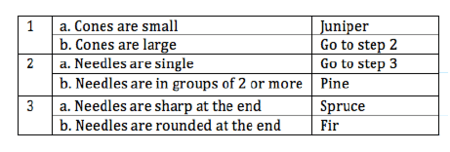
A dichotomous key for trees is provided. Hikers found a tree that has large brown cones and single sharp needles. What species of tree have the hikers found?
a)
Juniper
b)
Pine
c)
Spruce
d)
Fir
119.
The 8 levels of classification, most broad to most specific.
a)
Domain, Genus, Family, Order, Class, Phylum, Kingdom, Species
b)
Domain, Species, Kingdom, Genus, Phylum, Family, Class, Order
c)
Domain, Kingdom, Phylum, Class, Order, Family, Genus, Species
d)
Order, Kingdom, Species, Domain, Phylum, Family, Class, Genus
120.
The first part of a scientific name is an organism's _______________ and the second part is its ________________.
a)
species, genus
b)
phylum, order
c)
class, spices
d)
genus, species
121.

Which level of taxonomy shows the closest relationship between 2 organisms?

a)

kingdom

b)

class

c)

domain

d)

species

122.

There are many different species of big cats around the world. Why is having a scientific name for each species of an organism important?

a)

to prevent existing named organisms from having their name changed as they become extinct

b)

to keep the classification system from being altered as new organisms are discovered

c)

to allow organisms to be placed in many classification levels at the same time

d)

to standardize the naming and organization of organism to avoid confusion between scientist across the world

123.

I am unicellular

I am prokaryotic

I am found in extreme environments

What kingdom do I belong to?

a)

The Eubacteria

b)

Kingdom Plantae

c)

Kingdom Animalia

d)

Kingdom Archaebacteria

124.

I can be either a heterotroph or an autotroph-

I am mostly unicellular

I am the "Junk Drawer" kingdom

The only thing for sure about me is that I have a nucleus in my cells...

I am Kingdom ____________ .

a)

Plantae

b)

Protista

c)

Animalia

d)

Fungi

125.

All living things are divided into three groups called 'domains'. They include, Domain Bacteria, Domain Archaea, and ____________.

a)

Domain Animalia

b)

Domain Eukarya

c)

Domain Prokaryotic

d)

Domain Protista

126.
An illustration and a dichotomous key are given. What is the correct classification for this organism?
a)
Class Insecta
b)
Order Amblygygi
c)
Order Araneae
d)
Order Scorpiones
127.

Which of the following is not of the 6 kingdom names?

a)

Plantae

b)

Archaebacteria

c)

Phylum

d)

Protista

128.

Using a light microscope, a student identified the following characteristics of 4 organisms found in a sample of pond water. (look at the picture) Based on the table, which organisms most likely belong to the taxonomic group for bacteria?

a)

organisms 1 and 2

b)

organisms 2 and 3

c)

organisms 1 and 4

d)

organisms 3 and 4

129.

A classification table is shown in the picture. According to the picture, which group does a bluebonnet belong to?

a)

group 1

b)

group 2

c)

group 3

d)

group 4

130.
What is the importance of a standardized taxonomic system to the scientific
community?
a)
To have many different common names for one species.
b)
To organize species cells, tissues, organs, and organ systems.
c)
To have a universal scientific naming system.
d)
To analyze species genetic information.
131.
I sometimes get confused by others to be a plant. I'm heterotrophic and digest decaying material. What kingdom to I belong to?
a)
Archaebacteria
b)
Animalia
c)
Fungi
d)
Protista
132.
In what kingdom would you find trees and flowers?
a)
Plantae
b)
Fungi
c)
Eubacteria
d)
Animalia
133.
Bacteria, plants, and fungi--
a)
have cell walls.
b)
belong to the same kingdom.
c)
are all heterotrophic.
d)
can do photosynthesis.