
 Worksheets
LBC-Ch8 Electronegativity, polarity, dipoles
Total questions: 76
Worksheet time: 40mins

When two nonmetals do not share electrons evenly, the resulting covalent bond will be
nonpolar
polar
ionic
metallic

In a covalent bond, one or more valence electrons are ______

Two people that are in an unfulfilling relationship

Which has a higher electronegativity
Carbon
Nitrogen
Fluorine
Calcium

Fluorine has the highest electronegativity on the chart
False
True

Is water polar or nonpolar?
Polar
Nonpolar

Intermolecular forces are
chemical bonds within molecules
forces of attraction between molecules
how baby yoda got started
what holds the atomic nucleus together


This is an example of a(n) __________.
Electrostatic discharge
Dipole
Nonpolar Molecule
Intermolecular Force

The electrons in a polar covalent molecule are shared...
Evenly
Unevenly
Electrons are not shared
None of the Above

The electrons in a nonpolar covalent molecule are shared...
Evenly
Unevenly
Electrons are not shared
None of the Above

The electrons in an ionic molecule are shared...
Evenly
Unevenly
Electrons are not shared
Ironically

In a polar covalent bond, the electrons gather around...
The atom with the Greatest Electronegativity
The atom with the Lowest Electronegativity
Each atom Equally
None of the Above

Partial charges are present in which type of bond?
Ionic
Nonpolar Covalent
Polar Covalent
Partial bonds

Molecules that contain whole number charges on atoms (+1,-3, etc.) must be...
Polar Covalent
Nonpolar Covalent
Ionic
Polar Covalent or Ionic

What must the difference in electronegativity between two atoms be in order for the bond between them to be polar covalent?
less than 0.5
greater than 2.1
between 0.5 and 2.1
irreconcilable

What must the difference in electronegativity between two atoms be in order for the bond between them to be nonpolar covalent?
less than 0.5
greater than 2.0
between 0.5 and 2.1
insurmountable

A diatomic molecule like O2 is always _____ because electrons are shared _____
nonpolar; unequally
polar; equally
nonpolar; equally
polar; unequally

What is the molecular polarity of Br2?
Polar
nonpolar
Ionic

What is the molecular polarity of HCl?
nonpolar
polar
ionic


How many valence electrons are represented by a single straight line in a Lewis structure?


Is this molecule polar or non-polar?
Polar
Non-polar

Is this molecule polar or non-polar?
Polar
Non-polar

Is this molecule polar or non-polar?
Non-polar
Polar


Will this molecule be polar or nonpolar? CHCl3


Which formula represents a nonpolar molecule?


The polarity of a bond is determined by...
The sum of the electronegativities of the two atoms.
The difference in the electronegativities of the two atoms.
The charges of the atoms.
None of the above.


What type of bond is depicted in the image?
Nonpolar Covalent
Polar Covalent
Ionic
Electronegativity is...
The ability for an atom to ATTRACT electrons
the ability of an atom to LOSE electrons
the energy required to remove an electron from an atom
how easy it is to make friends.

CO2 has two bond dipole, but it is not a polar molecule because it's ___
linear
bent
tetrahedral
trigonal pyramidal

The separation of the charge around a molecule into a more positive area and a more negative area creates ___
a polar vortex
a dipole moment
a magnetic monopole
a magnetic dipole

The dipole moment is represented by an arrow with a plus sign at the tail pointing toward ___
a fluorine atom
the negative side of the molecule
magnetic north
the least electronegative element

A little lowercase delta plus (δ+) or delta minus (δ–) by the individual atoms signify ___
partial charges
the magnetic poles
a difference in electronegativities
nonpolar molecules

Polarity taken to the extreme, where the electrons have completely transferred, creates ___
radioactive isotopes
an ultrapolar molecule
two charged ions
a molecular compound

The partial negatively charged oxygen sides of water molecules are always doing their best to orient themselves toward ___
magnetic north
the partial positively charged hydrogen sides of other water molecules
negative ions
the surface of a liquid
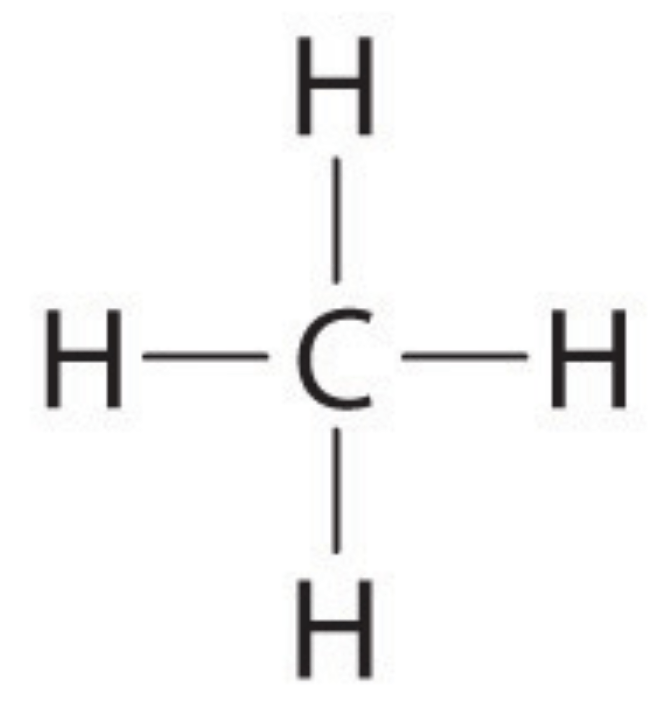
Why is the molecule nonpolar?
There are nonbonding pairs on the central atom.
There are different types of elements bonded to the central atom.
There are no nonbonding pairs on the central atom and all of the atoms bonded to the central atom are the same.

What does "polar" mean?
A molecule is cold
A molecule has areas of positive and negative charge

This atom in a water molecule has more of a negative charge
hydrogen
oxygen
Excluding the Noble gas family, where on the Periodic Table are the elements with the highest electronegativity located?
upper right
lower right
upper left
lower left

Phosphorus has an electronegativity value of 2.1. Chlorine's electronegativity value is 3.0. What type of bond will these two elements form?
ionic
nonpolar covalent
polar covalent
metallic

Which of the following pairs of elements is most likely to form an ionic bond?
sulfur and oxygen
sulfur and fluorine
sodium and sulfur
oxygen and fluorine

True or False: Molecules that contain polar bonds are always polar bonds.
True
False

In order to determine if a molecule is polar, you must consider the
polarity of bonds and symmetry of the molecule.
number of electrons and number of bonds.
polarity of bonds only.
total charge of each ion and number of multiple bonds.

Polar molecules have
no charges.
slight positive and negative charges on opposite ends of the molecules.
only positive charges.
either positive or negative charges, but not both.
What does the color coding on this chart indicate?
The electronegativity direction (north, south, east, west)
The electron orbital blocks (s, p, d, f)
The phase of the element (solid, liquid, gas, plasma)
Which other types of elements it will look good with
This atom in a water molecule has a partial negative charge
Oxygen
Hydrogen
Dihydrogen Monoxide
Argon
This atom in a water molecule has a partial positive charge
Oxygen
Hydrogen
False
Helium
This side of the water molecule will be attracted to a negatively charged surface
the oxygen side
the hydrogen side
neither side
the outside

What must the difference in electronegativity between two atoms be in order for the bond between them to be ionic?
less than 0.5
greater than 2.0
between 0.5 and 2.1
political

What is the bond type for BeF2 ?
nonpolar
polar
ionic

What is the bond type for SiO2 ?
nonpolar covalent
polar covalent
ionic
What is the bond type for H2 ?
nonpolar covalent
polar covalent
ionic
What is the bond type for HI (hydrogen iodide) ?
nonpolar covalent
polar covalent
ionic
What is the bond type for HF (hydrogen fluoride) ?
nonpolar covalent
polar covalent
ionic
What is the bond type for NaF (sodium fluoride) ?
nonpolar covalent
polar covalent
ionic

Put these bonds in order, from the least polar to the most polar. H-Cl, Cl-Cl, H-F, C-O.
Cl-Cl < C-O < H-Cl < H-F
H-F < Cl-Cl < C-O < H-Cl
They are all ionic
Cl-Cl < H-F < H-Cl < C-O
Which of these bonds is non-polar?
Cl-Cl
H-F
H-Cl
C-O
Which of these bonds is the most polar?
Cl-Cl
H-F
H-Cl
C-O
Which of these bonds has an electronegativity difference of 1.06?
Cl-Cl
H-F
H-Cl
C-O
Which of these bonds has an electronegativity difference of 0.89?
Cl-Cl
H-F
H-Cl
C-O

Is this molecule polar or non-polar?
Polar
Non-polar
fluorine has a partial positive charge
fluorine has a partial negative charge
fluorine was discovered by a Greek scientist
fluorine has formed an anion

Will this molecule be polar or nonpolar? CH2Cl2

