Wayground logo

Free Printable Worksheets

Font size

S
M
L
XL
Worksheets

Unit 9 Matter and Reactions Review

Total questions: 43

Worksheet time: 1hrs 26mins

Name
Class
Date
1.
What is the correct order of the states of matter?
a)
Solid, Liquid, Gas
b)
Gas, Liquid, Solid
c)
Liquid, Gas, Solid
d)
Solid, Gas, Liquid
2.
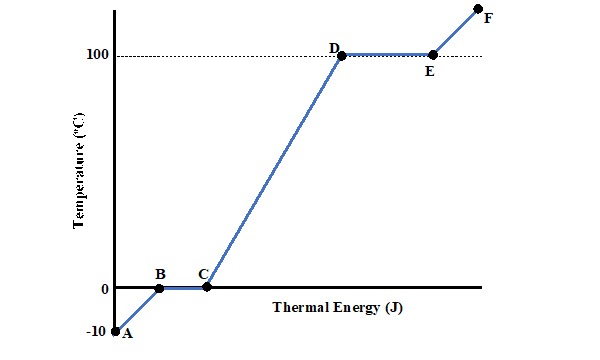
This image shows:
a)
Molecules in solid have the greatest amount of energy.
b)
Molecules in a liquid have the greatest amount of energy.
c)
Molecules in a gas have the greatest amount of energy.
d)
They have equal amounts of energy.
3.
What line segment represents only the solid state?
a)
A-B
b)
B-C
c)
C-D
d)
D-E
4.

Between which two points is the solid melting?

a)

A <---- B

b)

B <----> C

c)

C <---- D

d)

D <----> E

e)

E <---- F

5.

Between which two points is the water boiling?

a)

A <----> B

b)

B <----> C

c)

C <----> D

d)

D <----> E

e)

E <----> F

6.

A substance is cooled for sixteen minutes according to the cooling curve shown. During which time is the substance SOLID?

a)

0-2 min

b)

2-6 min

c)

6-10 min

d)

10-14 min

e)

14-16 min

7.

When the temperature of a gas at constant volume is increased...

a)

the pressure of the gas decreases.

b)

the pressure remains the same.

c)

the pressure of the gas increases.

d)

the pressure can either increase or decrease.

8.

What causes a truck's tires to burst on long road trips?

a)

Hot temperatures increase the pressure inside the tire.

b)

Lower temperatures decrease the volume.

c)

Lower pressure is caused by lower temperatures.

9.

Predict: What do you think will happen when you dunk a balloon in ice water?

a)

The balloon will remain the same size because temperature change does not affect the volume.

b)

The ballon will become smaller because lower temperatures will cause the volume to decrease.

c)

The balloon will become larger because lower temperatures will cause the volume to increase.

10.
Which of the following would increase the pressure on a system?
a)
Increase the Temperature
b)
Pump in more gas
c)
Decrease the volume
d)
All of these
11.
Substances present at the start of a chemical reaction
a)
subscripts
b)
coefficients
c)
reactants
d)
products
12.
Substances that form as the result of a chemical reaction
a)
products
b)
reactants
c)
coefficients
d)
subscripts
13.
How many nitrogen atoms are in 
Fe(NO3)2
a)
1
b)
2
c)
3
d)
6
14.
How many iron atoms are in 
Fe(NO3)2
a)
1
b)
2
c)
3
d)
6
15.
How many oxygen atoms are in 
Fe(NO3)2
a)
1
b)
2
c)
3
d)
6
16.

How many oxygen atoms are in the products for the chemical reaction below?
4Fe + 3O2 → 2Fe2O34Fe\ +\ 3O_{2\ }\rightarrow\ 2Fe_2O_3  

a)

2

b)

3

c)

5

d)

6

17.
Matter can not be created nor destroyed: it can only be
a)
Destroyed a little bit
b)
Invisible
c)
Transformed, changed
d)
None of the above
18.
The number to the lower side of an element is a 
a)
Subscript
b)
Superscript
c)
Coefficient
d)
Charge
19.
The number in front of a compound or element is a 
a)
Subscript
b)
Coefficient
c)
Superscript
d)
Charge
20.
Which of these is not a chemical reaction?
a)
Burning of wood
b)
Milk going bad
c)
Mixing vinegar and baking soda
d)
Melting of ice
21.
If reaction starts with 20g of reactants it should produce 
a)
a total of 40g of products
b)
a total of 10g of products
c)
a total of 80 g of products
d)
a total of 20g of products
22.

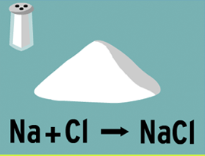
When sodium and chlorine combine to form sodium chloride, sodium chloride is the:

a)

Originator

b)

Reactant

c)

Product

d)

Produce

23.

Does the equation H2+O2 →H2O follow the Law of Conservation of Mass?

a)

Yes, because the atoms are equal.

b)

No, because more info is needed.

c)

No, because there are more atoms in the product.

d)

No, because there are more atoms in the reactant.

24.
How many elements are in C6H12O6?
a)
1
b)
2
c)
3
d)
4
25.

How many Nitrogen atoms are in (NH₄)₂CrO₄?

a)

1

b)

2

c)

8

d)

16

26.

What is C2H8O ?

a)

Element

b)

Letters

c)

Numbers

d)

Compound

27.

How many Oxygen atoms are in Al₂(SO₄)₃?

a)

4

b)

12

c)

7

d)

24

28.
Which of the following is a compound?
a)
Co
b)
O2
c)
C
d)
CO2
29.
An element plus additional element reacts to form one product is an example of which type of chemical reaction? 
a)
combustion
b)
decomposition 
c)
synthesis 
d)
single replacement
30.
Describes the number of molecules in a compound and is used to balance a chemical reaction. 
a)
coefficient 
b)
subscript
c)
superscript
d)
SI unit
31.
Which type of reaction takes place in the presence of oxygen and produces carbon dioxide and water?
a)
double replacement 
b)
decomposition 
c)
combustion 
d)
single replacement
32.
Provides evidence that a chemical reaction has occurred. 
a)
dissolving 
b)
melting
c)
formation of a gas
d)
bending
33.
A compound is reacted and forms two new substances. What type of reaction is this? 
a)
combustion 
b)
synthesis 
c)
decomposition 
d)
single replacement 
34.

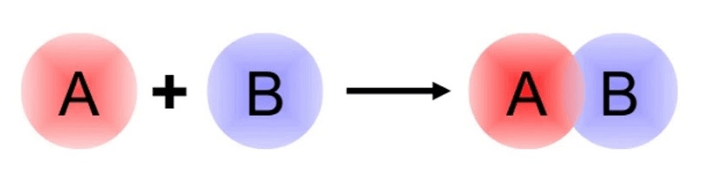
What is the type of reaction shown above?

a)

Synthesis

b)

Decomposition

c)

Single Replacement

d)

Double Replacement

35.

Identify the reaction type:

C2H6 + O2 --> CO2 + H2O

a)

Double replacement

b)

Synthesis

c)

Acid base

d)

Combustion

36.

Identify the reaction type for the following equation:

K + F2 --> KF

a)

Double replacement

b)

Single Replacement

c)

Synthesis

d)

Decomposition

37.

Identify the type of reaction:

ZnCl2 + Mg --> Zn + MgCl2

a)

Precipitate

b)

Single Replacement

c)

Double Replacement

d)

Decomposition

38.

Identify the reaction type:

NaCl + KOH --> KCl + NaOH

a)

Double replacement

b)

Combustion

c)

Synthesis

d)

Decomposition

39.
__Na + __Cl2 --> __NaCl
a)
1,1,2
b)
2,1,2
c)
2,1,1
d)
already balanced
40.
Balancing this reaction: ____ CH4 + ____ O2 ---> ____ CO2 + ____ H2O
a)
2,1,3,1
b)
1,2,1,2
c)
1,2,2,1
d)
2,1,1,2
41.
What do the coefficients need to be in the following equation in order to be balanced?
_Mg + _Cl2 → _MgCl2
a)
1, 2,1
b)
already balanced
c)
2,1,1
d)
1,1,2
42.
Balance this equation:
Al2O3 -> Al + O2 
a)
2Al2O3 -> 2Al + 3O2 
b)
2Al2O3 -> 4Al + 3O2 
c)
3Al2O3 -> 2Al + O2 
d)
2Al2O3 -> 3Al + 2O2 
43.
Balance this equation:
MgCl2 --> Mg4+ Cl2
a)
It's already balanced.
b)
4MgCl2 --> Mg4+ 4Cl2
c)
4MgCl2 --> Mg4+ 5Cl2