Wayground logo

Free Printable Worksheets

Font size

S
M
L
XL
Worksheets

6th Grade IA Week 27 Review

Total questions: 68

Worksheet time: 43mins

Name
Class
Date
1.

Hand Warmer in a Hand

a)

Heat is being transferred from the hand warmer to the hand.

b)

Heat is being transferred from the hand to the hand warmer.

c)

The hand is getting warmer. The hand warmer is getting cooler.

d)

The hand warmer is getting warmer. The hand is getting cooler.

2.

Boiling Water

a)

Conduction

b)

Convection

c)

Radiation

3.

Curling Iron

a)

Conduction

b)

Convection

c)

Radiation

4.

Weather Patterns

a)

Conduction

b)

Convection

c)

Radiation

5.

Sun Bathing

a)

Conduction

b)

Convection

c)

Radiation

6.

Mantle

a)

Conduction

b)

Convection

c)

Radiation

7.

Feet on Hot Sand

a)

Conduction

b)

Convection

c)

Radiation

8.

Lava Lamp

a)

Conduction

b)

Convection

c)

Radiation

9.

Hot Air in a Toaster

a)

Conduction

b)

Convection

c)

Radiation

10.

Microwaving Food

a)

Conduction

b)

Convection

c)

Radiation

11.

Heat Lamps

a)

Conduction

b)

Convection

c)

Radiation

12.

Cold Pack on Person

a)

Heat is transferred from the cold pack to the person.

b)

Heat is transferred from the person to the cold pack

c)

The cold pack is getting warmer. The person is getting colder.

d)

The cold pack is getting colder. The person is getting warmer.

13.

Hand Warmer in a Hand

a)

Heat is being transferred from the hand warmer to the hand.

b)

Heat is being transferred from the hand to the hand warmer.

c)

The hand is getting warmer. The hand warmer is getting cooler.

d)

The hand warmer is getting warmer. The hand is getting cooler.
14.
What kind of heat transfer happens when the sun heats your body?
a)
Conduction
b)
Radiation
c)
Convection
d)
Density
15.
Warm air rises and the cool air sinks demonstrates this type of heat transfer. 
a)
conduction
b)
convection
c)
radiation
d)
Insolation 
16.
Warm air is __________ dense than cold air and rises creating convection currents.
a)
more
b)
less
17.
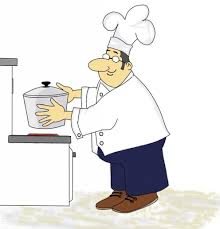
The man takes the hot pot off the stove with his bare hands and his hands get burned.  This is an example of 
a)
conduction
b)
convection
c)
radiation
18.
What is the definition of CONDUCTION?
a)
When heat is transferred from objects like rays of light or electromagnetically.
b)
a  hot liquid or air that  expands, becomes less dense, and rises or becomes more dense, and sinks.
c)
When heat transfers from objects that are touching.
d)
When heat transfers through the heater or AC in your house.
19.
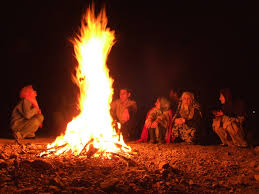
A group of friends gather around a fire to stay warm.  This is an example of
a)
conduction
b)
convection
c)
radiation
20.
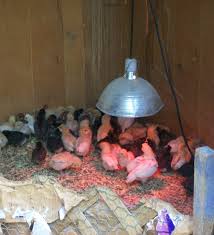
The baby chickens are kept warm from the heat lamps. This demonstrates what kind of heat transfer? 
a)
conduction
b)
convection
c)
radiation
21.
The transfer of heat by currents through liquids of gases is called
a)
Perspiration
b)
Radiation
c)
Conduction
d)
Convection
22.
A metal spoon heated by hot soup.  This is an example of
a)
Conduction
b)
Transpiration
c)
Convection
d)
Radiation
23.
"Lava lamps" contain colored liquids. These liquids form globs that rise to the top due to
a)
conduction
b)
convection
c)
radiation
24.
Near the ceiling of a room the air is warmer; the warm air rises because of
a)
conduction
b)
convection
c)
radiation
25.
A huge rock at the state park gets hot during the day. The rock was warmed from the Sun by
a)
conduction
b)
convection
c)
radiation
26.
You lay on a hot rock and keep warm from the rock by
a)
conduction
b)
convection
c)
radiation
27.
A crayon placed on a dark driveway in bright sunlight melted into a colorful puddle. What caused the crayon to melt?
a)
Solar radiation heated the driveway and then heat transferred to the crayon by conduction.
b)
Solar radiation heated the driveway and then heat transferred to the crayon by radiation.
c)
Solar convection heated the driveway and then heat transferred to the crayon by radiation.
d)
Solar convection heated the driveway and then heat transferred to the crayon by conduction.
28.
Which statement is true?
a)
The quicker a molecule moves, the colder it is.
b)
The slower a molecule moves, the warmer it is.
c)
The quicker a molecule moves, the warmer it is
d)
The movement of a molecule doesn't affect its temperature
29.
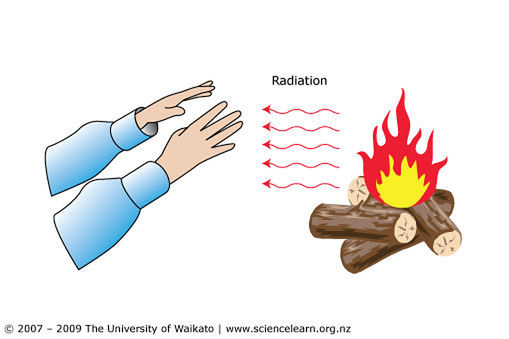
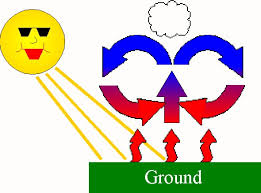
The picture shows heat transfer by
a)
Conduction
b)
Convection
c)
Radiation
30.
Cold air sinks.  True or false? 
a)
true
b)
false
31.
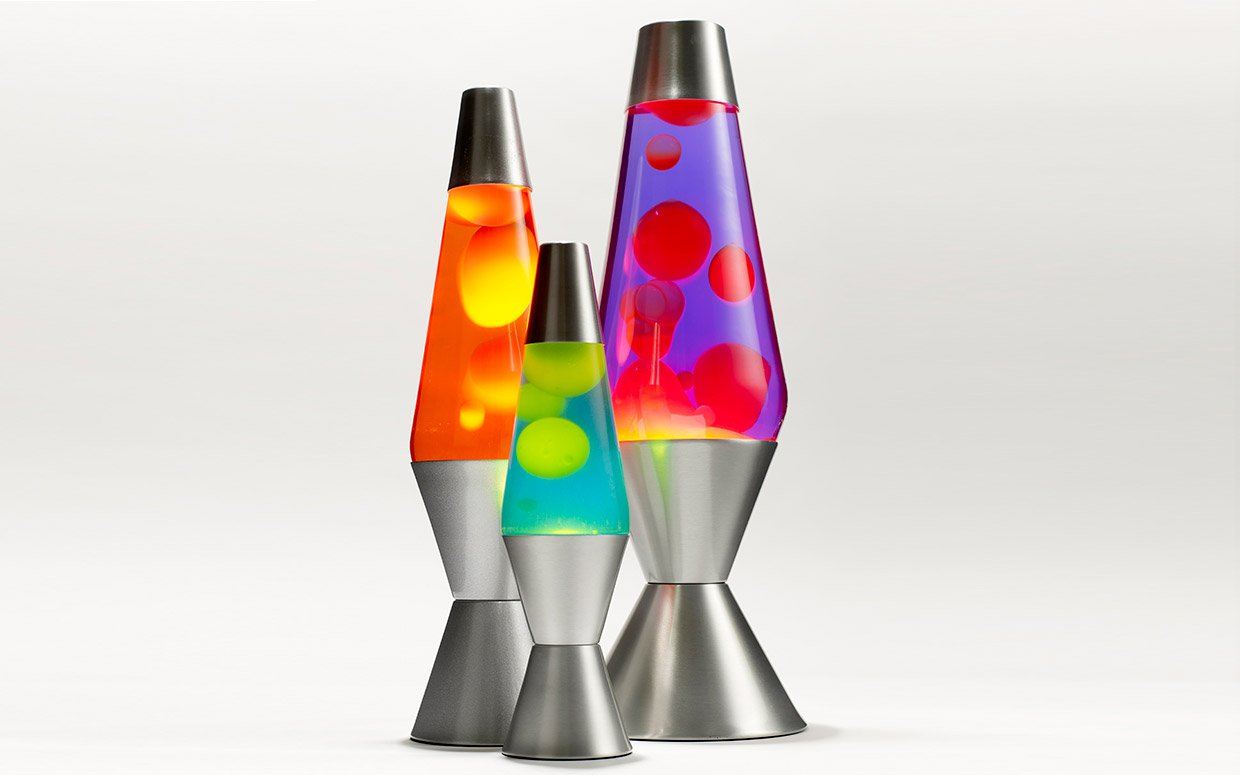
This is a lava lamp. When the light bulb heats the wax, the wax rises. When the wax cools, it falls. This cycle of rising/falling is an example of:
a)
Conduction.
b)
Convection.
c)
Radiation.
32.
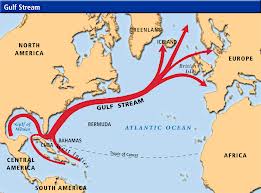
The Gulf Stream is a current that brings warm ocean water from the south to the north. What type of heat transfer is this?
a)
conduction
b)
convection
c)
radiation
d)
Insolation 
33.

The diagram shows a cross section of a portion of the Earth. Which letter represents a mid-ocean ridge?

a)

W

b)

X

c)

Y

d)

Z

34.

The diagram shows a landform on Earth. How did the movement of Earth’s plates form the landform?

a)

Two oceanic plates slid past each other.

b)

Two continental plates collided.

c)

One continental plate slid past an oceanic plate.

d)

One continental plate subducted beneath an oceanic plate.

35.

Which diagram shows a plate boundary that is typical for the formation of volcanoes?

a)
b)
c)
d)
36.

Use the diagram to answer the question. What results as the two oceanic plates converge?

a)

formation of a deep sea trench and island volcanoes

b)

earthquake activity and appearance of a transform fault

c)

volcanic eruption along both oceanic plate edges

d)

formation of a continental mountain range

37.

Use the diagram to answer the question. What results when the two plates move in the direction indicated by the arrows?

a)

formation of a deep sea trench and island volcanoes

b)

earthquake activity and appearance of a transform fault

c)

volcanic eruption along the edges of both plates

d)

formation of a continental mountain range

38.

The diagram below shows a cross section of a portion of the Earth. Which location represents a deep ocean trench?

a)

A

b)

B

c)

C

39.

What is occurring at the Nazca Plate?

a)

Trasformation

b)

Subduction

c)

Lithification

d)

Compaction

40.
What kind of plate boundary is shown here?
a)
divergent
b)
convergent
c)
transform
d)
submergent
41.
What geologic feature/event you be most likely to find at a transform boundary?
a)
Earthquakes
b)
Volcanoes
c)
Mountains
d)
Rift Valleys
42.
What geologic feature/event would you most likely to find at a divergent boundary between two pieces of oceanic crust?
a)
Rift Valley
b)
Mid-Ocean Ridge
c)
Island Arc
d)
Flat land
43.
What geologic feature/event would you most likely to find at a convergent boundary between two pieces of continental crust?
a)
Volcano
b)
Mountain
c)
Rift
d)
Island Arc
44.
A subduction zone is formed...
a)
when one tectonic plate sinks below another
b)
at every type of convergent plate boundary
c)
at every type of divergent plate boundary
d)
at transform boundaries
45.
Sometimes, when two tectonic plates collide, one is pushed below the other; this action at the convergent boundary is called...
a)
Divergent boundary
b)
Convergent boundary
c)
Transform boundary
d)
Subduction
46.
When an oceanic plate is subducted under a continental plate, a deep valley is formed in the ocean. What is this valley called? 
a)
a trench
b)
a rift zone
c)
ocean spreading ridge
d)
Continental crust
47.
When convergent plates collide, if both plates are pushed upward, this forms.  
a)
Fissures
b)
Mountain Ranges
c)
Volcanoes
d)
Rock Cycle
48.

There are (a)   types of Plate Boundaries.

49.

A type of Plate boundary that involves grinding or sliding past of the plate.

(a)  

50.

A type of Plate boundary that involves collision of two plates.

(a)  

51.

A Plate Boundary where two plates move away from each other.

(a)  

52.

Which of the following is NOT a result of converging plates?

a)

Mountain Formation

b)

Volcano Formation

c)

Earthquake

d)

Rift-Valleys

53.

The following are geologic events in a plate boundary, EXCEPT _____________.

a)

Earthquake

b)

Volcano Formation

c)

Typhoon

d)

Rift Valleys

54.

Areas near Plate Boundaries are prone to experience earthquake.

a)

True

b)

False

55.

Philippines lies along the Circum-Pacific belt.

a)

True

b)

False

56.

We can find (a)   at the mid-oceanic ridge.

57.

Trench will be formed when two plates converge.

a)

True

b)

False

58.
This rock was another type of rock that was heated and compressed over time. What type of rock is this?
a)
Sedimentary
b)
Igneous
c)
Metamorphic
59.

This rock started as molten magma but transformed after a volcano erupted. What type of rock is this?

a)

Sedimentary

b)

Igneous

c)

Metamorphic

60.
This rock was formed by smaller pieces of rock that settled at the bottom of a lake millions of years ago. What type of rock is this?
a)
Sedimentary
b)
Igneous
c)
Metamorphic
61.
The process when rocks break into smaller pieces due to exposure to natural elements is called
a)
erosion
b)
weathering
c)
sediments
62.
What are the 3 major types of rocks?
a)
Igneous, Metamorphic, Sedimentary
b)
Metamorphic, Igneous, Cementation
c)
magma, lava, crystals
63.
The process by which metamorphic rocks are formed...
a)
heat and pressure
b)
erosion and deposition
c)
melting and cooling
64.

What do we call the material that comes from rocks that have been broken down into smaller pieces. This usually results from weathering.

a)

texture

b)

weathering

c)

sediment

d)

erosion

65.

What causes igneous rocks to form

a)

animal and plant remains aka fossils

b)

cooling magma, lava, and pressure

c)

compaction of sediment

d)

cementation or hardening of minerals

e)

sediment

66.

Name of the impression of a plant or animal, in the soil, that existed in the past

a)

diamond

b)

hardness

c)

fossil

67.

Geologists are scientists that study _______.

a)

rocks

b)

lakes

c)

rivers

d)

animals

68.

Geologists can find ______ in old rocks.

a)

fossils

b)

toys

c)

sofas

d)

people