wayground logo

Free Printable Worksheets

Font size

S
M
L
XL
Worksheets

Animal Behavior and Plant Reproduction Test Review

Total questions: 76

Worksheet time: 35mins

Name
Class
Date
1.
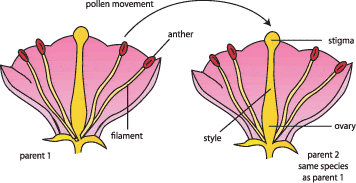
The tip of the style that has sticky hairs to trap pollen is the ___.
a)
stamen
b)
stigma
c)
ovary
d)
style
2.
The part of the stamen that produces pollen grains is the ___.
a)
anther
b)
pistil
c)
filament
d)
ovary
3.
The male reproductive structure of a flower is the ___.
a)
pistil
b)
ovary
c)
stamen
d)
ovule
4.
Which part produces pollen?
a)
A
b)
B
c)
C
d)
E
5.
Pollination can occur between flowers of the same plant. 
a)
True 
b)
False 
6.
What is the function of nectar?
a)
To provide food for the flower
b)
To attract pollinators
c)
To attract animals to disperse the fruits
d)
To produce perfumes for Man
7.
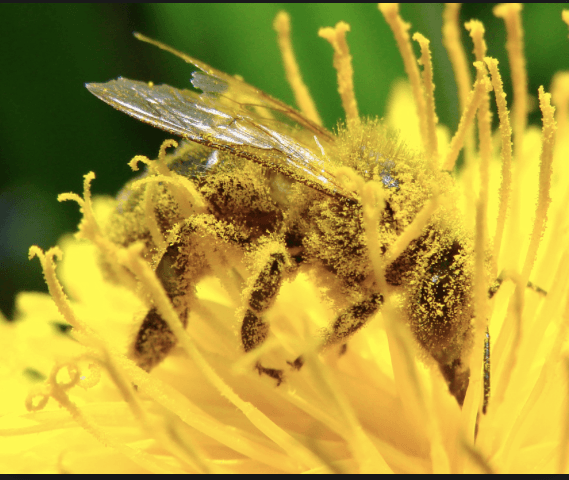
Pollination is the process by which pollen
a)
causes people to sneeze
b)
is formed inside a plant
c)
moves from stamen to stigma
d)
moves from stigma to stamen
8.
Brightly colored parts of flowers that attract insects.
a)
petals
b)
pistils
c)
stamen
d)
filaments
9.
Small grains that contain a plant's male reproductive cells.
a)
stamen
b)
pollen
c)
anther
d)
stigma
10.
What is the female part of the flower used during reproduction?
a)
Pistil
b)
Petal
c)
Stigma
d)
Stamen
11.
What is the male part of the flower used during reproduction?
a)
Pistil
b)
Stigma
c)
Stamen
d)
Pollination
12.
The stalk connecting the ovaries and stigmas.
a)
filament
b)
pistil
c)
style
d)
anther
13.
The seeds of apple would probably be disbursed by?
a)
animals
b)
wind
c)
water
d)
fire
14.
Seeds can be disbursed by animals, water, and __________ ?
a)
wind
b)
earthquakes
c)
fire
d)
blizzards
15.
Pollen comes from the male or female parts of the flower?
a)
male
b)
female
16.
__________________  is a huge industry devoted to farming, ranching, food production, and many other vocations
a)
Engineering
b)
Agriculture
c)
Construction
17.
Which of the following is most likely inherited by flowering plants?
a)
lean on a pole
b)
the ability to produce cones
c)
the ability to produce seeds
d)
forming different shapes when trimmed
18.
Which of these are characteristics of inherited traits?
a)
the ability to speak in front of a crowd
b)
having green eyes and brown hair
c)
mastering multiplication facts
d)
becoming an extrovert
19.
Which of these is not an instinctive behavior? 
a)
a bird building a nest
b)
a turtle burying its eggs
c)
a bear hibernating in winter
d)
a horse pulling a plow
20.
A person who breeds animals keeps careful records of the fur color of parents and offspring from each generation. The fur color is a trait transferred from generation to generation. What are the structures that carry the information for these traits?
a)
the skin
b)
the genes
c)
the nerves
d)
the cytoplasm
21.
True or False
Sometimes environmental factors can influence our traits.
a)
True
b)
False
22.
True or False
Only humans can pass down traits.
a)
True
b)
False
23.
True or False
Many, but not all, physical traits are inherited.
a)
True
b)
False
24.
True or False
A learned behavior is an acquired trait.
a)
True
b)
False
25.
Some birds fly south for the winter. Birds know when and where to fly because of ________________. 
a)
camouflage
b)
mimicry
c)
instinct
d)
hibernation
26.
Smelts are fish that lay their eggs in the sand on beaches. When the eggs hatch, the babies know to go to the water. This is an example of _______________________.
a)
instinct
b)
hibernation
c)
camouflage
d)
learned behavior
27.
Which of these can you change?
a)
instinct
b)
hibernation
c)
camouflaged
d)
learned behavior
28.
Which of these is an example of learned behavior? 
a)
a spider making a web 
b)
geese migrating south for the winter 
c)
birds singing to each other
d)
a service dog helping its owner
29.
Why do organisms resemble their parents? 
a)
because traits are inherited from parent to offspring 
b)
because traits are given as gifts on holidays
c)
because if they don’t look like their parents they wouldn’t match
d)
because people wouldn’t recognize their siblings if they didn’t look alike
30.
Each of the following is an acquired trait EXCEPT which one?
a)
scar
b)
purple hair
c)
long legs
d)
broken arm
31.
True or False
Only traits you can physically see areinherited.
a)
True
b)
False
32.
Each of the following is a learned behavior EXCEPT which one?
a)
speaking a second language
b)
reading
c)
writing
d)
sleeping
33.

A change in food availability

a)

Environmental Factor

b)

Genetic Factor

34.

What is an inherited Trait?

a)

Physical characteristics of organisms that are passed from parents to their offspring (young).

b)

Characteristics of organisms that are influenced by the environment.

c)

Animals have inherited characteristics that are also affected by their environment.

35.

What is an Acquired Trait?

a)

Physical characteristics of organisms that are passed from parents to their offspring (young).

b)

Characteristics of organisms that are influenced by the environment.

c)

Animals have inherited characteristics that are also affected by their environment.

36.

A cat is homeless and starves on the streets.Her ribs are showing and her fur is matted. Her kittens are rescued by a family, and have food and fresh water everyday.

a)

Inherited Traits

b)

Acquired (Environmental) Traits

c)

Inherited-Environmental Trait

37.

If a trait varies greatly within a pair of identical twins, it is mostly likely caused by what?

a)

Genetics

b)

Environment

c)

Nutrition

d)

Inherited

38.

Both genetics and environment are responsible for making you who you are.

a)

True

b)

False

39.

The surroundings in which an organism operates is called _____________________.

a)

environment

b)

stress

c)

genetics

d)

nutrition

40.

Ear shape is an example of a _______________.

a)

environment

b)

nutrition

c)

stress

d)

trait

41.

Biotic factors are

a)

Living

b)

nonliving

42.

Abiotic factors

a)

living

b)

nonliving

43.

A biotic factor that limits the size of a population would be:

a)

food

b)

space

c)

water

44.

An abiotic factor that limits a population size would be?

a)

Food

b)

predators

c)

space

d)

disease

45.

All of the organisms of the same species in an area is defined as:

a)

Community

b)

population

c)

limiting factor

d)

carrying capacity

46.

The factors that limit the size of a population are:

a)

Ecos factor

b)

carrying capacity

c)

limiting factor

d)

abiotic number

47.

What abiotic factor would plants compete for?

a)

Food

b)

Sunlight

c)

Parasites

d)

predators

48.

What are the 3 levels of organization in an ecosystem from smallest to largest?

a)

Organism, Population, Community

b)

Population, Organism, Community

c)

Organism, Community, Population

d)

Organism, Community, Population, Ecosystem

49.

An ecosystem is made up of all of the _____________ and __________ in one area.

a)

Populations, Communities

b)

Organisms, Populations

c)

Biotic, Abiotic

d)

Plants, Animals

50.

Living, or once-living, organisms in an ecosystem are....

a)

Biotic

b)

Abiotic

51.

The largest number of species an ecosystem can support.

a)

Limiting Factor

b)

Carrying Capacity

c)

Abiotic

d)

Biotic

52.

Which of these 2 are abiotic limiting factors?

a)

Water

b)

Human Involvement

c)

Disease

d)

Weather

53.
Why is a spider spinning a web an innate behavior?
a)
It learns how to spin the web from its mother.
b)
It learns how to spin a web through insight learning.  
c)
It is born knowing how to spin a web.
d)
It learns how to spin a web through observational learning.
54.
Which type of behavior is most likely to occur due to a seasonal change stimulus?
a)
migration
b)
estivation
c)
reproduction
d)
social grooming
55.
An octopus can change its color to match its surroundings. This is an example of which type of behavior?
a)
camouflage
b)
mimicry
c)
cooperative behavior
d)
estivation
56.
The behavior of some animals to attract other animals
a)
Courtship
b)
Dating
c)
Showing off
d)
Hibernation
57.
Traveling to a different region during different times of the year
a)
Migration
b)
Communication
c)
Hibernation
d)
Competition
58.
(6-3.5) In the fall, black bears eat so much that they can gain up to 68 kg of fat in just two months.Why do black bears gain so much weight?
a)
to become stronger so they can better defend themselves
b)
to prepare for migration
c)
to attract a mate
d)
to prepare for hibernation
59.
(6-3.5) Some male birds perform elaborate dances in order to attract females. This is an example of _______.
a)
camouflage
b)
insight
c)
courtship
d)
mimicry
60.
This is a behavior when certain animals travel together for protection:
a)
mimicry
b)
camouflage
c)
grouping
d)
blending
61.
A dog rolls over and gets a treat, so she rolls over again. This is an example of a...
a)
learned behavior
b)
inherited behavior
c)
physical trait
d)
instinct
62.
The following are inherited traits of humans EXCEPT...
a)
long hair
b)
long eyelashes
c)
blue eyes
d)
small dimples
63.
Which trait does a puppy inherit from its parents?
a)
fur color and pattern
b)
food brand preference
c)
obedience to owner's commands
d)
knowledge of where the treats are kept
64.
Which is an example of a learned characteristic?
a)
Color of a dog's fur
b)
A mouse successfully running a maze
c)
Color-blindness
d)
Blinking your eyes several times a minute
65.
All of the following are learned EXCEPT:
a)
reading a book
b)
sneezing
c)
using a knife and fork
d)
avoid poison ivy
66.
Smelts are fish that lay their eggs in the sand of a beach. When the eggs hatch, the babies know to go to the water. This is an example of...
a)
inherited behavior
b)
camouflage
c)
hibernation
d)
learned behavior
67.
 Which of the following is a behavior? 
 
a)
running when startled
b)
having very sharp teeth
c)
having a good sense of smell
d)
having long legs
68.
Which of the following is a learned behavior
a)
a snake slithering on the ground
b)
bees pollinating flowers
c)
a duck swimming in a pond
d)
a dog fetching a newspaper
69.

What is a pollinator?

a)

A type of plant that grows fruit

b)

Anything that moves pollen from the male to the female part of the plant

c)

A tool that farmers use to grow crops

d)

The hair on bees' knees

70.

Birds are attracted to what types of flower?

a)

color - dull white, green, or purple, odor - strong musty; emitted at night

b)

color - bright, including red and purple, odor - faint but fresh

c)

color - scarlet, orange, red, or white, odor - none

d)

color - pale and dull red, odor - strong sweet; emitted at night

71.

Bees are attracted to what types of flower?

a)

color - dull white or green, odor - none to strongly fruity

b)

color - bright white, yellow, blue, or UV, odor - fresh, mild, pleasant

c)

color - scarlet, orange, red, or white, odor - none

d)

color - pale and dull to dark brown, odor - putrid

72.

Which of the following are nocturnal pollinators?

a)

bats, moths

b)

bees, birds

c)

butterflies, flies

d)

wind, water

73.

True or False?

Plants can be pollinated by wind and water.

a)

True

b)

False

74.

Which of the following creatures are pollinators? Check all that apply.

a)

birds

b)

butterflies

c)

bats

d)

moths

75.
Which of the following is NOT a pollinator?
a)
bees
b)
humming bird
c)
fruit bat
d)
scorpion
76.

Choose all that help pollinate...


(There is more than one)

a)

bees

b)

wind

c)

animals

d)

butterflies