
 Worksheets
Classification
Total questions: 94
Worksheet time: 3hrs 39mins
An animal's qualities are listed below:
ANIMAL'S QUALITIES
● Moist skin
● Has four legs
● Lays eggs
● Breathes with lungs and gills
● Cold blooded
What type of animal is described in the box?
amphibian
fish
mammal
reptile
bird
A biologist observes that a plant specimen has
no true roots, stems, or leaves. What term would
she use to describe this plant?
vascular
flowering
wilted
non-vascular
Which of the following organisms is a vertebrate?
insect
sponge
monkey
earthworm
What trait do all mammals share?
walk upright
have an opposable thumb
have large brains
nurse their young with milk
Which vertebrate is ectothermic (cold-blooded)?
cat
chicken
human
lizard
Which term describes an animal without a
backbone?
chordate
invertebrate
protozoan
vertebrate
Although the bald cypress tree loses its leaves in
the winter, its seeds are similar to evergreen pine
trees. How are bald cypress and pine tree seeds
similar?
They are found in bulbs.
They are found in cones.
They are found in fruits.
They are found in shells.
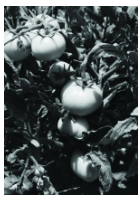
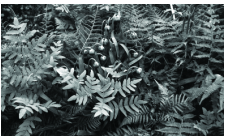
Which of the following plants produces spores?
Which of the following organisms lack vascular
tissue?
mosses
whisk ferns
pine trees
flowering plants
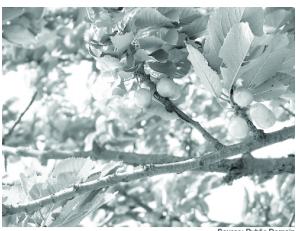
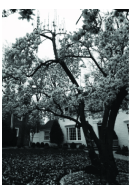
The picture above shows a cherry tree
What do cherry trees produce that helps
scientists classify them?
flowers and cones
flowers and seeds
leaves and spores
leaves and spores
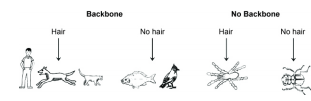
According to the classification key above, which pair of animals could be classified as mammals?
humans and dogs
birds and fish
birds and fish
cats and birds

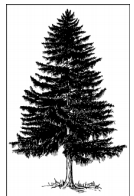
The picture above shows a hemlock tree at different times of the year.
deciduous
evergreen
spores
flower producing
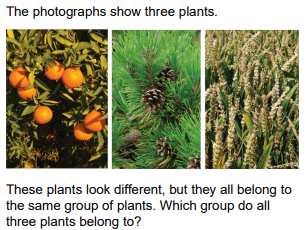
plants that produce seeds
plants that produce flowers
plants that produce spores
plants that produce needles
Insects, arachnids, worms, and mollusks all belong to which group?
vertebrate
invertebrate
classification
vascular
Fish, amphibians, reptiles, birds and mammals all
belong to which group?
vertebrate
invertebrate
bacteria
vertebrate and invertebrate
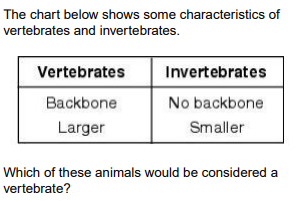
fish
clam
sponge
octopus
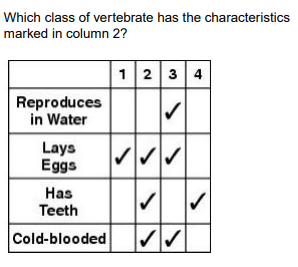
fish
bird
reptile
mammal
Organisms with a body covering of feathers are
classified as a__________.
bird
mammal
fish
reptile
Which of the following is an example of a vertebrate animal?
fly
worm
bird
starfish
Most fish have _________________ to protect their bodies.
hair
scales
feathers
skin
Which of the following statements is true of reptiles?
They are cold-blooded.
They have gills.
Their babies drink their mother's milk.
They spend part of their lives in the water and part of their lives on land.
Invertebrates do NOT have a
brain.
heart.
stomach.
backbone.
Asia keeps seeing a small animal in her backyard. She observed the animal has a backbone, four legs and a long tail, and its body is covered with scales. What is the classification for this animal?
bird
mammal
reptile
amphibian
Which group of vertebrates possesses gills, two sets of paired fins, and is generally adapted to living in water?
fish
reptiles
mammals
amphibians
Animals that are warm blooded, have body hair, and produce milk for their young are grouped into which of the following classes?
amphibians
mammal
birds
reptiles
What type of animal is a whale?
amphibian
fish
mammal
reptile
A snake has an internal skeleton, cannot breathe under water, and relies on outside sources of heat to keep its body temperature constant. A snake is which type of animal?
bird
fish
reptile
amphibian
Which vertebrate organism can breathe through its skin?
clam
frog
spider
pangolin

The picture shows a unique animal called a pangolin. The pangolin has scales, is warm-blooded, gives live birth and nurses its young. What group of animals is the pangolin mostlike?
reptiles, except it has scales
mammals, except it has scales
birds, because it nurses its young
amphibians, because they are warm-blooded
The platypus has hair and makes milk for its young. To which group of animals does the platypus belong?
amphibians
birds
mammals
reptiles

All of these animals are grouped together. What characteristics do the animals MOST likely have in common?
eye color
what they eat
hair
feathers
Tulips and oak tree are both plants that look different. However, they both belong to the classification of plants that make
leaves
pine cones
flowers
seeds
Ms. Daley takes her class on a field trip to a pond. The class sees a bald eagle and a salamander near the pond. How are these two animals alike?
They both have offspring that is very different from the adults.
They both lay eggs.
They both are warm-blooded.
They both are able to breathe through their skin.
If your teacher gave you the characteristics of an animal: moist skin, lives in the water when they are young and land as an adult, lays eggs. What animal is the teacher MOST likely talking about?
Fish
Aligator
Frog
Turkey
If you and your friends find a new species of plant in the woods. What would be the BEST way to identify the plant?
compare it to other plants
develop a theory about the plant
disect the plant
determine the best way to grow the plant at home.
Which group of plants would be considered spore producing?
Tulip, sunflower, rose
Pine tree, oak tree, apple tree
Moss, fern, tiger fern
Shrubs, daisies, sweet gum trees
Which animal gives birth the same way as a dog?
Dolphin
Gold fish
Dove
Lizard
How are sharks and dolphins similar and different?
Similar: they have fins
Different: sharks are fish and dolphins are mammals
Similar: they both lay eggs
Different: Dolphins are fish and sharks are mammals
Similar: they both are fish
Different: Sharks eat dolphins and dolphins eat plants
Similar: they both have a blow holes
Different: sharks lay eggs and dolphins give live birth

This class has hair or fur and is the ONLY vertebrate that feed milk to their young.
Fish
Amphibians
Insects
Mammals


Flowering plants are called:
pretty
monocotyledons
dicotyledons
angiosperms
Plants that reproduce from seeds can be further divided into:
monocots & dicots
angiosperms & dicotyledons
conifers & flowering plants
spores & conifers
Conifers (pine trees) reproduce by making:
male & female cones
spores
angiosperms
runners
Which of the following plants do NOT reproduce using spores?
Algae
Strawberries
Ferns
Mosses


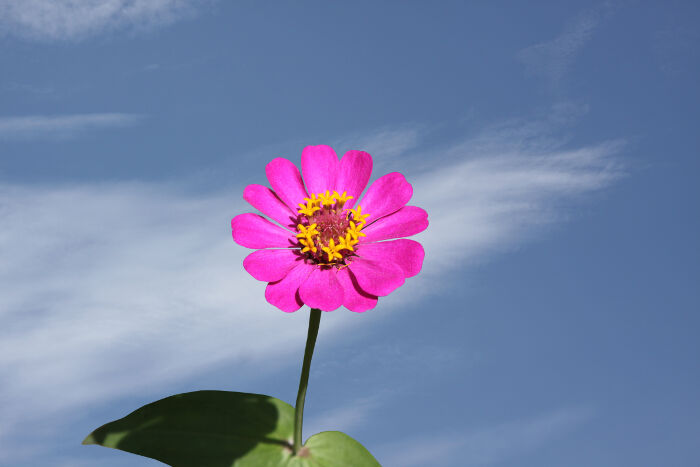


Which plant below would scientist group with watermelon plants?
fern
rose
pine tree
apple tree

Classify the plant.
Flowering
Non-Flowering

