
 Worksheets
Exploring Energy and Matter
Total questions: 95
Worksheet time: 2hrs 32mins
What is energy transfer in an ecosystem?
Energy transfer is the conversion of energy into heat.
Energy transfer in an ecosystem refers to the movement of energy through trophic levels, from producers to consumers and decomposers.
Energy transfer occurs only in aquatic ecosystems.
Energy transfer is the process of photosynthesis in plants.
Name one way energy is transformed in nature.
Nuclear fission
Respiration
Combustion
Photosynthesis
What are the three main states of matter?
solid, liquid, plasma
plasma, vapor, foam
solid, liquid, gas
gas, liquid, crystal
How does energy conservation work in ecosystems?
Energy conservation in ecosystems means energy is created and not lost.
Energy is only transferred from consumers to producers in ecosystems.
Energy conservation in ecosystems has no impact on food chains.
Energy conservation in ecosystems involves the transfer of energy from producers to consumers, with energy loss at each trophic level.
What happens to the energy when ice melts?
The energy is released as cold, causing the ice to freeze further.
The energy remains constant, with no change in temperature.
The energy is converted into light, illuminating the surroundings.
The energy is absorbed as heat, facilitating the phase change from solid to liquid.
What is an example of kinetic energy?
A parked bicycle
A moving car
A frozen lake
A stationary rock
How does temperature affect the state of matter?
Temperature only affects gases, not liquids or solids.
Temperature has no effect on the state of matter.
Higher temperatures always lead to solid states.
Temperature influences the state of matter by changing the energy and movement of particles, leading to phase transitions.
What is potential energy?
Potential energy is the energy stored in an object due to its position or state.
Potential energy is the energy of an object in motion.
Potential energy is the energy released during a chemical reaction.
Kinetic energy is the energy of motion.
List one renewable energy source and its use.
Wind energy
Geothermal energy
Hydropower
Solar energy
What is the role of producers in an energy ecosystem?
Producers are primarily responsible for decomposing organic matter.
Producers rely on other organisms for energy and nutrients.
Producers consume chemical energy from other organisms.
Producers convert sunlight into chemical energy, forming the base of the food chain and supporting all other organisms.
How does energy flow through a food chain?
Energy is lost only at the producer level.
Energy is constant at all trophic levels.
Energy flows from producers to consumers in a food chain, with energy loss at each trophic level.
Energy flows only from consumers to producers.
What happens to the energy in a chemical reaction?
Energy is created from nothing in a chemical reaction.
Energy remains constant and does not change during a reaction.
Energy is only released and never absorbed in a chemical reaction.
Energy is absorbed or released during a chemical reaction.
What state of matter has a definite shape and volume?
Gas
Plasma
Solid
Liquid
How does solar energy impact the environment?
The production of solar panels has no environmental impact.
Solar energy increases greenhouse gas emissions significantly.
Solar energy has a positive impact by reducing pollution and greenhouse gas emissions, but it can have negative effects during production and disposal of solar panels.
Solar energy contributes to deforestation and habitat loss.
What is the difference between thermal energy and heat?
Thermal energy is the total energy of particles, whereas heat is the transfer of that energy.
Thermal energy is only related to temperature.
Heat is the total energy of particles.
Thermal energy is the same as heat.
An example of a decomposer is ____________________.
eagle
grass
frog
mushroom
An example of a producer is ____________________.
cricket
mushroom
grass
spider
An example of a consumer is ____________________.
fungi
cricket
flower
mushroom
All energy in ecosystems comes from _________________.
the Earth
the soil
the rain
the sun
Which of the following choices is two consumers?
grass and grasshopper
rabbit and dog
mushroom and wolf
turtle and flower
An example of a carnivore is a ____________________.
giraffe
pig
tiger
human
What is the role of a producer?
to eat consumers
provide food for carnivores
to make food for themselves and other organisms
to make carbon dioxide & oxygen
Which of the following statements best describes a decomposer?
They are abiotic and only eat producers that are biotic.
They are abiotic and eat both plants and animals.
They are biotic and break down dead material.
They consume other biotic things for energy.
In an ecosystem, many birds depend on insects. If pesticide is spread to control the insect population, which of the following will most likely happen?
The bird population will increase.
The bird population will decrease.
The bird population will increase then decrease.
The bird population will decrease then increase.
Animals that hunt other animals to eat are called
prey
omnivores
predators
herbivores
A fly is trapped in a spider's web. Which term describes the fly in this situation?
producer
consumer
predator
prey
A food chain shows the flow of
animals
water
energy
food
The arrows in a food chain or food web represent
the direction an organism moves
the flow of energy
the size of the organisms
the weight of the organisms
What is bacteria?
decomposer
herbivore
carnivore
consumer
In a food web, which population would increase the most if insects were eliminated?
decomposers
producers
primary comsumers
secondary consumers
If these organisms were arranged in a food pyramid, which organism would have the least amount of total energy available?
shrub
insect
lizard
coyote

Use the food chain to answer the question. If the mouse population dies out, what will happen to the owl population.
It will decrease because of the loss of their food source.
It will increase because there will be more grasshoppers.
It will decrease because they do the mouse.
It will increase because of the loss of their food source.
What is an omnivore?
They only eat animals (meat).
They only eat plants.
They eat plants and animals.
They eat only dead plants and animals.


The main source of energy for all of earth's food chains is the...
sun
water
nutrients
producers
Plants produce their own food through...
symbiosis
photosynthesis
genetics
magic
All food chains begin with a...
grass
producer
consumer
decomposer
The second link in a food chain is a...
consumer
producer
herbivore
carnivore
A herbivore is a...
consumer that eats both plants and other animals
consumer that only eats other animals
consumer that only eats plants
A herbivore is also known as...
primary consumer
secondary consumer
tertiary consumer
The second consumer in the food chain is called...
primary consumer
secondary consumer
tertiary consumer
The secondary consumer is a carnivore which means...
a consumer that eats both plants and other animals
a consumer that eats only plants
a consumer that eats only other animals
The third consumer in the food chain is called...
primary consumer
secondary consumer
tertiary consumer
An omnivore is a...
consumer that eats both plants and other animals
consumer that eats only other animals
consumer that eats only plants
Animals that are not hunted and eaten by any animals are called...
herbivores
carnivores
omnivores
apex predators
The level of apex predators in the food chain is...
first
second
tertiary
top
Apex predators contribute to the food chain by...
being eaten by other animals
decomposers breaking down their bodies when they die
producing their own food
Examples of decomposers are...
plants
animals
bacteria and fungi
The level of humans in the food chain is...
first
second
tertiary
top

The original source of energy for a food web is...
plants
sun
producers
decomposers

Decomposers get energy from...
the sun
eating plants
eating animals
dead things and waste

Producers are ...
plants
able to do photosynthesis
also called autotrophs
all of these are true

Arrows in a food web represent...
eating
sunlight
energy
matter

Photosynthesis is important because...
it makes carbon dioxide
it makes food for the food webs
it makes water
it's not important
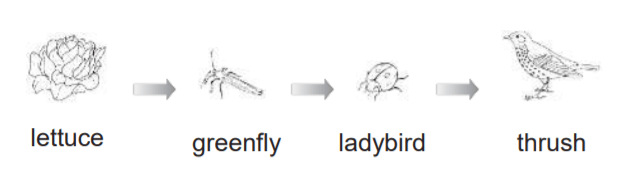
Who is the producer?
lettuce
greenfly
ladybird
thrush

What is a producer?
an organism that gets energy from eating other organisms
an organisms that uses sunlight to make its own food
an organism that gets energy from eating dead organisms, non-living material or waste

An animal that hunts other animals for food is a ___________
herbivore
predator
prey
omnivore

What is a herbivore?
an animal that gets energy from eating other animals
an organism that gets energy from eating only plants
an animal that gets energy by eating both plants and other animals

An organism that gets energy from eating other organisms is a ______________
producer
consumer
decomposer

A connection of food chains with many food energy paths in an ecosystem is a ____________
ecosystem
food web
environment

An animal that is hunted and eaten for food is a
predator
prey

What is a carnivore?
an animal that gets energy by eating other animals
An animal that gets energy by eating only plants
an animal that gets energy by eating both plants and animals

An animal that gets energy from eating both plants and animals is a(n)
herbivore
carnivore
omnivore

Which of the following is NOT a consumer
grass
dog
shark
fish

Which of the following is a living part of the ecosystem?
Air
Sunlight
Mushroom
Soil

