wayground logo

Free Printable Worksheets

Font size

S
M
L
XL
Worksheets

Physics Lab Midterm Exam 2021-2022

Total questions: 123

Worksheet time: 6hrs 9mins

Name
Class
Date
1.

A force is a ________________________ that acts on an object.

a)

push

b)

pull

c)

push or pull

2.

A force that pushes back against one object moving past another object

a)

gravity

b)

friction

c)

inertia

d)

mass

3.

Acceleration is best described as a change in an object's

a)

velocity

b)

speed

c)

direction

4.

50 miles per hour, West

a)

acceleration

b)

speed

c)

velocity

d)

gravity

5.

An object at rest will stay at rest unless an unbalanced force acts on it.

a)

True

b)

False

6.

An object that is changing position (location) is

a)

at rest

b)

in motion

7.

An object's tendency to resist (not) change its state of motion.

a)

gravity

b)

force

c)

inertia

d)

friction

8.

Which of the following is not a force?

a)

gravity

b)

velocity

c)

friction

d)

push

9.

If an object in motion is not acted on by an unbalanced force, it will continue with the same speed and direction.

a)

True

b)

False

10.

If an object is speeding up, it is accelerating.

a)

True

b)

False

11.

The rate or measure of how fast an object is moving

a)

velocity

b)

force

c)

speed

d)

acceleration

12.

The measure of how fast an object is moving AND what direction it is moving

a)

velocity

b)

force

c)

speed

d)

acceleration

13.

Which of the following will reduce (make less) friction?

a)

make a surface rough

b)

make a surface smooth

14.

If an object changes direction, it experiences acceleration.

a)

True

b)

False

15.
If an object has a kinetic energy, it must be _____.
a)
at rest
b)
in motion
16.
____ is energy possessed by an object due to its motion or movement.
a)
thermal energy
b)
potential energy
c)
kinetic energy
d)
solar energy
17.
If an external force is applied, the velocity will change because of the force.
a)
True
b)
False
18.
The tendency of an object to resist change in motion.
a)
Force
b)
Motion
c)
Friction
d)
Inertia
19.
Objects with more mass or heavier have LESS inertia.
a)
True
b)
False
20.
Lighter objects have LESSER inertia than heavier objects.
a)
True
b)
False
21.
____ is a force that occurs when an object rubs against another object.
a)
Motion
b)
Friction
c)
Velocity
d)
Speed
22.
Friction can make a moving object slow down or stop.
a)
True
b)
False
23.
_____ is an object’s speed in a given direction.
a)
Friction
b)
Motion
c)
Speed
d)
Velocity
24.
____ is the distance traveled divided by the time of travel.
a)
Velocity
b)
Speed
c)
Mass
d)
Volume
25.
Jasmyn can run 50 yards in 10 seconds and Jaylah can run 100 yards in 20 seconds. Who has a faster speed? (speed is distance divided by time; S = d/t)
a)
Jasmyn
b)
Jaylah
c)
Both have the same speed.
26.
Scalar quantity has ____.
a)
magnitude (size)
b)
magnitude and direction
27.
Vector quantity has magnitude (size) and direction.
a)
True
b)
False
28.

A book is lying at rest on a table. The book will remain there at rest because

a)

there is a net force but the book has too much inertia

b)

there are no forces acting on it at all

c)

there is no net force on the book

d)

there is a net force, but the book is too heavy to move

29.

A hockey puck slides on ice at constant velocity. What is the net force acting on the puck?

a)

equal to its weight

b)

zero

c)

less than its weight but more than zero

d)

depends on the speed of the puck

30.
If a force of 26 N is exerted on two balls, one with a mass of 0.52 kg and the other with a mass of 0.78 kg, which ball will have the greater acceleration?  (F=ma)
a)
The one with a mass of .78 kg will have the greatest acceleration.
b)
The one with a mass of .52 kg will have the greatest acceleration.
c)
They will both accelerate at the same rate.
31.

If you double the mass of an object but apply the same force apply on it, the acceleration will __________________.

a)

double

b)

cut in half

c)

the same

d)

zero

32.
What kind(s) of objects have inertia?
a)
all objects with mass
b)
only objects at rest
c)
only objects in motion
d)
only objects whose motion is being changed
33.
Which one needs a greater net force to move, a kilogram of feathers or a kilogram of iron? 
a)
feathers 
b)
iron
c)
same
d)
depends on their friction
34.

A 20 kg bike accelerates at 10 m/s2. What was the net force?

a)

25 Newtons

b)

20 Newtons

c)

200 Newtons

d)

10 Newtons

35.

Which one of Newton’s Laws of Motion best explains why the dishes do not move when the tablecloth is removed?

a)

Newton's 1st Law

b)

Newton's 2nd Law

c)

Newton's 3rd Law

36.

Which arrow shows the direction of the friction force?

a)

A

b)

B

c)

C

d)

D

37.

45 m/s2 represents the ___________________________.

a)

mass

b)

force

c)

acceleration

d)

weight

38.

A car speeding up to get through a yellow traffic light is an example of .... (select all that apply)

a)

balanced Forces

b)

unbalanced Forces

c)

acceleration

39.

Which type of force(s) will cause a change in an object's motion?

a)

gravity

b)

zero net force

c)

balanced forces

d)

unbalanced forces

40.

Newton's third law states that any action will have a(n) _______ and ______ reaction.

a)

Equal and similar

b)

Equal and opposite

c)

Equal and different

d)

Greater and opposite

41.

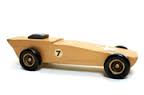
What law does this equation apply to?

a)

Newton's first law of motion

b)

Newton's second law of motion

c)

Newton's third law of motion

d)

None of these

42.

Which of Newton's laws are illustrated with a rocket launch?

a)

1st Law, the Law of Inertia.

b)

2nd Law, the Law of Acceleration.

c)

3rd Law, the Law of Action - Reaction

43.

A bike accelerates at 10 m/s2 when a force of 50N is applied. What is the mass of the bike and its rider?

a)

25 kg

b)

200 kg

c)

20 kg

d)

5 kg

44.

What is the standard unit that force is measured in?

a)

Newtons

b)

pounds

c)

grams

d)

meters

45.
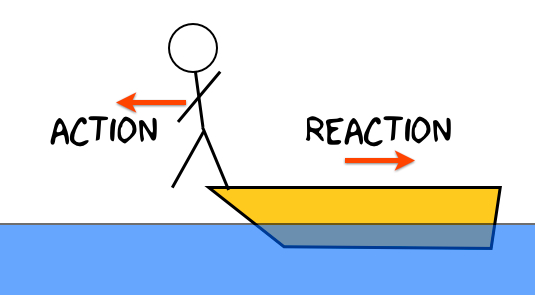
What law of motion does this picture represent?
a)
Newtons 1st law
b)
Newtons 4th law 
c)
Newtons 3rd law 
d)
Newtons 2nd law
46.
A car travels 90 meters due north in 15 seconds. Then the car turns around and travels 40 meters due south.  What is the magnitude and direction  of the car's resultant displacement?  
a)
40 metres, South
b)
50 metres, South
c)
50 metres, North
d)
40 metres, North 
47.
Which statement describes a vector?
a)
It has magnitude but no direction
b)
It has direction but no magnitude
c)
It has both direction and magnitude
d)
It has constant magnitude but no
 direction
48.
In practice A of the figure, What is  the magnitude of the  resultant displacement?
a)
5 km 
b)
8 km
c)
11 km
d)
15 km
49.
In practice A of the figure, what is the direction of the resultant displacement?
a)
63 degrees, South of East
b)
63 degrees, North of West
c)
27 degrees, North of West
d)
27 degrees, South of West
50.
In practice B of the figure, which displacement is the horizontal component?
a)
30 km, East
b)
30 km, West
c)
40 km, North
d)
40 km, South
51.
Is this a scalar quantity or a vector quantity?
Wind blowing at 20 knots
a)
Scalar
b)
Vector
52.
Is this a scalar quantity or a vector quantity?
A deer running 15 meters per second due west

a)
Scalar
b)
Vector
53.
If a boomerang is thrown 20 m in a straight line and returns exactly to the spot it was thrown what is its displacement?
a)
20m
b)
40m
c)
0m
d)
-20m
54.
If a car moves 12 km North, 19 km East, and 12 km South, what is its displacement?
a)
12 km
b)
19 km, East
c)
31 km
d)
43 km, East
55.
Which of these is not a vector quantity? 
a)
displacement 
b)
time
c)
velocity 
d)
acceleration
56.
Which of the following quantities are vectors?
a)
speed, velocity, acceleration
b)
velocity, acceleration, force
c)
force, acceleration, mass
d)
length, mass, time
57.
The _______ of two or more vectors is the sum of the vectors.
a)
components
b)
scalar
c)
resultant
d)
magnitude
58.
What is the net force?
100 N        230 N
<------        --------->
a)
30 N to the right
b)
230 N to the right
c)
130 N to the right
d)
This is a balanced force
59.
What is the SI unit of measurement for force?
a)
lbf
b)
Kilograms
c)
Newtons
d)
m/sec^2
60.
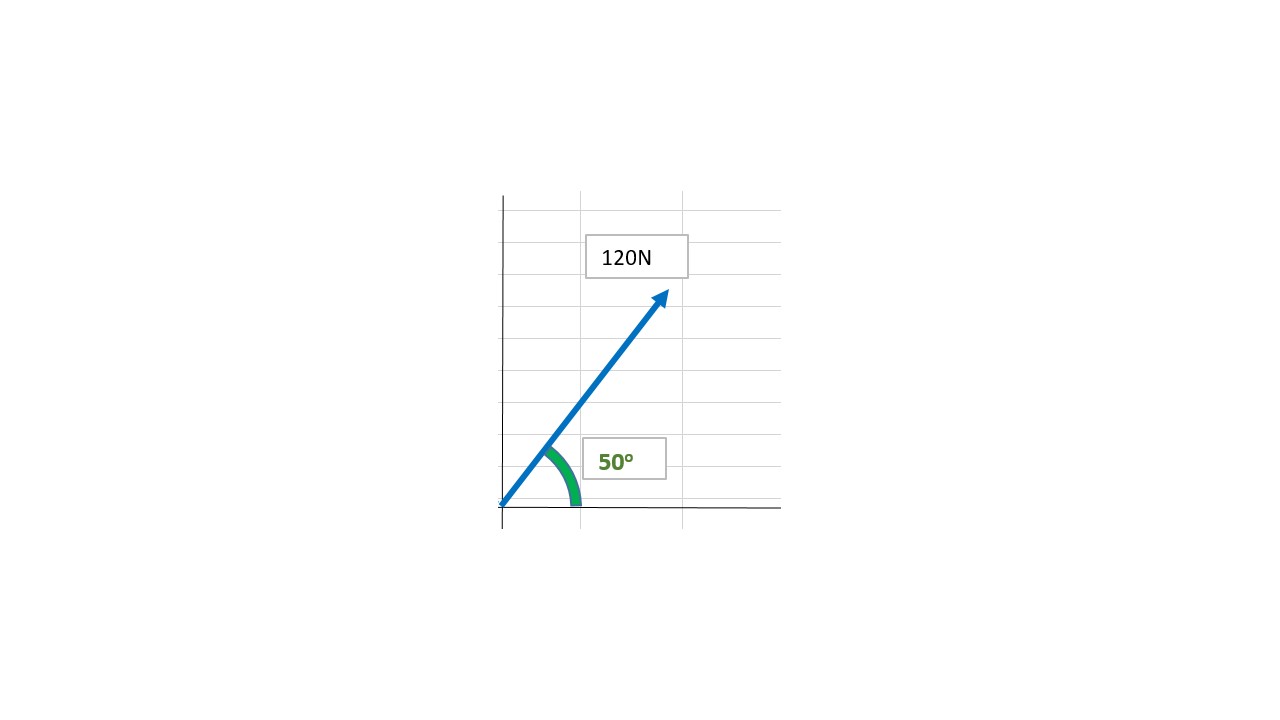
What is the x component of the vector given in the diagram?
a)
77N
b)
92N
c)
120N
d)
60N
61.
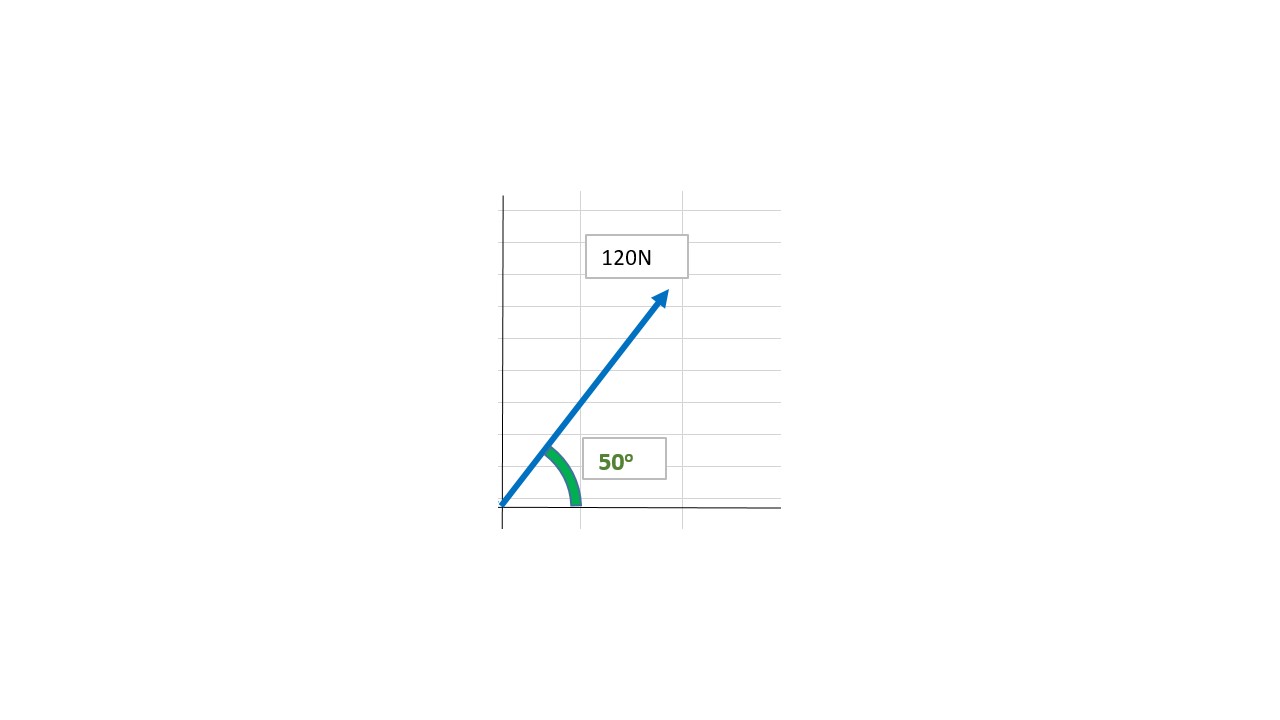
What is the y component of the vector given in the diagram?
a)
77N
b)
92N
c)
120N
d)
60N
62.

what is the speed of an object at rest?

a)

0.0 m/s

b)

1.0 m/s

c)

9.81 m/s

d)

-9.81 m/s2

63.

Acceleration is

a)

displacement

b)

the rate of change of displacement

c)

velocity

d)

the rate of change of velocity

64.

Velocity is (select all that apply)

a)

speed with a direction

b)

a vector

c)

rate of change of displacement

d)

rate of change of acceleration

65.

Displacement is (select all that apply)

a)

how far an object is from where it started

b)

how far an object has traveled

c)

a scalar

d)

a vector

66.

distance is (select all that apply)

a)

a scalar

b)

how far an object moves is all of its travels

c)

always positive

d)

how far an object is from where it started

67.

A shopping cart given an initial velocity of 2.0 m/s undergoes a constant acceleration of 3.0 m/s2. What is the magnitude of the cart's displacement after the first 4.0 s of its motion?

a)

10.0 m

b)

55 m

c)

32 m

d)

80.0 m

68.

A curious kitten pushes a ball of yarn at rest with its nose displacing the ball of yarn 15.4 cm in 3.00 s. What is the acceleration of the ball of yarn?

a)

4.38 cm/s2

b)

3.42 cm/s2

c)

46.2 cm/s2

d)

18.4 cm/s2

69.

A rock is thrown straight upward with an initial velocity of 24.5 m/s where the downward acceleration due to gravity is -9.81 m/s2. What is the rock’s displacement after 1.00 s?

a)

9.81 m

b)

19.6 m

c)

24.5 m

d)

29.4 m

70.

Human reaction time is usually about 0.20 s. If your lab partner holds a ruler between your finger and thumb and releases it without warning, how far can you expect the ruler to fall before you catch it?

a)

4.0 cm

b)

9.8 cm

c)

16.0 cm

d)

19.6 cm

71.

A runner moves 40 m to the right and then 10 m to the left. What is the runner’s displacement after the two moves?

a)

30 m to the right

b)

40 m to the right

c)

50 m

d)

30 m

72.

What is the standard SI unit for acceleration?

a)

m/s

b)

m/s 2

c)

m

d)

s

73.

What is the standard SI unit for distance?

a)

m/s

b)

m/s 2

c)

m

d)

s

74.

select all of the properties that are scalars

a)

distance

b)

time

c)

temperature

d)

speed

e)

displacement

75.

Select all of the properties that are vectors

a)

acceleration

b)

time

c)

velocity

d)

displacement

76.

a vector is a quantity with

a)

magnitude and direction

b)

magnitude or direction

c)

magnitude only

d)

direction only

77.

In one-dimensional motion, the average speed of an object that moves from one place to another and then back to its original place has which of the following properties?

a)

It is positive.

b)

It is negative.

c)

It is zero.

d)

It can be positive, negative, or zero.

e)

It isn't zero

78.

A cheetah can run at approximately 100 km/hr and a gazelle at 80.0 km/hr. If both animals are running at full speed, with the gazelle 70.0 m ahead, how long before the cheetah catches its prey?

a)

12.6 s

b)

25.2 s

c)

6.30 s

d)

10.7 s

e)

6.30 s d. 10.7 s e. 20.3 s

79.

An automobile driver puts on the brakes and decelerates from 30.0 m/s to zero in 10.0 s. What distance does the car travel?

a)

150 m

b)

196 m

c)

336 m

d)

392 m

e)

421 m

80.

A rock, released at rest from the top of a tower, hits the ground after 1.5 s. What is the speed of the rock as it hits the ground? (g = 9.8 m/s2 and air resistance is negligible)

a)

15 m/s

b)

20 m/s

c)

31 m/s

d)

39 m/s

e)

40 m/s

81.
What is the displacement of an object at rest?
a)
0 m
b)
1 m
c)
9.8 m
d)
9.81 m
82.

A trucker drives with an average velocity of 27 m/s towards the east on a perfectly straight highway. What will the trucker's displacement be after 2 minutes?

a)

97 m; east

b)

190 m; east

c)

1600 m; east

d)

3200 m; east

83.
A race car accelerates from 0 m/s to 30 m/s with a 45 m displacement. What is the vehicle's acceleration?
a)
2 m/s2
b)
5 m/s2
c)
10 m/s2
d)
15 m/s2
84.
What is another name for free fall acceleration?
a)
Displacement
b)
Gravitational Acceleration
c)
Instantaneous Acceleration
d)
Negative Velocity
85.

what is the speed of an object at rest?

a)

0.0 m/s

b)

1.0 m/s

c)

9.81 m/s

d)

-9.81 m/s2

86.

Acceleration is

a)

displacement

b)

the rate of change of displacement

c)

velocity

d)

the rate of change of velocity

87.

Velocity is (select all that apply)

a)

speed with a direction

b)

a vector

c)

rate of change of displacement

d)

rate of change of acceleration

88.

Displacement is (select all that apply)

a)

how far an object is from where it started

b)

how far an object has traveled

c)

a scalar

d)

a vector

89.

distance is (select all that apply)

a)

a scalar

b)

how far an object moves is all of its travels

c)

always positive

d)

how far an object is from where it started

90.

A shopping cart given an initial velocity of 2.0 m/s undergoes a constant acceleration of 3.0 m/s2. What is the magnitude of the cart's displacement after the first 4.0 s of its motion?

a)

10.0 m

b)

55 m

c)

32 m

d)

80.0 m

91.

A curious kitten pushes a ball of yarn at rest with its nose displacing the ball of yarn 15.4 cm in 3.00 s. What is the acceleration of the ball of yarn?

a)

4.38 cm/s2

b)

3.42 cm/s2

c)

46.2 cm/s2

d)

18.4 cm/s2

92.

A rock is thrown straight upward with an initial velocity of 24.5 m/s where the downward acceleration due to gravity is -9.81 m/s2. What is the rock’s displacement after 1.00 s?

a)

9.81 m

b)

19.6 m

c)

24.5 m

d)

29.4 m

93.

Human reaction time is usually about 0.20 s. If your lab partner holds a ruler between your finger and thumb and releases it without warning, how far can you expect the ruler to fall before you catch it?

a)

4.0 cm

b)

9.8 cm

c)

16.0 cm

d)

19.6 cm

94.

A runner moves 40 m to the right and then 10 m to the left. What is the runner’s displacement after the two moves?

a)

30 m to the right

b)

40 m to the right

c)

50 m

d)

30 m

95.

What is the standard SI unit for acceleration?

a)

m/s

b)

m/s 2

c)

m

d)

s

96.

What is the standard SI unit for distance?

a)

m/s

b)

m/s 2

c)

m

d)

s

97.

select all of the properties that are scalars

a)

distance

b)

time

c)

temperature

d)

speed

e)

displacement

98.

Select all of the properties that are vectors

a)

acceleration

b)

time

c)

velocity

d)

displacement

99.

a vector is a quantity with

a)

magnitude and direction

b)

magnitude or direction

c)

magnitude only

d)

direction only

100.

In one-dimensional motion, the average speed of an object that moves from one place to another and then back to its original place has which of the following properties?

a)

It is positive.

b)

It is negative.

c)

It is zero.

d)

It can be positive, negative, or zero.

e)

It isn't zero

101.

A cheetah can run at approximately 100 km/hr and a gazelle at 80.0 km/hr. If both animals are running at full speed, with the gazelle 70.0 m ahead, how long before the cheetah catches its prey?

a)

12.6 s

b)

25.2 s

c)

6.30 s

d)

10.7 s

e)

6.30 s d. 10.7 s e. 20.3 s

102.

An automobile driver puts on the brakes and decelerates from 30.0 m/s to zero in 10.0 s. What distance does the car travel?

a)

150 m

b)

196 m

c)

336 m

d)

392 m

e)

421 m

103.

A rock, released at rest from the top of a tower, hits the ground after 1.5 s. What is the speed of the rock as it hits the ground? (g = 9.8 m/s2 and air resistance is negligible)

a)

15 m/s

b)

20 m/s

c)

31 m/s

d)

39 m/s

e)

40 m/s

104.
What is the displacement of an object at rest?
a)
0 m
b)
1 m
c)
9.8 m
d)
9.81 m
105.

A trucker drives with an average velocity of 27 m/s towards the east on a perfectly straight highway. What will the trucker's displacement be after 2 minutes?

a)

97 m; east

b)

190 m; east

c)

1600 m; east

d)

3200 m; east

106.
A race car accelerates from 0 m/s to 30 m/s with a 45 m displacement. What is the vehicle's acceleration?
a)
2 m/s2
b)
5 m/s2
c)
10 m/s2
d)
15 m/s2
107.
What is another name for free fall acceleration?
a)
Displacement
b)
Gravitational Acceleration
c)
Instantaneous Acceleration
d)
Negative Velocity
108.
A man walks 30 meters South, 25 meters West, 50 meters North, and 15 meters East in 80 seconds. What was his displacement?
a)
35.4 meters NW
b)
22.4 meters SE
c)
119 meters
d)
22.4 meters NW
109.
A man walks 30 meters South, 25 meters West, 50 meters North, and 15 meters East in 80 seconds. What was his total distance?
a)
40 meters
b)
22.4 meters
c)
30 meters
d)
120 meters
110.
A man walks 30 meters South, 25 meters West, 50 meters North, and 15 meters East in 80 seconds. What was the average velocity that he traveled?
a)
0.44 m/s NW
b)
1.5 m/s SW
c)
1/5 m/s NW
d)
0.28 m/s NW
111.
The result of adding two vectors together is called the?
a)
independent vector
b)
resultant vector
c)
directional vector
d)
manipulated vector
112.
At the instant a ball is thrown horizontally, an identical ball is dropped from the same height. Which ball hits the ground first? (no air resistance)
a)
the horizontally thrown ball
b)
they both hit the ground at the same time
c)
the dropped ball
113.
The diagram represents the path of a car that is driven off a cliff. Neglecting air resistance, the horizontal component of the velocity at A is _______ the horizontal component of the velocity at B
a)
smaller than
b)
greater than
c)
the same as
d)
can not be determined
114.
According to the picture, which points is the speed of the projectile the same?
a)
B and E
b)
A and E
c)
B and D
d)
Both A and E, B and D
115.
In the absence of air resistance, the angle at which a thrown ball will go the farthest is?
a)
60 degrees
b)
45 degrees
c)
15 degrees
d)
30 degrees
116.
The cannon fires at 45 degrees with a set velocity. If the angle of the projectile is raised to 75 degrees, what would happen to the height and range of the projectile's path?
a)
The projectile would travel to a greater height and have a longer range.
b)
The projectile would travel to a lower height and have a smaller range.
c)
The projectile would travel to a greater height and have a smaller range.
d)
The projectile would travel to a greater height and have the same range.
117.
A ball is thrown straight upward at 20 m/s. With no air resistance, the ball will return to the thrower's hand with a speed of?
a)
20 m/s
b)
40 m/s
c)
80 m/s
d)
0 m/s
118.
The picture shows two objects that were dropped and recorded with a stroboscopic camera. The best explanation for the results is that object A
a)
has less air resistance
b)
was dropped from a greater height
c)
has a smaller mass
d)
accelerated more slowly
119.
What is the path of a projectile?
a)
Wavy line
b)
Parabola
c)
Hyperbola
d)
Projectiles don't follow a predictable path.
120.
Which of the following exhibits parabolic motion?
a)
A person diving into a pool from a diving board
b)
A space shuttle orbiting Earth at a constant velocity
c)
A leaf falling from a tree
d)
A train moving along a flat track
121.
Which of the following does NOT exhibit parabolic motion?
a)
A frog jumping from land into water
b)
A basketball thrown towards a hoop
c)
A flat piece of paper released from a window
d)
A baseball thrown to home plate
122.
Which of the following is a physical quantity that has a magnitude but no direction?
a)
Vector
b)
Scalar
c)
Resultant
d)
Frame of Reference
123.
Identify the following quantities as scalar or vector: the mass of an object, the number of hairs on a dog, an airplane's velocity.
a)
Vector, Scalar, Scalar
b)
Scalar, Scalar, Vector
c)
Vector, Scalar, Scalar
d)
Scalar, Vector, Vector