
NEW
Font size
 Worksheets
STAAR BIOLOGY - EVOLUTION (big adaptive set)
Total questions: 60
Worksheet time: 3hrs 10mins

Why do we use the system of taxonomy for classifying organisms?
to classify animals based on their fur color
to organize organisms based on their ability to reproduce
classify organisms based on their height
to avoid confusion and have the same name for an animal

The scientific name of an organism contains which two levels?
phylum and species
domain and kingdom
genus and species
order and domain
Two animals in which of the following groups would be the most closely related to each other?
domain
species
genus
order
Two animals in which of the following groups would be the least related to eachother?
class
order
domain
species
Animals in different species cannot do what with each other?
fight eachother
eat eachother
growl at eachother
reproduce successfully

What are homologous structures?
different ATP synthesis mechanisms
DNA similarities
different bone structures
similar bone structures in different species (evidence of common ancestor)
Two animals that are closely related would demonstrate which of the following?
low amounts of their DNA sequence in common
high amounts of their DNA sequence in common
similar methods of flying
the same type of habitat

Cows and horses both have hooves on their feet. Which of the following conclusions could be made?
cows descended from a fish
cows and horses can reproduce with each other successfully
cows and horses are in the same species
cows and horses share a common ancestor

Kangaroos and koalas are marsupials that carry their offspring in a pouch. Which of the following conclusions could be made about these two species?
kangaroos descended from birds
kangaroos and koalas share a common ancestor
female kangaroos can successfully mate with male koalas
koalas have the exact same DNA sequence as kangaroos
What is an adaptation?
a trait that you can acquire in your lifetime to help you survive
an inherited trait that helps you survive and reproduce
a trait that disappears when you are 15 years old
When an animal changes and tries to adapt
Which of the following best describes evolution?
spermocytes disfigure and destroy their spermotaphores
individual animals change over time
individual animals try really hard to grow wings and adapt
populations change over time, not individuals

Which of the following can be concluded from the fossil record of horse relatives?
horses cannot reproduce successfully with other mammals
horses evolved to dominate the aquatic ecosystem
evolution is a slow and gradual process that takes a long time
evolution occurs extremely rapidly in all species
If a scientist is trying to prove two animals share a common ancestor, what is the best piece of evidence they could use?
biological records showing they both had the same predator
fossils being discovered in the same location
fossils showing they both had teeth
similar nitrogen base sequences of DNA in both animals

Which of the following will happen to the giraffe population in a few years?
the genes for long necks will increase in frequency
the genes for short necks will increase in frequency
the short neck giraffes will start trying to grow longer necks
the long neck genes will disappear from the population

This is an example of which of the following?
active transport
natural seleciton
homologous structures
common ancestry

Which giraffe is more fit for the environment?
the dead one
the tree
short neck
long neck

Which of the following levels would indicate the closest relationship? (similar DNA)
kingdom
order
genus
phylum
The scientific name for an animal consists of:
order and class
domain and phylum
species and kingdom
genus and species
The scientific name for the buffalo is Syncerus caffer. What is the species name for the buffalo?
caffer
syncerus
buffalo

The concept of gene flow is demonstrated when a cow is driven off from its herd, joinsanother herd, and reproduces. When the cow contributes to the gene pool of the new herd, which of these most likely increases?
Natural selection
Genetic variation
Environmental fitness
Reproductive mutations

Some organisms have genes that improve their ability to survive and reproduce. If the genes also help their offspring survive and reproduce, then which of the following will most likely increase?
The frequency of the genes in one individual
The frequency of the genes in the population
The number of genes in one chromosome
The number of genes in the species

Arthropods are joint-legged animals. Spiders, crabs, pill bugs, centipedes, and millipedes are examples of the many types of arthropods. Which of these arthropods are MOST CLOSELY RELATED?
Arthropods of the same FAMILY
Arthropods of the same CLASS
Arthropods of the same GENUS
Arthropods of the same SPECIES

A prey population consists of individuals with a variety of running speeds. The adaptation that allows some of these animals to run fast would be an example of natural selection if it helps them —
survive and undergo mutations in their DNA
lower the mortality rates of the population
produce offspring that run at average speeds
reproduce and increase the frequency of their genes in the population

Scientists can determine relatedness among organisms by comparing partial amino acid
sequences. The table shows four partial amino acid sequences from four organisms.Which organism is the LEAST related to the other three organisms?
Organism 1
Organism 2
Organism 3
Organism 4

A student used a microscope to study four members of the phylum Ciliophora. Members of
this phylum move when propelled by hundreds of tiny cilia.Although these organisms belong to the same phylum, they are classified as different —
families
species
kingdoms
orders

The diagram shows light- and dark-colored beetles that live on a tree.Which result is most likely to occur to the beetle population due to predation over time?
The number of light-colored beetles in the population will increase.
There will be more dark-colored beetles than light-colored beetles.
The number of light-colored beetles will decrease.
The dark-colored beetles will move to a different type of tree.

The relationships among different orders of millipedes are shown in the cladogram.Based on this cladogram, which statement best describes relationships among millipede
orders?
Stemmiulida is more closely related to Merocheta than Penicillata is to Merocheta.
Spirostreptida is more closely related to Glomerida than Sphaerotheriida is to Glomerida.
Polyzoniida is more closely related to Glomeridesmida than Sphaerotheriida is to
Glomeridesmida.
Merocheta is more closely related to Glomeridesmida than Glomerida is to
Glomeridesmida.

The outcome of this adaptation in the scarlet king snake is to —

How has the seed dispersal method developed by these plants given them a reproductive advantage?

Which discovery would challenge the validity of this cladogram?

The diagram shows data on the evolution of horses. The data in the diagram is evidence that -
a new species of horse suddenly appeared
horses slowly developed over time
horses have similar stages of rapid embryological development
horses have a common ancestry with other hooved animals

The graph shows the number of taxa of reptiles whose fossilized tracks have been found. Which statement is best supported by these data?
competition for food and shelter among reptile species was very low during the Triassic period
a great extinction occurred during the Jurassic period
environmental conditions for speciation were most favorable for reptiles during the Permian period
reptiles adapted to a terrestrial environment during the Cretaceous period

Which layer contains the oldest fossil?
Layer 1
Layer 2
Layer 3
Layer 4

What process leads to a new species and often begins by a portion of a population become physically or geographically isolated?
Speciation
Selective breeding
genetic change
resistance

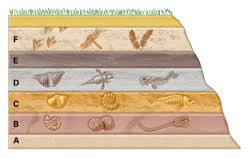
Which rock layer contains the newest fossils?

have the ability to interbreed.

Images of the embryo and adult stages of three different organisms are shown.
Which of the following is the best conclusion that can be drawn from this evidence?
Having similar embryos indicates that these organisms eat the same types of food.
Having similar embryos indicates that these organisms live in a similar environment.
Having similar embryos indicates that these organisms share a recent common ancestor.
Having similar embryos indicates that a certain protein controls how many legs the adult organisms will have.

