
 Worksheets
Chapter 10 Clue's to Earth's Past
Total questions: 35
Worksheet time: 12mins

In which kind of rock do we usually find a fossil?
sedimentary rock
metamorphic rock
igneous rock
If you know the age of a rock, you know the relative age of the _________________ that was found inside.
sticky tar
fossil
amber
ice
Which of the following would be an example of absolute age?
Fossil A is older than Fossil B
Fossil A and Fossil B are the same age
Fossil A is 10 million years old


Which of the following can be learned by using the fossil record?
When organisms changed or evolved
when organisms appeared on Earth
when organisms became extinct
All the above
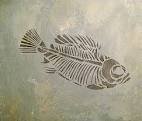
If scientists found this fossil in a desert, what could they infer?
what fish are like today
that this fish lacked oxygen
that water once covered the area where this fossil was found

Most fossils form when living things die and are buried by _______________ that hardens into rock over time.
sediment
people
cement
ants
An organism is ______________ if it no longer exits and will never live again on Earth.
rare
extinct
plentiful
missing
What is an extremely thin coating of carbon on rock?
sediment
sap
tar
carbon film
A ______________________ is a scientist who studies fossils.
biologist
chemist
paleontologist
astronomer
Scientist study the ____________________ to learn about the history of life, past environments on Earth, and how different groups of organisms have changed over time.
fossil record
animal record
historical record
Earth record
Which of the following substances is not able to preserve entire organisms?
sticky tar
water
amber
ice
Which step in fossilization comes first?
An organism dies and the soft part of it decay.
Over time, layers build pressure that turn the layers to stone.
Wind and water erosion expose the fossil to the surface.
Minerals around the skeleton preserve the bones.
ALL organisms become fossils when they die.
True
False
Fossils are still be formed today.
True
False
What a fossilized jawbone or tooth tell us about that animal?
The animal's favorite food.
When the animal lived.
What the animal ate.
What color was the animal.

