
NEW
Font size
 Worksheets
Rocks test
Total questions: 53
Worksheet time: 2hrs 46mins

This is a natural solid that is made of one or more minerals.
Mineral
Fossil
Rock
Sediment

The substance that is melted rock below the ground is called what?
Magma
Sediment
Gas
Water

This is the type of rock that forms when earth processes change the texture and heat and pressure are applied.
Igneous rock
Sedimentary rock
Metamorphic rock
Rock Cycle

These are traces or remains of a once-living thing sometimes found in sedimentary rocks.
Rocks
Sediments
Fossils
Minerals

Which missing rock type is the arrow pointing at?
Igneous
Sedimentary
Metamorphic

Which missing rock type is the arrow pointing at?
Igneous
Sedimentary
Metamorphic

Which missing rock type is the arrow pointing at?
Igneous
Sedimentary
Metamorphic

How does a metamorphic rock become an igneous rock?
Heat and pressure
Melting and cooling
Weathering/Erosion and Cementation
Cycle

How does an igneous rock become a sedimentary rock?
Heat and pressure
Melting and cooling
Weathering/Erosion and Cementation
Cycling

How does a sedimentary rock become a metamorphic rock?
Heat and pressure
Melting and cooling
Weathering/Erosion and Cementation
Cycling




A classification of metamorphic rocks would include whether they are
Chemical or organic
Intrusive or extrusive
Foliated or nonfoliated
Basaltic or granitic

Sedimentary rocks are ___________.
Formed below Earth's surface as magma
A type of foliated igneous rock
Formed by great heat
Formed from already existing rocks that are weathered and eroded

The rock cycle indicates that each type of rock can ______.
Provide materials to make up other rocks
Form other types of rocks
Be changed by natural processes
All of the above

A rock is _____.
Always made up of molten material
A mixture of minerals, organic matter, and other materials
A pure mineral
Either igneous or sedimentary

The crystals that form in slowly cooling magma are generally _______.
Large
Small

Where does the rock cycle begin?
With sedimentary rocks
With metamorphic rocks
With igneous rocks
It has no beginning and no end

Rock fragments, mineral grains, bits of shells can be called...
Magma
Lava
Metamorphic Rock
Sediments

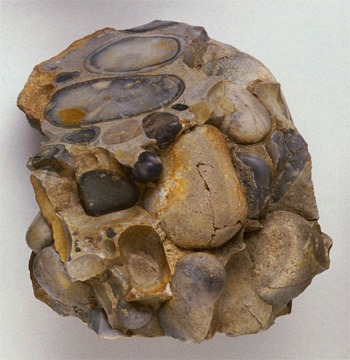
Conglomerate, Breccia and Limestone are...
Metamorphic Rocks
Sedimentary Rocks
Igneous Rocks

Magma on the surface of Earth
Magma
Lava
Sediments

Rock formed from magma below Earth's crust
Intrusive Igneous Rock
Sedimentary Rock
Extrusive Igneous Rock
Metamorphic Rock

Rock formed from lava on the crust.
Intrusive Igneous Rock
Extrusive Igneous Rock
Metamorphic Rock
Sedimentary Rock

Which of the following changes may occur during metamorphism?
The rock becomes more compact.
Certain minerals may recrystallize.
Crystals may grow larger.
all of the above

Which of the following is NOT one of the three types of rock?
metamorphic
sedimentary
magma
igneous

In Figure 3-1, what type of rock should occur in the part of the rock cycle labeled F?
metamorphic
sedimentary
igneous
lava

What type of sedimentary rock is formed from weathered particles of rocks and minerals?
clastic sedimentary rock
chemical sedimentary rock
biochemical sedimentary rock
intrusive sedimentary rock

In Figure 3-1, what type of rock should occur in the part of the rock cycle labeled B?
igneous
lava
metamorphic
sedimentary

In Figure 3-1, what process or processes would be occurring in the part of the rock cycle labeled E?
weathering and erosion
cooling
melting
compaction and cementation

In which of the following settings would a metamorphic rock most likely form?
on the slopes of an active volcano
a desert
an ocean floor
8 kilometers below Earth’s surface

Lava that cools so quickly that ions do not have time to arrange themselves into crystals will form igneous rocks with a ____.
coarse-grained texture
glassy texture
fine-grained texture
porphyritic texture

Which of the following is NOT considered to be a rock?
sandstone
coal
lava
pumice

All of the energy that drives Earth’s rock cycle comes from ____.
the movement of water over Earth’s surface
the wind
Earth’s interior and the sun
the breakdown of organic matter

What type of rocks are formed by processes powered by the sun?
metamorphic rocks
igneous rocks
No rocks are formed by energy from the sun.
sedimentary rocks

Which of the following is NOT an agent of metamorphism?
heat
running water
pressure

If granite undergoes high temperatures and high pressures at depth within Earth, what type of rock will be formed? Assume that the granite does not melt.
magma
a sedimentary rock
an igneous rock
a metamorphic rock

As the rate of cooling of igneous rocks increases, the size of the crystals that form ____.
increases
cannot be determined
decreases
is not affected

Which of the following represents the correct order of the processes involved in sedimentary rock formation?
compaction, cementation, deposition, weathering, erosion
erosion, weathering, compaction, cementation, deposition
weathering, erosion, deposition, compaction, cementation
deposition, cementation, compaction, erosion, weathering

The three groups of rocks are classified by ____.
how they formed
grain size
chemical composition
color

Which sedimentary rock would most likely be deposited in a very fast moving stream?
coal
conglomerate
siltstone
shale

