wayground logo

Free Printable Worksheets

NEW

Font size

S
M
L
XL
Worksheets

Biology EOC

Total questions: 71

Worksheet time: 1hrs 23mins

Name
Class
Date
1.
Name the photosynthesizing organelle of the plant cell.
a)
G
b)
B
c)
J
d)
C
2.
Name the process in the picture.
a)
transcription
b)
mitosis
c)
translation
d)
replication
3.
What process is occurring in the picture?
a)
DNA replication
b)
mitosis
c)
protein synthesis
d)
meiosis
4.
Which gas is filling the balloon in the experiment?
a)
Oxygen
b)
Carbon Dioxide
c)
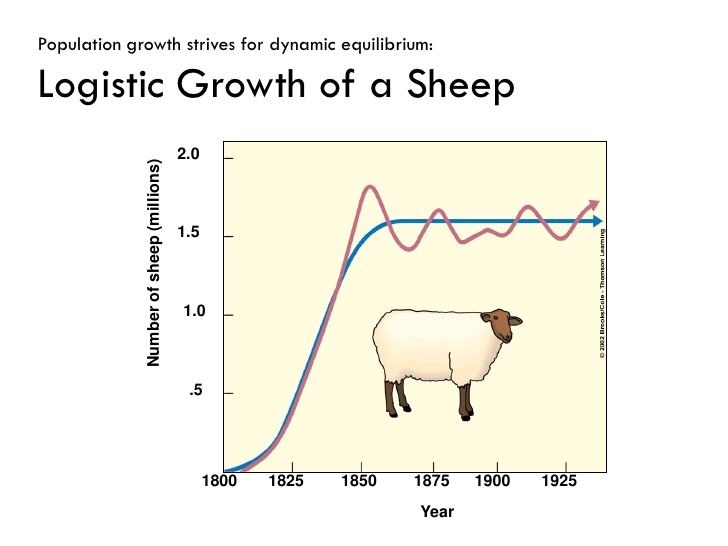
Glucose
d)
Water
5.
What is one advantage of sexual reproduction?
a)
offspring are identical to parents
b)
offspring are resistant to viruses
c)
offspring are born live, rather thna from eggs
d)
offspring inherit a wider variety of genetic information
6.
Replicate the following strand of DNA: 
AATCATGGA
a)
AATCATGGA
b)
TTAGTACCT
c)
UUAGUACCU
d)
GGATAUCUA
7.
Colorblindness is a recessive, X chromosome sex-link disorder. Cross the parents to figure out which percentage of their offspring will be colorblind.
a)
25%
b)
0%
c)
75%
d)
50%
8.

What is the purpose of Strand A?

a)

to act as a template for the synthesis of messenger RNA

b)

to carry the code from the DNA molecule in the nucleus to the ribosome

c)

picks up and transfers specific amino acids to the ribosome

d)

picks up and transfers nucleic acids to the nucleus

9.

What mRNA sequence will best match the section of DNA shown?

a)

C-T-A-G-G-C

b)

C-U-A-G-G-A

c)

A-G-C-U-U-C

d)

T-C-G-A-A-G

10.
Four different types of cells are shown in picture. Which characteristic is shared by all four cells?
a)
A mechanism for transforming sunlight into energy
b)
Self-locomotion
c)
Membrane-bound organelles that transport substances
d)
Genetic material composed of DNA
11.
Which diagram demonstrates how crossing-over contributes to genetic variety during meiosis?
a)
A
b)
B
c)
C
d)
D
12.
How many chromosomes do humans have?
a)
46
b)
21
c)
10
13.

The diagram represents one way an enzyme can be inhibited. Which statement explains the effect of an inhibitor on an enzyme?

a)

A substrate will be able to bond with the enzyme.

b)

The enzyme will likely be attacked by immune cells

c)

The enzyme will be unable to produce more enzymes.

d)

A substrate will be unable to attach to the enzyme.

14.

Which statement best describes the relationship between the products of photosynthesis and the reactants in cellular respiration?

a)

The products of photosynthesis serve as the reactants in cellular respiration to provide chemical energy.

b)

The products of photosynthesis combine with the reactants in cellular respiration to remove ATP from cells.

c)

The products of photosynthesis inhibit the reactants in cellular respiration in the presence of light.

d)

The products of photosynthesis change the structure of the reactants in cellular respiration in the presence of light.

15.

Why is blood considered a tissue?

a)

cells working together for a specific purpose

b)

tissues are always red

c)

blood moves through the entire body

d)

blood makes up an organ system

16.
What are the reactants of photosynthesis? 
a)
water, carbon dioxide, light energy
b)
oxygen and glucose
c)
oxygen and carbon dioxide
d)
oxygen and water
17.
Which of the following lists these levels in the correct order of organization from the simplest to the most complex?
a)
cells, tissues, organs, organ systems, organisms
b)
organisms, organ systems, organs, tissues, cells
c)
tissues, cells, organs, organisms, organ systems
d)

organs, organ systems, organisms, cells, tissues

18.

Food webs such as the one shown were first used in 1927 by the animal ecologist Charles Elton. The food web below represents the feeding relationships among organisms in an Alaskan ecosystem. An environmental change that removed which of these organisms from the ecosystem would cause the most instability in the ecosystem?

a)

Auklets

b)

Foxes

c)

Salmon

d)

Zooplankton

19.

During meiosis, homologous chromosomes exchange genetic material. This exchange of genetic material

a)

increases the genetic variation

b)

reduces the diploid number to the haploid number

c)

increases the haploid number to the diploid number

d)

reduces the probability of mutations

20.

Bactrian camels, dromedaries, llamas, and alpacas are all members of the same taxonomic family, Camelidae. Members of this family all have two toes, no hooves, true canine teeth, and a split upper lip. The family Camelidae originated in North America. The physical features of animals in this family and the family’s geographical origin provide evidence that all these animals

a)

live in the same type of ecosystem

b)

have slowly evolved to become herbivores

c)

have a common ancestor

d)

exchanged DNA at some point in the past

21.

An analysis of DNA and RNA sequences can be used to classify organisms. A dendrogram, such as the one shown, is based on molecular data. It can be used to represent evolutionary relationships within a group of organisms that are hypothesized to have descended from a common ancestor. Which statement is best supported by the information in this dendrogram?

a)

Lesser pandas are more genetically similar to giant pandas than they are to raccoons.

b)

Brown bears are more genetically similar to giant pandas than they are to sun bears.

c)

Lesser pandas are more genetically similar to raccoons than they are to giant pandas.

d)

The bear species are all more genetically similar to dogs than they are to giant pandas.

22.

Some students used vinegar to dissolve a way the shells of three eggs and used these eggs as models of human red blood cells. The students observed the changes in the eggs when they were placed in different solutions. Which statement best describes the role of the cell membrane in this model?

a)

The cell membrane is an impermeable barrier that prevents water from entering the cell.

b)

The cell membrane allows solutions to enter the cell, which causes the cell to shrink.

c)

The cell membrane allows water to enter and leave the cell.

d)

The cell membrane removes solutes from the environment.

23.
According to the diagram, when did the common ancestor of giant pandas and spectacled bears exist? 
a)
5-10 mya
b)
10-15 mya
c)
15-20 mya
d)
20-25 mya
24.
Movement of materials down the concentration gradient through a protein channel is an example of 
a)
facilitated diffusion
b)
active transport
c)
respiration
d)
osmosis 
25.
Which list includes only structures that would be found in a prokaryotic cell? 
a)
Cell wall, plasma membrane, mitochondria
b)
Central vacuole, cell wall, lysosome
c)
Cell wall, plasma membrane, cytoplasm
d)
Plasma membrane, nucleus, mitochondria
26.
Humans are made up of different cells that preform different functions. From which cells do nerve cells develop? 
a)
Muscle cells
b)
Stem cell
c)
Sperm cells
d)
White blood cells 
27.
Which uses cilia for movement?
a)
Euglena
b)
Amoeaba
c)
Paramecium
d)
Volvox
28.
Which best describes the function of enzymes?
a)
to speed up chemical reactions in a cell
b)
to produce cellular energy
c)
to produce proteins
d)
to speed up cell division
29.
Which factor determines the shape and function of a protein?
a)
The density of ribosomes in the cell
b)
The peptide bonds between amino acids
c)
The order of the amino acids in the peptide chian
d)
The sequence of the phosphate molecules in the DNA chain. 
30.
What are the products of photosynthesis? 
a)
glucose and oxygen
b)
glucose and carbon dioxide
c)
glucose and water
d)
water, carbon dioxide, and energy
31.
The diagram provided shows a breakdown of the genomes of humans, mice, chickens, and zebra fish. The numbers in overlapping regions indicate homologous sequences, similar genes that indicate shared ancestry. The data in the diagram best supports which of the following conclusions?
a)
There are no gene sequences that are common to all these animals.
b)
The common ancestor of the mouse and the chicken lived very recently.
c)
The mouse and the zebrafish share the closest relationship of all animals shown.
d)
Humans are more closely related to zebrafish than to chickens.
32.
An analysis of DNA and RNA sequences can be used to classify organisms. A dendrogram/evolutionary tree, such as the one shown below, is based on molecular data. It can be used to represent evolutionary relationships within a group of organisms that are hypothesized to have descended from a common ancestor.
Which statement is best supported by the information in this dendrogram/evolutionary tree? 
a)
Lesser pandas are more genetically similar to giant pandas than they are to raccoons.
b)
Brown bears are more genetically similar to giant pandas than they are to sun bears.
c)
Lesser pandas are more genetically similar to raccoons than they are to giant pandas.
d)
The bear species are all more genetically similar to dogs than they are to giant pandas.
33.
What is this an example of?
a)
diversity of species
b)
variation
c)
vestigial structures
d)
DNA studies
34.

Which of the following is an example of natural selection?

a)

Bald Eagles are hunted until near extinction, population recovers.

b)

Small group of iguanas floats to an island, starts a new population.

c)

Red fox pups are more likely to survive in a snowy environment if they are born white.

d)

Farmer chooses seeds from largest apples to plant next year. This results in larger apples from year to year.

35.
According to the food web, which of these supply energy for all the other organisms?     
a)
snakes
b)
insects
c)
grasses
d)
cougars
36.

Having freckles is dominant over not having freckles. If two individuals heterozygous for freckles have a child, what is the probability the child will have freckles?

a)

0%

b)

25%

c)

50%

d)

75%

37.

What is the function of a restriction enzyme?

a)

to control the movement of proteins into a cell

b)

to regulate blood sugar levels

c)

to produce hormones that regulate digestion

d)

to cut DNA at a specific nucleotide sequence

38.

Which statement best describes natural selection?

a)

As the weather changes, organisms that are able to find shelter need less energy to live.

b)

Organisms that eat only plants need less food than organisms that eat animals.

c)

Organisms better adapted to their environment are more likely to reproduce and pass on their traits to their offspring.

d)

Small organisms are more likely to survive than larger organisms.

39.

Which molecules are joined together to make proteins?

a)

fatty acids

b)

nucleic acids

c)

amino acids

d)

acetic acids

40.

Which word equation best represents the process of cellular respiration?

a)

carbon dioxide + glucose → oxygen + water

b)

carbon dioxide + water → glucose + oxygen

c)

glucose + oxygen → carbon dioxide + water

d)

oxygen + water → carbon dioxide + glucose

41.
All of the living and nonliving things in an area that interact with each other are called a/an ______.
a)
community
b)
habitat
c)
population
d)
ecosystem
42.

In which type of interaction does one animal eat another for energy and nutrients?

a)

Competition

b)

Parasitism

c)

Predation

d)

Mutualism

43.

Where do plants get the energy for photosynthesis to take place?

a)

nutrients in the soil

b)

the sun

c)

chlorophyll

d)

bee pollination

44.
This process releases chemical energy from sugars and other carbon-based molecules to make ATP when oxygen is present.
a)
photosynthesis
b)
light-independent reaction
c)
cellular respiration
d)
light-dependent reaction
45.
Which is not a waste product of cellular respiration?
a)
Water
b)
Heat
c)
Carbon Dioxide
d)
Oxygen
46.
Osmosis is the movement of _____ across a membrane.
a)
food
b)
energy
c)
oxygen
d)
water
47.
During osmosis
a)
water moves from high to low concentration
b)
large or oddly shaped molecules move across a cell membrane
c)
water moves when energy is used
d)
proteins are built
48.
Passive transport requires no
a)
concentration gradients
b)
osmosis
c)
motion
d)
energy
49.
The picture is an example of...
a)
active tranport
b)
passive transport
c)
diffusion
d)
osmosis
50.
"Water Loving"
a)
Hydrophobic
b)
Hydrophilic 
c)
Hydroelectric 
d)
Hydroloric
51.
A phospholipid has 2 parts. What are they called? 
a)
Hydrophilic Head, Hydrophobic Tail 
b)
Hydrophobic Head, Hydrophilic Tail 
52.
If the number of births in a population is the same as the number of deaths in a population, what will happen to the growth of the population?
a)
It will increase.
b)
It will decrease.
c)
It will stay the same.
d)
It will fluctuate.
53.
What is the carrying capacity for this sheep population?
a)
1.8 million
b)
1.25 million
c)
1.6 million
d)
1.o million
54.
What absorbs energy from visible light?
a)
Chlorophyll
b)
Chloroplast
c)
Stroma
d)
Carbon Dioxide
55.
The main source of energy for all life comes from ____.
a)
the Earth
b)
the moon
c)
the sun
d)
the food we eat/make
56.
If carbon dioxide is completely removed from a plant’s environment, what would you expect to happen to the plant’s production of high-energy sugars (rate of photosynthesis)?
a)
Sugar production will likely increase.
b)
Sugars will not be produced.
c)
The rate of sugar production will decrease .
d)
Fewer sugars will be produced at first, but then the plant will recover.
57.
Which conclusion best matches the trends shown on the graph?
a)
Bean plants produce more ATP than corn plants.
b)
Corn plants require more oxygen than bean plants.
c)
Corn plants release more carbon dioxide than bean plants.
d)
Corn plants produce sugars at a faster rate than bean plants.
58.
What are the bubbles rising in the test tube?
a)
nitrogen gas
b)
carbon dioxide gas
c)
glucose
d)
oxygen gas
59.
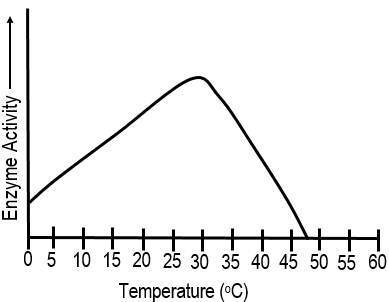
Based on the graph, what temperature does this enzyme work best? 
a)
15 C
b)
40 C
c)
30 C
d)
47 C
60.
Which of the following conclusions can be drawn from this graph?
a)
The optimum pH of the enzyme is 6.6.
b)
The optimum pH of the enzyme is 5.8
c)
The enzyme’s activity increases as pH increases 5.0 to 9.0
d)
The enzyme’s activity is greater around pH of 8.0 .
61.
The graph shows the relative rates of action of four enzymes, A, B, C, and D. Which enzyme shows the greatest change in its rate of action with the least change in pH?
a)
enzyme A 
b)
enzyme B 
c)
enzyme C
d)
enzyme D
62.

Some marine worms and mollusks go through similar larval stages during development. Which can be inferred about their relationship?

a)

They share a common ancestor

b)

The mate with each other

c)

They compete for a habitat

d)

The share the same food source

63.
Carbohydrates are made of... 
a)
C H O
b)
C H O N
c)
C H O N P
d)
C H O N S
64.
Glucose is a _____.
a)
carbohydrate
b)
lipid
c)
protein 
d)
nucleic acid
65.
ATP is...
a)
a unit of energy in the cell
b)
a type of lipid
c)
a molecule of DNA
66.
Enzymes are _________ that __________ chemical reactions.
a)
proteins, slow down
b)
proteins, speed up
c)
lipids, slow down
d)
lipids, speed up
67.

Enzymes _ activation energy

a)

raise

b)

lower

68.

What is mising from this equation for photosynthesis?

a)

ATP (reactant) and ADP (product)

b)

Lactic acid (reactant) and pyruvic acid (product)

c)

water (reactant) and oxygen (product)

d)

sugar (reactant) and carbon dioxide (porduct)

e)

Venus

69.

Which of these is a major component of the plasma membrane?

a)

lipids

b)

proteins

c)

carbohydrates

d)

none of these

70.

What concept do these diagrams illustrate?

a)

the abiotic factors of an environment

b)

the biological adaptations of animals

c)

the flow of energy through an ecosystem

d)

the population of organisms within a habitat

71.

Which of the following gives the correct terms?

a)

Definition A: transcription; Definition B: translation

b)

Definition A: translation; Definition B: transcription

c)

Definition A: telophase; Definition B: prophase

d)

Definition A: prophase; Definition B: telophase