
 Worksheets
Ecosystems
Total questions: 74
Worksheet time: 1hrs 27mins

Groups of cells with similar functions.
Organs
Molecules
Tissues
Organelles

Group of tissues with similar functions.
Organelles
Cells
Tissues
Organs

Group of organs with similar functions.
Organism
Cell
Organ
System
Plants and animals in the tundra must be able to adapt to the extremely ___________ weather
small
cold
perennials
shallow
Many of the animals in the desert are ______________ to avoid the extreme heat during the day.
cacti
chia
water
nocturnal


In this energy pyramid, which organisms have the most energy available?
Producers
Carnivores
Herbivores
Top Predator


Suppose that a new predator of the rabbit migrated to this ecosystem. What is the most likely initial effect on the other organisms?
More competition among the mice for food
More competition among the hawks for food
Less competition among snakes for food
Less grass available for food
What is a Cell?
The smallest basic unit of structure and function in living things
The smallest basic unit of structure of matter
Groups of similar cells that have a common function
A structure that is composed of different kinds of tissues that perform similar functions
A structure that consists of different organs that work together closely to perform a vital function
A body structure that is composed of different kinds of tissues that perform closely related functions
Cell
Tissue
Organ
Organ System
Organism
Level of organization: Reorder the following from smallest to largest
Individual (Species)
Population
Community
Ecosystem
Biome
Species
a group of organisms that are genetically related and can breed to produce fertile young
Population
a group of organisms of one species that interbreed and live together within a defined area.
Communities
groups of populations comprised of many species that live together in a defined area.
ecosystem
a combination of the communities and the physical (non-living) environment.
Biome
large area that has a particular climate, and particular species of plants and animals that
A (a) is a large group of many ecosystems.
Abiotic Factor
nonliving factors (soil, pollution, natural disasters, climate)
Biotics Factor
Living factors (plants and animals)
Habitat
is a place where a particular population lives (anthills, squirrel nests, beaver dams, etc)
Primary Succession
On land, succession that occurs where no soil previously existed is called _______.
Pioneer Species
The first species to populate the area are called _______.
Secondary Succession
______ occurs in areas where soil exists, but has been damaged or di
Select all that are biotic
Tall bluestem grass
Post Oak Tree
Red Tailed Hawk
Average temperature 94 degrees
6-8 inches of rainfall/year

A carnivore eats
Happy Meals
Meat
Plants

Detritivores eat
Plants Only
Meat Onlt
Dead organic matter

Decomposer is responsible for
eating all the meat.
recycle nutrients in an ecosystem.
eat only plants.

Trophic Levels represent ...
level of students at VOHS.
levels of nourishment in a food chain.
level of largest plants

Models the complex network of feeding relationships
trophic levels
food webs
food chains

What is Biomass?
the total mass of organisms in a given area
all the compost

Predation

Symbiosis

Commensalism

Parasitism
A condition that occurs when two or more organisms compete for the same resources
competition
predation
parasitism
mutualism
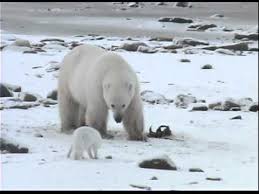
Two arctic fox are fighting with a polar bear for a sea lion carcass. One fox distracts the bear while the other eats. What type of limiting factor is the polar bear?
Predator-Prey Relationships
Competition
Herbivory Effect
Weather

A group of elephants gets stuck in mud at the edge of the river from a recent mud slide. A lion waits for an elephant to get tired before it attacks. What is the limiting factor to the elephant population?
Predator-Prey Relationships
Natural Disaster
Herbivory Effect
Competition
In many desert ecosystems, days are hot and nights are cold. Water is scarce, so animals seek water wherever possible. The spines of a cactus are actually leaves adapted to conserve water. The cactus plants have also adapted to live in thin, sandy soil. Which of the following is a biotic component of a desert ecosystem?
the thin, sandy soil
the wide temperature range
the scarcity of water
the spiny cactus leaves

What happens if a population grows past its carrying capacity?
The population keeps growing
The population starts to die off
The entire species will go extinct
The carrying capacity just increases

a relationship between two species that benefits both of them
mutualism
commensalism
parasitism
competition
a relationship between two species that benefits one of them, but the other is not harmed or helped
mutualism
commensalism
parasitism
competition
a relationship between two species that benefits one of them, and the other is harmed
mutualism
commensalism
parasitism
competition

This is ___
mutualism
commensalism
parasitism

This is the largest number of individuals of a population that the environment can support...
carrying capacity
population crash
lag phase
mutualism

Animal that gets its energy and nutrition from eating plants.
Parasite
Herbivore
Carnivore
Ominvore

Animal that gets its energy and nutrition from eating meat.
Detritivore
Ominvore
Carnivore
Herbivore

Organisms that produce their own food mostly through photosynthesis (producers). Examples are plants and algae.
Ominvore
Detritivore
Heterotroph
Autotroph

Organisms that get their energy and nutrition from other organisms (consumers).
Heterotroph
Autotroph
Decomposer
Detritivore

Heterotrophs that get energy and nutrition from dead or decaying organisms or their waste products and recycle nutrients back to the ecosystem.
Producer
Trophic
Decomposer
Autotrooph

Heterotrophs that “clean up” the ecosystem by eating dead and decaying organisms.
Autotrophs
Herbivores
Ominvores
Detritivores

The level in an Ecological pyramid that includes all the organisms that share the same place in a food chain.
Trophic Levels
Toxic Levels
KeKe Levels
Environmental Systems


Why is some energy not passed on to the next trophic level?
The organisms at each level use about 90% of the available energy to live.
The statement is NOT true. All energy IS passed from one trophic level to the next.
The organisms at each level use about 10% of the available energy to live.
Most energy is absorbed by the soil instead.

Analyze the positions of the hawk and the snake in the food web pictured above. Which of the following statements is correct?
The hawk eats more types of organisms in the food web than the snake does.
The eagle eats the same types of organisms as the snake does.
The snake eats more types of organisms in the food web than the eagle does.
The snake is eaten by the same types of organisms as the eagle is.

Primary succession

pioneer species

abiotic factor

secondary sucession

climax community
Primary succession occurs in an area that has:
Has Soil
Has No Soil
Has Some Soil
none of these


After a volcanic eruption, volcanic rock is present (but no soil). Which of the following states the most likely order of succession that would be seen?
Lichens → Shrubs → Grasses → Trees
Lichens → tree → shrubs→Grasses
Grasses → Lichens → Shrubs → Trees
Lichens → Grasses → Shrubs → Trees
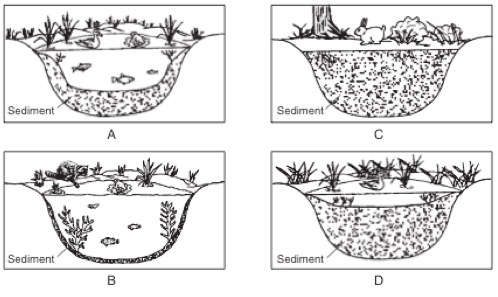


Which is NOT a process of the water cycle?
precipitation
freezing
transpiration
evaporation


Biomes are mainly determined by _____ and ____.
temperature
weather
precipitation
soil
rocks
What are some characteristics of tundra?
permafrost
very cold, low average temperatures
lots of trees
small amount of plants
high amount of rainfall
What are some characteristics of a tropical grassland/savanna?
warm temperatures
seasonal rainfall
lots of trees
grassland
low average temperature
Which biome consists of lakes, rivers, and streams and only includes 3% of the Earth’s water?
Marine open ocean
Marine coastal
Tundra
Freshwater

