wayground logo

Free Printable Worksheets

Font size

S
M
L
XL
Worksheets

Stars & Eclipses

Total questions: 41

Worksheet time: 38mins

Name
Class
Date
1.

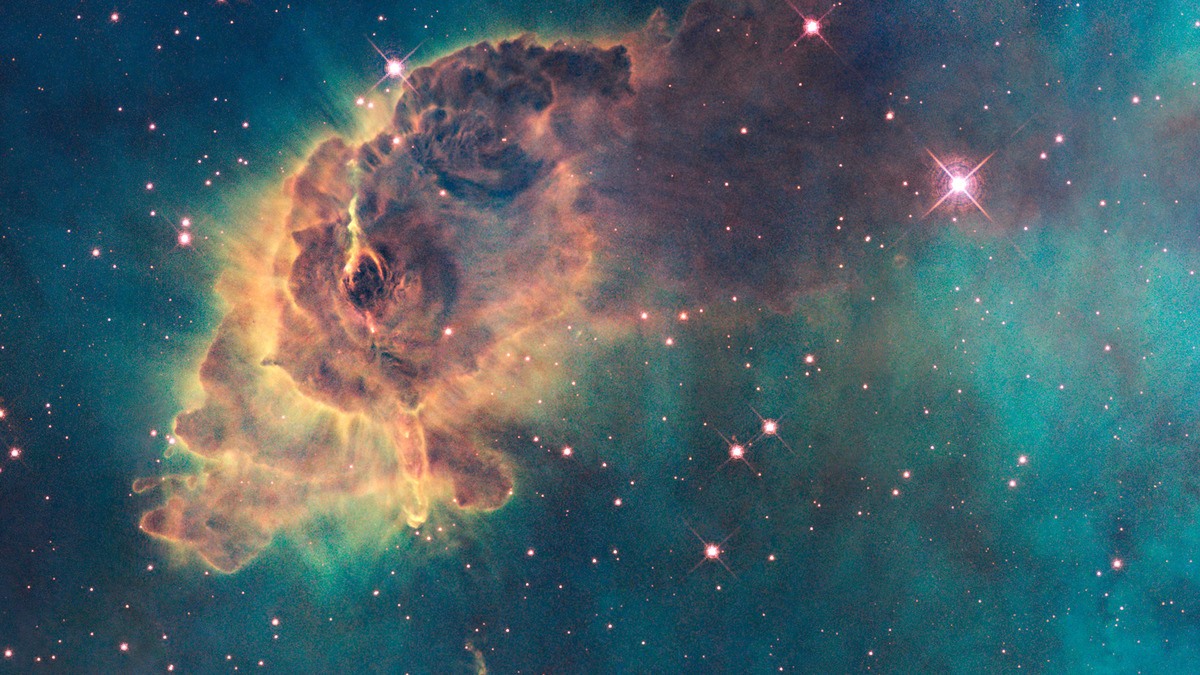
Which color of a star means it has the hottest temperature?
a)
Blue
b)
Red
c)
Yellow
d)
Orange
2.
What is the name of the gas/dust clouds that form stars?
a)
Nebulas
b)
Protostars 
c)
Supernova
d)
Neutron Star
3.

What is the name of the explosion at that occurs at the end of a massive star's lifespan?

a)
Supergiant
b)
Supernova
c)
Black Hole
d)
Nebula
4.
What word best describes our sun?
a)
Average
b)
Supergiant
c)
Dwarf
d)
Red Giant
5.

All stars begin their life in a __________.

a)
Main Sequence
b)
Nebula
c)
Protostar
d)
Black Dwarf
6.
Most stars are made of which elements?
a)
Hydrogen only
b)
Hydrogen and Lithium
c)
Hydrogen and Sodium
d)
Hydrogen and Helium
7.

What is the name of our galaxy?

a)
Earth Nebula
b)
The Hubble Galaxy
c)
The Milky Way
d)
The Snickers
8.
A small, hot star near the end of its life is a star called a
a)
white dwarf
b)
red dwarf
c)
supergiant
d)
protostar
9.

What will be the next stage in our star the sun's life cycle?

a)

supernova

b)

white dwarf

c)

blackhole

d)

red giant

10.

Who studies the planets and the sun in our own solar system, as well as other stars, solar systems, galaxies, and the whole universe?

a)

Geologist

b)

Paleontologist

c)

Astronomers

d)

Chemist

11.

Which is the largest object in our solar system?

a)

Moon

b)

Mars

c)

Venus

d)

Sun

12.

The surface of the sun is called ______________________.

a)

photosphere

b)

chromosphere

c)

sunspots

d)

flares

13.

__________________ are darker,cooler areas on the sun's photosphere.

a)

corona

b)

sunspots

c)

flares

d)

solar wind

14.

Which is the outer layer of the sun's atmosphere?

a)

solar wind

b)

corona

c)

sunspots

d)

chromosphere

15.

What holds Earth and all other planets together?

a)

Heat and Light

b)

Magnetisim

c)

Gravitational Pull

d)

Electricity

16.

What is a solar wind?

a)

The surface of the sun

b)

Darker, cooler areas of the sun

c)

Outer layer of the sun

d)

Constant flow of tiny, fast, electrically charged particles

17.
In which area of the sun does gas rise as it heats up, then fall back down as it cools?
a)
the core
b)
the radiation zone
c)
the convection zone
d)
the corona
18.
When we look at the sun, what layer are we viewing?
a)
photosphere
b)
chromosphere
c)
corona
d)
convection zone
19.
What layer gives the sun it's reddish color during a solar eclipse?
a)
convection zone
b)
corona
c)
chromosphere
d)
photosphere
20.
What layer of the sun's atmosphere gives the sun its "white halo" during a solar eclipse?
a)
chromosphere
b)
photosphere
c)
corona
d)
atmosphere
21.
The particles of the corona extends into space for millions of kilometers and spreads into streams of electrically charged particles called:
a)
coronal discharge
b)
solar flares
c)
coronal ejection
d)
solar winds
22.
Areas of gas on the sun's surface that are cooler than gases around them are called:
a)
corona
b)
prominences
c)
sunspots
d)
solarspots
23.
The number of sunspots on the sun varies in a cycle that is about how long?
a)
6-8 years
b)
10-11 years
c)
12-15 years
d)
365 days
24.
Huge loops of reddish gas that connect sunspots are called:
a)
prominences
b)
solar flares
c)
coronal loops
d)
solar wind
25.
The sun makes up about _________ percent of the solar system's total mass.
a)
98
b)
95
c)
99.8
d)
98.9
26.

Which eclipse do you need to wear special glasses for?

a)

Mars Eclipse

b)

Mercury Eclipse

c)

Lunar Eclipse

d)

Solar Eclipse

27.

Which happens when the Earth comes in between the Moon and the Sun?

a)

Lunar Eclipse

b)

Solar Eclipse

c)

Earth Eclipse

d)

Jupiter Eclipse

28.

Which eclipse happens when the Moon gets in between the Earth and the Sun?

a)

Neptune Eclipse

b)

Uranus Eclipse

c)

Solar Eclipse

d)

Lunar Eclipse

29.
What type of eclipse occurs when the moon doesn't completely cover the sun?
a)
partial solar eclipse
b)
total solar eclipse
c)
total lunar eclipse
d)
partial lunar eclipse
30.
What type of eclipse is this?
a)
Solar eclipse
b)
Lunar eclipse
31.
What type of eclipse is this?
a)
Solar Eclipse
b)
Lunar Eclipse
32.
Which of the following is NOT true about a total solar eclipse?
a)
It can be viewed from every spot on earth
b)
It is dangerous to look at without the proper device
c)
When it happens, the moon blocks all of the sun except the corona
d)
You must be within the moon's umbra to see it
33.
What is the bigger, less dark part of the shadow called in an eclipse?
a)
Penumbra
b)
Penumbrella
c)
Umbrella
d)
Umbra
34.
What kind of eclipse happens more often and can be seen by more people?
a)
Solar
b)
Lunar
35.

How does the sun produce energy?

a)

By burning sulfur

b)

By making carbon from water and oxygen

c)

By fusing hydrogen into helium

d)

By the fission of uranium atoms

36.

What best describes sun spots?

a)

cooler places on the sun's surface

b)

holes left after solar explosions

c)

cave-like structures that lead to the sun's core

d)

different colored elements than the rest of the surface

37.

What phenomena is pictured?

a)

a sunspot

b)

a maunder minimum

c)

a solar flare

d)

a black hole

38.
A huge ball of gas held together by gravity. The central core is extremely hot and produces energy.
a)
Star
b)
Nebula 
c)
Mass
d)
Gravity 
39.
A process in stars where two Hydrogen atoms combine to form Helium and release energy.
a)
Nebula 
b)
Nuclear Fusion 
c)
Supernova 
d)
Gravity 
40.
A force which tries to pull two objects toward each other.
a)
Supernova 
b)
Nebula 
c)
Planetary Nebula 
d)
Gravity 
41.
All low/medium mass stars will eventually 
a)
explode into a supernova
b)
become a black hole
c)
change into a white dwarf 
d)
become a neutron star