
 Worksheets
customer
Total questions: 98
Worksheet time: 2hrs 38mins
Which statement about customer service is correct?
Excellent customer service results in a more positive business
reputation.
Excellent customer service results in more promises and
therefore more lawsuits.
Excellent customer service results in fewer loyal customers.
Excellent customer service results in lower wages.
Which of the following is one of the most effective and least expensive ways to market a business?
In-theater advertising
Effective customer service
Glossy, colorful, professional brochures
One-on-one sales calls
An example of how to provide good customer service is...
Greeting customers in a friendly manner
Hiding in the stock room
Talking about customers with colleagues
Following a formal procedure for dealing with complaints

Good Customer Service helps to:
Build Your Brand
Create Trust With Your Customers
Reduce Customer Complaints & Minimise Problems
All of the Options

What makes your organisation different from similar ones?
Products & Service are the difference
We pay less so our costs are lower
We work our teams harder
Our social media & marketing is funnier

What is the first stage on the Customer Journey?
Need recognition
Information Search
Evaluation of Alternatives
Purchase Decision

How long do you have to make a first impression?
7 Seconds
17 Seconds
70 Seconds
7 Minutes

What percentage of complaints do you hear about?
1 in 10
1 in 50
1 in 500
1 in 25

How many people could hear about a bad experience?
6
60
600
6000

What is the first thing to do when handling a complaint?
Run away
Get the manager
Apologise
Argue back

Your most unhappy customer is your greatest source of.....
Aggravation
Learning
Income
Frustration

Which of the following demonstrates respect:
Being Polite
All of the Options
Being consistent in your actions
Encouragement & Implementation of ideas
what is customer service?
is the assistance and advice provided by a company to those people who buy or use its products or services.
Is when you love the customer
is giving everything the customer wants to keep them satisfied
all of the above
What does a good customer service typically mean?
make jokes with the customer and become his friend
send gifts to the customer every birthday
providing timely, attentive, upbeat service to a customer, and making sure their needs are met in a manner that reflects positively on the company or business
generate business for the customer
Check all the characteristics of an Incredyble Customer Service...
is fast and accessible
ease the customer service it is necessary to use customer service cloud-based technology
become their friend to give them benefits from the company
efficiently resolve queries effectively at every single touchpoint.

A customer is complaining angrily about a fault in goods purchased at the store. Which Two of the following actions would be the most suitable?
Lead the customer to a quiet area of the store.
Defuse the customer’s anger.
Call the manager immediately.
Refuse to talk to the customer until they calm down.

A regular and valued customer has complained that a delivery of goods has been delayed. Which of the following actions are likely to satisfy the customer?
Offer free delivery on their next purchase.
Promise to investigate the problem.
Give an apology
all of the above

Customers who leave feeling satisfied with the service are more likely to ?
Change brands
Leave a tip
Tell someone else
Shop with a competitor

A customer service assistant should use which one of the following styles when listening to a customer?
Active listening
Clearly listening
Passive listening
Apparently listening

Which of the following is a positive response to the customers question Do you have these shoes in a size five and a half?
No we don’t sorry.
I’ll just check for you. They have been very popular
I’d say it was unlikely. They were snapped up quickly because they’re so cheap
I could look but I don’t hold out much hope

Which of the following is an example of positive body language when talking to customers?
Shaking your head
Making eye contact
Folding your arms
Shrugging

Which one of the following describes a main key feature of excellent customer service?
Being courteous to customers.
Exceeding customer needs.
Accepting customer needs.
Meeting company needs.

Which one of the following techniques is most effective when dealing with customers making complaints?
Identify important points and facts.
Explain the company’s complaints policy.
Write everything down.
Ask for a brief version of events.

How does solving difficult-customer situations benefit your company?
It will generate repeat business.
The difficult customers won’t bother you again.
You will get a promotion.
All the employees will get promotions.
What is the first thing to do when handling a complaint?
Run away
Get the manager
Apologise
Argue back
Your most unhappy customer is your greatest source of.....
Aggravation
Learning
Income
Frustration

A company will find that delivering consistently high customer care increases their ...
complaints
reputation
staff turnover
absenteeism

Excellent customer care increases customer ..........
complaints
retention
profits
recruitment
When dealing with customer face to face which way do you communicate with them more effectively
Getting defensive with angry customers will likely
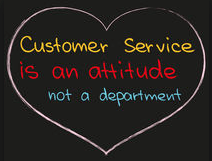
A good _______________ is essential to a business when providing customer service
speaking voice
attitude
first impression
hair style
Which of the following best defines customer service?
Act or manner of serving food and beverages.
All positive moments experienced between hospitality employees and customers.
Someone who purchases products or services from a business.
Total customer experience with a business.
Which of the following is an example of empathy?
Feeling angry when a customer insults you.
Feeling timid and withdrawing when a customer suggests your business is inadequate.
Shouting at a customer who shouts at you.
Understanding the tired feeling a customer has after traveling all day.

Which document is being described here? An agreement often used with customers to define exactly what service the company will provide.
Written Customer Care Statement
Service Level Agreement
Complaints Procedure
Quality Management Procedure
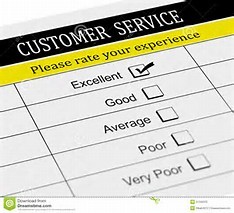
A small number of customers are invited to provide feedback and together have in-depth discussion on a number of key areas.
Customers who complain:
Had unhappy childhoods
Are genetically predisposed to sourpusses
Have trouble in their primary relationships
Are doing you a service in identifying what isn't working in your business or organization

Identify two examples of external customers:
Impulse customers
Warehouse employees
HR Staff
Loyal customers
How does solving difficult-customer situations benefit your company?
It will generate repeat business.
The difficult customers won’t bother you again.
You will get a promotion.
All the employees will get promotions.
How does solving difficult-customer situations benefit you personally?
You will encounter difficult customers less frequently.
Your customers will be happier.
You gain valuable communication skills.
Your boss will automatically give you a raise.
Eva works at a hotel registration desk. When a customer was checking in tonight, Eva reminded him that checkout time would be 11:00 a.m. “No, it’s not!” he exclaimed. “It’s always at 11:30!” Eva’s customer is
suspicious.
leave-me-alone.
impatient.
argumentative.
Rich works the cash register at a retail store. The store is unusually busy today, and Rich’s line has grown long. A woman at the back of the line remarks loudly, “This is absolutely ridiculous!” Rich’s customer is
domineering/superior.
impatient.
argumentative.
leave-me-alone.
Stacey works at a fancy gift shop. Many of the items in the shop are expensive collectibles, and Stacey is very knowledgeable about them. Today, a man comes in looking for a gift for his wife. Stacey offers to help, but he just grunts at her and turns his back. Stacey’s customer is
impatient.
insulting.
leave-me-alone.
argumentative
Jonathan works in his small town’s only grocery store. He is on a first-name basis with most of the customers who come in. Cheryl is a difficult customer. Sometimes she’s really friendly, and other times she snaps at Jonathan. She is a(n) __________ customer.
irritable/moody
suspicious
slow/methodical
dishonest
Darcie is a lifeguard at the local beach. Sometimes, she has to blow her whistle to signal to swimmers that they have gone out too far. Today, one of the risky swimmers runs up to her and shouts, “I wasn’t out too far! You must be blind!” This is an example of a(n) __________ customer.
insulting
suspicious
impatient
slow/methodical
Ellen works at a golf course. During the summer, she drives a golf cart around the course, selling cold drinks and snacks to the golfers. It’s a beautiful day, and the course is especially crowded. Ellen offers one golfer a cold drink, and she replies, “Well, I guess I’ll have time, since the play is so slow. It’s not very fun to have to wait so long between holes. Who is running this course? You always set your tee times way too close together!” Ellen’s customer is
suspicious
argumentative
complaining
leave-me-alone
Carrie has a summer job cleaning and maintaining backyard pools. Her boss thinks she does a great job. Today, she has a new client. For a while, he was watching her from the porch, and then he came out and stood just a few feet away from her. “Don’t do it that way,” he instructed. “You’re using too much chlorine. Should I just measure it out for you?” Carrie’s customer is
slow/methodical
domineering/superior
suspicious
irritable/moody
Mitch works at the layaway counter in a retail store. The store’s layaway policy is clearly posted on a sign over the counter, but sometimes customers just don’t “get it.” Today, a woman asked about 15 questions to make sure she understood the policy correctly. She was a __________ customer.
dishonest
domineering/superior
complaining
suspicious
Jill works behind the counter at a fast-food restaurant. The restaurant prides itself on great food and quick service. Right now, a man is staring up at the menu trying to decide what he wants to order, and a line is quickly forming behind him. Jill asks, “May I take your order?” but he remains silent. This customer is
complaining
suspicious
dishonest
slow/methodical
Randy works at a batting cage. Today, a customer came to him to complain that the machine did not give as many pitches as she paid for and to demand a refund. Randy checked out the machine and didn’t find anything wrong with it. He had a feeling that the customer was just
trying to practice for free but didn’t have any proof. Randy’s customer is
domineering/superior
dishonest
impatient
leave-me-alone
Which of the following is the best way to handle argumentative customers:
Ask simple, polite questions with options.
Never press for sales or decisions.
Explain and demonstrate good service as many times as you need to.
Mirror their behavior.
Which of the following is the best way to handle dishonest customers:
Explain and demonstrate good service as many times as you need to.
Never press for sales or decisions.
Don’t jump to quick conclusions.
Mirror their behavior.
Which of the following is the best way to handle impatient customers:
Explain and demonstrate good service as many times as you need to.
Agree first on common points.
Never press for sales or decisions.
Serve them non-emotionally.
Which of the following is the best way to handle slow/methodical customers:
Don’t jump to quick conclusions.
Let them have their say.
Serve them non-emotionally.
Help them along by not overwhelming them.
Which of the following is the best way to handle leave-me-alone customers:
Agree first on common points.
Ask simple, polite questions with options.
Don’t jump to quick conclusions.
Never press for sales or decisions.
Which of the following is the best way to handle suspicious customers:
Ask simple, polite questions with options.
Serve them non-emotionally.
Help them along by not overwhelming them.
Explain and demonstrate good service as many times as you need to.
Which of the following is the best way to handle irritable/moody customers:
Let them have their say.
Be consistent in your positive behavior.
Explain and demonstrate good service as many times as you need to.
Ask simple, polite questions with options.
Which of the following is the best way to handle domineering/superior customers:
Never press for sales or decisions.
Don’t jump to quick conclusions.
Let them have their say.
Explain and demonstrate good service as many times as you need to.

